Archive

Tag Archives: aviation industry

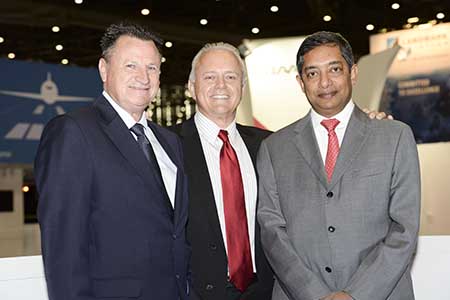
Business Aviation ServicesA couple of former Embraer executives have formed a new leasing business in Dubai to provide simple and straightforward executive jet aircraft leasing to business aviation. The company was launched at EBACE last week.

The new company, Veling Tayara is a part of the airline leasing company, Veling, based in Mauritius and headed by Nirvan Veerasamy, former chief of Air Mauritius.

Ernie Edwards and Colin Steven, both former executives of Embraer Executive Jets are setting out to bring new types of leasing structures with simplified financing that will offer far more flexibility, allowing clients to upgrade or change the agreement as their businesses change.

Mr Edwards said, “Our structured finance model provides more than just an operating lease package for a client’s business jet. Instead of tying up an owner’s cash, an operating lease will permit the owner to invest in appreciating assets instead of depreciating capital equipment.”

“Together, my board and I believe there is a service we can provide the business jet financing world that places the client in the enviable position of not having to worry about aircraft disposal at the end of the lease. At that time, the operator can have the simple choice of either extending the lease or returning the aircraft. It’s as simple as that.”

“Veling Tayara will remove the burden of owning the asset and provide inherent options throughout the lease period. It will provide flexible operating leases designed to clients’ individual needs, permitting upgrades to larger, newer aircraft as the business grows,” said Mr Steven.
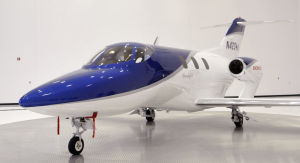
Honda Business JetHondaJet, a production model designed to carry up to seven passengers and crew in style has been unveiled at EBACE in Geneva this week. This much-anticipated debut from Honda was well-received, with the company proudly announcing several milestone achievements.

Honda, who have nine aircraft on the final assembly lines, said that the jet is ready for ground testing, having recently taken delivery of the first GE Honda HF120 engines. The first flights are expected to take place this summer.

“Honda Aircraft Co.’s most important goals are achieving Federal Aviation Administration Type Certification and delivering the first customer aircraft,” said Michimasa Fujino, president and chief executive. The final certification stages began in December 2013.

“The HondaJet production line is maturing with efficient and robust processes in place to build high quality aircraft,” Fujino said. “From handheld tablets that deliver worker instructions to an automatic guided cart to pick up and deliver parts, we continue to integrate the latest technology into our production process to create an efficient workflow.”

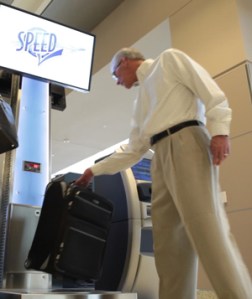
Automated Border Control BenefitsAtlanta International Airport have unveiled the latest in automated passport control in conjunction with the US Customs and Border Protection authority. The kiosks will operate in concourses E & F and will be available to passengers with Electronic System for Travel Authorization approval.

The system allows such passengers to submit their Customs Declaration and other travel and personal information electronically, which will reduce the time they will be required to spend with a CBP officer. The average reduction will be 20-40% in waiting time and will greatly improve efficient expedition of these passengers.

As passenger numbers grow across the globe on a yearly basis, many airports are looking into electronic border control solutions to increase passenger processing, while maintaining security. Ground delays are kept to a minimum, as ‘safe’ passengers can be expedited, leaving more time for border agencies to screen other travellers.

“These new kiosks will go a long way to improve the overall experience for our international customers coming into Atlanta because they provide a more efficient process for exiting customs,” said John Laughter, senior vice president for Delta`s Corporate Safety, Security and Compliance. “We strive to provide our customers with an enjoyable travel experience through all aspects of our operation including Customs and Border Protection checkpoints.”

Business Jet Just before the opening of Geneva EBACE this year, two major aviation companies announced the launch of new, longer-range business jets, both set to be ready for the markets in early 2015.

The Gulfstream G650ER, an upgraded version of the popular G650, is undergoing FAA certification and will share the same cabin, systems and avionics, but will have a capacity of 7,500 nautical miles, the longest range of its class, according to Gulfstream.

“The G650ER provides our customers with greater mission flexibility and the longest range of any business jet,” Scott Neal, Gulfstream senior vice president of worldwide sales and marketing, said in a statement. “It’s the only aircraft in the world capable of travelling 7,500 n.m.”

Dassault have announced the development of the Falcon 8X, the sixth in the family, including the Falcon 5X that is still in development. The Falcon 8X will have a capacity to carry eight passengers and three crew, with the longest cabin of any other Falcon. With a range of 6,450 nautical miles, the aircraft will also have the longest range of the Falcon family.

Certification is expected at the beginning of 2016 for the Falcon 8X with deliveries to follow before the end of that year.

Other Aircraft Internet ProvidersAs the demands for aircraft internet rise amongst passengers, in-flight WiFi communications providers are beginning to see a rise in revenue with Gogo Inc reporting an increase of 35% for the first quarter of this year, amounting to $95.7 million.

“We have proven our leadership in bringing more bandwidth to any aircraft type no matter where it flies,” said Michael Small, Gogo CEO. “In addition Gogo has uniquely positioned itself as a full-service communications provider to the global aviation industry. There’s a sensational demand for connectivity on every face of the earth,” he said. “It’s not surprising that it’s the same demand in the air too.”

Business passengers have had high expectations of aircraft connectivity for some time, according to business aviation providers, ARINC Direct. Faster broadband speeds and global connections are essential for the ‘office-in-the-sky’ needs and competitiveness in the business sector is rising as more operators strive for better services for their passengers.

Other Types of Aviation ConsultancyAviation Consultants Inc began with nothing but an idea to build a corporate aviation business at the San Luis Obispo County Regional Airport after realising that there was a gap in the market. Bill Borgsmiller lived out of his office and began building his dream in the hope of achieving success that had nagged at him since he was a small boy.

After some years of hard work and an eye for detail, the company reputation is soaring with his 85-strong staff and a growth of 50% since 2009.

“It has been little steps at a time,” said Borgsmiller, recalling that those early years living on the west side of the airport made him “appreciate what I have.”

Growth in the business aviation industry is tough, with competition at a premium. Mr Borgsmiller believes that his success is largely down to his determination to provide quality service with attention to the small details. Maintenance, fuel and flight support services providers must ensure reliability to enable operational productivity.

Aviation messaging is critical to keep down time to a minimum and to maintain a constant flow of critical data amongst all partners. Type B messaging can be confusing and costly if it is not handled correctly. Aviation consultants can help operators to understand these messaging networks and allow information sharing that can streamline the entire process.

AviNet Airport Solutions

Rockwell Collins will be demonstrating the best features of their ARINC airport solutions at this year’s Dubai Airport Show on stand 8310.

“The Dubai Airport Show is an important platform for us to engage with new and potential customers – especially as we continue to invest and grow in the region,” said Tony Lynch, Middle East Director, Information Management Services for Rockwell Collins. “We’re looking forward to many productive meetings at the show, and demonstrating how our innovative airport technologies can help manage airport costs and improve processes.”

Rockwell Collins will be exhibiting highlights of the Airport Solutions package, with cost-effective shared check-in features, such as:

Multiple airline support
• Cloud-based common check-in
• Touchscreen Wayfinding
• Airport Operational Suite – as part of the CDM initiative
• Security & surveillance solutions
• Legacy & CUPPS application support
• Common-use biometric passenger processing

All these features and more will provide advanced solutions for the airport of tomorrow, offering flexibility and enhanced operational activity with cost-sharing initiatives for all sized operations.

Leading Cabin Services ProvidersFlight crews and maintenance personnel will now be able to receive cabin communications training from Satcom Direct in a partnership with FlightSafety at the Teterboro Learning Centre in an expansion of their current training program in Georgia.

The aim is to provide cabin communications equipment training in a demonstration of how the satellite and equipment functions and operates in order for cabin crews to better assist passengers with the operation of the IFE systems and for maintenance crews to learn to troubleshoot.

“Students will have a hands-on experience just like they would in the aircraft,” said Scott Hamilton, Satcom Direct chief strategy officer. “They’ll learn how to optimize computers and mobile devices for satellite internet and voice communications.”

Using the very latest equipment from Inmarsat and Iridium, in addition to the Satcom Direct systems, students will learn how to deal with inoperative equipment whilst in-flight, enabling minor issues to be ironed out with minimal disruption to the service.

Cabin communications providers offer seamless connectivity for passengers and crew with Internet access for in-flight entertainment.

Physical Security Solutions Providers for AviationIt has been announced that multinational security company, Magal Security Systems Ltd, have been awarded a $6.4 million contract to provide physical security measures and an information management system in Nairobi International Airport by 2015.

In addition to security fencing upgrades and multiple surveillance technology, Magal will install an advanced PSIM information management system to integrate and manage the security improvements.

President and CEO of Magal S3, said, “Over the past two years, we have successfully delivered a number of security projects for critical national assets in Kenya, demonstrating how excellence in performance and successful deliveries lead to significant further business. We are proud to be employed by this prestigious national customer and remain committed to supplying the latest technology with the highest standards of execution.”

The announcement follows recent speculation of the release of funds from the Kenyan government to invest in the much-needed improvements to airport security across the country.

Providers of secure, reliable APIS deliveryIn a bid to make the travel experience for passengers as smooth as possible, the Philippines will make the implementation of Advanced Passenger Information System (APIS) next year. Carried out jointly with the Department of Justice, Department of Budget and Management Bureau of Immigration, the vital data concerning all passengers will be assessed between 120 hours to 15 minutes prior to departure.

Aside from the security aspects of reliable APIS, the Philippines have long been struggling with efficiencies on the ground, as flights tend to arrive quickly, in succession. The long ground delays have been a problem, causing chaos within terminals as passengers endure queues, hold-ups in baggage areas and a lack of trolleys.

Tourism Secretary Ramon R. Jimenez Jr. said, “The ideal travel experience is one without interruption. We want the entry of travellers into the Philippines to become as smooth and seamless as possible so we need an efficient tool such as an electronic API. This would avoid long queue in our airports, as we can already identify passengers who are ‘bad’ or ‘good.’ But, of course, we have to have a balance between border control/security with that of ease of entry into our airports.”

The benefits of APIS are clear to see and easy to implement. “All we have to do is to synchronize the system with that of the Philippines government. It will be up to the Philippines authorities to align their systems with the airline companies’ systems,” explained Roberto Lim, IATA Country Manager for the Philippines.

Streamlining passenger processes are just one of the advantages of APIS implementation. The ability to screen passengers in advance gives the authorities the opportunity to spot ‘at risk’ travellers and expedite ‘safe’ ones. Providers of APIS technology offer secure and reliable ways of APIS delivery across the world.