Archive

Tag Archives: aviation industry

Aircraft Financing Scheme LaunchUS-based Global Jet Capital (GJC) is a recently-launched leasing and lending company, initially funded with a $2 billion investment fund from AE Industrial Partners, GSO Capital and The Carlyle Group.

The company is now targeting an aircraft market, offering financing for business jets with a price tag of $30 million and upwards. A range of options will be available, including mortgage, finance leases, progress payments and mezzanine finance, which combines debt and equity.

Launched at the ABACE exhibition, GJC are aiming their financing options outside the US, where it expects the greatest uptake to be located. The company has noticed a surge in demand for this type of financing over the past three years, since banks and traditional finance companies have begun to shy away from jet financing.

Transactions are already being discussed for Gulfstream, Boeing and Bombardier aircraft.

Baggage Handling Systems Technology Saves Airline Industry BillionsA recent report from SITA has highlighted that the rate of baggage mishandling has reduced by more than 60% on a global scale in the last eight years saving the sector an estimated $18 billion since 2007.

The sharp decline in mishandling is in spite of the increase in passenger numbers and the improvements are due to the rise in investment by airlines and airports across the world in enhanced baggage handling systems.

Over the past few years airport improvements to the passenger processing system, particularly in self-service bag drop and check-in technology has risen dramatically, and has been almost at the top of the priority list for spending.

Optimising the check-in process means reduced queues, increased passenger experience and a streamlining of airport systems.

The biggest baggage handling systems providers offer baggage self-tagging, multiple airline bag drop facilities and even off-site check-in capabilities. The days of two-hour pre check-in and long queues at peak times are behind many of the world’s major airports and passengers are noticing the difference.

Cost savings are clearly a huge benefit for airports and airlines, and open up the possibilities for more future investment.

Advanced Border Management Systems Technology ProvidersInterpol World 2015 in Singapore this week will see Gemalto demonstrate its latest next-generation Border Management Systems with automated eGates, electronic passports and visa monitoring capabilities.

Government and border agencies all over the world are looking to the latest technological advancements to increase border security, at all border checkpoints but not least in the airport environment. As traveller numbers steadily increase year-on-year, it is critical to maintain utmost security while streamlining the passenger processing system in order to keep ground delays to a minimum.

Self-service kiosks and biometric systems from providers such as Gemalto, SITA and Rockwell Collins are amongst the most popular with passengers, allowing them to take greater control of their travel experience and reducing queueing time.

Self-service and common-use systems provide airlines with an opportunity to share costs and reduce the time spent micro-managing the passenger check-in process, while airports regain valuable terminal space and personnel time, which can be better utilised to maximise operational productivity.

Other Providers of Leading Cabin Services & Aircraft BroadbandSmartSky Networks announced a partnership with Kontron this week at the AEA Convention held in Dallas. Kontron, German-based cabin WiFi access point (CWAP) manufacturer, and the relatively new SmartSky Networks, air-to-ground aviation telecommunications network provider, will team to provide a SmartSky 4G service with an expected capability of 10 times the current speed and capacity of other networks, according to the Florida-based SmartSky.

As passenger and operational expectations increase across both business and commercial aviation sectors, airlines and operators are seeking greater transfer speeds and capabilities for cabin services and flight deck options.

Other next-generation cabin services providers are utilising powerful satellite communications networks, such as Inmarsat and Iridium, to deliver aircraft WiFi solutions that can be as effective in the sky as they can on the ground.

Other Business Aviation Passenger Communications Solutions ProvidersGogo, business aircraft communications provider, announced the launch of a new service at the AEA International Convention & Trade Show this week. The ATG 1000 is a new system for connectivity that is aimed at the light private aircraft market, offering passengers the chance to use their own personal smartphones inflight for calls and texts.

Additional services such as web browsing, can be added using a software key, offering complete flexibility for operators wishing to provide basic services.

This new offering from Gogo joins the passenger communications revolution sweeping the industry as traveller demand increases for affordable, yet fast connection speeds.

Business jet owners and operators are seeking solutions for inflight communications on all levels from the cabin to the cockpit to enable streamlined operations.

Other inflight connectivity providers, such as Rockwell Collins’ ARINCDirect, offer passenger communications with high-speed broadband to give larger operators and charter companies the capability of an office-in-the-sky, almost a prerequisite in the modern cabin.

Streamlining Passegner Processing with Technology & SolutionsNorth Carolina’s Charlotte Douglas International Airport (CLT) has selected a new platform to help streamline passenger processing, operational messaging and business systems as a part of their 2015 upgrade program, which will also include improvements to car parking and to the airport entrance and terminal expansion of more than 30,000 square feet.

Award-winning CLT aim to be the preferred airport and hub for airlines in the region and pride themselves on enhanced passenger experience. The new system will allow them to implement common-use technological solutions in a way that will increase operational flexibility throughout the airport environment, improving passenger experience and reducing costs.

CLT have selected AirIT’s Extended Airline System Environment (EASE) as their preferred platform, which is designed to be scalable to their requirements as they continue with their expansion program and increase passenger flow.

As worldwide airline traffic continues to increase, international airports need to create a virtualisation of operations in order to maintain efficiency throughout the entire passenger processing and ticketing environment. Ground delays result in higher expenditure and as queues increase and waiting times lengthen, passenger satisfaction is reduced.

The implementation of high-performance networks for airlines and airport operators is a growing necessity for international airports to ensure seamless access to airline Departure Control Systems. Using a common-use solution, such as Rockwell Collins’ ARINC AviNet Airport, allows for cost-sharing and terminal space-saving benefits.

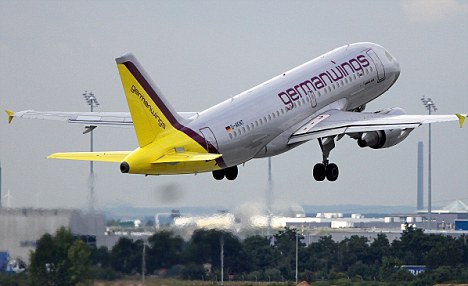
Germanwings Airlines Aviation expert, Norman Shanks, has voiced his concerns about airline testing and psychological evaluations of pilots following the tragic events of the Germanwings crash, as details emerge about the state of mind of the co-pilot.

Mr Shanks says that it is difficult for airlines to determine the psychological state of an individual pilot. A psychological profile of a person can change and can be influenced by events in one’s life. As pilots are placed to work with different colleagues on a regular basis, it is difficult to create a team-building aspect, where a colleague might be able to point out differences in a demeanour or attitude.

Germanwings’ parent company, Lufthansa, are discussing the possibility of changing their flying rules and ensuring that two members of flight crew are on the flight deck at all times.

Providers of Aviation Data Link Communications SolutionsAn Oceanic Data Link (ODL) service will be provided by Rockwell Collins to enable real-time data communications between ATC and pilots in a seven-year contract awarded by the FAA this week.

The ARINC data link service will be established in the FAA control centres in New York, Oakland and Anchorage under the contract, which will enable the air traffic control centres to conduct standard procedures on Future Air Navigation System (FANS) equipped aircraft. FAA aircraft tracking will be made possible while out of radar range.

Rockwell Collins currently works in conjunction with the FAA for the Next Generation Air Transport System (NextGen) initiative, providing voice and domestic data link.

The aviation community is in mourning today after yesterday’s tragic crash of Germanwings flight 9525 in France enroute from Barcelona to Dusseldorf. 150 passengers and crew are thought to have perished in the French Alps, including 16 German schoolchildren returning from a Spanish exchange program.

The Airbus 320 came down approximately 45 minutes into the flight, dropping from a cruise altitude of 38,000ft to 6,000ft in just eight minutes before contact was lost.

The cause of the crash remains unclear, but one of two aircraft ‘black box’ flight recorders has been recovered from the crash site and will be examined by investigators. What can be confirmed is that no distress signal was issued and the flight maintained total radio silence in the final ten minutes.

Our thoughts are with the families of the victims at this sad time.

Latest Technology for Monitoring Cabin PressureA California-based aviation technology company have launched a new innovation for pilots to detect a possible cabin pressurisation failure in a bit to combat accidents caused by hypoxia. AltAlert, the personal cabin pressure monitor is a simple device that is small and easy to carry, able to be clipped to a belt, shirt pocket or attached to a window via a small suction cup.

The device gives both audible and LED visual alarms to warn the pilot that the cabin altitude is climbing above specified thresholds.

Based on a NASA patent, AltAlert has a battery life of 18 months and was developed using algorithms for consistency and reliability. Four years in development, the monitor is the project of president and CEO of Carlsbad, Stacy Pappas Sawaya, who researched hypoxic-related accidents. She said, “I started researching the number of accidents logged with the NTSB related to pressurization. The Payne Stewart accident was the most highly publicized, but the total number is enormous. It was really just a coincidence that the TBM 900 went down last September; we were finishing up by then. It was yet another example of the need for this device and its lifesaving capabilities.”

The AltAlert device is now publicly available to pilots at many pilot shops at a cost of under $400.