Archive

Tag Archives: airport security

Physical Airport Security Solutions ProvidersLast month security concerns were raised after Indira Ghandi International Airport (IGI) received a bomb threat. Not unused to hoax messages, IGI have taken the threat seriously for many reasons, including the fact that this one arrived just three days after threats were made to bomb flights from Mumbai, Ahmedabad and Kochi – all three airports were also put on high alert.

The ensuing review revealed areas of vulnerability at IGI, including parts of security fencing that are completely concealed with overgrown, dense foliage. These areas have already twice experienced security breaches in the past year.

Airport physical security has been stepped up, which involve vehicle checks and monitoring, additional personnel on-site and a review of the overgrown areas located behind airport buildings, including the offices of the Airports Authority of India, the Bureau of the Civil Aviation Authority and New Customs House – all of which could be potentially targeted.

All over the world, airports are realising an increasing need for airport physical security measures to be tightened and more securely monitored. The aviation industry as a whole relies upon physical security to ensure that passengers, aircraft and personnel are kept safe at all times, both on the ground and in the air.

Airport Security Management SolutionsBaltimore/Washington International Airport (BWI) recently achieved an award with Intergraph Security Solutions for recognition of their PSIM system for Physical Security Information Management procedures. The airport also won Most Notable Airport Security Program, Large Airports.

The Consolidated Dispatch Centre (CDC) at BWI provides emergency calls delivery across the airport, using a fully integrated platform with software, hardware and multi-system and agency coordination services. The CDC responds to security system-wide calls and additionally, provides a Public Safety Answering Point (PSAP) to the Anne Arundel County.

“This highly successful project provided our security and public safety personnel with cutting-edge emergency response technology,” said Paul J. Wiedefeld, chief executive officer of BWI Marshall.  “The improvements to the consolidated dispatch centre help ensure increased responsiveness and situational awareness.  We are honoured by the recognition from Government Security News.”

Sophisticated PSIM solutions are necessary within a secure aviation environment. Many security systems incorporate physical security systems, from perimeter fencing and monitoring to personnel access systems and information management systems for all mission critical facilities.

Phones & Laptops Included in Heightened Airport Security MeasuresThe Department of Transport in the UK has expanded upon tightened airport security measures issued earlier this month as they now urge passengers to make sure that mobile phones, tablets and other electronic devices are charged up and ready to be switched on during routine security checks.

Passengers who are unable to comply with the requests may face having devices confiscated under the new rules. The move has been taken following advice from the US after airport security risk was escalated to ‘substantial’ – meaning there is a ‘strong possibility’ of attack from terrorists. Fears arise from intelligence information that terrorist groups could build bomb components from non-metal substances that would be undetected with airport security scanning devices.

A spokesman for the Department of Transport said, “The UK government keeps aviation security under constant review in conjunction with international partners and the aviation industry. On 2 July we announced we were stepping up some of our aviation security measures. In line with the US advice, passengers on some routes into and out of the UK may now also be required to show that electronic devices in their hand luggage are powered up or face not being allowed to bring the device onto the aircraft.”

“Passengers flying into or out of the UK are therefore advised to make sure electronic devices being carried in their hand luggage are charged before they travel,” he added.

Although the government have promised to keep disruption to a minimum, they also stress that public safety remains paramount. Airport security have not confirmed which routes may be affected.

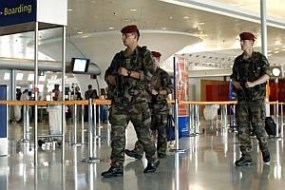
Passenger Screening at Airports - Solutions ProvidersLast week we saw a call from the U.S. and the U.K. to boost security in airports across the countries as the threat of Islamic radical activities raised its ugly head once more. This week we see France following suit with a boost in passenger screening at its airports. Those most likely affected will be Paris’ Charles de Gaulle and Heathrow in the U.K. receiving a combined average of 2.5 million passengers per day.

The enhanced passenger screening procedure may cause delays for travellers, but the consensus is that it is a greater priority to keep passengers, flight crew and aircraft safe from threat. Both French and British authorities have advised passengers to allow extra time to pass through the enhanced screening procedures.

It is not clear what is involved, but it is thought to be focussed upon footwear and electronic devices, such as mobile phones, tablets and computers. Earlier today, there were reports centred upon the use of mobile phones to carry complex explosive devices. Particular attention was being paid to those phones that are not fully charged, or at least able to be switched on with battery life remaining.

Airport Security ProvidersUK PM David Cameron today said that the safety of air passengers ‘must come first’ when commenting on the tightening of airport security across the UK amidst fears of possible terrorist attacks announced in Washington.

It is hoped that unnecessary delays are not caused, but it is clear that no risks can be taken with the threat of an attack plot from the Yemen and Syrian extremist groups.

Mr Cameron said, speaking to the BBC yesterday, “We take these decisions looking at the evidence in front of us and working with our partners. This is something we’ve discussed with the Americans and what we have done is put in place some extra precautions and extra checks. The safety of the travelling public must come first. We mustn’t take any risks with that. I hope this won’t lead to unnecessary delays but it’s very important that we always put safety first, and we do.”

For the time being, airport security measures will be tightened, although it is not yet clear to what extent. Significant disruption is expected, but airport security officials are working closely with the UK government to initiate procedures that keep delays to a minimum. Air passengers are advised to allow plenty of time to pass through security at the borders.

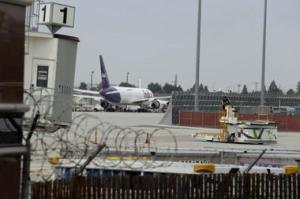
Solutions for Airport Perimeter Security As the aviation industry reels in shock as a teenage stowaway breaches airport perimeter fencing to board an aircraft bound for Maui, even more serious questions are raised about airport security. Video surveillance footage clearly shows the boy make his way across the tarmac and climb into the wheel well of the plane, yet it was missed.

Since 9/11, airport security has been stepped up, or so we thought. There are increasing numbers of airport breaches being reported, articles claiming that passport checks are not being accurately carried out and monitoring equipment not being monitored.

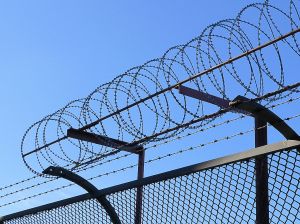
Holes in security are most certainly there. Although security cameras are installed, they must be manned consistently to be effective. Airport perimeter fencing is more effective at keeping animals from the runway than people, it is said.

Officials are concerned and according to the New York Times, portions of the fencing at the airport are falling down in places.

Measures to Upgrade Airport Communications SystemsAn investigation into the November shooting at Los Angeles International Airport (LAX) that resulted in the death of airport security officer Gerardo Hernandez and the injury of three others, has highlighted airport communications issues and the need for enhancement in this and other physical security areas.

It is important that lessons learned from the tragic incident are used to review and improve security operations and make changes to bolster safety at not only LAX, but at airports across the country. Subcommittee chairman Rep. Richard Hudson, R-N.C. said that ‘communications breakdowns are not unique to LAX.’

The panel was told that co-ordination among ‘all relevant agencies’ and technical issues prevented the agencies from communicating directly with one another, taking more than 45 minutes before a cohesive plan could be put into action.

The incident is likely to put pressure upon authorities to implement technology to enhance airport communications and the interoperability of communications to ensure such an incident does not recur. Across the world, airport security issues are being raised, from passenger processing to physical security and perimeter fencing.

With technological advancements, information sharing and communications systems, there is a realisation that the solutions are available, yet action needs to be taken and investments made to ensure utmost security is held paramount in airports across the globe.

Advanced Passenger Information System ~ Find Out More...The International Air Transport Association (IATA) today called for greater use to be made of Advanced Passenger Information System data as the industry still reels in the aftermath of the missing flight MH370 search.

Director General of IATA, Mr Tony Tyler said, ‘It is important to remember that airlines aren’t border guards or policemen, the checking of passports is the well-established responsibility of governments.’ His comments were made at a conference in the Malaysian Capital earlier this week as he spoke of the need for a review of government data-review procedures, which would importantly include the comparison of names against Interpol’s lost and stolen passport lists. Although no link has been established with the two Iranian passengers that boarded with stolen passports and any terrorist organisation, the fact that they were allowed on board ‘rings alarm bells.’

In addition to Advanced Passenger Information System data, Mr Tyler, who is also a former chief executive for Cathay Pacific Airways, placed emphasis upon a need for better aircraft tracking. ‘In a world where our every move seems to be tracked, there is disbelief both that an aircraft could simply disappear and that the flight data and cockpit voice recorders are so difficult to recover,’ he said.

IATA plan to assemble a team of experts to study the available options for aircraft tracking, which is expected to reveal its conclusions at the end of the year.

Airport Security Solutions Providers

While the reason for the disappearance of flight MH370 is still unclear, Malaysian Defence Minister, Hishammuddin Hussein spoke earlier this week about the suggestion from investigators that the behaviour of the aircraft before vanishing from radar and radio contact was ‘consistent with deliberate action’ by someone onboard. Malaysia has agreed to ‘step up’ airline and airport security measures.

The comments followed strong advice from industry experts to consider better security measures across the world to minimise the threats against security. Malaysian Home Minister, Ahmad Zahid Hamidi confirmed that officials were re-examining security within airports and particularly at Kuala Lumpur International and consistently around airport security procedures and protocol for key entry points.

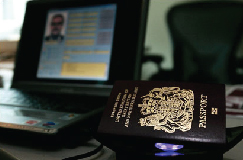
Malaysian authorities have confirmed that they do not check the Interpol database of lost and stolen passports, explaining that there are compatibility and speed issues with the system. This is in spite of the fact that the database contains more than 40 million entries. Early indications show that the stolen passports used to board flight MH370 had been reported missing more than 12 months before.

According to security experts, Malaysia could effectively enhance passenger screening with the use of current security measures if carried out correctly and efficiently without causing severe ground delays and by working with International law enforcement groups, such as Interpol.

“It’s very much the case that global organized criminal networks have exploited the lax government arrangements in Southeast Asia,” said Mr Carl Ungerer, lecturer of International relations at Australian Bond University, ‘Countries in the region should improve coordination between law enforcement agencies on intelligence sharing.’

‘We have increased security and enhanced monitoring procedures on board all our aircraft. However, for security purposes we are unable to discuss any such procedures publicly,’ a Malaysia Airlines spokeswoman said.

ARINC Solutions for Information Management & Passenger Processing Rockwell Collins have been awarded a five-year contract to place ARINC’s vMUSE in four common-use terminals at London Heathrow Airport (LHR). The contract was awarded through Heathrow AOC Ltd on the strength of Rockwell Collins’ recent acquisition of ARINC Inc. LHR will upgrade their current ARINC MUSE platform in terminals 1,2 and 3 to the latest vMUSE implementation and will install a new system in Terminal 4, supporting more than 1,500 common-use workstations.

The upgrades will bring the latest CUPPS standards, offering airlines and LHR greater efficiency and cost management opportunities. The vMUSE platform allows the extension of CUPPS support to off-site locations and is a scalable solution for baggage drop and information management systems.

“As one of the world’s busiest airports, Heathrow must utilize the most effective passenger processing technologies available,” said David P. Wilding, chairman of the AOC Shared Systems Board. “The ARINC system enables us to meet the needs of our member airlines by improving the efficiency and flexibility of passenger processing, which ultimately enables us to provide the best customer service possible.”

“We’ve been working with LHR for many years, and are delighted that the AOC has decided to renew and expand its relationship with us,” said Tony Chapman, executive director, Heathrow for Rockwell Collins’ Information Management Services business. “As passenger traffic continues to grow, we remain committed to providing airlines and airports of all sizes with the most efficient solutions available to meet passenger demands.”