
Archive

Tag Archives: airport operations

GlobalinkLos Angeles International Airport (LAX) have been using ARINC’s GLOBALink ground radio services since 2001 for the delivery of mission critical messaging information to airline passenger services, ground handlers and security teams, ground support staff and airline ramp personnel.

ARINC has partnered with PowerTrunk, a subsidiary company of Teltronic, who design, manufacture and implement digital and analog land mobile radio on a global scale.  Together, they will install Terrestrial Trunked Radio (TETRA) as a part of the ARINC GLOBALink upgrade for mission critical transmissions of airline and ground-based communications.  This will be the first North American deployment of the TETRA technology in the industry of aviation.

“TETRA is an ideal communications technology for airport and airline use,” said Carlos Fernandez, VP of Business Development for PowerTrunk. “It uniquely combines telephone-like voice and data services with dynamically configurable group call capability in a single, privately operated radio network platform”.

The TETRA platform will bring improved voice clarity and RF spectrum efficiency with multiple conversations capability.  ARINC leads the way with the recently approved TETRA platform, testing new products and operational behaviour in a fully functional demonstration environment.

“We are pleased to provide our valued customers at LAX with the latest technology which is currently deployed for airports and airlines globally,” said John Monto, Director, Radio Technology Solutions at ARINC. “We believe this upgrade, and the associated benefits it brings for ground communications, will enable ARINC’s customers at LAX to get their jobs done in a more timely and efficient manner.”

message handling systemPort Moresby, as the main site for Papua New Guinea Air Services, is to serve other airports in Papua New Guinea and in Brisbane, Australia as a message hub with its new, fully operational and ICAO compliant message handling system.

The message handling system, deployed by COMSOFT will bring Papua New Guinea Air Services, (PNGAS), provider of air navigation services, the ability to reinforce the aeronautical message handling system connections with other countries, such as New Zealand, Australia, Fiji & Indonesia who also operate the COMSOFT message handling system.

This is great news for PNGAS, who have been eager to introduce the message handling system technology in Papua New Guinea as, due to the nature of the terrain, air travel is key to the country’s economy.

With the message handling system, operators will be able to access critical flight information; NOTAMs, weather data and flight plans.

Aviation message handling system operations are crucial to safe and efficient flight management and offer solutions to airlines of all sizes.  Aviation messaging providers, such as COMSOFT & ARINC can bring these key solutions closer for compliance with ICAO regulations.

ARINC, industry-leading aviation message handling system providers have been bringing the answers to aircraft communications for 80 years.


aviation messaging solutionsARINC has announced that Denim, Dutch providers of aircraft and crew capacity solutions for worldwide airlines and organizations, have selected ARINC’s AviNet Mail for their critical Type B messaging requirements.

AviNet is an essential solution for secure, mission-critical communications for the aviation industry.  It is a part of ARINC’s eHub suite and provides seamless global solutions with their industry-leading reliability.

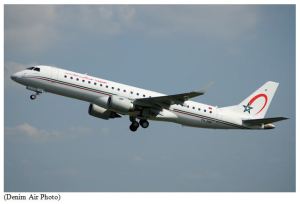
Denim will also use ARINC’s GLOBALink ACARS messaging, to provide instant air-ground and ground-air data communications for Denim’s Embraer 190 planes.  The move is aimed at improving efficiency and operational productivity.

“ARINC offered us a user friendly, flexible and more technically advanced solution,” said Maarten Temminck, Project Manager at Denim. “We provide a number of vital services to our customers worldwide, and we believe we can now do so better with ARINC.”

Alexis Hickox, Senior Director, Aviation Solutions, at ARINC EMEA explained there were several reasons for the change. “ARINC provided a superior solution for Denim. Specifically, they cited ARINC’s Type B messaging service, enabling ground-to air communications and lower costs as reasons for their decision.”

ARINC aviation solutions are renowned innovations in the industry.  They are world-leaders in aviation communications and have been for more than 80 years since the birth of commercial air travel.  ARINC continue to look ahead and tirelessly produce new and improved solutions to meet the growing demands of aviation travel.

Alexis Hickox, Senior Director, Aviation Solutions, at ARINC EMEA explained there were several reasons for the change. “ARINC provided a superior solution for Denim. Specifically, they cited ARINC’s Type B messaging service, enabling ground-to air communications and lower costs as reasons for their decision.”

John Belcher, Head of Aerospace Technology Company, ARINC, and his wife Cathy, have pledged the largest bequest ever to the Anne Arundel Medical Center, Annapolis.

The couple will give the first $1 million to the hospital, where Mr Belcher is a member of the board of trustees, over the next few years.  The hospital plans to rename the Health Science Pavillion after the couple in honor of their generous gift.  The remainder of the bequest has been written into the couple’s estate and will be donated upon liquidation after their deaths.  It is believed that the donation could be in excess of $10 million, depending upon the value of the estate at that time.

The hospital will also found ‘The John & Cathy Belcher Society’, which will recognise people who bequeath gifts of $100,000 or more in the future.

Mr Belcher chaired the hospitals Care Like No other campaign, which funded the Health Sciences Pavillion.  He joined ARINC in 1997, was appointed CEO in 2002 and also named Chairman in 2004.  With over 30 years of aviation, IT and the defense industries experience, Mr Belcher was more than qualified to head the industry-leading aviation communication company.

ARINC Inc were the founders of ACARS messaging and provide innovative solutions to the needs of commercial and business aircraft.  They furnish the industry with messaging solutions for aircraft and airport operations, continuing with the respected reputation they have gained over the past eight decades.

ARINC vMUSEJeju International Airport has followed South Korea’s other major airports in its choice to use ARINC’s vMUSE technology to improve and optimize operations as the number of passengers grows each year.

The industry-leading provider develops and delivers innovative aviation solutions that can assist airports and airlines with cost management and increasing operational flexibility with vMUSE common-use technology.

Jeju International Airport will benefit from maximized use of facility space with the vMUSE platform and will be able to access off-site servers with any device, which will in turn reduce the necessity for hardware and support requirements.

This new contract will mean that ARINC now provides its vMUSE technology for all South Korea’s International airports, allowing for interoperability and connectivity between the airports and the airlines that operate from them.  This will lead to further operational cost reductions with the allowance for host sharing between the airports.

“Our biggest problem currently is a lack of check-in counters to accommodate the number of airlines that fly through the airport. ARINC’s vMUSE will enable carriers to directly log into their Departure Control System at any counter over any device. The sharing of counter facilities will improve terminal operations, and allow both airlines and airports to welcome more airlines and passengers,” said a representative of the Airlines Operators Committee of Jeju (AOC-CJU).

ARINC are delighted to be working with Jeju and AOC-CJU.  Mr Michael DiGeorge, ARINC MD of Asia Pacific said, “South Korea is one of our strongest and most important markets in the Asia Pacific region. Being a trusted partner to all the major international airports in the country is indeed a rare honour and re-affirms our reputation as a leader in the aviation industry.”

Self-Service Check-in eBag Tag

Frequent travellers, flying with British Airways, could soon be taking another step into the future of self-service check-in with the airline to trial an innovation in baggage tagging – the electronic bag tag.

The new tag will easily be updated using Smartphone and barcode technology, enabling passengers to simply scan their baggage at the self-service check-in bag drop point and move quickly through security to relax before departure, knowing that their luggage is fully trackable.

The bag tags, developed for the trial by Designworks, could eliminate the need for paper tagging, especially for frequent travellers, who could have their own, personalised baggage tag.  Designworks lead designer for the project, Lewis Freeman said, “This step into digital tagging of luggage is a huge leap forward enabling your luggage to become a connected object, providing a seamless experience for frequent travellers with British Airways.”

Self-service check-in is fast growing, using innovative, advanced technology and solutions, such as the ARINC vMUSE platform, used around the world.


Ben-Gurion International Airport in Israel is going to trial a new automated baggage security system which is hoped will shorten waiting times for passengers during security checks.  The system will scan, using an automated baggage system, for explosives and other potentially dangerous material, separating those bags for further screening, before delivering the cleared baggage for loading onto the aircraft.

The new system should help to streamline airport operations and enhance passenger experience, while maintaining strict pre-flight security.

Worldwide, airports are realising the increased efficiency of automated operations, including passenger processing and the groundbreaking self-service check-in and automated baggage drop solutions. 

It is easy to see, with current industry-leaders offering technologically advanced check-in and baggage solutions on the ground and in the air, that the future of airline travel could be fully automated, safe and with reduced waiting times.

automated baggage scan

The International Air Transport Association (IATA) have announced plans for a ‘New Distribution Capability’ (NDC) which involves the sharing of social media profiles for a better shopping experience for passengers.  NDC will offer personalized booking through a user-friendly platform that is content and image-rich, enabling passengers to book ‘extras’, such as Wi-Fi, comfortable seats or even a chauffeur service to and from the airport, based upon their preferences according to social media profiling.

Passengers, of course, will also have the opportunity to shop anonymously and IATA promise all the usual privacy assurances, but there are still some who are skeptical about sharing such information – especially as some companies who act as middlemen for bookings, such as Amadeus or Travelport may find their roles significantly diminished.

Social Media profiling is huge stuff in today’s marketplace, offering comsumers flexibility, if you don’t mind sharing your information and preferences and offering business massive marketing opportunities.

IATA are excited about the new proposed NDC and have been singing its praises at the group’s 69th AGM in Cape Town this week.  There is a lot of support for NDC and more than a little controversy, but much agreement universally that the face of buying airline travel and the way airlines, travel agencies and associated services work and interact would change enormously.

IATA have released a video to explain more about NDC… See it here...

Later this month, Edinburgh airport will introduce MFlow Journey as a part of the airport systems to track and monitor passenger movement through its terminals.

MFlow is one of the latest innovations in Human Recognition, and will take a (thankfully) anonymous image of each passengers face as they check-in.  This enables the airport systems to measure the length of time it will take for each passenger to reach certain ‘check-points’.

Airport Systems

MFlow Airport Systems

The analysis of the data will enable the airport systems      to alert passenger management of any potential queue problems in advance, the idea being that the reduced time for the passenger queuing or waiting in a particular area of the terminal will increase the time the passenger will have for spending in the shopping areas, and therefore, maximizing profit potential for the airport, while enhancing the passenger experience as a whole.

Airport Systems

Edinburgh Airport Systems

Head of IT for Edinburgh Airport, Graeme Agnew said, “As the system doesn’t rely on people carrying Bluetooth or Wi-Fi technology, we are able to collate highly accurate data on the movement of passengers through security screening and then make informed decisions about how we manage this area of the airport in the long term.”

Ghana is the latest country to implement biometrics to improve airport security and enhance border control.  The Ghana Immigration Service (GIS) recognised the need to streamline the immigration process with the implementation of electronic border control, visa and permit applications and the installation of electronic gates at Accra’s Kotoka International Airport to enhance airport.

GIS director and Commissioner of Police Dr Peter A Wiredu said, “To maintain Ghana’s economic development, we need an immigration system that can meet the challenges of rapid growth in international travel.”

The GIS has awarded the contract to implement the scheme to Gemalto, who will, with the assistance of Avalon Biometrics, install the fully computerized system.  Dr Wiredu added, “Gemalto has contributed to more than 80 successful government programmes worldwide and has all the required project management skills, reputation and expertise to deliver the country’s new IT infrastructure.”

The eGhana project, which encompasses this initiative, will also set up an online portal, data centre and network upgrade for visa applications and issuance of permits.  The project will allow Ghana to monitor the movements of its borders, as growth continues and will enhance passenger experience with faster, controlled processing while maintaining airport security like never before.

Airport security systems such as that offered by ARINC – AviNet Airport – are becoming increasingly popular worldwide as they offer airlines the chance to improve security whilst concurrently improving efficiency.