Archive

Tag Archives: flight operations

New Eclipse 550 Business AircraftDescribed by its CEO, Mason Holland, as a ‘game-changer’, the Eclipse Aerospace delivered the first of its new Eclipse 550 to Albuquerque, New Mexico this week to the delight of the company’s European dealer, non-executive chairman of Aeris Aviation, Bruce Dickinson of Iron Maiden fame.

Mr Dickinson, who believes strongly in the Eclipse 550 as the ‘only VLJ’ on the market, said, “In essence it is a two-hour aeroplane. You can stick pretty much anything you want in it and go for two hours. The same is not true for other alleged VLJ’s that weigh a lot more and cost a lot more to operate.” A accomplished private jet pilot and joint-CEO of Cardiff Aviation, Mr Dickinson joined Aeris Aviation to promote sales of the Eclipse in October last year and underwent his type-training while piloting himself to Iron Maiden concert venues in an Eclipse.

Certification has just been achieved from the FAA for the Eclipse 550, a beautiful aircraft that began its production journey in June 2012, and has been described as ideal for those wishing to upgrade from turboprop or pistol aircraft.

Mr Holland said it was an exciting day for Eclipse Aerospace and for general aviation, “With the Eclipse 550, we’ve built a high-performance light jet that includes advanced technology and safety features that have traditionally been found only on much larger cabin-class business jets and commercial aircraft.”
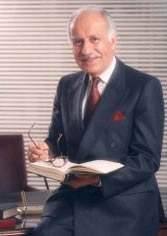

Business Aviation Community Pays TributeThe passing of former president of the ICAO, Dr Assad Kotaite on 27th February has prompted a wave of tributes from the business aviation community as they mark the occasion with the respect that the 89-year old veteran of the industry richly earned in his career.

His life-long contribution to the industry began with the ICAO in 1953 as he joined the Legal Committee. He was a council representative of Lebanon twice, from 1956 to 1962 and again from 1965 until 1970, also holding positions as the chairman of the Air Transport Committee, chairman of the Working Group on ICAO Financial Regulations, second vice president of the ICAO Council and vice chairman of the ICAO Finance Committee.

Dr Kotaite held the position of ICAO secretary general for six years before being elected president in August 1976, where he remained until his retirement thirty years later. His 53-year long career with the ICAO earned him the title president emeritus and was last year awarded the 40th Edward Warner Award in honorary recognition of his contributions to international civil aviation.

The business aviation community paid tribute this week with Ray Rohr, IBAC director of regulatory affairs noting Dr Kotaite’s support of the modernisation of ICAO standards and said, “The original standards had received limited amendment since their implementation in 1969, and didn’t sufficiently address modern business aircraft operations. As a demonstration of his confidence in IBAC and the industry, Kotaite suggested to [then-IBAC Director General] Don Spruston that the industry take the lead to establish a committee and draft revisions for ICAO consideration. We assumed that ICAO would substantially rework our first draft through committee, but instead that draft was largely accepted and implementation was expedited.”

Former NBAA director of international operations, Bill Stine, commended Dr Kotaite’s work to ensure recognition of the International Business Aviation Council (IBAC) and said, “IBAC petitioned for official ICAO recognition less than a year after its founding in 1981. From the beginning, Kotaite recommended that IBAC participate in council panels and committees to demonstrate our commitment to serving civil aviation.”

Dr Kotaite will continue to influence the future of civil aviation, living on through the ICAO’s Assad Kotaite Graduate and Postdoctoral Fellowship fund, encouraging continuing education for the advancement of safety in developing countries.

Beechjet 400A for Solaeris AviationSolaeris Aviation today announced the addition of a Beechjet 400A to its Houston-based fleet in Texas.

Citing the aircraft as the ‘perfect addition’ to their charter fleet, Mr Richard Ziskind, vice president of privately-held Solaeris Aviation, established in 2006 said, “We have taken this step in response to growing customer demand for our exclusive aviation product offering. We are set apart in two ways; first, we tailor our services for each customer and secondly, our aircraft services operate under the strictest safety standards with our flight programme, BARS (Basic Aviation Risk Standard). The BARS meets or exceeds our ARG/US and Wyvern ratings.”

The Beechjet 400A is an old favourite corporate aircraft, having been on the open business aviation marketplace since 1989, and is as strong an entry-level jet today as it has always been. Capable of 45,000 feet and a carrying capacity of up to eight passengers, the luxurious Beechjet 400A shows no signs of slowing as a leading contender in its class.

Global Coverage with Ground-Stations Networks for AviationRussia plan to deploy a maximum of seven new ground-stations in foreign countries in a bid to improve satellite navigational capabilities with Glonass system monitoring by the end of 2014. The new ground-stations will join 46 that currently operate within Russian territory, three in Antarctica and one in Brazil.

The news was announced at the Security Technologies exhibition conference earlier this month and the focus, according to Vladimir Klimov, Glonass Association Executive Director, is to create a worldwide Glonass augmentation network.

In order for high-precision navigation and communications to operate seamlessly, it is critical that satellite networks can communicate globally with a series of ground-based stations or receivers. High frequency data link communications for example, can only be seamlessly effective if geostationary satellite transmissions can form a truly global network, including remote, Polar Regions and vast oceanic expanses. This is made possible by overlapping coverage zones with carefully placed ground-stations and high frequency receipt and transmission technology is installed within aircraft.

Other aviation HFDL providers include ARINC who successfully achieve global coverage utilising the Iridium and Inmarsat satellite networks.

Web-Based Operations Solutions for AirportsA new partnership has been announced for the aviation industry of Casper and Cirrus Environment (UK) who will work together on the much-debated subject of noise monitoring.

The web-based noise management solution is an effective tool, combining automated analysis and reporting functionality to bring a supported noise management system to airports of all sizes. Portable, semi-permanent and permanent units can be used within the cloud-based network giving flexibility over a wide range of applications.

Cloud-based and web-based operations management solutions give access to permission-supported users across the industry in all sectors. This can bring effective and streamlined integration for operators; from airports operations to passenger processing and maintenance management on the ground and in the air. A growing number of aviation industry sectors are turning to web-based solutions as demands increase for cost-effectivity, sharing capabilities and communications speed and capacity.

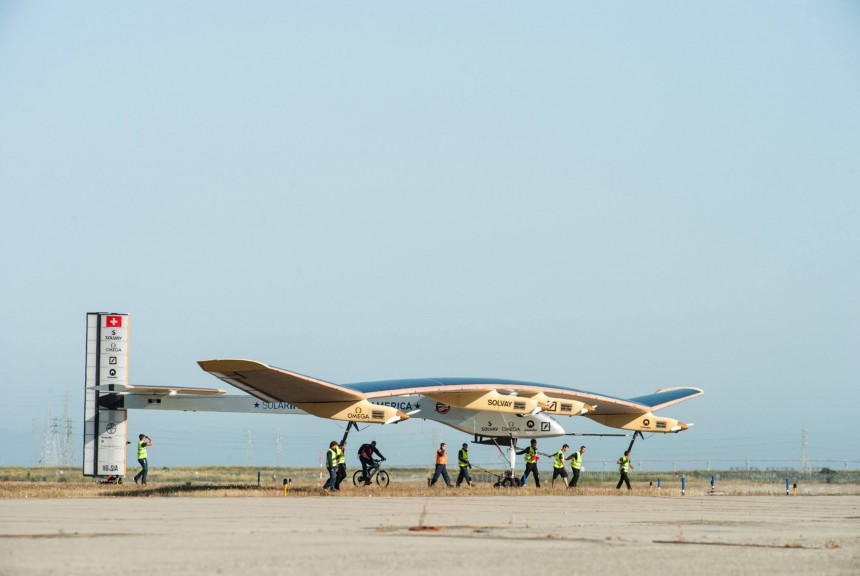
Solar Impulse Will Make Aviation History The first day and night, solar powered aircraft is expected to land in India in April 2015 amid much excitement, approximately one year after it is officially unveiled. The record-breaking expedition will take approximately three months with actual flight time of around 20-25 days.

It is not yet clear where Solar Impulse will land in India, but it is hoped that two landings will be made on the west and the east coast.

“Solar Impulse will land in India in April 2015 and will be the first ever day and night-abled solar powered aircraft to do so,” Solar Impulse CEO Andre Borschberg said. “Solar Impulse that weighs 2,740 kg is an attempt to push the envelope as far as research and innovation are concerned in areas such as renewable energy and materials research. It is also a powerful educational tool, encouraging young minds to unleash their imagination.”

Powered by 12,000 solar cells and no fossil fuels, the aircraft reaches high altitudes during daylight hours to enable it to glide at night, covering long distances as it slowly descends.

The amazing Solar Impulse is the first aircraft in history to fly solely under the power of the sun and can reach speeds of up to 70km per hour. Built in Switzerland, the manufacturers have harnessed the latest technology which they plan to showcase around the world.

Mr Borschberg is proud of the opportunity to illustrate the potential of modern technology and said that if it can be used effectively within an aircraft, the potential for use on the ground will be clear.

Innovative Solutions for Passenger ServicesGoogle Glass will appear at Heathrow Airport as Virgin Atlantic trial the technology for six weeks to assess improvements in passenger services, check-in and processing.

It is hoped that a touch of glamour will also appeal to the industry with the simultaneous trial of the Sony SmartWatch 2, with both technologies expected to benefit the provision of enhanced customer service.

The SmartWatch and Google Glass will be connected to Virgin’s passenger services system and to a concierge dispatch app, which will send passenger data to the glasses at the beginning of the check-in process.

The app technology will also collect and transmit passenger data, which is hoped will benefit the passenger in terms of enhanced experience. If the trial is successful, Virgin hopes to deploy the technology across their network.

Reliable & Efficient Real Time Weather Data SolutionsFor the first time, pilots in India will be able to gain online access to real-time weather data thanks to the Aviation Weather Observation System (AWOS) that was rolled out at Juhu Airport by IMD Mumbai.

This will now offer pilots a much-needed update to the system of weather warning, as the new system will continuously monitor weather conditions and, using the new air traffic control tower wifi, information on weather conditions will be relayed to pilots via hand-held PC’s.

The system will now give pilots real-time weather data regarding conditions of visibility, wind patterns, temperature, pressure and types of clouds in addition to advance weather warnings through a wireless capability of a range of 50 nautical miles.

The system will come into its own during monsoon season, during which visibility is most commonly affected. “It is a great leap in aviation meteorological forecasting,” said Deputy-Director General of meteorology, IMD Mumbai, K S Hosalikar, and said that the AAI had granted clearance for the installation and for the operation at the required frequency.

The rollout of the greatly enhanced system will be the first time that pilots in the area have had access to such up-to-date information as real-time weather data. It is expected that safety and operational productivity will show considerable improvements.

Cessna 30 Million Hour MilestoneCessna have proudly announced that the 30 million hours milestone has been reached and surpassed by its Citation business jet – a figure unmatched in the business aviation industry.

The first Cessna Citation jet was launched over 42 years ago and since then more than 6,600 jets have been delivered, making them the best-selling family of business jets the world over. Eight models of Citations are currently designed and manufactured by Cessna Aircraft Co, each one focussing upon comfort, utility and performance.

Brad Thress, senior vice president of Cessna Business Jets, said, “More Cessna Citations have been sold than any other family of business jet, and more customers around the world choose Cessna’s Citation jets to save time and meet their business and transportation needs. When it comes to the business of aviation, we believe that Cessna is looked upon as the aviation authority and the Citation name is synonymous with performance, dependability, and sustained value. It’s a role we embrace, and a reputation Cessnans are proud of. We look forward to living up to this standard for the next 30 million flight hours.”

Dassault Training ProgramFollowing EASA regulatory approval, France’s Dassault Aviation have gained an industry first with the launch of their training academy, which will offer Part 147 practical training.

The training program will illustrate the necessity of allowing trainee aviation technicians to gain practical experience, which will then permit them to obtain the EASA rating certificate.

Dassault aim to stay ahead, in light of new regulations and new technologies coming into play within the business aviation industry. They constantly strive to develop training programs that will continue to meet future needs of their operators.

The new training centre running the Practical Training Program is located in Bordeaux, France and makes Dassault the first OEM to offer this level of training and support.