Archive

Tag Archives: border management systems

Other Improved Passenger Processing Solutions ProvidersThe Airports Authority of India (AAI) has announced that 25 airports across the country can now handle their 50 million passengers more efficiently and easily with the installation of new integrated passenger processing and baggage handling systems.

In a collaboration with SITA, the AAI have deployed common-use, self-service solutions as a part of a considerable program for modernisation of the airports across India. The baggage systems will be installed in 38 airports and it is hoped that they will reduce baggage mishandling by 10-20%.

“Our airport modernization program is designed to provide better service both for passengers and airlines alike as air travel in India continues to grow,” said Mr. Sudhir Raheja, Chairman of the Airports Authority of India. “With passenger numbers expected to reach 450 million by 2020, we need to ensure we are operating as efficiently as possible. SITA’s baggage systems, common use technology, and self-service check in kiosks are flexible, convenient and will help establish a firm foundation for future growth”.

The baggage reconciliation systems will be integrated into the AAI airports over the next seven years and will utilise the latest technology for CUPPS, CUSS and CUTE systems.
Electronic Surveillance SolutionsThe Dominican Republic is steadfast in its determination to strengthen border control and has just increased electronic surveillance to help the fight against smuggling and illegal entry across the borders.

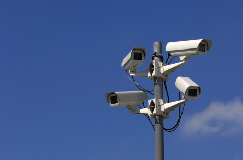
An additional 150 security cameras have been installed, making a total of 220 now operational over the past three years. They provide 24-hour surveillance at 42 border crossing points and will provide additional assistance to the military presence.

Electronic surveillance equipment is increasing in popularity as the world looks to enhance border control. Solutions from large companies, such as ARINC, can reinforce situational awareness and provide additional assistance to sometimes overstretched personnel and maintain a constant vigil at border checkpoints on the ground and in airport environments.

Physical security solutions can include access management, biometric detection and bioterrorism detection systems in addition to security surveillance cameras and recording equipment.

Border Control Solutions for AirportsAs issues of border control and security mount, the introduction of a new lightweight, mobile radar and camera surveillance system, designed specifically for border hotspots has been welcomed into the fray of electronic border solutions.

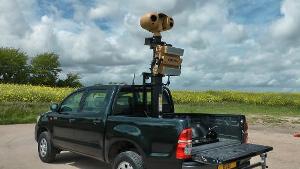
The system, designed and manufactured by British company, Blighter Surveillance Systems, features a Passive Electronic Scanning Array (PESA) radar, low-light camera, integrated radar tracker and thermal imaging system that can be mounted on a vehicle for deployment within minutes.

Capable of detecting a walking person at 4.6 miles or a moving vehicle at 13.7 miles, the system cues the camera to follow and identify its target. The ‘Blighter Scout’ is perfect for mobile surveillance in areas that are difficult to reach, or where fixed towers are prohibitively expensive.

Electronic border solutions are expanding in airports and border control areas across the globe, offering enhanced security and operational efficiency in even the most remote locations. The provision of such solutions serves to remind us that physical and information security is still at the forefront of global awareness.

Read more about Advance Passenger Information SystemsThe Royal Oman Police have issued a warning to citizens wishing to travel abroad to ensure that passports due to expire within the next six months are renewed to avoid problems at their destination airport. At the moment, airlines take only the name of the passenger before the issue of tickets.

This follows repeated complaints from travellers to many countries that refuse to accept passports with less than six months before the expiry time. Although the rules are in place, travellers still neglect to renew, yet still complain.

The upcoming mandates for advance passenger information will soon be in place and passports due to expire will be recognised immediately and ticket issue will be denied in advance. According to official sources, 99% of travel agencies do advise passengers to check the dates of issue and expiry in their passports, but still the problem remains.

Advance passenger information systems are mandatory in the US and this trend is spreading across the globe as aviation security measures tighten. The API system enables governments and border agencies to track and monitor the movement of passengers across the world, and identify high risk passengers in time to perform additional security checks, whilst expediting low risk travellers. The system helps to streamline the passenger processing system and minimises ground delays and associated costs.

Once advance passenger information is in operation, passengers will be required to provide passport as well as personal details before travel. The expectation is that there will be an influx of passport renewals in the Oman, which is likely to cause severe delays within the system. Those wishing to travel are strongly advised to check their passports in advance.

Automated Border Control BenefitsAtlanta International Airport have unveiled the latest in automated passport control in conjunction with the US Customs and Border Protection authority. The kiosks will operate in concourses E & F and will be available to passengers with Electronic System for Travel Authorization approval.

The system allows such passengers to submit their Customs Declaration and other travel and personal information electronically, which will reduce the time they will be required to spend with a CBP officer. The average reduction will be 20-40% in waiting time and will greatly improve efficient expedition of these passengers.

As passenger numbers grow across the globe on a yearly basis, many airports are looking into electronic border control solutions to increase passenger processing, while maintaining security. Ground delays are kept to a minimum, as ‘safe’ passengers can be expedited, leaving more time for border agencies to screen other travellers.

“These new kiosks will go a long way to improve the overall experience for our international customers coming into Atlanta because they provide a more efficient process for exiting customs,” said John Laughter, senior vice president for Delta`s Corporate Safety, Security and Compliance. “We strive to provide our customers with an enjoyable travel experience through all aspects of our operation including Customs and Border Protection checkpoints.”

Physical Security Solutions Providers for AviationIt has been announced that multinational security company, Magal Security Systems Ltd, have been awarded a $6.4 million contract to provide physical security measures and an information management system in Nairobi International Airport by 2015.

In addition to security fencing upgrades and multiple surveillance technology, Magal will install an advanced PSIM information management system to integrate and manage the security improvements.

President and CEO of Magal S3, said, “Over the past two years, we have successfully delivered a number of security projects for critical national assets in Kenya, demonstrating how excellence in performance and successful deliveries lead to significant further business. We are proud to be employed by this prestigious national customer and remain committed to supplying the latest technology with the highest standards of execution.”

The announcement follows recent speculation of the release of funds from the Kenyan government to invest in the much-needed improvements to airport security across the country.

Airport Security Solutions Providers

While the reason for the disappearance of flight MH370 is still unclear, Malaysian Defence Minister, Hishammuddin Hussein spoke earlier this week about the suggestion from investigators that the behaviour of the aircraft before vanishing from radar and radio contact was ‘consistent with deliberate action’ by someone onboard. Malaysia has agreed to ‘step up’ airline and airport security measures.

The comments followed strong advice from industry experts to consider better security measures across the world to minimise the threats against security. Malaysian Home Minister, Ahmad Zahid Hamidi confirmed that officials were re-examining security within airports and particularly at Kuala Lumpur International and consistently around airport security procedures and protocol for key entry points.

Malaysian authorities have confirmed that they do not check the Interpol database of lost and stolen passports, explaining that there are compatibility and speed issues with the system. This is in spite of the fact that the database contains more than 40 million entries. Early indications show that the stolen passports used to board flight MH370 had been reported missing more than 12 months before.

According to security experts, Malaysia could effectively enhance passenger screening with the use of current security measures if carried out correctly and efficiently without causing severe ground delays and by working with International law enforcement groups, such as Interpol.

“It’s very much the case that global organized criminal networks have exploited the lax government arrangements in Southeast Asia,” said Mr Carl Ungerer, lecturer of International relations at Australian Bond University, ‘Countries in the region should improve coordination between law enforcement agencies on intelligence sharing.’

‘We have increased security and enhanced monitoring procedures on board all our aircraft. However, for security purposes we are unable to discuss any such procedures publicly,’ a Malaysia Airlines spokeswoman said.

More About Advance Passenger InformationIt has been revealed that as many as 20 million passports per year may not be receiving proper consideration in the UK alone. These shocking figures come as the Home Office estimated that only 90% of Advanced Passenger Information (API) is being received. API is passenger data that is electronically gathered and transmitted to government and border agencies for checking and comparison to international ‘at risk’ registers. API can detect high risk passengers on ‘no-fly’ lists across the world and can ensure that terrorist activity is kept at bay.

If these estimates tell us that 10% of UK API is not being received, this could spell an average of 20 million passports that are not being checked properly. Interpol say that countries are not doing enough checks against its list of stolen passports. Globally, this figure could reach up to one billion passengers; a disturbing figure.

API is mandatory for all passengers travelling to and from the US and has been so in the wake of the official investigation into the tragic events of 9/11. Last year, the EU questioned the use of API with regard to the privacy aspect and raised issues about the use of the information, once gathered and checked.

Once reported stolen, UK passports are cancelled and deemed unusable for travel. International stolen passports are entered into the Interpol Lost and Stolen Database, accessible by border security agencies for comparison.

The Home Office are looking into the figures to clarify the situation and are working towards improving coverage.


Providers of Passenger Self Check-in Solutions & TechnologyIt has been announced that the Australian Immigration Authority will trial the use of the SmartGate passenger self check-in facility for Singaporean travellers this year, allowing them to join US and Swiss electronic passport holders in the trial. The successful SmartGate system is already in use permanently for Australian, New Zealanders and UK citizens, processing over four million passengers during 2012 and 2013.

The SmartGate system is an electronic, self check-in programme that speeds up passenger processing in eight airports across Australia and allows passengers to be expedited through passport control. The benefits have been felt particularly during peak times and busy periods.

The trial will eventually extend to further countries during 2014, with a view to rolling out the system in full force by 2018, when Australian immigration expect more than 80% of travellers to be in possession of the ePassport. The focus can then shift to monitoring for ‘high-risk’ passengers that may pose a threat to the borders.

eBorders technology is designed to bring flexibility to airport operations in order to manage secure integration with border security and government mandates, managing not only the check-in process, but careful screening and delivery of API.

Electronic Borders SolutionsIt has been announced that the UK Border Force have awarded a contract for the upgrade and installation of electronic borders solution – eGates – to Portugese company, Vision-Box. Vision-Box have previously installed 46 first generation eGates and will now deploy a further possible 180 new, second generation gates at airports across the country.

The second generation eGates are designed to make the most of limited space in today’s airports and in particular, immigration halls. The project will help to further enhance and streamline passenger processing, improving passenger experience and effectively increasing security aspects.

Gatwick airport is the first to announce completion of the installation of 15 new generation eGates.

Haroona Franklin, Director of Border Systems Strategy & Capability said that “this deployment will represent the biggest ePassport Gate project in Europe. The new gates will allow Border Force to improve the passenger experience while maintaining security at the border and enabling the effective deployment of our resources to areas of highest priority”

Electronic border technology is a fast-growing industry that maintains critical border security while enhancing and streamlining the process to provide greater productivity, improved efficiency and passenger experience.