Archive

Tag Archives: aviation industry

French aviation company Dassault  is targeting the emerging Indian markets for its long range business jets, in particular the Falcon 7X. The aircraft, described as a “stunning advancement in business aviation” has become the company best selling business jet. It is also the first fully “fly-by-wire” business jet.
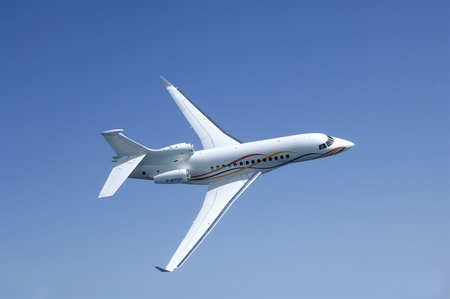
Falcon 7x Business Jet

Falcon 7x Business Jet

“Fly-by-wire” technology was developed in the ’70s, offering additional safety measures. Computers give out automatic signals that allow the plane to perform functions such as aircraft stabilization with no input from the pilot.The system is lighter than other mechanical systems, giving more freedom to designers in reducing the aircraft’s weight and size for more manoeuvrability and lower operating costs.

Last year two near miss accidents temporarily grounded the entire fly-by-wire fleet (about 112 of them) for several weeks. The Falcon 7X encountered a problem with the “horizontal stabilizer trim circuitry” (with the incident described by Dassault officials as a runaway pitch problem) that required software and hardware modifications. All the corrections have been made on the aircraft and the Falcon 7X is now fully certified with several orders lined up. Eurocopter Phils., together with Dassault of France, is planning to bring to Manila the shorter range Falcon 2000X around mid-April this year for showing and will conduct test flights for potential buyers in the Philippines.

In London, ARINC Direct as part of the company’s overall briefing gave a rundown on 2011 operations. The business aviation part of the business has started to realise some benefits from their previous investments in 2011, especially in advances with flight planning solutions and even exceeding them in terms of integration and customer support.

ARINC Direct has seen the number of aircraft it supports grow by 30% in the EMEA region, with most growth coming from the Middle East, Russia and Europe. In Europe ARINC has made significant gains in Italy, where it has recently signed two larger business aircraft operators.

The company is expanding its customer support structure with support now in India, which covers the Middle East and they are looking at setting up support in China.

“By listening to our customers we are able to manage a community of experience to deliver progressive and innovative solutions as well as core communication services,” says James Hardie, senior business manager, ARINC Direct EMEA.

ARINC have continued to develop apps for the iPAD, which was launched just before last year’s NBAA. The main new feature was the integration of FlightRisk, which enables clients to report on safety matters at airports to the worldwide ARINC Direct community. More apps are being added over the next few months.

“We are seeing a plethora of flight-deck applications enter the market on the back of the iPad and other tablets and we are duly delivering more up to date information, automatically to our own App, whenever it is connected. This has enabled information that was previously only available via aircraft avionics to be available on board from a live feed over Swift Broadband. Things like live weather radar and other data, coupled with mapping functionality easily enable pilots to re-route their aircraft or make other operational decisions. The easy availability of bandwidth and point to point connectivity is already starting to have an impact in areas like engine health monitoring, and Flight Operations Quality Assurance (FOQA) data delivery,” adds Hardie.

Currently ARINC Direct has around 2,500 business jets and business turboprop aircraft as clients worldwide. ARINC Direct will be attending EBACE in Switzerland.

For more information on business jet flight support services please visit www.business-flight-support.com.

Aircraft company Hawker Beechcraft Corporation (HBC) has carried out research on the European jet industry, with findings showing that the aging business jets in circulation will soon need replacing.

Despite the harsh economic conditions this will likely lead to an uplift in sales. In Europe the average age of business jets are 13.2 years old, and a staggering 17% of the fleet are over 30 years old. Figures for the UK specifically show an even older (although the second largest) fleet.

HBC’s Europe, Middle East and Africa president Sean McGeough said: “This analysis highlights just how old many business aircraft in Europe are, with one in six at least 30 years old. Many of these aircraft will be less economically and environmentally viable than new aircraft so we anticipate seeing a significant number of aircraft retirements over the next few years.

“The industry has made a huge investment into delivering greater fuel efficiency for business aircraft. Newer aircraft not only have more efficient engines but are more aerodynamic and lighter.”

Ultra Electronics, Airport Systems this month announced it has completed implementation of Canada’s first Common-Use Passenger Processing System (CUPPS) at St. John’s International Airport, Canada.

Common-Use Passenger Processing System

Common-Use Passenger Processing System

The deployment of a fully virtualized client/server solution will provide a variety of efficiencies and advantages including lower energy costs, improved maintenance and less dependency on traditional PC’s.St. John’s International Airport is experiencing rapid growth as passenger traffic has doubled since the airport was privatized in 1998; a rate that is double the national average in Canada.

Common-Use Passenger Processing Systems are offered by a range of suppliers. ARINC, one such supplier, says “the cost savings of running multiple workstation operating systems on servers in the cloud versus traditional, on-site servers range between 50% and 70%”.

The ARINC product, vMUSE, is said to allow users to realize space savings, power savings, and reduced up-front capital costs as well as lower operation and maintenance costs due to the near elimination of on-site infrastructure. Despite the savings in cost, vMUSE Enterprise delivers the same common-use capabilities as full-size, server-based terminal installations of CUTE systems.

For more information please visit: www.vmuse-enterprise.com

It was reported this month that preliminary designs for a quiet supersonic business jet have been launched by a Russian aeronautical research agency.

The jet, which could fly over populated areas, should generate the same noise level as future subsonic aircraft for the civil market.

A conceptual image of the aircraft shows it with a long, pointed nose and up to four engines on the aft fuselage.

The goal of the project by TsAGI (The Central Aerohydrodynamic Institute ) is to establish Russia as a technology leader in business aviation.

© The Central Aerohydrodynamic Institute (TsAGI)


Because they have few limits on bandwidth airlines are giving satellites a second look for delivering onboard Internet services to passengers.

Satellites are an attractive option for airlines that are still figuring out the best and most affordable ways to deliver Internet on flights.

Currently most U.S. carriers offering in-flight Internet, including Delta Air Lines, American Airlines, US Airways, Alaska Airlines, AirTran and Virgin America, use so-called air-to-ground technology provided by Illinois-based Gogo. This system only offers limited availability the aircraft must be flying over land.

Consultant Michael Planey says “Satellites offer broadband capability that gives airlines flexibility to offer more services to passengers”.

The commercial incentive for airlines are potential additional revenue sources that will require more broadband bandwidth, including streaming videos, online shopping, booking hotels and local destination coupons.

ARINC Cabin Connect - In-flight Broadband

ARINC Cabin Connect - In-flight Broadband

Onboard internet is offered by ARINC’s Cabin Connect Service. Passengers can now browse, email, IM, tweet, shop and more direct from their own device.

For more information on how ARINC’s passenger WiFi product can revolutionise the inflight experience please visit: www.cabinconnect.aero

The FAA is planning to look again at the use of gadgets during take-off and landings in flights.

We heard this week that despite these devices being deemed safe for pilots, airlines are unwilling to invest in the testing required to be sure that each device is safe for passengers to use during these critical times.

With the necessary investment so high it is much more economical for airlines to simply ask passengers to turn off equipment, and as the airlines unlikely to take the initiative the FAA will start looking at the issue.

Results may take years and one way to speed up the process, and to make it more financially viable, would be for airlines to pool their resources.

The regulator has already paved the way for in-flight mobile telephones, creating a technical framework within which in-flight calling is safe and leaving it to the airlines to decide if it’s worth offering the service.

ARINC Incorporated announces the deployment of its Advance Passenger Information System (APIS) messaging service to support message transmission to the Netherlands Ministry of the Interior and Kingdom Relations. ARINC’s EMEA Government & Security Division has installed the new APIS service, in full cooperation with the Identity Management & Immigration (IDMI) programme directorate to support its Innovation Border Management Programme (Vernieuwing Grensmanagement or VGM).

ARINC Delivers Advance Passenger Information (APIS)

ARINC Delivers Advance Passenger Information (APIS)

The ARINC solution interfaces seamlessly with the existing IDMI border control system. “ARINC greatly values the relationship we have established with the IDMI programme directorate and the Royal Netherlands Marechausse (Koninklijke Marechausee – KMAR), which has stretched back to the successful pilot programme from 2009” stated Ray Batt, ARINC Director, Government & Security.”ARINC is eager to become an important technology partner to the Ministry of the Interior and Kingdom Relations and to assist the Netherlands in reaching its future Border Control objectives.” “This APIS system based on our latest Advance Passenger Information eXchange (APIX) platform is a natural complement to the wider innovative border control solutions already deployed in the Netherlands”, stated Ray Batt. “We strongly believe that the future will demand a continuous increase in the integration of intelligence led border control systems.”

ARINC is committed to providing advanced border management solutions that encompass network transport technology, a messaging service, and message format translations in an effective, reliable, and cost-effective manner. These capabilities perfectly link to the proven expertise of the Identity Management & Immigration (IDMI) programme directorate and the Royal Netherlands Marechausse.

Industry-standard API messaging, part of the ARINC Electronic Borders security portfolio, is increasingly demanded by government agencies because it provides pre-arrival and pre-departure manifest data on all passengers and crew, improving the security of national borders. ARINC Electronic Borders provides a portfolio of border solutions to manage the entry and exit of travellers entering or leaving a country via Air, Sea, or Land borders. ARINC can tailor and scale each solution to meet specific customer requirements, while also meeting industry standards sought by international trade organizations and governments.

The Netherlands APIS project signifies another significant milestone in ARINC’s aim to become a premier provider of Electronic Borders solutions within the Europe Middle East and African region.

For more information on advance passenger information systems please visit AviSec Messaging or for complete border management solutions visit Electronic Borders. .

Singapore Airshow

Last week we saw the end of a record breaking Singapore Airshow, Asia’s largest aerospace & defense exhibitions and in the top three globally.

Over 145,000 private and trade visitor attended the event

The trade days attracted 45,000 visitors from 128 countries.

“Singapore Airshow 2012 has been a success for everyone. We have set a new record for the value of deals announced, as well as the number of visitors on both trade and public days. As a testament to the show’s achievements, over 70% of exhibitors have already reaffirmed their commitment to take up exhibition space in 2014. The response from the record crowd that visited the event over the two public days was also overwhelmingly positive. We are looking forward to the next show and hope to deliver a more enhanced experience for all our visitors in 2014,” said Jimmy Lau, Managing Director of Experia Events, organiser of Singapore Airshow.

vMUSE Multi-Airline Check-in

vMUSE Multi-Airline Check-in

Last month we heard that ARINC Incorporated has taken over the support and maintenance of 48 Common-Use Self-Service (CUSS) kiosks used by international airlines at London Gatwick Airport.

ARINC was contracted for the work in late 2010 after Gatwick Airport requested a proposal for support services for their existing kiosk estate. ARINC’s offer included a new software platform to improve operation of the kiosks, and a full maintenance and support package to ensure on-going operational effectiveness.

ARINC fast-tracked the installation. Beginning in late 2010 it took over the existing kiosk hardware and installed new IBM CUSS platform software to manage the kiosks and their associated airline applications. The project was finished in just 12 weeks.

More recently, ARINC has installed and now supports an additional 30 new IBM “N series” kiosks within Gatwick’s North Terminal.

“Automated passenger processing solutions are more critical than ever for airports today,” stated Andy Hubbard, ARINC EMEA Managing Director. “Efficiently managing the diverse passenger profile of today’s travellers is key to an airport’s success, and a cost-effective and reliable CUSS system is a vital part of the solution. We are delighted to be given the opportunity to assist Gatwick Airport in delivering on their vision of streamlined passenger handling.”

ARINC has become the industry leader in this area of passenger processing, and with IBM has installed 60% of the CUSS kiosks at airports worldwide. ARINC also supports other CUSS kiosk installations at a number of UK airports. “IBM has worked with a large number of airlines and airports around the world for many years and is dedicated to developing smarter ways to make airport operations more efficient and cost-effective,” said Stephen Luurtsema, Associate Partner, IBM GBS Travel & Transportation.

For business aviation customers ARINC offers vMUSE. vMUSE offers secure connections into the cloud with its elasticity of resources and promise of even greater savings through the use of a vast centralised computing infrastructure that can be easily accessed via the internet. This is, in effect, “pay-as-you-go” computing that reduces capital expenditure, minimises management overheads and gives immediate access – with nearly infinite capacity – to a broad range of applications.

Working within the ARINC private cloud, vMUSE Enterprise puts the power of common use systems within reach of airports and airlines whose passenger volumes may be too small to justify the investment in traditional CUTE (Common Use Terminal Equipment) infrastructure.

For more information please visit the vMUSE website.