Archive

Tag Archives: ARINC

ACARS Messaging for Mission Critical TransmissionsA key question that has been on the lips of much of the public was how missing flight MH370 could still communicate with satellites, according to the latest Inmarsat information, when reports claim that the on-board ACARS system had been disabled?

The answer to this lies in the workings of the ACARS system itself. Aircraft Communications Addressing and Reporting System (ACARS) has been the industry standard data communications system since the 1970’s. Developed and introduced by ARINC Inc, ACARS gives a data link from air-to-ground, relaying critical information regarding the flight, aircraft systems and also gives the ground-based operators means to relay NOTAMs, weather data and in-flight messages to the flight deck.

If ACARS failed, or was manually disabled during the flight, how, then, did the satellite appear to receive information after this? ACARS carries satellite equipment outside the aircraft that cannot be tampered with while the plane is in flight. The internal workings of ACARS in the cockpit can be disabled with a simple manual action. This is possible because of the risk of electrical fire on the flight deck.
Although ACARS, once manually disconnected, will not relay information, the satellite equipment outside the aircraft will send and receive ‘pings’ or digital handshakes periodically to determine the status of the network.

It is these pings or handshakes that the satellite picked up. While the aircraft responded to these pings, it was clear that it had power, was likely intact and in flight, although this does not prove beyond doubt that it was not intact on the ground.

The search continues for flight MH370 and leaves many questions unanswered.

Solar Impulse Will Make Aviation History The first day and night, solar powered aircraft is expected to land in India in April 2015 amid much excitement, approximately one year after it is officially unveiled. The record-breaking expedition will take approximately three months with actual flight time of around 20-25 days.

It is not yet clear where Solar Impulse will land in India, but it is hoped that two landings will be made on the west and the east coast.

“Solar Impulse will land in India in April 2015 and will be the first ever day and night-abled solar powered aircraft to do so,” Solar Impulse CEO Andre Borschberg said. “Solar Impulse that weighs 2,740 kg is an attempt to push the envelope as far as research and innovation are concerned in areas such as renewable energy and materials research. It is also a powerful educational tool, encouraging young minds to unleash their imagination.”

Powered by 12,000 solar cells and no fossil fuels, the aircraft reaches high altitudes during daylight hours to enable it to glide at night, covering long distances as it slowly descends.

The amazing Solar Impulse is the first aircraft in history to fly solely under the power of the sun and can reach speeds of up to 70km per hour. Built in Switzerland, the manufacturers have harnessed the latest technology which they plan to showcase around the world.

Mr Borschberg is proud of the opportunity to illustrate the potential of modern technology and said that if it can be used effectively within an aircraft, the potential for use on the ground will be clear.

Solutions from ARINC AIM

Mohammed Ahli – Director General – Dubai CAA

With the Gulf airports aiming to increase passenger numbers to 450 million per year by 2020, and the development of new terminals at both Doha and Abu Dhabi, the Arabian Gulf States are investing heavily in airport security, an industry currently estimated to have a global value of $22 billion.

Much of this investment is focussed on innovative technologies designed not only to improve security and efficiencies for the airport but also to improve the passenger experience, as

Mohammed Ahli, director general of the, Dubai Civil Aviation Authority (DCAA) explained,  “It’s crucial to adopt innovative technology, improve security and streamline efficiencies to offer a seamless passenger travel experience.”

Airport Show, the Middle East’s largest airport industry event, provides a welcome opportunity for companies to showcase the technologies vital in achieving this aim. Both Intertech Vision Group, which already has 140 installations in the region, and ARINC, a security and systems integration company offering an Advanced Information Management system (AIM) will be attending,

Stephen Horner, International Business Development Director, Integrated Security Solutions, ARINC, said: “There are many security and systems integration opportunities throughout the GCC region. ARINC has provided integration and security solutions for more than 30 years to a security industry of equal age. We are able to provide ‘best fit’ technology and solution to airports. We wish to showcase our wider capability in delivering integrated security solutions, command and control facility as well as airport solutions.”

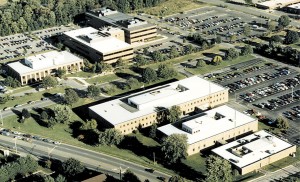
ARINC Headquarters Complex at AnnapolisIowa-based aviation equipment supplier, Rockwell Collins has announced the completion of the acquisition of ARINC Inc, also confirming that two subsidiaries have been sold and that the Annapolis employees will not be immediately affected.

The ARINC Industry Standards Organization has been sold to SAE International and plans to divest ARINC’s Aerospace Systems Engineering and Support, based in Oklahoma City are underway. Both sales and integrations are expected to take six to nine months to complete. For the foreseeable future, Rockwell Collins has no plans to close the Annapolis Headquarters or relocate any staff.

Similarly, the 300-strong workforce in Oklahoma City will see business as usual for the time being.

Rockwell Collins announced its intention to buy ARINC in August this year for $1.39 billion and expect revenues of more than $600 million within the next quarter.

Critical Messaging for Aviation Weather DataWeather issues in aviation can cause disruption on many levels, which is why critical messaging is high on the list of operational priorities for most airlines.

Although not all airlines seem to handle these adverse conditions too well, as was apparent in Delhi over the last few days. Passengers were left stranded, some since Tuesday evening with little or no information, food or indeed luggage, as flights were delayed and cancelled due to foggy conditions.

There were closed desks and mobbed airline staff as the situation reached fever pitch with some passengers left standing on tarmac for more than an hour.

Traveller Annamma Sam George, who had lost her baggage enroute from America earlier in the week said, “I will never come to Delhi again in the winter. The airport authorities are probably too busy handling the cancelled and delayed flights, but my valuables are in the bag and I’m running out of cash.”

The T3 visitors lounge was packed with anxious, stranded passengers simply left with nothing.

Nothing can be done about the weather – that much is clear – but with advanced messaging solutions within aviation, there is certainly room for improvement upon passenger services and facilities in adverse conditions and situations.

Passenger Data Solutions ProvidersIn a move to improve border security and enhance accountability, Mexico’s National Institute of Immigration has chosen ARINC’s e-Government solution. The solution will support Mexico’s immigration policies, enabling the government to improve the process of assessing individuals upon entry in addition to monitoring exit from the country.

The collection of Advanced Passenger Information (API) is a large part of the solution and complies with U.S. mandates in this area. Data gathered allows a detailed review of the passengers before they land in the destination country and can help to recognise high risk passengers, which in turn, allows greater efficiency when managing passenger processing, enhances border security and speeds up the entire process.

ARINC and the INM plan to have the system in place and operational by the end of this year and look forward to the vast improvements that it will allow. The e-Government program is a part of the ARINC electronic borders portfolio, specifically developed to meet modern security and government requirements.

The improvements will service more than 250 commercial airlines that currently operate in Mexico, delivering all the API messaging into the country once the implementations are completed.

“ARINC looks forward to a long and productive relationship with the government of Mexico and our close partners, INM,” said Vice President of ARINC Global Network and IT Solutions, Yun Chong, “Airports and other points of entry must meet border security requirements while still providing the highest levels of customer service. We are committed to helping INM meet its current and future border security and control objectives.”

More about GLOBALink Solutions from ARINCThe GLOBALink partnership between ARINC Asia-Pacific and Aeronautical Radio of Thailand (AEROTHAI) began back in 1998 when ARINC first sought to expand their data link presence in the region.

Now, the GLOBALink service stretches across 14 countries in Asia with AEROTHAI and both companies are now looking to the installation of their milestone 100th Remote Ground Station in the area at the end of this month.

GLOBALink data link coverage is a seamless, industry-leading service solution, used on a daily basis by 78 airlines and more than 3,000 aircraft in Asia.  The partnership have great plans to further expand into the new emerging markets such as Pakistan, Nepal, Vietnam, Bangladesh, Sri Lanka and the Maldives.

Very recently, the ARINC Company announced the installation of the 500th Remote Global Ground Station – a double celebration of sorts for ARINC Inc.

chi-speedy-passport-process-coming-to-midway-2-001Chicago Department of Aviation announced last week that Chicago Midway Airport will soon implement the same speedy passport process as O’Hare Airport did earlier this year.

The fully automated passport control is all about moving passengers quickly and safely through border clearance processes with the ability to enter information at a self-service kiosk.

This eliminates the filling in of paper customs declaration forms in the U.S., instead scanning passports and answering question on a touch screen.

Photographs are taken of each passenger at the kiosk and, once the verification questions and customs declaration are completed, then a receipt is printed to present to the customs officer.

The system is designed to speed up the entire process of passenger processing, not just in the US, but across the world too.

European countries, such as France are expanding the self-service idea, with many airlines utilising vMUSE and CUTE self-service systems, with many aviation companies placing a direct focus upon these emerging markets.  ARINC, for example have launched a French language site for their electronic and automated borders solutions.


Global Connectivity with ARINC eHub Solution for Airports

ARINC Inc announced today that its airport solution, AviNet Airport, through the enterprise hub (eHub) is in use by over 100 airports across the world.

The solution give a wide-area network connecting airline DCS to airport-based passenger processing systems, giving a single network connection to support common-use and self-service check-in with back-office settings.  The system allows airports to bring reliability to mission-critical services while drastically reducing operational costs.

“AviNet Airport deployment is continually expanding and includes strategic airports in the European, Middle East, Asian Pacific and American regions,” said Alexis Hickox, Senior Director, Aviation Solutions ARINC EMEA.  “We believe that the speedy and seamless implementation process for AviNet Airport has been the key to its extensive industry acceptance.”

ARINC Inc are industry renowned for the provision of innovative communications, integration and engineering solutions worldwide.  Industry leaders for eight decades, ARINC is a trusted name in aviation, synonymous with reliability.

Enterprise eHub is just one example of the drive to deliver significant cost efficiencies to the aviation industry with a focus upon web-based services and the flexibility that this brings.

security surveillance systemLong Island MacArthur Airport (LIMA) have upgraded their security surveillance system to an advanced digital system as part of a plan to enhance the airport ready for potential passenger growth and expanded air service.  LIMA have leveraged previous investments by choosing a security surveillance system to integrate with their existing technology.

LIMA have selected IPVideo Corporation to provide the upgrades to the public airport that is owned by the town of Islip.  LIMA serves almost two million passengers per year, averaging 500 flights every day, both commercial and private charter aircraft, of which it houses 250.

The new system will operate high resolution cameras with facial recognition capability to aid border control to identify persons of interest.  The cameras have a timeline feature which will enable higher levels of customer service and allow operators to locate lost items or even cars in the parking facility.

Physical security surveillance system operation is critical across the globe to guarantee secure and safe passage for passengers and staff at border control facilities.  The reassurance of today’s technological advances can be felt industry-wide.

A solution that is scalable and flexible is often required and is offered by companies such as ARINC, who have an eighty-year record of excellence in the aviation industry.  Their physical security surveillance systems are used throughout the industry and also in nuclear facilities.