Archive

Tag Archives: airport operations

Providers of secure, reliable APIS deliveryIn a bid to make the travel experience for passengers as smooth as possible, the Philippines will make the implementation of Advanced Passenger Information System (APIS) next year. Carried out jointly with the Department of Justice, Department of Budget and Management Bureau of Immigration, the vital data concerning all passengers will be assessed between 120 hours to 15 minutes prior to departure.

Aside from the security aspects of reliable APIS, the Philippines have long been struggling with efficiencies on the ground, as flights tend to arrive quickly, in succession. The long ground delays have been a problem, causing chaos within terminals as passengers endure queues, hold-ups in baggage areas and a lack of trolleys.

Tourism Secretary Ramon R. Jimenez Jr. said, “The ideal travel experience is one without interruption. We want the entry of travellers into the Philippines to become as smooth and seamless as possible so we need an efficient tool such as an electronic API. This would avoid long queue in our airports, as we can already identify passengers who are ‘bad’ or ‘good.’ But, of course, we have to have a balance between border control/security with that of ease of entry into our airports.”

The benefits of APIS are clear to see and easy to implement. “All we have to do is to synchronize the system with that of the Philippines government. It will be up to the Philippines authorities to align their systems with the airline companies’ systems,” explained Roberto Lim, IATA Country Manager for the Philippines.

Streamlining passenger processes are just one of the advantages of APIS implementation. The ability to screen passengers in advance gives the authorities the opportunity to spot ‘at risk’ travellers and expedite ‘safe’ ones. Providers of APIS technology offer secure and reliable ways of APIS delivery across the world.

Baggage Handling Systems ProvidersDuring the Dubai Airport Show this year, Beumer Group Company, Crisplant, will demonstrate their latest in-tote automated baggage handling system. The system uses a ‘one-bag-one-tote’ idea to effectively allow the baggage to be checked-in, screened and sorted, then ‘tipped’ at the point of baggage discharge.

The new system, CrisBag, is easily integrated into new and legacy systems and is designed to give high levels of operational efficiency.

Other baggage handling systems providers, such as ARINC, believe that automated baggage handling systems should bring enhanced operational productivity to the airport terminal and allow effective screening to maintain optimal security, while streamlining the entire baggage handling process to offer comprehensive, end-to-end efficiency across the entire check in procedure.

Passengers have high expectations today of their travel arrangements. No longer are we prepared for long delays, queues and no longer is it necessary. With common use check in desks, self service kiosks and updated automated baggage handling, passenger check in queuing is becoming a thing of the past in airports, large and small, across the globe.

Automated Baggage Handling ProvidersThere is little doubt that airports with automated baggage handling provide a smooth, enhanced experience for passengers, reducing waiting times and streamlining the flow of baggage and passengers through the check-in system.

As many of us use some form of self-service check-in process, the advent of the one-stop kiosk is proving to be a huge benefit to those of us who wish to remain in control of every step of our journey.

Keeping it simple is the key. Easy-to-operate systems must be installed to enable even the virgin traveller to handle their own check-in with no fuss. The latest CUTE systems provide a comprehensive check-in system that has clear, simple instructions on a touch-screen interface that enables the passenger to;

  • Check in                 
  • Receive a boarding card and baggage tag
  • Attach the baggage tag
  • Place baggage in the kiosk, where it can be weighed, scanned and sent into the baggage handling system

Automated baggage handling system providers, such as ARINC, use the latest technology to provide just that. Simple, easy-to-operate systems that ensure that the baggage follows the passenger to their destination, including connecting flights, with the help of RF tagging is becoming essential to operational productivity.

The latest automated baggage handling systems are able to keep track of baggage with RF readers at critical points along the track, such as merging points and separators, which ensures that baggage can be verified and expedited along the correct route, even with business passenger baggage, that tends to arrive much closer to departure time.

As airports are being placed under greater pressure with the increase in passenger flow, particularly at peak times, Common Use Terminal Equipment is the answer to the expedition of the check-in process and automated baggage handling systems are growing in popularity across the globe.

Visit Aviation Security ProvidersIt appears that the Kenyan government are preparing plans for funding to be released at the start of their new financial year to provide upgraded security for major airports around the country. The largest portion of the funding, rumoured to be in the region of 6.4 billion Kenya Shillings, will be invested in upgraded perimeter fencing to improve physical security and the installation of additional CCTV equipment.

Although security measures are in need at Jomo Kenyatta International Airport (JKIA), it is yet to be confirmed whether the much-bemoaned multi-security point access system will be upgraded to provide better, single point access for the new Terminal four. According to the Transport Cabinet secretary, Kamau, the new terminal should be open by the end of the summer and will increase capacity at JKIA by several million passengers, which will hopefully give rise to the full refurbishment and awaited modernisation of Terminals 2 and 3, currently working as international departure terminals.

Physical security in airports across the country is the priority and upgrades to perimeter fencing are in dire need.

arrows-navigation-05-14In today’s modern cockpit, it is difficult to imagine what navigation must’ve been like back in the days before GPS and datalink air traffic control, on-board computers and high-technology.

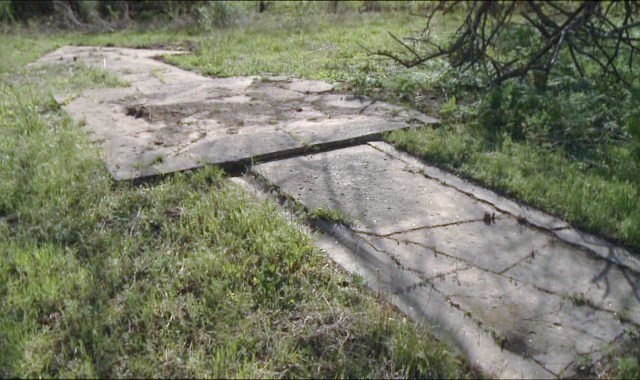
Evidence of how 1920’s, 30’s and 40’s pilots navigated around the country is still visible today in parts of Kansas in the form of giant concrete arrows on the ground. The U.S. government built a series of light beacons at 10-mile intervals along certain flight paths, including the most famous which stretched from New York City to San Francisco. Underneath many of these beacons were placed the huge arrows.

Today, four of these arrows and one tower are left in Kansas at the Kansas City – Amarillo Airway. Although three are located on what is now private property, one is public; located at the southern end of the Anthony Municipal Airport and attracts hundreds of enthusiasts each year. While they can be seen from the ground, the most clear view is given by satellite images, as the original intention, of course, was to view them from the air.

It is fascinating to think of these as essential navigation for pilots using the eyes as the greatest instrument, rather than reliance upon the many navigational technological advancements that we see today.

Leading Airport Management SystemsAviation information management is complex and handles enormous amounts of data regarding flight management systems, aircraft weight and balance data, departure control systems and even information about car rentals, online check-in and passenger data. For this reason it is critical that the information can be collected, stored and used efficiently and above all, securely.

Airlines, operators and airports use specialist providers of information management systems to ensure correct and reliable management is seamlessly efficient, fast and ultimately secure, often storing incredible amounts of sensitive data. Airport operations rely upon accurate data analysis to allow for smooth productivity.

Amadeus, a technology partner in aviation, has come up with a software solution that uses predictive analytics to pick up potential problems before they occur. Netuitive is a cloud-based system that monitors their Alta DCS, flight management system and all the aforementioned considerations. It is expected to be ready for commercial release in the latter half of this year, and will aim to simplify the data management arena.

Solutions for Airport Perimeter Security As the aviation industry reels in shock as a teenage stowaway breaches airport perimeter fencing to board an aircraft bound for Maui, even more serious questions are raised about airport security. Video surveillance footage clearly shows the boy make his way across the tarmac and climb into the wheel well of the plane, yet it was missed.

Since 9/11, airport security has been stepped up, or so we thought. There are increasing numbers of airport breaches being reported, articles claiming that passport checks are not being accurately carried out and monitoring equipment not being monitored.

Holes in security are most certainly there. Although security cameras are installed, they must be manned consistently to be effective. Airport perimeter fencing is more effective at keeping animals from the runway than people, it is said.

Officials are concerned and according to the New York Times, portions of the fencing at the airport are falling down in places.

Measures to Upgrade Airport Communications SystemsAn investigation into the November shooting at Los Angeles International Airport (LAX) that resulted in the death of airport security officer Gerardo Hernandez and the injury of three others, has highlighted airport communications issues and the need for enhancement in this and other physical security areas.

It is important that lessons learned from the tragic incident are used to review and improve security operations and make changes to bolster safety at not only LAX, but at airports across the country. Subcommittee chairman Rep. Richard Hudson, R-N.C. said that ‘communications breakdowns are not unique to LAX.’

The panel was told that co-ordination among ‘all relevant agencies’ and technical issues prevented the agencies from communicating directly with one another, taking more than 45 minutes before a cohesive plan could be put into action.

The incident is likely to put pressure upon authorities to implement technology to enhance airport communications and the interoperability of communications to ensure such an incident does not recur. Across the world, airport security issues are being raised, from passenger processing to physical security and perimeter fencing.

With technological advancements, information sharing and communications systems, there is a realisation that the solutions are available, yet action needs to be taken and investments made to ensure utmost security is held paramount in airports across the globe.

Leading Baggage Handling Solutions ProvidersChilean Santiago International airport has announced the order for an Explosive Detection Scanner (EDS) as part of an upgrade to security. The contract has been awarded to Smiths Detection, through its regional authorised partner, Aerotech. The airport expansion plans are due to a rise in air traffic, noticeable throughout the world.

The order is the first for Smith Detection for the new HI-SCAN 10080 XCT EDS and was won after public tender application. The system was chosen, according to the airport, because it best met the needs for the expansion plans. Based on dual-energy, dual-view x-ray technology, the EDS has a large central opening and capacity for 1800 bags per hour at 98 ft per minute.

Many airports around the globe are upgrading baggage handling systems and looking at a more automated approach to streamline the passenger processing system as passenger demand increases.

Air Traffic ManagementAirports Fiji Limited (AFL) has awarded a long-term support contract which will look after the Aurora ATM System, commissioned in May 2010 to Adacel, a developer of Air Traffic Management systems with Headquarters in USA, Canada and Australia and clients all over the world.

The Aurora system gives AFL the flexibility to handle traffic growth, bringing high levels of safety and service to operators. Capabilities include automated conflict detection, control by exception and monitoring, 4D profile protection and dynamic airspace allocation. The use of CPDLC, Air Traffic Service Inter-Facility Data Communications and surveillance incorporating radar has brought AFL to the forefront of ATM technology in the Pacific region.

Mr Faiz Khan, Executive Chairman of AFL said, ‘The introduction of the Aurora system in our airspace allowed us to operate with neighbouring ANSP’s in a completely seamless manner using an already developed and proven system. The performance of our system since commissioning has been exemplary and support from Adacel will assure continuing success in the future.’