Providers of Global Communications for Flight TrackingCanadian aerospace company, Flyht has launched a new portable SATCOM system, based on Iridium network technology that promises global communications at low prices for the aviation industry. At an initial cost of less than $10,000, the Dragon system will allow pilots and passengers to communicate for less, with no certification needed.

Using iPads, pilots and passengers will be able to use the Dragon iPad app to make telephone calls, send and receive emails and texts. The App will also be utilised by ground-based operations to deliver NOTAMs and weather updates to the cockpit, globally, via the Iridium satellite network.

As the world of aviation requests global flight tracking in the wake of flight MH370’s disappearance, the advent of the Dragon could not be better timed. With its ability to feed ASD systems, the Dragon is capable of flight following and has been tested by Chinese company, Aircraft Data Communication for input into its global aircraft management system.

Real-time flight tracking and delivery of automated OOOI messages is set to be high on many operators agenda’s this year. Other providers of technology based upon the Iridium network, particularly in the world of business aviation, are stepping up in the face of the competition.

aviation weatherAn eight-month weather safety campaign has been launched this week at the Great Alaska Aviation Gathering in Anchorage, with an aim to help pilots prepare for weather issues that may arise over the coming year. The campaign, entitled ‘Got Weather?’ is to be managed by a partnership between the FAA and the GA community and will deal will a focus weather topic each month via an online portal, in addition to safety seminars and case studies.

Aviation accidents caused by adverse weather are amongst the most frequent across the world with almost 75% of these resulting in fatalities. The campaign will discuss turbulence issues, icing, high winds and thunderstorms as part of the initiative to bring enhanced awareness to GA pilots.

U.S. Transportation Secretary Anthony Foxx said, “General aviation is a vibrant part of our country’s culture and our economy, but too many lives are lost each year in general aviation crashes related to weather. This campaign will help ensure that our general aviation pilots are prepared in the face of bad weather and are as safe and well-trained as possible.”

“The link between aviation safety and weather is something that can never be overemphasized,” said vice president of safety and advocacy for the Experimental Aircraft Association (EAA), Sean Elliott. “Understanding weather and how it affects your planned flight is essential, and that’s why EAA supports this safety initiative for all aviators.”

The official launch date for ‘Got Weather?’ is 4th May and is expected to run until December.


Automated Baggage Handling ProvidersThere is little doubt that airports with automated baggage handling provide a smooth, enhanced experience for passengers, reducing waiting times and streamlining the flow of baggage and passengers through the check-in system.

As many of us use some form of self-service check-in process, the advent of the one-stop kiosk is proving to be a huge benefit to those of us who wish to remain in control of every step of our journey.

Keeping it simple is the key. Easy-to-operate systems must be installed to enable even the virgin traveller to handle their own check-in with no fuss. The latest CUTE systems provide a comprehensive check-in system that has clear, simple instructions on a touch-screen interface that enables the passenger to;

  • Check in                 
  • Receive a boarding card and baggage tag
  • Attach the baggage tag
  • Place baggage in the kiosk, where it can be weighed, scanned and sent into the baggage handling system

Automated baggage handling system providers, such as ARINC, use the latest technology to provide just that. Simple, easy-to-operate systems that ensure that the baggage follows the passenger to their destination, including connecting flights, with the help of RF tagging is becoming essential to operational productivity.

The latest automated baggage handling systems are able to keep track of baggage with RF readers at critical points along the track, such as merging points and separators, which ensures that baggage can be verified and expedited along the correct route, even with business passenger baggage, that tends to arrive much closer to departure time.

As airports are being placed under greater pressure with the increase in passenger flow, particularly at peak times, Common Use Terminal Equipment is the answer to the expedition of the check-in process and automated baggage handling systems are growing in popularity across the globe.

Visit Aviation Security ProvidersIt appears that the Kenyan government are preparing plans for funding to be released at the start of their new financial year to provide upgraded security for major airports around the country. The largest portion of the funding, rumoured to be in the region of 6.4 billion Kenya Shillings, will be invested in upgraded perimeter fencing to improve physical security and the installation of additional CCTV equipment.

Although security measures are in need at Jomo Kenyatta International Airport (JKIA), it is yet to be confirmed whether the much-bemoaned multi-security point access system will be upgraded to provide better, single point access for the new Terminal four. According to the Transport Cabinet secretary, Kamau, the new terminal should be open by the end of the summer and will increase capacity at JKIA by several million passengers, which will hopefully give rise to the full refurbishment and awaited modernisation of Terminals 2 and 3, currently working as international departure terminals.

Physical security in airports across the country is the priority and upgrades to perimeter fencing are in dire need.

arrows-navigation-05-14In today’s modern cockpit, it is difficult to imagine what navigation must’ve been like back in the days before GPS and datalink air traffic control, on-board computers and high-technology.

Evidence of how 1920’s, 30’s and 40’s pilots navigated around the country is still visible today in parts of Kansas in the form of giant concrete arrows on the ground. The U.S. government built a series of light beacons at 10-mile intervals along certain flight paths, including the most famous which stretched from New York City to San Francisco. Underneath many of these beacons were placed the huge arrows.

Today, four of these arrows and one tower are left in Kansas at the Kansas City – Amarillo Airway. Although three are located on what is now private property, one is public; located at the southern end of the Anthony Municipal Airport and attracts hundreds of enthusiasts each year. While they can be seen from the ground, the most clear view is given by satellite images, as the original intention, of course, was to view them from the air.

It is fascinating to think of these as essential navigation for pilots using the eyes as the greatest instrument, rather than reliance upon the many navigational technological advancements that we see today.

Broadband for Business Aviation ConnectivityBusiness aviation connectivity is set for an upgrade next year with faster in-flight broadband speeds promised by Honeywell and AT&T. Honeywell have announced that they will be providing the hardware for a new 4G network service from AT&T that could potentially, based upon current capabilities, offer download speeds ranging from 16.65 to 66.11 Mbps and upload speeds of 7.43 Mbps.

These speeds could enable business aviation passengers to watch video, text and Internet surf in addition to the data messaging benefits for flight deck communications and cabin services.

Using the new Ka-band GX aviation service, these speeds promise to be the fastest to date.

Honeywell will provide the hardware, including antennas, for access to the network and will be developed to work with the Inmarsat L-band and new Global Xpress Ka-band satellite networks, giving connectivity the chance to stretch its legs beyond the continental U.S.

Business aviation currently enjoys global connectivity with other providers, such as ViaSat’s Yonder service and ARINC Direct’s range of passenger and cabin communications solutions.

Leading Airport Management SystemsAviation information management is complex and handles enormous amounts of data regarding flight management systems, aircraft weight and balance data, departure control systems and even information about car rentals, online check-in and passenger data. For this reason it is critical that the information can be collected, stored and used efficiently and above all, securely.

Airlines, operators and airports use specialist providers of information management systems to ensure correct and reliable management is seamlessly efficient, fast and ultimately secure, often storing incredible amounts of sensitive data. Airport operations rely upon accurate data analysis to allow for smooth productivity.

Amadeus, a technology partner in aviation, has come up with a software solution that uses predictive analytics to pick up potential problems before they occur. Netuitive is a cloud-based system that monitors their Alta DCS, flight management system and all the aforementioned considerations. It is expected to be ready for commercial release in the latter half of this year, and will aim to simplify the data management arena.

Flight Deck Weather DataThe recording and delivery of reliable aviation weather data is a critical component in maintaining safety in the skies. Adverse weather is one of the major contributors to aviation accidents on a global scale. But where does the data come from?

All over the world, weather stations are continuously monitoring and recording weather data consisting of temperatures to cloud cover and everything in between. These stations are called Automated Surface Observing Systems. Supercomputers take this data and use equations and calculations to enable weather forecasting.

The aviation weather data readings must be accurate and as fresh as possible to facilitate swift decision-making, flight planning and scheduling. The FAA issues coded messaging to airports, air traffic services and other authorities with numbered data to ascertain the source of the aviation weather data. Currently, there are 5,431 stations recognised by the FAA.

Timely delivery of aviation weather data is managed by ATS via airline data link, radio communications and often via satellite. Using ACARS, HFDL and CPDLC communications, aviation weather data keeps the safety of all aircraft as a priority. State-of-the-art technology in aviation today can mean that via type b messaging capability, aviation weather data can be accessed and delivered within a second.

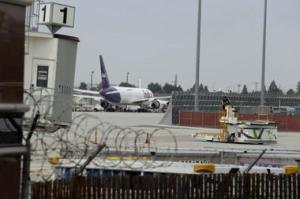
Solutions for Airport Perimeter Security As the aviation industry reels in shock as a teenage stowaway breaches airport perimeter fencing to board an aircraft bound for Maui, even more serious questions are raised about airport security. Video surveillance footage clearly shows the boy make his way across the tarmac and climb into the wheel well of the plane, yet it was missed.

Since 9/11, airport security has been stepped up, or so we thought. There are increasing numbers of airport breaches being reported, articles claiming that passport checks are not being accurately carried out and monitoring equipment not being monitored.

Holes in security are most certainly there. Although security cameras are installed, they must be manned consistently to be effective. Airport perimeter fencing is more effective at keeping animals from the runway than people, it is said.

Officials are concerned and according to the New York Times, portions of the fencing at the airport are falling down in places.

Measures to Upgrade Airport Communications SystemsAn investigation into the November shooting at Los Angeles International Airport (LAX) that resulted in the death of airport security officer Gerardo Hernandez and the injury of three others, has highlighted airport communications issues and the need for enhancement in this and other physical security areas.

It is important that lessons learned from the tragic incident are used to review and improve security operations and make changes to bolster safety at not only LAX, but at airports across the country. Subcommittee chairman Rep. Richard Hudson, R-N.C. said that ‘communications breakdowns are not unique to LAX.’

The panel was told that co-ordination among ‘all relevant agencies’ and technical issues prevented the agencies from communicating directly with one another, taking more than 45 minutes before a cohesive plan could be put into action.

The incident is likely to put pressure upon authorities to implement technology to enhance airport communications and the interoperability of communications to ensure such an incident does not recur. Across the world, airport security issues are being raised, from passenger processing to physical security and perimeter fencing.

With technological advancements, information sharing and communications systems, there is a realisation that the solutions are available, yet action needs to be taken and investments made to ensure utmost security is held paramount in airports across the globe.