Archive

Tag Archives: passenger processing

Industry Leading Passenger Processing Solutions from ARINCARINC Inc will continue to provide Hong Kong International (HKIA) with a full suite of passenger processing and bag drop solutions for the next five years, it has recently been announced.  In addition, support and maintenance services will also be provided.

HKIA, voted the world’s best airport, have been using ARINC technology and solutions since 2008.  Their MUSE, common-use systems and bag drop solutions, including BagLink baggage messaging and fallback tag services have been successful in enhancing operational efficiency.  In addition to the contract renewal, a new agreement has been signed to provide maintenance services and round-the-clock technicians with ARINC Managed Services division (AMS).

“With HKIA being one of the largest engineering and architectural developments in the world, the passenger system deployed by ARINC has been one of the most complex, comprising more than 1,300 common-use workstations located in Terminals 1 and 2, and Skypier of the Airport. The deployment also includes two off-site Airport Express train stations in Hong Kong, and multiple Upstream Check-in facilities at ferry terminals and bus stations in China and Macau,” said Glen Oliveiro, Director of Aviation and Ground Systems Solutions, ARINC.

“Since our founding 84 years ago, ARINC has been a trusted partner to the world’s leading airports and airlines. The fact that HKIA, one of the world’s largest airports and a major gateway into Asia, trusts ARINC to undertake this project is a testament to our commitment to providing the best technology and solutions to satisfy our customers’ needs,” said Michael DiGeorge, Managing Director of ARINC in Asia Pacific. “Having had a presence in Asia Pacific through our regional HQ in Singapore since 2003, this partnership with HKIA is also strategic as it underlines ARINC’s dedication to this rapidly-growing region.”

“Established on the principles of Safety, Operational Efficiency, Customer Convenience and Environment, it is of utmost importance that HKIA, being one of the world’s busiest passenger airports, uses a stable and reliable common platform. ARINC has consistently delivered reliable performance and quality, leading to improved efficiency in passenger processing and operation productivity over the past five years,” said Andy Bien, Chief Information Officer, Airport Authority Hong Kong (AAHK).
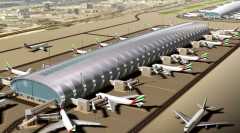
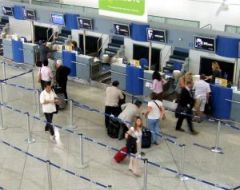
Advanced Passenger Information System in DubaiA federal project is expected to be implemented in Dubai to deal with Visa eligibility with the Advanced Passenger Information System initiative before passengers arrive in the UAE.

Col. Khalid Nasser Al Razouqi, Assistant Director-General for e-Services Sector at the Directorate of Residency and Foreigners Affairs in Dubai said, “It (the advance passenger information system) shall rather importantly help the residency and immigration authorities concerned decide accurately if a passenger is banned from entering the country or not.”

The advanced passenger information system (APIS) will enable the directorate to collect passenger data and check visa eligibility before the aircraft touches down in the country. “Of course, we shall not prohibit anyone from entering the country. Rather, we shall disallow already banned people as registered in the systems of the country,” he continued.

The system will also identify prohibited passengers and enable advance cancellation of travel from the source of the flight for those passengers.  The APIS initiative will help to streamline ground operations for the airports, who expect to see more than 98 million passengers by 2020 and is welcomed in the UAE, who announced earlier this year that over 351,000 banned expats were denied access into the UAE since 2003, many in possession of fake credentials and associated paperwork.

On Wednesday, the Greater Orlando Aviation Authority unanimously approved a $1.1 billion scheme to improve airport operations, passenger processing and capacity for Orlando International Airport.

The expansion plans will hope to increase the capacity from the current 24 million to 45 million passengers per year.

The project will incorporate major improvements to airport operations for passenger processing capabilities including a new terminal ticket lobby and baggage handling facility.

In addition to the passenger processing improvements will be airfield projects and ground transportation plus terminal and airside upgrades and new additions.

The South Terminal APM Complex will be connected to the North Terminal via a people mover, giving direct connection to the South Terminal parking garage.

“Once we hit the trigger of 40 million annual passengers and now 2 million annual arriving international passengers, we’ll start the final design and construction of phase one of the South Terminal project, which will be a new terminal,” said Phil Brown, GOAA Executive Director.

Eight airlines are in support of the project, expected to begin in 2014 and take three years.  Five airlines have lodged objections, however, to the people mover and car requisitions from North to South Terminals.

The board have made it quite clear that they will not move forward with the expenditure of the entire budget without just and clear reasoning for proven, worthy spending.

The funding has been sourced from both state and federal grants, passenger facility charges and general airport revenue.  The improvements will greatly enhance passenger processing and baggage handling for a direct impact upon the passenger experience.

Quintessentially Aviation FBO will launch its new FBO facility with efficient passenger processing at Shannon Airport at the NBAA Convention in Las Vegas.

The new FBO commenced operations at the beginning of this month and is part of a joint venture between QA and Sky Handling Partners.

Custom Clearance Shannon is the only place outside the Americas that can furnish business aviation with US pre-clearance and boasts turnaround times of approximately 45 minutes, which has made Shannon an attractive place for passengers of both departures and arrivals into the US with swift and smooth passenger processing.

“We anticipate that 90% of our clientele will be transatlantic clients wishing to maximise the ease of clearance opportunities at the airport. They are also likely to be high net worth individuals originating in Russia or the Middle East, so Shannon’s strict security monitoring, is also an attraction” said Brendan McQuaid, Managing Director, confirming why Shannon Airport was selected for the inaugural QA FBO.

Expected to be completed at the end of this year, the large crew facilities will include a rest area, showers, WiFi, flight planning capabilities and satellite television with a new passenger lounge with contemporary style and service.

The company are hoping to attract new clientele with the new facility in addition to the competitive fuel pricing structure developed in partnership with World Fuel.

Quintessential Aviation FBO hope that this new facility will be the first of many and look forward to its success.

Automated Border ClearanceHamad International Airport in the State of Qatar has awarded a contract for 64 e-Gates, equipped with Automated Border Clearance Biometrics to be integrated into the infrastructure of the airport operations.

The technology, including face, fingerprint and iris recognition biometrics will bring enhanced automated border clearance, speeding up passenger processing and streamlining operations at the airport.

Vision-Box, who has been awarded the contract are honoured to be a part of the implementation of the state-of-the-art systems.  “The Middle-East is a market that continues to show enormous potential, where we have invested for some years now and we look forward to further contribute to the various on-going Identity Management programs, as well as supporting the different GCC initiatives in similar projects, by continuously investing in local resources” said Jean-François Lennon, Director of International Business Development at Vision-Box.

Automated Border Clearance Systems are in operation across the globe and can greatly improve operations within the terminal buildings, helping passengers and airport staff with the streamlining of procedures, which before could be exhaustive both physically and operationally.

Other eBorders providers, such as ARINC Inc, bring enhanced automated border clearance technology solutions, including automated baggage handling, self-service kiosks for check-in and bag drop and advanced passenger information systems for the delivery of vital and often mandatory passenger data.

vmuse solutionsARINC has announced the completion of its implementation of vMUSE Common Use Passenger Processing Solution at Ras Al Khaimah (RAK) International Airport in the United Arab Emirates.

Ras Al Khaimah, literally meaning ‘the top of the tent’ shares a border with Oman and its International Airport is seeing increasing numbers of passenger throughflow steadily each year.  The airport has been undergoing an expansion plan and ARINC’s technological solutions will help to bring the airport greater efficiency and will optimise capacity.

Chairman of RAK International Airport, H.H. Engr. Sheikh Salem Bin Sultan Al Qassimi, said: “We have continuously delivered on all of our promises for this year, including the current expansion phase which is already seeing the airport receive a steadily increasing number of passengers. We are confident that the ARINC systems will make us a hi-tech, efficient and integrated airport.  We are already pioneering several firsts and ARINC is the right partner who has embraced the concept of taking the airport out into the wider Ras Al Khaimah, the resorts, hotels and the city.”

ARINC vMUSE solutions bring virtualisation technology into the equation and provide multiple airline check-in facilities that do not require multiple check in desks.  The space saving benefits can be realised immediately in smaller airports, allowing for reduced operational costs, up-front capital expenditure and the near elimination of on-site infrastructure spending.

Ras Al Khaimah is now planning the next step in their expansion as they plan to offer remote check-in and self-service bag drop facilities.  ARINC’s technology will play an important part in the plan.

Airport Management System ProvidersAirport Management System provider, SITA, has been awarded a seven year deal with Airports Authority of India (AAI) for the implementation of their systems in 10 airports in the country.

In partnership with NIIT Technologies, the company will also provide airport operations control centres as a part of the $130 billion airport modernisation programme.

The airports involved in the programme are Chennai, Kolkata, Ahmedabad, Calicut, Jaipur, Mangalore, Pune, Trichy, Trivandrum and Guwahati, whose combined annual passenger numbers are expected to rise to 450 million over the next six years.

The airport management systems will help with the implementation of collaborative decision making (CDM) to increase efficiency and in turn, more cost effective overall.

The AAI intend to install and run Common User Terminal Equipment across 38 airports, with automated baggage handling solutions, further streamlining operations through the airport management system.

Other airport management systems providers include ARINC, who offer a fully integrated suite of services with their industry-leading AviNet Airport system.  The company, who have recently been bought by Avionics manufacturer Rockwell Collins for $1.39 billion, bring innovative and cost efficient communications solutions for airport management systems, CUTE technology and automated baggage handling with AviNet Airport.

Electronic Border Management Solutions ProvidersAll over the world, airports have been wrestling with the notoriously difficult and time-consuming aspects of inner-terminal processes – departures.  The entire check-in process is laborious and exhausting for both passengers and airport staff and is the biggest cause of ground delays, queuing time and missed revenue.

It has to be said that the introduction of electronic border management solutions has made leaps and bounds on the road to improving this procedure.  Online check-in and bag drop kiosks are helping to streamline the check-in process and is bringing down waiting times.

London Heathrow has led the way in this field for a number of years, being the first to trial self-service check-in operations and multiple airline baggage handling and check-in solutions.  Passenger processing is fast-becoming ultra-efficient, reducing waiting times and significantly improving the entire experience for both passengers and airlines.

Mark Walker, Heathrow Airports Leader of the Passenger Processing Program says, “We’ve been taking quite a rigorous approach to exploring what good ideas we’ve got in-house or with our airlines, or indeed with industry best practices that are emerging, trialling some of those to really understand whether it is what our passengers want here at Heathrow, and then selectively deploying those technologies.”

Electronic Border Management encompass not just check-in and baggage handling, but also Advanced Passenger Information System solutions to allow government departments access to critical passenger data ahead of the scheduled departure.  Border Control Agencies are then able to spot high-risk passengers and expedite low-risk passengers, which also helps to streamline the process of check-in and boarding, minimising the risk of ground-delays.

ARINC Common Use System BenefitsARINC has announced that London Heathrow (LHR) has renewed it current iMUSE, common use system contract until March 2015 by the AOC.

LHR remains the world’s busiest international airport, with over 75 million passengers passing through each year and is known as the hub of the civil aviation world.

An additional contract has simultaneously been awarded to ARINC to install the industry leading common use system in LHR’s new Terminal 2, expected to open its doors in June 2014, to support 378 check-in desks and boarding gates.  ARINC will also continue with the maintenance and support for all the equipment.  The new terminal is expected to service 20 million passengers.

Arinc, who have been working with LHR since 1999 have built a strong relationship with the airport.  David P Wilding, Chair of Heathrow AOC’s Shared System Board said, “Terminal 2, which is scheduled to open its doors to the public in June 2014, has been meticulously designed around the needs of passengers – with particular emphasis on enabling them to get to and from their flights as quickly as possible.  ARINC’s iMUSE, by processing passengers faster and more efficiently through sharing airport infrastructure and resources, has a pivotal role to play in this objective which is fundamental to LHR’s undertaking to provide world-class customer service.”

ARINC are delighted to extend and expand their relationship with Heathrow, especially their involvement with the common use system for the new Terminal 2.  Tony Chapman, Executive Director of ARINC EMEA for Heathrow said, “We look forward to continuing to support the AOC’s efforts of providing the most efficient passenger processing systems possible.”

automated baggage handlingAccording to ARINC, passengers are set to spend significantly less time waiting at airports in the near future as airline operators and airports invest in advanced technological solutions designed to increase operational efficiency from advanced passenger information systems to automated baggage handling.

“The passenger is the one who’s going to have more control over that whole experience than they currently have,” said Michael DiGeorge, Managing Director of ARINC Asia Pacific. “That process of going from check-in through immigration through boarding is going to get more invisible.”

Passengers regularly wait for an average of three hours, sometimes more, which is causing industry-wide concern, especially during peak-time congestion, with the real fear of the denial of landing rights during those times.

ARINC’s extensive collection of innovative products are targeted to improve passenger information screening and transmission, travel documentation and check-in, which in turn will increase the flow of passenger traffic through airport terminals and remove the stress for passengers, airlines and operational facilities.

With many Asian nation plans to build new airports and terminals, there is a strong likelihood of growing competition to provide the best experience for passengers and airlines.  It stands to reason that the facilities that can provide smooth and fast passenger experience are going to be the most successful in the future of an industry that is ever-expanding as demand and expectation grows.