Archive

Tag Archives: passenger processing

Other Baggage Handling Systems ProvidersAs demand increases at Stockholm-Arlanda Airport, with a record that reached almost 21 million passengers last year, the decision has been taken to upgrade the baggage handling system in terminal 5. The upgrade plan will include the integration of Septembers’ mandatory standard two screening and it is hoped that the current baggage handling system will continue to operate to keep disruption to a minimum while work is being carried out.

Stockholm-Arlanda is managed and operated by Swedavia, who have awarded the upgrade contract to Crisplant, a part of the Beumer Group who provide baggage handling systems and logistics solutions. The company have been selected to extend the tilt-tray sorter in terminal 5 in addition to the upgrade of the control systems within the terminal building.

Baggage handling systems can help to streamline the passenger processing system and therefore, with careful integration, can help to maximise productivity, particularly during peak times and busy periods. With demand expected to continue rising, it makes sense that expediting the check-in and baggage handling process is necessary to avoid costly ground delays for both passenger experience and airport management.

Providers of Passenger Self Check-in Solutions & TechnologyIt has been announced that the Australian Immigration Authority will trial the use of the SmartGate passenger self check-in facility for Singaporean travellers this year, allowing them to join US and Swiss electronic passport holders in the trial. The successful SmartGate system is already in use permanently for Australian, New Zealanders and UK citizens, processing over four million passengers during 2012 and 2013.

The SmartGate system is an electronic, self check-in programme that speeds up passenger processing in eight airports across Australia and allows passengers to be expedited through passport control. The benefits have been felt particularly during peak times and busy periods.

The trial will eventually extend to further countries during 2014, with a view to rolling out the system in full force by 2018, when Australian immigration expect more than 80% of travellers to be in possession of the ePassport. The focus can then shift to monitoring for ‘high-risk’ passengers that may pose a threat to the borders.

eBorders technology is designed to bring flexibility to airport operations in order to manage secure integration with border security and government mandates, managing not only the check-in process, but careful screening and delivery of API.

Airport Operations Solutions ProvidersRaytheon, global defence contractors and Passur Aerospace, specialising in predictive analytics and business intelligence have formed an alliance to bring an enhanced perspective to airport safety and efficiency, it has been announced. The partnership will integrate Passur’s predictive analytics decision support software with Raytheon’s air traffic management systems and will work in unison with the FAA’s NextGen Terminal Flight Data Manager programme.

It is hoped that the collaboration will produce and process enhanced flight data and transmit it to air traffic positions and tower control. The information will allow airport operators and airlines to function efficiently within a seamless air traffic system, thus streamlining operations. The system will roll out with a demonstration this month at the Communications for Safety conference.

Jim McCoy, VP of Raytheon ATS said, “We are using analytics to create useful information and get it to the air traffic managers and operators who make crucial decisions regarding air traffic flow at all stages of flight. Rapid access to better information enhances safety, efficiency, and the curb-to-curb travel experience.”

“Passengers and operators are rightfully demanding a more predictable air travel experience,” said Jim Barry, PASSUR president and CEO. “Through the Raytheon/PASSUR collaboration, we achieve this objective and bring enhanced reliability to everyone involved.”

Maintaining Airport Security Whilst Improving Passenger ExperienceBy the end of February passengers at McCarran International Airport will be able to apply for PreCheck, a scheme that will allow expedited check-in for up to five years at a cost of $85.

The scheme will be run by the Transportation Security Administration PreCheck Application Center, based in the Airport Terminal 1, and will follow more than 100 airports across the country that currently operate the screening program.

Passengers will apply for a Known Traveller Number, which will be granted after rigorous identity verification processes, fingerprinting and immigration status investigations, allaying fears from opposers of the scheme, who raised initial concerns about maintaining high security for airline passengers.

Once membership is granted, successful applicants will pay an $85 fee for a five-year period of expedited processing. PreCheck will allow passengers to pass through airport security without being held up by the usual process of removing their shoes for screening or without removing laptops and TSA-compliant liquids from their hand luggage.

Rosemary Vassiliadis, Director of aviation for Clark County welcomes the scheme, saying “At McCarran, our priority is a positive travel experience for passengers and expedited screening provides just that.”

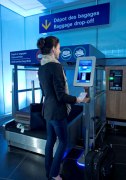
Industry Pioneering Self-Service Bag Drop Solutions OnlineMontreal Trudeau Airport has converted eight of their 17 previously manned baggage desks into self-service bag drop points in a bid to enhance passenger check-in and speed up operations within the terminal.

More passengers will now be able to make use of the common use, self-service bag drop points for multiple airlines baggage on any flight bound for the US. The airport has observed that the new system has already been adopted by almost half the passengers.

Common-use self-service bag drop points have and will continue to revolutionise airline travel worldwide, streamlining the check-in system and helping to create fluidity within the terminal space that has previously lacked the world over.

Maintaining airport security still remains a priority and the common use desks use up-to-the-minute technology to ensure all the bases are touched in this area. While many of us still check-in online and an increasing number check-in at off-site locations, the self-service bag drop desks offer airlines and airports greater use of terminal space and staff to ensure that the passenger service and experience is better than ever.

Innovative Solutions for Passenger ServicesGoogle Glass will appear at Heathrow Airport as Virgin Atlantic trial the technology for six weeks to assess improvements in passenger services, check-in and processing.

It is hoped that a touch of glamour will also appeal to the industry with the simultaneous trial of the Sony SmartWatch 2, with both technologies expected to benefit the provision of enhanced customer service.

The SmartWatch and Google Glass will be connected to Virgin’s passenger services system and to a concierge dispatch app, which will send passenger data to the glasses at the beginning of the check-in process.

The app technology will also collect and transmit passenger data, which is hoped will benefit the passenger in terms of enhanced experience. If the trial is successful, Virgin hopes to deploy the technology across their network.

Providers of Automated Baggage Handling SolutionsSince 9/11, there is little doubt that increases in airport security and border control have swept the globe. As governments and border control agencies take technological advancements and solutions to border security into the 21st Century airports, not only have these biometric solutions improved security, but have indeed contributed to an enhanced experience for the passenger.

It is small wonder that market intelligence providers, Acuity, report that the automated border control eGate and kiosk market will generate over $1.2 billion annually by 2020. The analysts also predict that during the same year, automated border control systems will number more than 6,000 with 33,000 self-service kiosks and eGates deployed for baggage drop and check-in across all ports, including airports, land and sea.

Maxine Most, principal of Acuity Market Intelligence says, “Automated border control eGates and kiosks represent the customer-facing touch points to what promises to be a far more complex and highly interoperable 21st Century border management IT infrastructure.”

Automated border control providers can integrate the system of passenger processing and baggage handling both within the terminal and off-site, creating improved through-flow for the airport and greater efficiency, which in turn offers the passenger far greater flexibility. Common-use terminal equipment brings multiple airlines baggage and self-service check-in solutions to streamline operations, leading to cost-effective management and infrastructure.

Integrated Airport Operations Solutions on Show in DubaiThe fifth annual MRO Middle East Exhibition and Conference will be held at the Dubai World Trade Centre and hosted by Penton’s Aviation Week, information and services provider for aviation and defence industry.

The conference will focus upon ways to maximise aviation efficiency using enhanced management practices while facing the issue of reducing costs; a growing concern amongst airports and operators across the world. The fact remains that streamlining airport operations is a high priority throughout the industry and solutions must be found to increase operational productivity while keeping a close eye on cost efficiency.

At the exhibition hall, product and service providers will be showcasing their solutions, including the latest in technological advancements, tools resources and services to help address some of the difficulties faced by global airports and operators.

Increasing Efficiency of Airport Security Screening TechniquesA team comprising of representatives from the Canadian airport authorities and airlines has been formed to conduct a study with an aim to speed up the process of airport security screening. The Airport Pre-Board Screening Efficiency Team will focus upon ways to improve the speed of airport security screening without compromising the security of passengers.

In 2012, more than 51 million passengers, at 106 checkpoints and 311 screening lanes were screened by 5,400 screening officers at Canada’s airports; an improvement of 30% compared to 2010, from 90 to 120 passengers per lane, per hour during peak times.

Lisa Raitt, Canada’s Minister of Transport said, “I trust the Airport Pre Board Screening Efficiency Team will find efficiencies that can be implemented without undue cost to Canadian travellers. Transport Canada will provide appropriate supports to this team.”

Other Providers of Baggage Handling SystemsIncheon, South Korea’s busiest airport, is to get a 42km, state-of-the-art baggage handling system courtesy of the contract recently awarded to electronics giant Siemens and Posco, the South Korean steel makers.

Capable of handling over 22,000 pieces of luggage per hour, the new system will comprise over 216 check-in counters in departures, 10 carousels in arrivals, 14 make-up carousels and 18 laterals, with an additional storage facility for up to as many as 2,000 pieces of luggage.

Completion is set for September 2017, readying the airport both for the influx of visitors to the 2018 Winter Olympics and the completion of Incheon’s new U.S. $2.5bn (£1.6bn) Terminal 2, which will increase airport’s annual passenger capacity to 62 million. The new infrastructure is planned to seamlessly integrate into the existing, and will be controllable by both IT and automated systems.

Siemans is already familiar with Incheon’s current baggage handling capability. In 2008 the company upgraded systems in the airport’s satellite terminal to handle up to 56,000 items of baggage every hour and has provided ongoing IT support ever since.