Archive

Tag Archives: passenger processing

Airport Operations Integrated with Management SolutionsExelis, aerospace and defence information company headquartered outside Washington, VA, have announced their acquisition of Orthogon; German airport operations management business, providing applications for air traffic flow management and decision-making to airport operators and ANSPs across the world.

The Orthogon business designs and develops traffic optimisation applications and predict traffic demand on runways, giving airport operators flexibility to optimise their resources both on the ground and in the air.

“The acquisition of Orthogon expands our aviation solutions portfolio and international market position,” said Pam Drew, Exelis president of the Exelis Information Systems division. “With our global airport presence and Orthogon’s queue management applications we see opportunities to deliver solutions to our customers that will lower costs and increase capacity and efficiency of their operations.”

Airport management systems integration is a necessary part of the process of information management. Additional applications available from other providers of airport management systems can include ‘back-office’ applications that assist with the smooth and efficient operation of baggage handling systems and passenger processing. As airports grow busier, with estimated passenger flow on the increase to the tune of more than 5% each year, operational productivity can suffer without key integrated systems in place.

Self Service Bag Drop Solutions ProvidersSelf Service bag drop solutions offer improvements to passenger processing and minimise ground delays. Halifax Stanfield International Airport is the first in North America to offer self-service baggage drop for all their passengers, working closely with their airline partners.

“This new, fully automated, self-serve baggage drop system uses the latest technology to simplify the check-in process for airline passengers,” says Joyce Carter, Halifax International Airport Authority (HIAA), President & CEO. “With airline customer service agents available to assist passengers if necessary, this improved level of service speeds up the check-in process and makes it possible for passengers to avoid line ups at counters.”

The airport followed the lead of airports across the world, when looking for ways to streamline these vital processes and ensure that ground delays were kept to a minimum during peak flow seasons.

“We welcome any airport improvements that enrich the travel experience for our guests,” says Jon Quinton, Station Manager for WestJet in Halifax. “This new system helps travellers move through the check-in process more quickly, and frees up our team members to get out from behind the counters and assist those guests who need a little extra attention.”

The new baggage handling system formed a part of a larger project to modernise the terminal space within the International airport. The domestic and international check-in halls in addition to U.S. preclearance have been renovated to create additional space, with future growth in mind. A stylish new exterior has changed the face of the airport and are a part of a 10-year plan to meet the needs of current and future passengers.

There is little doubt, if we look at the affect that self-service bag drop has upon the world’s busiest airports, that the new system will streamline passenger processing and increase operational productivity for Halifax Stanfield.

Electronic Surveillance SolutionsThe Dominican Republic is steadfast in its determination to strengthen border control and has just increased electronic surveillance to help the fight against smuggling and illegal entry across the borders.

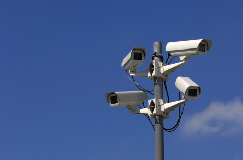
An additional 150 security cameras have been installed, making a total of 220 now operational over the past three years. They provide 24-hour surveillance at 42 border crossing points and will provide additional assistance to the military presence.

Electronic surveillance equipment is increasing in popularity as the world looks to enhance border control. Solutions from large companies, such as ARINC, can reinforce situational awareness and provide additional assistance to sometimes overstretched personnel and maintain a constant vigil at border checkpoints on the ground and in airport environments.

Physical security solutions can include access management, biometric detection and bioterrorism detection systems in addition to security surveillance cameras and recording equipment.

Complex Airport Infrastructure Improvements ProvidersPlans and proposals to upgrade Mandalay Airport have now been submitted to the Myanmar Investment Commission after receiving government approval last week.

Formal talks have been concluded and the agreement is to upgrade the airport to a logistics hub, requiring improvements to airport infrastructure, physical development and promotion of local airlines. Mitsubishi-Jalux and SPA Project Management won the project tender last year and will upgrade and manage the country’s second-largest airport once completed.

Infrastructure upgrades to airport operations involve a full-scale overhaul of messaging environments to allow maximum operational productivity both in the air and on the ground. Today, web-based messaging platforms give airports greater flexibility and can assist with streamlining both operations and costs.

To operate on a truly global scale, Mandalay Airport will benefit from the liberalisation of economic regulations and strengthening of air linkages between the country and other parts of Asia, Europe and the USA.

Find out more about Passenger Name Record data transferLast month saw a new agreement signed on the process, collection and transfer of Passenger Name Record details by air carriers to the authorities in Canada. The new terms supersede the current agreement made in 2006.

A legal framework will be established for the transfer of Passenger Name Record (PNR) data by carriers operating flights between the EU and Canada. Transmission of the passenger data must remain secure and transfer to the correct authority must be ensured. Subsequent use of the data by the authorities must remain secure.

PNR data is used for the prevention of and the detection of terrorist activity or serious crime and the subsequent investigation and prosecution of the said activity if necessary.

Before the agreement is put into place, consent must be obtained from the European Parliament, and then the EU Council of Ministers can adopt its decision on the conclusion of the agreement. Similar agreements for the transfer of Passenger name Record information are in place with the USA and Australia.

Phones & Laptops Included in Heightened Airport Security MeasuresThe Department of Transport in the UK has expanded upon tightened airport security measures issued earlier this month as they now urge passengers to make sure that mobile phones, tablets and other electronic devices are charged up and ready to be switched on during routine security checks.

Passengers who are unable to comply with the requests may face having devices confiscated under the new rules. The move has been taken following advice from the US after airport security risk was escalated to ‘substantial’ – meaning there is a ‘strong possibility’ of attack from terrorists. Fears arise from intelligence information that terrorist groups could build bomb components from non-metal substances that would be undetected with airport security scanning devices.

A spokesman for the Department of Transport said, “The UK government keeps aviation security under constant review in conjunction with international partners and the aviation industry. On 2 July we announced we were stepping up some of our aviation security measures. In line with the US advice, passengers on some routes into and out of the UK may now also be required to show that electronic devices in their hand luggage are powered up or face not being allowed to bring the device onto the aircraft.”

“Passengers flying into or out of the UK are therefore advised to make sure electronic devices being carried in their hand luggage are charged before they travel,” he added.

Although the government have promised to keep disruption to a minimum, they also stress that public safety remains paramount. Airport security have not confirmed which routes may be affected.

Passenger Reconciliation Systems ProvidersSao Paulo International Airport (GRU) is undergoing a big change to their passenger reconciliation system as Rockwell Collins implement its leading ARINC VeriPax system. Although the entire installation is in progress, the first phase of the project went live ahead of the 2014 World Cup tournament on June 12.

ARINC VeriPax reads boarding passes using automated security screening with 2D barcode scanners and checks passengers against flight information in real time. The system has streamlined the entire process of check-in and has already proved its worth with the attendance of elevated numbers of passengers for the World Cup tournament, speeding up the passenger screening process at security checkpoints.

“Hosting the 2014 World Cup has brought soccer fans from around the world to Brazil so we needed a solution that would provide our passengers with a better, faster check-in experience,” said chief information officer for GRU, Luiz Eduardo Ritzmann. “By automating the screening process, we believe that VeriPax has enabled us to improve GRU’s passenger flow by 15 to 20%.”

Although the ARINC VeriPax solution is utilised in some of the world’s busiest airports, and has been since 2009, GRU is the first airport in South America to use the bar-coded boarding pass gates and the VeriPax solution. The new security screening system is currently in use in the airport’s new terminal 3, but will soon go live in subsequent phases planned for terminals 1, 2 and 4.

“We’re proud to be playing a critical role in making GRU one of the most modern airports in the world in terms of passenger processing capabilities,” said staff vice president of airport systems, Information Management Services for Rockwell Collins, Michael Picco. ”This program marks yet another key milestone in our commitment to invest and grow in Brazil. We look forward to a long and productive relationship with GRU and other airports throughout the country.”

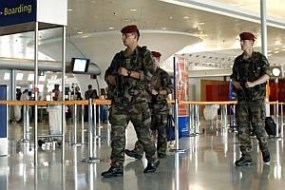
Passenger Screening at Airports - Solutions ProvidersLast week we saw a call from the U.S. and the U.K. to boost security in airports across the countries as the threat of Islamic radical activities raised its ugly head once more. This week we see France following suit with a boost in passenger screening at its airports. Those most likely affected will be Paris’ Charles de Gaulle and Heathrow in the U.K. receiving a combined average of 2.5 million passengers per day.

The enhanced passenger screening procedure may cause delays for travellers, but the consensus is that it is a greater priority to keep passengers, flight crew and aircraft safe from threat. Both French and British authorities have advised passengers to allow extra time to pass through the enhanced screening procedures.

It is not clear what is involved, but it is thought to be focussed upon footwear and electronic devices, such as mobile phones, tablets and computers. Earlier today, there were reports centred upon the use of mobile phones to carry complex explosive devices. Particular attention was being paid to those phones that are not fully charged, or at least able to be switched on with battery life remaining.

Automated Baggage Handling System - Find Out More...It has been revealed that Guam Airport will receive a new $26million automated baggage handling system that will greatly enhance the experience for passengers travelling through the airport and free up valuable terminal space. The system is looking at a completion date of 2016.

The announcement was made at a presentation on Thursday, attended by officials and key airport stakeholders. Funded by the Department of Homeland Security (DHS) Transportation Security Administration (TSA), the high priority project due to the current use of TSA baggage screening pods were installed and operated within the ticketing lobby, causing delays and congestion. The grant has been secured during a justifiable case for the optimisation of the TSA screening system.

“The Airport is one of Guam’s most critical facilities. It’s the first place our visitors see and it’s the last place we have to leave a lasting impression with them. Safety, reliability and efficiency have got to be our top priorities and I’m proud of the work our Airport family is making,” said Governor Eddie Baza Calvo. “This new system is further proof that our federal partners have faith in our ability to move these projects forward and the credibility to be transparent with critical federal funds. All of the GovGuam family is committed to fixing problems of the past and making sure there is room to grow in the future. This is the kind of progress Guamanians deserve.”

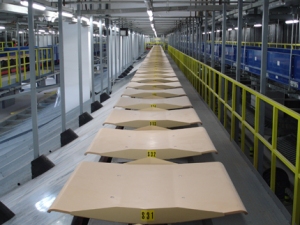
To upgrade and replace the system, it is expected to take approximately 22 months. The new system will speed up operations with the latest automated baggage handling system processing up to 680 per hour, per machine, opposed to an average of 200 bags per hour using the current, outdated model.

Leading Providers of Airport Baggage Handling SystemsNew research has revealed that commercial airport baggage handling systems market could be worth as much as $37.86billion by 2020. The research, titled ‘Commercial Airport Baggage Handling Systems Market by Sorting Systems’ provides in-depth analysis into the current size of the industry and examines growth prospects during the forecast time period.

There are also highlights of growth stimulation, key global markets and a detailed understanding of the emergence of opportunities concerning new RFID technology for tagging and developments within the workings of the immensely complex sorting systems.

Success with automated baggage handling systems and monitoring technological solutions has been demonstrated by the sharp fall in mishandled baggage rates, lost baggage and passenger processing delays, particularly as passenger flow has done nothing but increase steadily on a global scale.

Modern airport infrastructure relies heavily upon the efficiency of the baggage handling system and automated baggage handling systems increase operational productivity, streamline the entire check-in and passenger processing system and ultimately save money for airlines and airports in the long-term. Integration of automated baggage handling systems with airport IT systems, security systems and airline DCS all adds to the mix to pave the way for the future growth of the market sector.