Archive

Tag Archives: on board internet

Cabin Management TechnologyRockwell Collins, recent acquirers of ARINC Inc, today unveiled the latest innovation in personal tablet use. Their new side-ledge arm personal tablet mount is designed to work with the Venue Cabin Management System.

The new mount means that passengers with iPads and Galaxy tabs will be able to easily mount, charge and operate their personal tablets onboard, integrating with the latest in-flight entertainment system. This is great news for the ever-increasing numbers of passengers carrying personal tablets.

“With Venue, we’re creating a cabin experience that’s tailored to best suit its passengers,” said vice president and general manager, Flight Controls and Information Systems for Rockwell Collins, Greg Irmen. “Our new mount enables passengers to seamlessly integrate their personal tablets into the cabin setting and more comfortably enjoy their own content.”

Rockwell Collins offer apps that integrate with the cabin management system, such as Airshow, which displays an interactive moving map and real-time flight information. Also, they can offer Cabin Remote, which allows control of the cabin environment.

The new personal tablet mounts are available now for use in cabins equipped with the Venue system and allows Skybox passengers access to current onboard digital content.

GX Avionics & Inmarsat Satellite Communications SolutionsIt has recently been announced that the Critical Design Review (CDR) has been completed by Honeywell and Inmarsat for the avionics of GX Aviation.

The launch of GX Aviation, scheduled for 2015, will bring in-flight connection speeds equivalent to those on the ground, as promised by both Honeywell and ARINC, who signed an agreement in October. The agreement is expected to provide Inmarsat’s GX Aviation to the business aviation sector.

Currently, GX Aviation uses Ka-band satellites, which offers the high-speed connections. After the agreement was signed in October, Inmarsat and Honeywell announced three new satellites planned for the Global Xpress network, the first of which was launched in December last year.

Miranda Mills, Inmarsat Aviation president is confident that the GX Aviation program and the Honeywell avionics will be ready for the service launch in 2015, she said ‘A comprehensive team from both Inmarsat and Honeywell has completed its analysis of every aspect of Honeywell’s satcom system to ensure it meets all our design criteria.’

Cabin Services Solutions ProvidersAtlanta-based Delta Airlines have announced that they will not allow in-flight voice calls on their flights ahead of the impending final ‘vote’ by the FAA to lift the ban on cell phone usage.

In an internal memo, Richard Anderson, CEO of Delta said, ‘Last week the U.S. Federal Communications Commission voted to seek public comment in consideration of lifting its ban on in-flight cell phone use. Delta will not allow cellular calls or internet-based voice communications onboard Delta or Delta Connection flights.

Our customer research and direct feedback tell us that our frequent flyers believe voice calls in the cabin would be a disruption to the travel experience. In fact, a clear majority of customers who responded to a 2012 survey said they felt the ability to make voice calls onboard would detract from – not enhance – their experience. Delta employees, particularly our in-flight crews, have told us definitively that they are not in favour of voice calls onboard.

Delta has moved quickly when technological and regulatory breakthroughs provide opportunities to make flying better for our customers. That is why we were the first to file our plan with the U.S. Federal Aviation Administration to allow customers to use portable electronic devices below 10,000 feet. Similarly, if the FCC lifts its ban on cellular use in flight, Delta will move quickly to enable customers to use text, email and other silent data transmission services gate to gate.’

Since no decision has yet been reached on the proposed lift, it is still unclear whether passengers may yet be chatting about their journeys using in-flight voice calls – certainly, Mr Anderson has made Delta’s position clear on the subject.

Today, however, there is an ever-growing demand for cell phone use in-flight. Business aviation in particular experience high levels of expectation from their executive passengers as they operate the office-in-the-sky.

Industry-leaders, such as ARINC, offer high-speed passenger connectivity for emails and broadband, as an understanding within the industry realises the need to enhance cabin services, therefore increasing competition and allowing airlines to stay ahead of the game.

Many critics say that there is no real need for in-flight voice calls, with the level of connectivity now available in the cabin. It remains to be seen whether the ban will be lifted and it seems that opinion is divided. Maybe we will see ‘voice-call-seats’ or areas of the plane that will be designated ‘non-voice-call’ to be booked in advance like the years-old ‘non-smoking’ seats – the jury is still out on this moot point.

Airbus, Panasonic Avionics and Lufthansa Technik have joined forces in a retrofit operation to improve cabin services for all in-service A380s.  The agreement will bring broadband connectivity and mobile phone services to the aircraft.

David Bruner, vice president for global communications services at Panasonic Avionics said, “With this agreement we have made great progress with Lufthansa Technik towards providing this very important service to our airline customers and their passengers. We can now provide our broadband services on every aircraft type, which has always been our goal.”

Cabin Services Solutions for Enhanced Passenger ServicesIn addition to the benefit for passengers with access to the Internet and the ability to send and receive calls and SMS messages, the retrofit will bring enhanced Cabin Services possibilities for cabin crew.

Cabin Services give cabin crew greater access to flight information, passenger information and can be forewarned of problems, i.e. lost baggage in advance to enable them to deal with issues on board, before touchdown.

Other cabin services providers, such as ARINC, offer global solutions to airlines to enable increased passenger services efficiency and experience.

Aircraft Internet & Wi-Fi Services for Business AviationIn-flight Wi-Fi is not breaking news; its popularity continues to grow as passengers begin to expect more from flight operators in terms of connectivity.

In light of this, GoGo has introduced its latest in in-flight technology, giving Smartphone users the opportunity to make phone calls and text as though they were on the ground.

The GoGo air-to-ground connection will operate through the aircraft’s wireless network instead of the picocells, traditionally used for telephone connections.

New rules, sanctioned by the FAA, now give passengers permission to use their electronic devices; Smartphones and tablet technology during the entire flight, even during take-off and landing, of course, still subject to the requirements of the individual airlines.

Data transfers must still be restricted to ‘airplane mode’ and transmissions across cellular networks are still a ‘no-no’, but with a GoGo app, Smartphone users will be able to roam on the aircrafts in-flight service as though they were on the ground.

Other providers of such in-flight Wi-Fi solutions, such as ARINC Direct, offer seamless connectivity to business aviation passengers.  The business passenger places a generally higher demand upon the airline operators in terms of connectivity and welcome the ‘office-in-the-sky’ scenario.

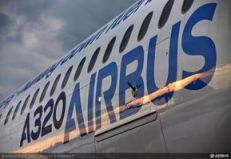
In-Flight Wifi Service ProvidersThe first A320 family of Airbus, single-aisle jet aircraft to be fitted with the company’s Airline Network Architecture (ALNA v2) will soon roll off the assembly line in Toulouse, France.

The equipment will offer passengers internet access with in-flight Wifi and mobile telephone services in readiness for new relaxed rulings about the use of passenger technology in the air.

The A320 family will join the other Airbus A330, A380 and the new A350 XWB families to be refitted with the ALNA v2 equipment.

In-flight Wifi and GSM offerings are hot property in the aviation industry at the moment, with passenger demand for connectivity growing by the day.  In the business sector and private jets, it is expected, in order for company executives to be able to work as efficiently and effectively in the air as they can in their ground-based offices.

Service providers such as ARINC Direct bring a complete suite of passenger connectivity products to the table of business aviation and offer innovative, cost effective and seamlessly operational solutions to in-flight Wifi, telephone, fax and conference video with their unique Inmarsat and Iridium satellite services.

in flight wifiAviation Technical, Washington-based providers have been awarded the contract by New York-based low cost airline, JetBlue to install in-flight Wifi technology on their fleet of 130 Airbus A320 aircraft.  To installations are expected to near completion by the end of 2014.

Designed by LiveTV, who will give training and technical support to Aviation Technical Services, the technology will provide Ka-band connectivity.

JetBlue’s brand for the in-flight wifi is called ‘Fly-Fi’ and will use satellite networks for connectivity, rather than the more common Ku-band provision, which uses ground-based stations.  This will give faster and more reliable connection.

The Ka-band operates within a higher bandwidth and offering eight times more than the Ku-band, which is also more highly congested.

Other in-flight wifi providers, such as ARINC, use Iridium and Inmarsat satellite networks to provide a seamless global connectivity for their customers within the Ka-band with SwiftBroadband and their CabinConnect solutions.

in flight wifiLast week, the UK’s OFCOM began a deliberation into the possibility of the authorisation of the use of ESOMPs to enable in-flight wifi with speeds capable of streaming content from sites such as BBC iPlayer and Netflix.

If the proposed license of a new satellite system is approved, the connections, up to 10 times faster than current in-flight wifi could be available in the air, on the ground within the UK rail networks and on-board ships as soon as 2014.

In the U.S. the FCC have already authorised the use of Earth Stations on Mobile Platforms (Sumps) which are the key to enabling the fast connections on a global scale.

It is unclear, as yet, just how many of the British-owned airlines will actually use the technology, given the inevitability of high costs.  Upgrades to equipment would be needed and some airlines are reluctant to commit at this stage, as users on-board may be dismissive of the high prices, preferring to remain connected with the 3 or 4G mobile option.

ARINC, U.S. based industry-leading passenger communications providers offer, under the US regulations, next-generation passenger connectivity solutions for commercial and business jet aircraft with CabinConnect.

in-flight wifi

In-Flight WiFi

According to many airlines, in-flight WiFi provision gives them a ‘competitive advantage’ in the commercial aviation industry.

As the competition grows fiercer, it seems that in-flight wi-fi will become less of an advantage and more of a normality according to a report by ‘routehappy.com,’ a site that ranks airlines.  Their report says that currently 38% of US flights offer internet connectivity and long haul or the most popular routes, such as non-connecting California-New York are offering in-flight WiFi.

Although it is still a small percentage of flights overall, it shows that, as passenger demands for in-flight WiFi grows, the more likely that it will become standard practice and airlines will be looking to offer faster, better and cheaper in-flight WiFi to remain competitive.

The debate grows after the FAA’s announcement last week that it will be lightening up about the use of electronic devices on-board, allowing passengers on certain flights to carry on using their Smartphones instead of the insistence of powering down before take off.

Most airlines provide ‘GoGo’ for in-flight WiFi, but with dramatic price fluctuations and intermittent signal, the marketplace is broadening and the opening into business aviation for passengers wishing to work in the sky and on the move means that a push into the Ku-band for international connectivity is the way forward.

Aircraft in-flight Wifi provider, ARINC, already offer truly global connectivity with their Inmarsat/iridium satellite network connectivity and are leaders in the business of aviation communications.

Gogo expects that in-flight wifi for business travellers will become a required expense and not an optional one and are experimenting on new pricing models as it is still early days for in-flight wifi connectivity.

Only time will tell…

The International Air Transport Association (IATA) have announced plans for a ‘New Distribution Capability’ (NDC) which involves the sharing of social media profiles for a better shopping experience for passengers.  NDC will offer personalized booking through a user-friendly platform that is content and image-rich, enabling passengers to book ‘extras’, such as Wi-Fi, comfortable seats or even a chauffeur service to and from the airport, based upon their preferences according to social media profiling.

Passengers, of course, will also have the opportunity to shop anonymously and IATA promise all the usual privacy assurances, but there are still some who are skeptical about sharing such information – especially as some companies who act as middlemen for bookings, such as Amadeus or Travelport may find their roles significantly diminished.

Social Media profiling is huge stuff in today’s marketplace, offering comsumers flexibility, if you don’t mind sharing your information and preferences and offering business massive marketing opportunities.

IATA are excited about the new proposed NDC and have been singing its praises at the group’s 69th AGM in Cape Town this week.  There is a lot of support for NDC and more than a little controversy, but much agreement universally that the face of buying airline travel and the way airlines, travel agencies and associated services work and interact would change enormously.

IATA have released a video to explain more about NDC… See it here...