Archive

Tag Archives: InFlight Broadband

ARINC Cabin ConnectIn the news again and again are the developments for inflight broadband. Some passenger groups hail it as an essential, other just see it as a rip off. One news report this week suggested that supply outweighed demand – but no commercial airline or private jet wants to be left behind the times.
This week we heard that the U.S. Federal Communications Commission (FCC) issued an order implementing Ku-band rules for the operation of satellite earth stations on aircraft enhancing competition and promote the widespread availability of Internet access to aircraft passengers – potentially starting the rise of low cost wifi on airplanes.

Providers to the aviation industry often differentiate their products by aircraft wifi for business aviation, and in flight wifi for commercial airlines.

Up until now, L-band licenses (1-2GHz) could be obtained from the FCC to offer connectivity to airborne aircraft over Mobile Satellite Services (MSS). The new rules will allow the FCC to process ESAA applications up to 50% faster and will speed the deployment of ubiquitous airborne broadband services, including Internet access.

The Federal Communications Commission is moving to ease restrictions on Internet use in commercial airlines as the agency attempts to enhance competition in the mobile telecommunications market and help speed the deployment of Internet services onboard aircraft. Airlines will be able to test systems that meet FCC standards, establish that they do not interfere with aircraft systems and receive FAA approval.

Rather than having to license on-board systems that provide in-flight wifi on an ad hoc basis, airlines will be able to test systems that meet FCC standards, establish that they do not interfere with aircraft systems and get FAA approval. An FCC statement explained “By reducing administrative burdens on both applicants and the Commission, the new rules should allow the Commission to process ESAA applications up to 50 percent faster, enhancing competition in an important sector of the mobile telecommunications market in the United States and promoting the widespread availability of Internet access to aircraft passengers.

While the FCC is working to speed up deployment of aircraft Wi-Fi systems in airplanes, an airplane manufacturer is also testing on improvements on wireless signals in airplane cabins, making it possible for passengers to enjoy more reliable connectivity when using networked personal electronic devices in the air.

The satellite antenna will carry the signal to and from the aircraft, and mobile technologies such as Wi-Fi will provide communications within the aircraft’s hull. In addition to promoting the economic growth and job-creating impacts of inflight broadband, the action also continues the FCC’s efforts to update and streamline regulatory requirements across the agency.

The Al Maktoum International Airport is hosting the much acclaimed MEBA event, where ARINC Direct will be exhibiting this month.

ARINC Direct will be showcasing its ConnectOnboard Communications System at MEBA. This latest product in a host of flight support services for business aviation delivers complete ACARS messaging, utilizing an iPad application as the user interface, high quality voice using an iPhone or Android device, and managed email.

“This is fertile ground for ARINC and we are delighted to be expanding our portfolio of services and resources in readiness for the growth,” said James Hardie. ”Our ability to support the widest cross-section of customers with continually evolving products and innovations is an advantage that is the envy of our competitors.”

For more details on the passenger communications, flight support or flight deck communications services offered by ARINC Direct please visit the ARINC Direct Business Flight Planning site.

To attract more business aviation Gloucestershire airport has extended its runway, said the airport’s head of operations, Darren Lewington,”Although only 12m of additional tarmac has been laid, the removal of obstacles nearby and the creation of an overrun means the landing distances available for aircraft have increased by up to 150m,” he added “The extra runway distances make a huge difference to the operators of the larger aircraft that currently use the airport and will generate additional business for us,”

Mr Lewington also said, “Business aviation movements make up around 5% of the take-off and landings, but they generate 30% of our revenue.” A large volume of activity is from general aviation aircraft, with approximately 70,000 actions annually. “With the closure of Filton airport, near Bristol, at the end of the year, there is already additional demand from corporate aircraft flying to the southwest of England. We are ideally placed to serve high net worth individuals in this region, as well as the Birmingham and Oxford catchment,” he adds.

Business aviation remains significant for airports across the country but increasingly as costs rise for operators they are looking for new, cost effective ways of running their businesses. Flight operations can be a significant outlay, and whilst operators cannot compromise on safety there are now solutions to make improve efficiency of all aspects of operations. ARINC Direct for example offer complete solutions for business aviation including all aircraft communications, flight support and planning services and even ancillary services such as aircraft broadband. For further information please visit the ARINC Direct website.

The uptake of SwiftBroadband (SBB) services among business aviation users continues at a cracking pace. Simultaneously, ARINC Direct has continued to design and implement new products and services to support this.

Cabin hotspot functionality eases the burden of managing the costs of SBB by enabling usernames and credit card billing. This is an attractive concept, too, with charter operators, and has also been taken up by corporate flight departments wanting to manage costs and budgets across departments using the business jet. Other management functions such as usage alerts have also been added.

If a customer has SBB and uses ARINC Direct’s iPad app they have a completely dynamic aviation information platform that surpasses traditional methods of obtaining flight data. At the half-year mark ARINC Direct’s customer base in EMEA and Asia Pacific had already achieved over 15% growth. The ARINC app is available on the Apple iTunes store.

ARINC Direct has been at the forefront using web enabled technologies since the business unit was founded in 2003, and the increasing availability of web access, suitable hardware and client-based application technology presents new opportunities for the way in which it interacts with its customers. Almost half of all ARINC Direct customers are now using the iPad app.

For more information on ARINC Direct SwiftBroadband service please click here.

Virgin and ARINC have succeeded in various in-flight initiatives and the latest being a SwiftBroadband-enabled program that provides passengers with live audio content. The Virgin Atlantic passengers will be able to enjoy Wi-Fi connectivity to the Internet and communications products, including seatback messaging, live news and retail portals, allowing constant data connection from early 2013. The system uses a hotspot portal with bandwidth offered by Inmarsat Swiftbroadband.

“We are especially delighted that Virgin Atlantic Airways, a long-term ARINC customer for more than 12 years, is the first company to confirm it will take Cabin Connect on trial. Virgin Atlantic Airways is an airline that is internationally recognized for its strong commitment to enhanced passenger communications and as such is a perfect fit to launch Cabin Connect,” said Lee Costin, director of satellite solutions and cabin services at ARINC.

Fort more information about the Cabin Connect Solution please visit www.cabinconnect.aero.

ARINC Incorporated, a portfolio company of The Carlyle Group, provides communications, engineering and integration solutions for commercial, defence and government customers worldwide.

ARINC Cabin Connect & Virgin

ARINC Direct Passenger Communications & Flight Support

ARINC Direct Passenger Communications & Flight Support

Recently I came across a web site that assists all of us within the business aviation industry with a fantastic range of services at an affordable cost.  The services, from ARINC Direct, range from passenger communications to flight deck communications and flight support solutions.

ARINC Direct is a leading supplier of data link communications for the business aviation industry, with products and services specifically geared to meeting the unique set of challenges we face. Over half of the world’s business jets rely on ARINC Direct for communication needs.

There is a high demand from passengers for high speed broadband connections whilst in the air. ARINC Direct offer an integrated satellite service, allowing ARINC Direct to offer a complete collection of onboard internet products that are easy to use. This allows passengers to stay connected whether for private or corporate use throughout the flight. The services can also increase the cabin crew efficiency by collecting real time CRM data, resolve any customer issues in flight, book onboard transfers, and track lost baggage.

Flight planning can be made simpler and more efficient with the help from ARINC Direct. With a suite of flight planning services from ARINC Direct you can benefit from airway slot management, advanced route planning, runway analysis and heaps more. They provide flight plans tailored to your aircraft ensuring accurate trip times, fuel consumption and routes. These flight plans are made available by data link or disk, ensuring error free loading on the flight management system.

ARINC’s Flight Deck Weather Graphics are cost effective and reliable. Their support covers either the Honeywell Primus Epic® or Rockwell Collins Pro Line 21® avionics suites offering next generation services.  ARINC Direct are the only service provider that can boast of radar data outside of the continental United States, delivering the most up-to-the-minute weather in the flight deck.

ARINC Direct are the leader in aviation technology solutions — in the air and on the ground —and are committed to the business flight industry. To discover more find them on: business-flight-planning.com.

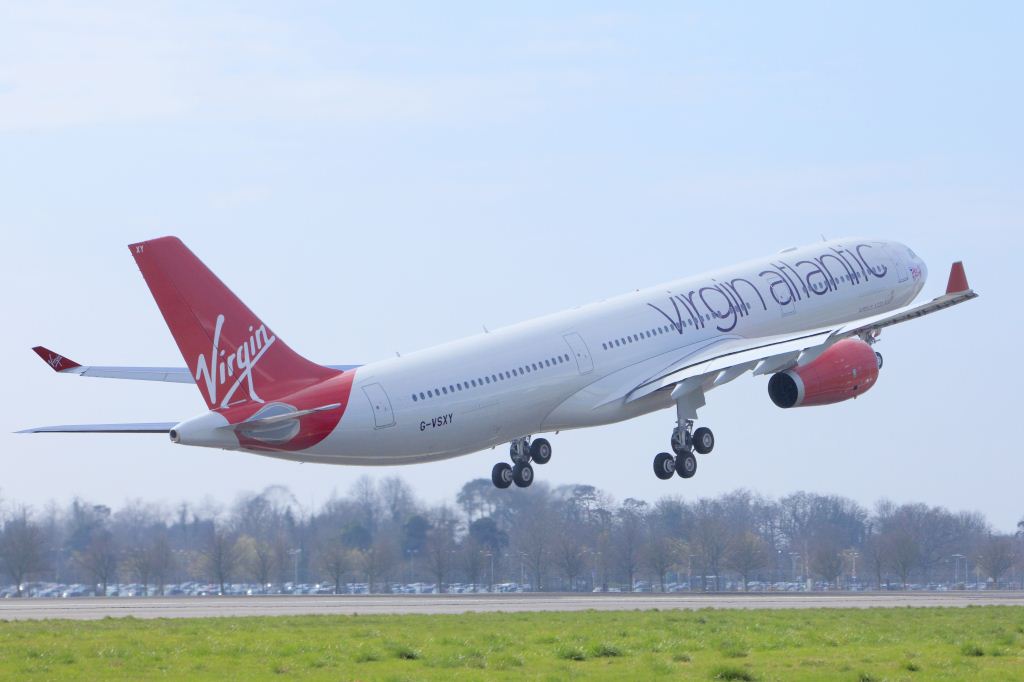
The Virgin VS Airbus A330 to be the first Virgin aircraft to be fitted with ARINC’s Cabin Connect by March 2013.

ARNIC Swiftbroadband, an IP-based packet-switched service that has constant data connection is being launched with Virgin Atlantic. It benefits all passengers to access internet who can now use their own portable electronic devices via ARINC SwiftBroadband Wi-Fi Internet hotspots and providing oceanic satellite coverage. Cockpit and cabin needs, including flight plan, weather, and chart updates, as well as telephone, text messaging, e-mail, Internet and intranet access will be available.

For more information about ARINC Cabin Connect please visit their site.

ARINC Cabin ConnectToday we are focusing on the brilliant facility of the Cabin Connect Suite offered from ARINC for both passengers and air crew. Cabin Connect has next generation connectivity and enhanced bandwidth provided by a partnership between ARINC and SwiftBroadband.

SwiftBroadband is one of the best, maximum cost effective, global, packet switched satellite communications networks available today. With a combined aviation experience of over 100 years airlines can make the most of the technical expertise of two industry leaders, ARINC and Inmarsat SwiftBroadband.

With ARINC’s Cabin Connect Solution passengers can surf the internet using their own electronic devices which can promote passenger loyalty to your services. In turn Cabin Crew can become more efficient by offering a better level of customer service by using ARINC’s AirCrew Connect. For those key passengers, Cabin crew can now act as a concierge service.  They would be able to remedy customer service issues straight away by having a direct link back to the head office, or ground team whilst in flight and experience an increase in operational the efficiencies.

For additional information please visit: cabinconnect.aero

This week I wanted to share a few of the interesting facts and figures found of the executive summary of the Airline IT Trends Survey 2012.

Airlines are more guarded about their outlook for 2013, taking into account a significant economic downside risk. Almost half of the airlines surveyed are still expecting their absolute IT spend to rise. However, the percentage of airlines anticipating growth in IT spending has decreased over the last three years.

For a second consecutive year, mobile services for passengers tops the list of investment programs for airlines, with six out of ten planning major investments in the next three years.

Airlines are continuing to expand their ticket distribution through direct channels. Emerging sales channels such as mobile and social media will have a significant impact on future growth in direct sales.

In the past, selling on an airline’s website has been crucial to driving the transition to direct distribution. Although sales through airline websites will continue to see growth, selling via smart phones is set to become an almost equally important sales channel in the future.

Nine out of ten airlines are planning to sell tickets via mobile phones by 2015, establishing mobile as a mainstream distribution channel for airline tickets. Growing from zero just a few years ago, mobile phones as a distribution channel are expected to generate significant growth in years to come.

Kiosks will continue to play a significant role, with ¾ of airlines increasing the number of check-in kiosks. When it comes to new functionality, however, opinions are split. About half of the respondents do not plan to deploy kiosks for flight transfer or lost baggage reporting. Only 39% of airlines believe kiosks will remain one of the dominant channels to process passengers in the future, highlighting that mobile phones and websites are set to play a more important role for passenger operations in the long-term.

Nine out of ten airlines plan to engage with passengers through mobiles by 2015, and the adoption of new services provided on mobile phones is speeding up. Airlines believe that smart phones can support most, if not all, customer facing interactions including customer service, commerce, in-flight entertainment and passenger processing.