Archive

Tag Archives: flight support services

Following the announcement of the proposed sale of its parent company, ARINC Direct senior director of sales, Joel Ehrmann admitted that the merger could provide opportunities for both companies in terms of online flight planning and support services, but he was unable to talk about the deal.

“It’s still got to be approved by regulators,” he said, “So its business as usual until the sale completes. But there are a lot of potential synergies.”

Flight planning

At LABACE this year, ARINC Direct had their latest innovation, Xplore, the SATCOM box.  Once certified, the connection of iPad and other mobile devices in the cockpit will be easily and efficiently linked to the Iridium satellite network.  ARINC Direct may begin the pitch to helicopters, especially in the offshore oil industry.

ARINC Direct seem to be preparing for a new office in Brazil shortly; according to Mr Ehrmann, “The major thing here is everyone’s ramping up for the World Cup and Olympics in Rio.”  He believes that major improvements will be seen in infrastructure and activity.

Mr Ehrmann would not comment as to how many Brazillian or Latin American customers ARINC Direct have, but stated that worldwide, the company cater to over 3,100 aircraft.

ARINC Direct’s iPad app has been particularly popular in the business jet industry, with its flexibility for flight planning and flight support services.  It will work well with the Xplore box in the cockpit of private aircraft across the globe.

data link communicationsThe much-talked-about and Rockwell Collins’ largest deal yet, the purchase of ARINC Inc for nearly $1.4 billion, will give them its fundamental data link communications connection to the FAA’s NextGen System.

ARINC is an industry-leading name in the field of aviation communications and this will increase Rockwell Collins’ immediate revenue potential by over 10%, with the commercial from 50% to 54% and next year’s military to 46%, which, it is said, is key for the company with declining military sales figures.

ARINC is most famously known as the pioneers of the ACARS messaging service and leads the way with their provision of air-ground digital VHF communications for airlines and business jets, flight support services, airport communications and the vMUSE platforms for passenger processing and the hugely successful self-check in operations.

Rockwell Collins hold more important ideas for the future with the increase in data link communications connectivity between cabins and flight decks with the ground, as the FAA’s NextGen plan will include the expansion of further data link communications; real-time weather information and re-routing plans and all-but replacing voice transmission.

“There is no doubt the digital information exchange will continue to expand at a rapid rate,” says Rockwell Collins CEO Kelly Ortberg, adding that the acquisition “substantially expands Rockwell Collins’ position in the growing aviation information-management space.”

The sale is expected to be finalized later this year, approximately 90 days after the acquisition announcement on August 11th.

In light of the upcoming deadlines for CPDLC mandatory regulations, it is necessary for upgrades to be carried out to ensure compliance.

Ruag Aviation technicians have completed their first upgrade in a Falcon 900EX using Honeywell’s EASy II avionics suite.  The EASy flight deck, based upon the Primus Epic avionics system from Honeywell, includes SmartView synthetic vision system (SVS) with HUD symbology displayed on PDFs.

CPDLC, or Controller-Pilot-Data-Link Communications supplements voice communications between ATC and pilots, increasing air traffic management and safety aspects as routine tasks can be automated.  This will reduce the workload in the cockpit and further add to safety concerns with fewer errors or misinterpretation of radio messaging.

The use of CPDLC is mandatory already in specified airspace and is the future of aviation communication in the congested airways above Europe.

ARINC vMUSEJeju International Airport has followed South Korea’s other major airports in its choice to use ARINC’s vMUSE technology to improve and optimize operations as the number of passengers grows each year.

The industry-leading provider develops and delivers innovative aviation solutions that can assist airports and airlines with cost management and increasing operational flexibility with vMUSE common-use technology.

Jeju International Airport will benefit from maximized use of facility space with the vMUSE platform and will be able to access off-site servers with any device, which will in turn reduce the necessity for hardware and support requirements.

This new contract will mean that ARINC now provides its vMUSE technology for all South Korea’s International airports, allowing for interoperability and connectivity between the airports and the airlines that operate from them.  This will lead to further operational cost reductions with the allowance for host sharing between the airports.

“Our biggest problem currently is a lack of check-in counters to accommodate the number of airlines that fly through the airport. ARINC’s vMUSE will enable carriers to directly log into their Departure Control System at any counter over any device. The sharing of counter facilities will improve terminal operations, and allow both airlines and airports to welcome more airlines and passengers,” said a representative of the Airlines Operators Committee of Jeju (AOC-CJU).

ARINC are delighted to be working with Jeju and AOC-CJU.  Mr Michael DiGeorge, ARINC MD of Asia Pacific said, “South Korea is one of our strongest and most important markets in the Asia Pacific region. Being a trusted partner to all the major international airports in the country is indeed a rare honour and re-affirms our reputation as a leader in the aviation industry.”

The Fort Wayne-Allen County Airport Authority has given the go-ahead for plans to be designed for a new aviation fuel station.  The fuel station is expected to be in the region of $4 and $5 million for construction cost, with design budget set at a maximum of $500,000.

The fuel station will be a major improvement for Fort Wayne Airport and will help to put the airport on the map for refuelling, giving the airport direct control over fuel, which is currently served by a fuel farm owned and managed by Atlantic Aviation.

Although contracts and designs are expected later this year, it could be years before the construction is finished and the fuel station is operational.

According to Scott Hindermann, executive director of the airport, local money will be used as the new station will not be eligible for federal funding.

In the aviation industry, fuel management can be critical to the continuation of operations for many airlines, both commercial and private.  Often, a large part of flight planning, the costs for fuel need to be managed for optimum productivity and also for the growing concerns about environmental impact.


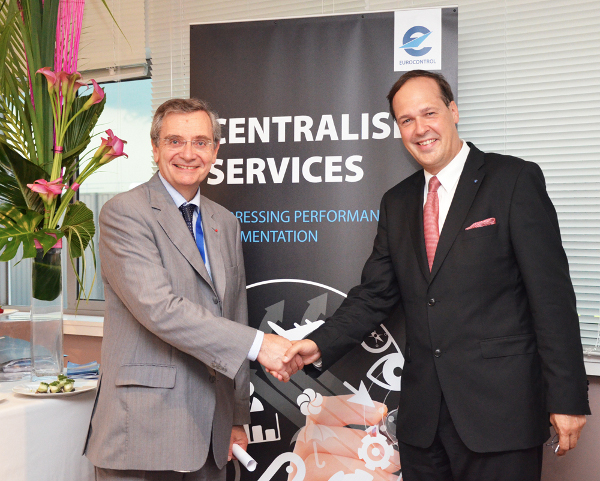
The European Aviation Safety Agency and EuroControl have established a co-operative plan for the improvement of aviation, focussing upon the implementation of the Single European Sky, with environmental protection, training and the development of the EU External Aviation Policy as priorities.

The co-operative plans will establish a common foundation, general framework and a programme on a formal basis, expected later this year.  There will be an evaluation of national civil aviation authorities’ mandates and the requirements of military airspace users in addition to overseeing the SESAR deployment.

EASA executive director Patrick Goudou said “the new framework is instrumental in the development of a more competitive air transport industry in Europe. EUROCONTROL believes this agreement will provide the optimal framework to combine the expertise and resources of the two European organisations, following the extension of EASA competences to ATM/ANS and aerodromes”

It is believed that EUROCONTROL will support EASA’s regulatory work with its air traffic and route management.

The new Single European Sky is a direct initiative borne from the heavy congestion over Europe.  Part of the directive spells the need for CPDLC capability in the cockpits to free up the airwaves.

EASA EuroControl Single Sky CPDLC

Analysts from Research & Markets have forecast that despite increased operating costs, the Business Jet Global market should grow at an average annual rate of 9.4% over the four-year range of 2012-2016, in their new report ‘Global Business Jet Market 2012-2016’.

They attribute the market growth to a couple of factors including the rise in the number of global billionaires and an increasing demand from the emergence of certain economies, however there are concerns that increased operating costs could challenge this growth.

It is noted that in 2012, 28% of growth was attributed to emerging economies and could rise to 40% by 2030.

Companies such as Bombardier Inc, Dessault Aviation and Gulfstream Aerospace Corp. may dominate the market, with other vendors mentioned being; Airbus SAS, Embraer, The Boeing co and Hawker Beechcraft will all benefit from the growing order backlogs as growth is propelled by the major owner-operator segment of the market – billionaires.

Next month’s Middle East Business Aviation Conference will take place in Jeddah, at the Hilton Hotel in the Kingdom of Saudi Arabia and will be the first time the KSA has hosted the event.

H.H. Prince Fadh bin Abdullah bin Muhammed is the patron of the event and also the President of the General Authority of Civil Aviation (GACA) in the Middle East.

The Kingdom of Saudi Arabia has been experiencing a surge in growth in the aviation sector and is becoming one of the largest markets, with almost half the market share.

At last years conference in Dubai, Honeywell forecast 14,000 business aircraft deliveries up to 2017, with the Saudi Arabian market expected to be on of the main contributors to the industry sales of $233 billion.

Speaking at the conference, in addition to H.H. Prince Fadh bin Abdullah bin Mohammed will be H.E. Dr Faisal Bin Hamad Al Sughair and Mr Wajdi Alidrissi, MD of Saudi Private Aviation, who said, “We anticipate that the Saudi Arabian market will witness growth of at least 10% though to 2014, due to the government’s bold plans for economic cities across the Kingdom and other major infrastructure projects currently underway and in the pipeline.”

The conference will continue with the discussion panels comprised of some of the major companies in the sector, including GASA, Nasjet and Nexus, who will debate regulatory frameworks and other matters concerning the Kingdom’s economic agenda to promote and understand business aviation through the important platform that the MEBAC has become.

It has recently been announced that the FAA have issued new requirements for International Civil Aviation Authority (ICAO) flight plans for all border crossings, even for flights within the U.S. airspace, VFR or IFR. Most GA operators will be able to operate within the US borders, but the FAA have still said that they would still prefer an ICAO flight plan to be issued.

The ICAO flight plan form, updated in November and implemented in March of this year in the Aeronautical Information Publication, is now required for any flight that crosses any International border or flies above 29,000 feet, operating with RSVM.  The changes were published in the Aeronautical Information Manual concurrently.

A agreement has been signed by Inmasat and Kymeta to develop a new satellite antenna that will enable business jets to use high speed broadband connectivity worldwide using Inmasat’s Global Xpress (GX) service

Only GX users will be able to use the propriety Kymeta Aero Antenna enabling the two company’s opportunities in the fast expanding business aviation market.

Managing Director of Inmarsat Global Xpress, Leo Mondale said, “Over the coming 10 years, some 10,000 new business jets are forecast to enter service. In this changing world, where enhancing the productivity and effectiveness of the business executive is paramount, the need to offer constant connectivity is non-negotiable. It is this absolute requirement to keep executives connected, wherever they are, that is driving demand for solutions which support smaller aircraft. Our partnership with satellite technology specialist, Kymeta, will make business jet travel an even smarter and more efficient option for executives”

CEO of Kymet, Vern Fotheringham added, “Our technology for flat-panel, beam-forming antennas will enable a number of new markets and a new generation of customers to benefit from lower cost, high-speed satellite internet connectivity anywhere in the world. We are excited to reach this milestone and engage with Inmarsat to bring next-generation broadband services into the global business aviation market.”

Inmarsat is a long standing player in the industry providing passenger communications solutions for both commercial airlines and business jets.