Archive

Tag Archives: business aviation

The large number of applications submitted exceeding ICANN’s original projections can be explained, with the new gTLD program having a profound impact on the private sector’s increasing dominance over Internet information resources and ownership of critical registry technical infrastructure assets. It is projected only the private sector will take full advantage of the commercial possibilities offered by the introduction of new gTLDs creating new innovations.

The successful introduction of new gTLDs will also create new challenges of security for the private sector. Creation of Internet additional domains would expose to different security risks on the Internet. Applicants are expected to describe in details the security policies and procedures of the proposed registry, and to go to some considerable depth in explaining how denial of service attacks would be mitigated, and describe their computer and network incident response policies, plans, and processes; the types of defences that will be deployed against threats, etc. What ICANN considers as a robust response to the Security Question must show “evidence of highly developed and detailed security capabilities” amongst other requirements, coupled with an independent assessment report that demonstrates effective security controls as proof of conformance to the ISO27001 Certification Standard.

Cyber-security threats have now emerged as the defining security challenges of the global Internet economy. National Security operatives are now seized by the issue of Cyber-security. They are actually now more worried and concerned about security threats on computers and information resources than a physical terrorist attack that can be easily detected and disrupted in an airport. Sharing advance passenger information on airline passengers for example between the United States and European countries will make it more difficult for a terrorist to board an airline flying between Europe the USA. Moreover, increased and more efficient traditional spying has helped security and anti-terrorism agencies to more accurately identify and prevent terrorists from carrying out their wicked plans, but the identity of cyber-warriors remain very much anonymous, and pinpointing their exact geographical location remains a major technical challenge.

Advance Passenger Information (API), already obligatory in the USA and across all EU member states, is increasingly required by governments around the world.  Combined with Passenger Name Records (PNR), this information must be sent by the airlines to the destination country’s border security department to facilitate the passenger screening that is crucial for effective border management.

For more information on API and its transmission please visit this site from ARINC.

The 2012 business aviation industry has showed a weak performance. One small improvement was with active turbine corporate aircraft fleet which climbed to more than 29,000 compared to 28,300 in 2011, while the jet fleet has risen by a small 565 to 17,974.

One of the best areas to make improvements is the Asia-Pacific countries, The FlightGlobal Ascend online database shows that this fleet has risen by nearly 150 aircraft to 834 jests and 625 turboprops. The Chinese market shows an impressive fleet gain but China has not turned into the cash cow that was expected by some analysts. It has been suggested by Foley that China has provided “a conveniently timed mini-rescue”, for the aircraft industry. It has been good while it lasted but jet manufactures are now concentrating on preserving orders rather than being in sales mode.

Rise and Fall of the Business Aircraft Industry 2012

According to Aboulafia a full recovery will only occur when the world’s economies finally stabilize at some time in the future and the jet fleet replacement cycle in the USA is in full swing. USA has the largest business aircraft fleet but the market is fragile.

In Europe the last 12 months have been disastrous with the number of business jet and turboprop fleet reducing by 30 aircraft. This is largely caused by the global recession that has continued to grip this region. Not surprisingly the worst hit countries in Europe are Greece, Italy, Spain and Portugal.

The uptake of SwiftBroadband (SBB) services among business aviation users continues at a cracking pace. Simultaneously, ARINC Direct has continued to design and implement new products and services to support this.

Cabin hotspot functionality eases the burden of managing the costs of SBB by enabling usernames and credit card billing. This is an attractive concept, too, with charter operators, and has also been taken up by corporate flight departments wanting to manage costs and budgets across departments using the business jet. Other management functions such as usage alerts have also been added.

If a customer has SBB and uses ARINC Direct’s iPad app they have a completely dynamic aviation information platform that surpasses traditional methods of obtaining flight data. At the half-year mark ARINC Direct’s customer base in EMEA and Asia Pacific had already achieved over 15% growth. The ARINC app is available on the Apple iTunes store.

ARINC Direct has been at the forefront using web enabled technologies since the business unit was founded in 2003, and the increasing availability of web access, suitable hardware and client-based application technology presents new opportunities for the way in which it interacts with its customers. Almost half of all ARINC Direct customers are now using the iPad app.

For more information on ARINC Direct SwiftBroadband service please click here.

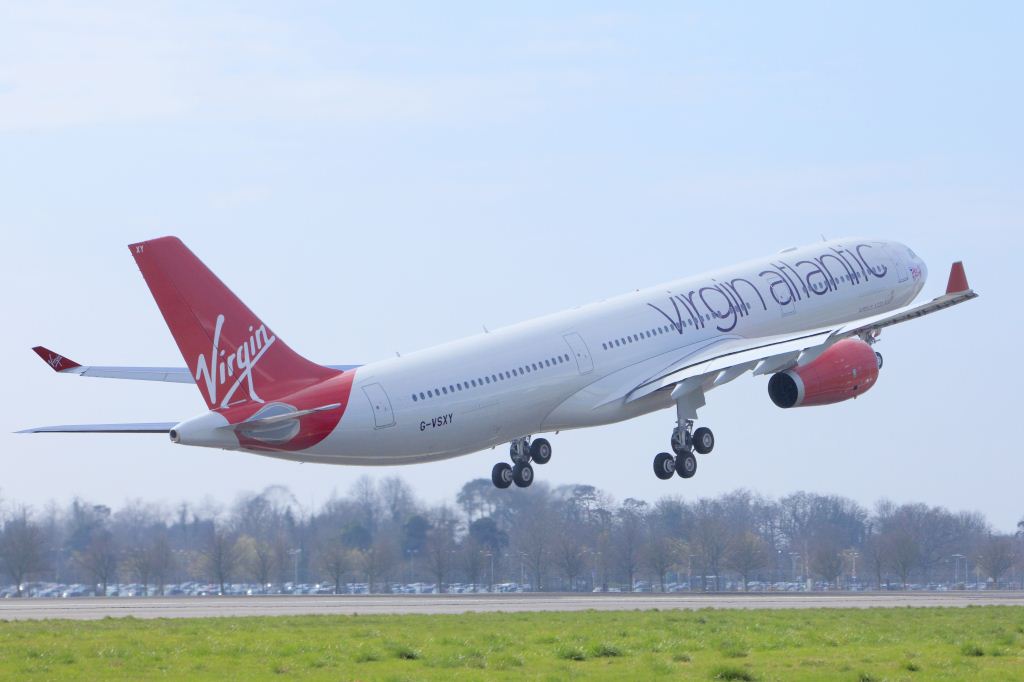
Virgin and ARINC have succeeded in various in-flight initiatives and the latest being a SwiftBroadband-enabled program that provides passengers with live audio content. The Virgin Atlantic passengers will be able to enjoy Wi-Fi connectivity to the Internet and communications products, including seatback messaging, live news and retail portals, allowing constant data connection from early 2013. The system uses a hotspot portal with bandwidth offered by Inmarsat Swiftbroadband.

“We are especially delighted that Virgin Atlantic Airways, a long-term ARINC customer for more than 12 years, is the first company to confirm it will take Cabin Connect on trial. Virgin Atlantic Airways is an airline that is internationally recognized for its strong commitment to enhanced passenger communications and as such is a perfect fit to launch Cabin Connect,” said Lee Costin, director of satellite solutions and cabin services at ARINC.

Fort more information about the Cabin Connect Solution please visit www.cabinconnect.aero.

ARINC Incorporated, a portfolio company of The Carlyle Group, provides communications, engineering and integration solutions for commercial, defence and government customers worldwide.

ARINC Cabin Connect & Virgin

After failing European approval ‘exposed’ airport scanners scrappedAirport Scanners Scrapped

The remaining full-body X-ray technology scanners that show up hidden explosives or weapons are to be discarded after failing to receive the European approval, and are to be scrapped within the next few weeks.

The scanners, which have been tested at air terminals since 2009, scan through passengers’ clothes, creating a detailed ghost-like image of the naked body and then viewed by security staff.

Critics believed that the machines invaded passengers’ privacy and the radiation they generate can raise the risk of cancer. However, the European Commission judged that the cancer risk was ‘close to zero’.  The Brussels legislation, three-year trial period has elapsed and it has decided not to ‘prioritise’ them for permanent use across the continent.

Airports waiting for the ‘ok’ on the scanners have been left with no choice other than to remove them and change them with ‘privacy-friendly’ machines that use a technology with radio-frequency.

Cessna Aircraft Company, a Textron Inc. company, in conjunction with Innotech-Execaire, Cessna’s authorized sales representative in Canada, announced an agreement with AirSprint Private Aviation, based in Calgary, Alberta, for a minimum of nine Citation CJ2+ aircraft. Indicating an agreement total value of approximately $60 million, as the present retail price per unit is nearly $6.

The addition of the CJ2+ is positioned to support AirSprint’s focus on boutique customer service and regional private air travel. John Young, Cessna vice president of regional sales said ‘the CJ2+ is a the right blend of efficiency, performance, comfort and reliability to fulfil AirSprint’s mission of providing a flying experience for their clients that is exceptionally safe and convenient for both work and leisure,’  he continued. ‘Of all the business jets purchased by the fractional/charter industry, nearly half are Cessna aircraft.’

AirSprint has operated since 1999 and is currently the largest fractional provider in Canada. They will use their CJ2+ aircraft to grow their fractional services in North America. Within the next 2 to 3 years the CJ2+ aircraft will replace AirSprint’s current Pilatus PC12 turboprop aircraft.

Chris Richer, President of AirSprint said ‘Our clients are very pleased with the balance of range, speed and efficiency that the CJ2+ offers as an alternative to our current fleet of Pilatus PC12 turboprop aircraft,’ he went on to say ‘Our clients are innovators, company builders, philanthropists and leaders in the local and global community – the CJ2+ will aid them in making those endeavours a great success. We are continuing to focus on safety, personalized customer service and making this transition in partnership with our clients. AirSprint’s experience with Cessna and Innotech-Execaire in the operation of seven Citation Excel/XLS mid-size jets gave us great confidence that we have the backing of a strong manufacturer.’

Powered by two Williams FJ44-3A power plants, each generating 2,490 pounds of thrust, the Citation CJ2+ is part of the Cessna Citation family of business jets. It holds six passengers in the main cabin and has a 1,600-nautical mile range and a top speed of 418 knots.

Virtual Airport Common Use Systems vMUSE Enterprise, the latest version of ARINC’s well-known MUSE® (Multi-User System Environment is a common use platform that offers an advanced virtual technology,  providing all in one multi-airline check-in without having to connect to on-site servers or platform software – using the private cloud of ARINC.

The benefits of vMUSE Enterprise, which has the capabilities as full-size server-based terminal, are that airlines and airports can enjoy power savings, space savings and reduced up-front capital costs. It also reduces operational and maintenance costs. Key components of vMUSE Enterprise are safely stored in the cloud so it can be quickly set up in any environment where power and the internet are available. Ideal for small and seasonal airports, airport parking terminals, rental car facilities, transit stations, and overflow use. This “pay-as-you-go” service reduces expenditure, minimises overheads with immediate access.

Existing PC’s can be converted to vMUSE Enterprise physical clients, and those who opt to replace traditional PCs with thin client workstations can realise further cost savings. With no moving parts, support costs are lower and the power consumption of thin client devices is considerably less than that of a PC.

To find out additional information view the website: http://www.vmuse-enterprise.com/

ARNIC is to implement multiple airport systems at Ras Al Khaimah International Airport
Ras Al Khaimah:ARINC Incorporated, has won a multi-million dollar, 10-year contract to implement multiple airport systems at Ras Al Khaimah International Airport in the UAE.

The project, which involves the design, supply and installation of ARINC’s core suite of airport passenger processing solutions, as well as advanced airport operational systems, will include common use passenger processing systems (CUPPS) and boarding operations at the expanding airport. The deal was announced on Sunday in Abu Dhabi at the 18th World Route Development Forum (World Routes) by Tony Lynch, Regional Director, ARINC Middle East & Africa, and Andrew Gower, CEO of Ras Al Khaimah International Airport.

The installation of VMuse/CUPPS, L-DCS, AirVue (FIDS), AirDB (AODB), InfoHub and Multi-Channel at RAK, in what will be the first off-site hotel check-in and bag drop in the region, will also equip the airport with future intelligence that will change the way in which people use it today.

It is anticipated that the number of CUPPS workstations and services will increase during the lifetime of the contract, as not only is the existing terminal being expanded, but there are plans for a new passenger terminal, dedicated to charter activity. Tony Lynch highlighted that ARINC won the bid through its close collaboration and consultation with the team at RAK Airport.

“We spent 18 months carefully ascertaining their requirements,” he said. “From a small hosted L-DCS the scope has been extended to the airport-wide suite of products which has now been ratified.”
“RAK International Airport’s current expansion will see the airport ready to receive the steadily increasing number of passengers over the next few years,” said Gower. “We are confident that ARINC is the right partner in this programme as their refreshing approach and industry knowledge ticks all the boxes for hi-tech, efficient, integrated airports. We needed a partner who could embrace the concept of taking the airport out into the wider Ras Al Khaimah, the resorts, hotels and the city.”

To find out more about ARINC’s vMuse product please visit their site: http://www.vmuse-enterprise.com/

ARINC AviSec Messaging - Passenger Data Transfer

ARINC AviSec Messaging – Passenger Data Transfer

This week’s focus is on one of the solutions offered by ARINC for essential aircraft messaging and transmission of passenger name records and advance passenger information. ARINC has been providing high-performance, reliable messaging for the aviation industry for over 50 years. Passenger Data Transfer and Advanced Passenger Information solutions from ARINC are the most reliable in the world, and the focus is very much on creating solutions that are high value to the customer at a low cost at a flat monthly rate.

Daily, 16 million messages are sent to 3,000 customers, supporting the two main requirements of traveller intelligence delivery of Advance Passenger Information between carrier and government. API is obligatory in the USA and all EU member states and increasingly being required around the world. Combined with Passenger Name Records (PNR), this information must be sent to the destination country’s border security department for passenger screening and failure to supply the information airlines can obtain a hefty fine.

It is vital for aviation security that information is communicated with the highest reliability. There are a number of ways API and PNR can be delivered, but Type B is fool proof. AviSec handle and convert multiple formats from different airline systems and safely transmit data over ARINC’s highly resilient AviNet network.

ARINC AviSec Data Transfer Pricing can be delivered either Flights Per Month (FPM) or total flat rate for iAPP. They have a simple pricing structure makes it easy for airlines to understand and manage costs effectively.

With this exciting solution it is clear that aircraft messaging can be both affordable and reliable. To find out more please visit avisec-messaging.com.

Private Jets on the Up

Private jet travel is no longer reserved for pop stars and the super rich as a new companies such as NetJets or VistaJets offer pay-as-you-go options with their private fleets, costing anything from £3,000-£8,000 an hour. These private fleets may well be the future for business aviaton.

European private jet business is up nine per cent on last year, and it is easy to see why the option is so popular among the ‘regular’ rich — the bankers and entrepreneurs — for whom first class is just not swanky enough.

In June this year the world’s first corporate aviation showroom for business jet aircraft’ opened on Hyde Park Corner. ‘The Jet Business’ is owned by Steve Varsano from New York. He chose London, he says, because ‘anybody who can afford a jet comes to London’.

Private jet travel remains popular for all those who feel that first class is not classy enough. By going private jet  you can expect to be fast tracked through customs and immigration control, and take as many sharp knives and bottled liquids on board as they desire. Once on the aircraft, flights are usually shorter as business aircraft are often faster than their commercial counterparts.

During this summer’s peak season there were more than 30 private jet landings a day on Ibiza and it is here that the new democratization of private jet travel is most evident. Every weekend at Ibiza Airport you will see banks of jets (four- to seven-seat Citations mainly), each bearing the livery of a different superstar DJ or nightclub.

‘Ten years ago the idea of a DJ demanding a private jet was considered outrageous, but in the past decade it’s almost become an industry standard,’ says Pacha resident DJ Pete Tong. ‘Erick Morillo started it all.’

So despite the economic downturn being suffered across the world, perhaps business aviation still has a rosy future.