Archive

Tag Archives: border management

Automated Baggage Handling ProvidersThere is little doubt that airports with automated baggage handling provide a smooth, enhanced experience for passengers, reducing waiting times and streamlining the flow of baggage and passengers through the check-in system.

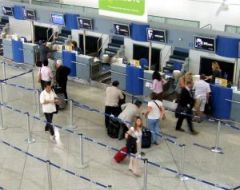
As many of us use some form of self-service check-in process, the advent of the one-stop kiosk is proving to be a huge benefit to those of us who wish to remain in control of every step of our journey.

Keeping it simple is the key. Easy-to-operate systems must be installed to enable even the virgin traveller to handle their own check-in with no fuss. The latest CUTE systems provide a comprehensive check-in system that has clear, simple instructions on a touch-screen interface that enables the passenger to;

  • Check in                 
  • Receive a boarding card and baggage tag
  • Attach the baggage tag
  • Place baggage in the kiosk, where it can be weighed, scanned and sent into the baggage handling system

Automated baggage handling system providers, such as ARINC, use the latest technology to provide just that. Simple, easy-to-operate systems that ensure that the baggage follows the passenger to their destination, including connecting flights, with the help of RF tagging is becoming essential to operational productivity.

The latest automated baggage handling systems are able to keep track of baggage with RF readers at critical points along the track, such as merging points and separators, which ensures that baggage can be verified and expedited along the correct route, even with business passenger baggage, that tends to arrive much closer to departure time.

As airports are being placed under greater pressure with the increase in passenger flow, particularly at peak times, Common Use Terminal Equipment is the answer to the expedition of the check-in process and automated baggage handling systems are growing in popularity across the globe.
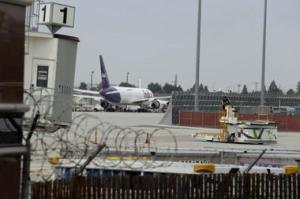
Solutions for Airport Perimeter Security As the aviation industry reels in shock as a teenage stowaway breaches airport perimeter fencing to board an aircraft bound for Maui, even more serious questions are raised about airport security. Video surveillance footage clearly shows the boy make his way across the tarmac and climb into the wheel well of the plane, yet it was missed.

Since 9/11, airport security has been stepped up, or so we thought. There are increasing numbers of airport breaches being reported, articles claiming that passport checks are not being accurately carried out and monitoring equipment not being monitored.

Holes in security are most certainly there. Although security cameras are installed, they must be manned consistently to be effective. Airport perimeter fencing is more effective at keeping animals from the runway than people, it is said.

Officials are concerned and according to the New York Times, portions of the fencing at the airport are falling down in places.

Airport Security Solutions Providers

While the reason for the disappearance of flight MH370 is still unclear, Malaysian Defence Minister, Hishammuddin Hussein spoke earlier this week about the suggestion from investigators that the behaviour of the aircraft before vanishing from radar and radio contact was ‘consistent with deliberate action’ by someone onboard. Malaysia has agreed to ‘step up’ airline and airport security measures.

The comments followed strong advice from industry experts to consider better security measures across the world to minimise the threats against security. Malaysian Home Minister, Ahmad Zahid Hamidi confirmed that officials were re-examining security within airports and particularly at Kuala Lumpur International and consistently around airport security procedures and protocol for key entry points.

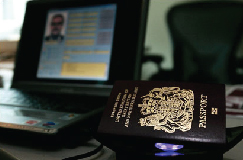
Malaysian authorities have confirmed that they do not check the Interpol database of lost and stolen passports, explaining that there are compatibility and speed issues with the system. This is in spite of the fact that the database contains more than 40 million entries. Early indications show that the stolen passports used to board flight MH370 had been reported missing more than 12 months before.

According to security experts, Malaysia could effectively enhance passenger screening with the use of current security measures if carried out correctly and efficiently without causing severe ground delays and by working with International law enforcement groups, such as Interpol.

“It’s very much the case that global organized criminal networks have exploited the lax government arrangements in Southeast Asia,” said Mr Carl Ungerer, lecturer of International relations at Australian Bond University, ‘Countries in the region should improve coordination between law enforcement agencies on intelligence sharing.’

‘We have increased security and enhanced monitoring procedures on board all our aircraft. However, for security purposes we are unable to discuss any such procedures publicly,’ a Malaysia Airlines spokeswoman said.

More About Advance Passenger InformationIt has been revealed that as many as 20 million passports per year may not be receiving proper consideration in the UK alone. These shocking figures come as the Home Office estimated that only 90% of Advanced Passenger Information (API) is being received. API is passenger data that is electronically gathered and transmitted to government and border agencies for checking and comparison to international ‘at risk’ registers. API can detect high risk passengers on ‘no-fly’ lists across the world and can ensure that terrorist activity is kept at bay.

If these estimates tell us that 10% of UK API is not being received, this could spell an average of 20 million passports that are not being checked properly. Interpol say that countries are not doing enough checks against its list of stolen passports. Globally, this figure could reach up to one billion passengers; a disturbing figure.

API is mandatory for all passengers travelling to and from the US and has been so in the wake of the official investigation into the tragic events of 9/11. Last year, the EU questioned the use of API with regard to the privacy aspect and raised issues about the use of the information, once gathered and checked.

Once reported stolen, UK passports are cancelled and deemed unusable for travel. International stolen passports are entered into the Interpol Lost and Stolen Database, accessible by border security agencies for comparison.

The Home Office are looking into the figures to clarify the situation and are working towards improving coverage.


Providers of Passenger Self Check-in Solutions & TechnologyIt has been announced that the Australian Immigration Authority will trial the use of the SmartGate passenger self check-in facility for Singaporean travellers this year, allowing them to join US and Swiss electronic passport holders in the trial. The successful SmartGate system is already in use permanently for Australian, New Zealanders and UK citizens, processing over four million passengers during 2012 and 2013.

The SmartGate system is an electronic, self check-in programme that speeds up passenger processing in eight airports across Australia and allows passengers to be expedited through passport control. The benefits have been felt particularly during peak times and busy periods.

The trial will eventually extend to further countries during 2014, with a view to rolling out the system in full force by 2018, when Australian immigration expect more than 80% of travellers to be in possession of the ePassport. The focus can then shift to monitoring for ‘high-risk’ passengers that may pose a threat to the borders.

eBorders technology is designed to bring flexibility to airport operations in order to manage secure integration with border security and government mandates, managing not only the check-in process, but careful screening and delivery of API.

Logan Teleflex France has been awarded a contract for the deployment of a new baggage handling system in Warsaw Chopin International Airport.

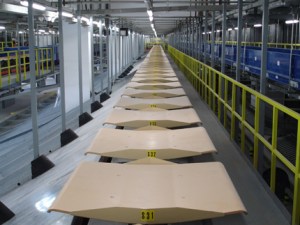
Superior Baggage Handling System ProvidersIncluding the next generation M700RF Tilt Tray Sorter, the 7.5 million Euro baggage handling system is a part of a development programme for the airport that it expected to be operational by 2015. The baggage handling system will work in conjunction with an adjacent sorter in the Terminal A complex at the airport and should be up and running by summer 2014.

Warsaw Chopin International will benefit from streamlined operations within the baggage handling system in addition to SCADA/PLC controls and the use of a Logan Sort Allocation Computer System.

The fully automated system includes an electric tip action, controlled by a radio signalling system, and will feature handling equipment with conveyors, pushers and ploughs using Logan and Daifuku technology.

An additional 29 destinations can be handled from the 48 check-in desks using the new system.

Industry Leading Passenger Processing Solutions from ARINCARINC Inc will continue to provide Hong Kong International (HKIA) with a full suite of passenger processing and bag drop solutions for the next five years, it has recently been announced.  In addition, support and maintenance services will also be provided.

HKIA, voted the world’s best airport, have been using ARINC technology and solutions since 2008.  Their MUSE, common-use systems and bag drop solutions, including BagLink baggage messaging and fallback tag services have been successful in enhancing operational efficiency.  In addition to the contract renewal, a new agreement has been signed to provide maintenance services and round-the-clock technicians with ARINC Managed Services division (AMS).

“With HKIA being one of the largest engineering and architectural developments in the world, the passenger system deployed by ARINC has been one of the most complex, comprising more than 1,300 common-use workstations located in Terminals 1 and 2, and Skypier of the Airport. The deployment also includes two off-site Airport Express train stations in Hong Kong, and multiple Upstream Check-in facilities at ferry terminals and bus stations in China and Macau,” said Glen Oliveiro, Director of Aviation and Ground Systems Solutions, ARINC.

“Since our founding 84 years ago, ARINC has been a trusted partner to the world’s leading airports and airlines. The fact that HKIA, one of the world’s largest airports and a major gateway into Asia, trusts ARINC to undertake this project is a testament to our commitment to providing the best technology and solutions to satisfy our customers’ needs,” said Michael DiGeorge, Managing Director of ARINC in Asia Pacific. “Having had a presence in Asia Pacific through our regional HQ in Singapore since 2003, this partnership with HKIA is also strategic as it underlines ARINC’s dedication to this rapidly-growing region.”

“Established on the principles of Safety, Operational Efficiency, Customer Convenience and Environment, it is of utmost importance that HKIA, being one of the world’s busiest passenger airports, uses a stable and reliable common platform. ARINC has consistently delivered reliable performance and quality, leading to improved efficiency in passenger processing and operation productivity over the past five years,” said Andy Bien, Chief Information Officer, Airport Authority Hong Kong (AAHK).

Automated Border ClearanceHamad International Airport in the State of Qatar has awarded a contract for 64 e-Gates, equipped with Automated Border Clearance Biometrics to be integrated into the infrastructure of the airport operations.

The technology, including face, fingerprint and iris recognition biometrics will bring enhanced automated border clearance, speeding up passenger processing and streamlining operations at the airport.

Vision-Box, who has been awarded the contract are honoured to be a part of the implementation of the state-of-the-art systems.  “The Middle-East is a market that continues to show enormous potential, where we have invested for some years now and we look forward to further contribute to the various on-going Identity Management programs, as well as supporting the different GCC initiatives in similar projects, by continuously investing in local resources” said Jean-François Lennon, Director of International Business Development at Vision-Box.

Automated Border Clearance Systems are in operation across the globe and can greatly improve operations within the terminal buildings, helping passengers and airport staff with the streamlining of procedures, which before could be exhaustive both physically and operationally.

Other eBorders providers, such as ARINC Inc, bring enhanced automated border clearance technology solutions, including automated baggage handling, self-service kiosks for check-in and bag drop and advanced passenger information systems for the delivery of vital and often mandatory passenger data.

With the rise in international travel, imports and exports across Europe, border management is proving to be increasingly difficult, due to the simultaneous rise of illegal immigration, drug crimes and human trafficking.  As a result, border management is soaring to the top of the priority list in many European countries.

Border agencies are seeking new and efficient ways to lower the risks of these activities and up the border management in their countries.

The Border Management and Technologies Summit will address these issues and discuss solutions such as increasing the use of biometrics, access control, surveillance and advance profiling to name a few.

Industry-leading companies, such as ARINC, provide tailored electronic border management solutions to the marketplace as a part of their extensive suite of services, to enhance border control and passenger data management.

High levels of illegal activity border-wide and corruption within the companies guarding Nigeria’s border has prompted a Chinese firm to apply to install electronic borders control equipment at a cost of approximately 244 million U.S. dollars.

Electronic border management deployment would tighten security immensely, reducing the temptation to try to access Nigeria’s borders illegally.  With enhanced security, and the reduction of illegal border activity, it will be possible for Nigeria to develop its borders and increase commercial promotion.

“Until now, what we had was a proposal from a private Chinese company with which we had also entered into a Memorandum of Understanding (MoU) to provide for an electronic border control and the cost of the equipment was approximately about 244 million U.S. dollars”, Interior Minister, Abba Moro said, adding, “With the assistance of the U.S. State Department, we realised that some components of the offer we got from the private firm was contained in what the State Department would be offering us”.

With the help of U.S. State Department, the Nigerian Interior Ministry hope to deploy advanced surveillance technology in addition to electronic borders equipment.