Archive

Tag Archives: border management systems

This day and age it is very important that we ensure that border control is secure and therefore essential that no unauthorised travellers enter the country. This is where the Border Management Solutions from ARINC facilitate improved airport operations and border security whilst offering competitive pricing.

It is a legal responsibility of airline carriers that migration laws and regulations are adhered to and therefore a necessity to be aware of and comply with a wide range of legislation and regulations relating to national border control procedure and admittance. Failure to supply API and interactive API (IAPI) airlines can end up with huge fines.

Therefore, Messaging for Government Mandated Authority to Carry requests and responses and Advance Passenger Information is vital. With a flat monthly fee, whole service or charge per flight ARINC makes things simple and easy to ensure manageable costs.

ARINC controls the world’s largest private global network with a highly secure and reliable service that is competitively priced. For more info: electronicborders.com

This week we heard that the Border Agency currently has a backlog of 276,000 immigration cases and private companies are tendering for the contract to deal with them.
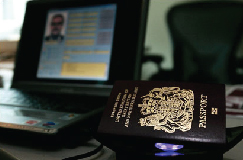
Business Aviation News - Border Management Solutions

Business Aviation News – Border Management Solutions

It is a sad fact that a third of immigrant overstay in the UK. Passenger records held in the e-borders database, which covers details of all flights outside Europe to and from Britain, will be checked and there will be careful monitoring of the 100 immigrants whose visas expire daily.

MPs sitting on the Commons Home Affairs Committee said the UK has become a ‘Bermuda Triangle’ for migrants, a country where it is ‘easy to get in, but impossible to keep track of everyone, let alone get them out.’

So what part do the airlines play in prevention of this problem?

The legal responsibilities of airline carriers are found in the migration laws and regulations of the state that grants those rights to land. All carriers must therefore be familiar with, and comply with, a wide range of legislation and regulations relating to national border control procedure and admittance.

This is detailed in Annex 9 of ICAO’s Convention on Civil Aviation, known as the Chicago Convention which covers the obligations on Carriers and states regarding the Facilitation of people and implementation of Border Control.

Having effective and harmonised guidelines to deal with:

•the communication of advance passenger information

•improperly documented travelers

•the denial of boarding to potential asylum-seekers

•and arrangements in regard to inadmissible passengers who are in transit

are important for airlines and airports to meet their obligations and provide the highest levels of customer service, as well as keep control of operational costs of staff and IT systems incurred as a result of new security requirements and mandates.

An effective solution for airlines?

The ARINC Border Management System is designed to adapt to the changes in operational process and support new technology, enabling Border Control agencies to flex with changing demands and capabilities.

Today it is not enough to simply secure borders from unauthorised entry by known undesirables. Now it is necessary to manage the stay of travellers, from entry through to exit, to know who has been in the country and when they left.

The ARINC Border Management System delivers a full stay management capability, screening all travellers before they travel, and managing visitors throughout their stay.

The ARINC Border Management system is a role-based system, managing entry and exit processes, and improving traveller flow at the primary line. The system supports secondary line investigative processes, enabling immigration, customs and other agencies to co-ordinate resources for a holistic view on potential threats.

For more information please visit ARINC Border Management Solutions

Director of Immigration for the Dominican Republic Jose Ricardo Taveras introduces ARINC representative Jorge Ramirez (far right).
(Government of the Dominican Republic)

The ARINC Electronic Borders solutions have been seen again in the news this week after ARINC announced that the government of the Dominican Republic had chosen them for all air and maritime border security solutions.

A press conference was held to introduce ARINC to the transport sector as the technology provider of choice for aviation and maritime advance passenger information (API) system solutions to help secure the nation’s borders.

ARINC’s ability to meet the government’s border security requirements with expertise, technology competence, and cost-efficiency defined them as the clear choice for Dominican Republic officials. Other providers did not have the qualifications to meet the necessary air and maritime technology requirements. The country has plans to work with ARINC to implement an advance passenger information system for ground transportation.

ARINC’s API and PNR solutions form part of the ARINC Electronic Borders portfolio, developed to meet today’s challenges in border security. For more detailed information on how ARINC can help airlines, agencies and operators manage the complete stay of passengers in a cost efficient way please visit electronicborders.com

ARINC AviSec - Passenger Data Transfer & Advanced Passenger Information - airline passenger data & aircraft communications - ARINC business aviation security

ARINC AviSec – Passenger Data Transfer & Advanced Passenger Information – airline passenger data & aircraft communications – ARINC business aviation security

Passenger numbers at UK airports is growing 5% per year – meaning that the airports are under increasing pressure to process more passengers, more quickly, with ever more stringent security checks.

Whilst automatic gates and iris/fingerprint recognition help to improve the passenger processing experience one suggestion to help alleviate the problem has been earlier delivery of advance passenger information.

The use of passenger data in advance would allow screening, prior to arrival. Passengers are already required to provide data about themselves and their journey at different points before departure. From the outset, they supply key information as part of passport and visa applications. This basic identity and biographic information is being strengthened through the linking of the passport or visa to biometric data, fingerprints, facial images or iris scans. In addition, individuals increasingly provide further information to the airline through advanced passenger information when they reserve their ticket and then, at check-in, creating an assured picture of individual and travel plans.

Consolidating this data and making it routinely available to immigration authorities as soon as it is collected will enable them to carry out effective profiling and pre-clearance of travellers. Authorities will be able to use this data to identify in advance any potential risks to public safety, national security or association with criminal activity. .

The challenge for airlines and operators is transmitting this data effectively. When choosing a provider of passenger data transfer airlines need to be assured that they not only receive a reliable and cost efficient solution at the present, but that they are using a provider that can cope with future innovations, such as those suggested here.

ARINC has been delivering high-performance messaging the aviation for over 50 years and is the innovative leader in aircraft communications. Their AviSec Messaging product deals directly with this and customers can rely on an accurate service that will evolve with border security developments. For more information please visit: avisec-messaging.com

This month we heard that Tan Son Nhat International Airport has asked ARINC to continue their contract to provide maintenance and support services for its passenger processing systems. Multiple products are in place there including the common use system, which processes passengers faster and more efficiently by sharing airport infrastructure and resources

“We are very pleased to renew our maintenance contract with ARINC,” said Mr. Tran Van Thang, Deputy General Director of the former SAC. “They have provided us with an exceptional level of support, and our customers, including the airlines and ground handling companies have given us very positive feedback on system performance.”

ARINC offers a multitude of multi user system environment solutions for passenger processing at airports.  vMUSE Enterprise, the latest version of ARINC’s well-known MUSE® (Multi-User System Environment) common use platform, combines the security and reliability of vMUSE with advanced virtualisation technology to provide seamless, multi-airline check-in without having to install and manage on-site servers and platform software.

For more information please visit: www.vmuse-enterprise.com

Virtual airport common use systems

Virtual airport common use systems

Electronic borders have been regularly in the news over the last few months and years so I wanted to do a focus on what they have to offer both individuals and airlines. The UK Home office wants to implement e-borders to improve border security by screening travel document information (TDI), otherwise known as Advance Passenger Information (API), on people travelling to, and from, the UK. Already routinely submitted by airlines this data can be used both for border security and has the potential to deliver improvements to migration and population statistics.

e-Borders works by taking biographical TDI (API) of passengers and crew members via their air, sea or rail carrier prior to travel either into or out of the UK. TDI is the biographical data on a travel document i.e. name, date of birth, nationality, gender, travel document type, state of issue, number and expiry date. The information is provided electronically to e-Borders by the airlines, who are legally responsible for collecting the data.

Airline Responsibility

The legal responsibilities of airline carriers are found in the migration laws and regulations of the state that grants those rights to land. All carriers must therefore be familiar with, and comply with, a wide range of legislation and regulations relating to national border control procedure and admittance.

Having effective and harmonised guidelines to deal with the communication of advance passenger information, improperly documented travellers, the denial of boarding to potential asylum-seekers, and arrangements in regard to inadmissible passengers who are in transit are important for airlines and airports to meet their obligations and provide the highest levels of customer service, as well as keep control of operational costs of staff and IT systems incurred as a result of new security requirements and mandates.

Border Management Systems

There are a wide variety of border management systems available. The ARINC Border Management System is designed to adapt to operational changes new technology, enabling quick integration with new Border Control agencies demands and requirements.

The ARINC Border Management system is a role-based system and offers a full stay management capability, managing entry and exit processes, and improving traveller flow. The system supports secondary line investigative processes, enabling immigration, customs and other agencies to co-ordinate resources for a holistic view on potential threats.

Affordability?

All airlines, but especially those in business aviation need to consider cost in addition to effectiveness.  The complete ABMS solution features an adaptable platform to protect your investment long term and the flexibility of a local, distributed, or cloud configuration. For more information please visit: www.electronicborders.com

ARINC Electronic Border Management System

ARINC Electronic Border Management System

Tens of thousands of football fans will be arriving this arriving in Poland this summer to attend the EURO 2012TM tournament matches. The Gdansk Lech Walesa Airport has recently more than doubled its passenger capacity by increasing airside infrastructure and adding a second passenger terminal

The sharp increase in passenger numbers expected has led the airport to chose vMUSE Enterprise hosted technology from ARINC Incorporated as its common-use passenger check-in and departure solution.

ARINC say “Unlike common-use systems that require costly IT hardware on site, ARINC’s vMUSE Enterprise solution delivers passenger processing as an Internet service. The check-in and departure functions use inexpensive “thin client” terminals in conjunction with an Internet connection.”

Because the data processing for vMUSE Enterprise occurs at an off-site data centre managed by ARINC, there is no need for the costly servers, core rooms, and computer workstations typical with other common-use systems. The need for on-site server maintenance, back-ups, and health checks is also eliminated. Airports can lower their IT capital and support costs while enjoying advanced common-use passenger services with improved overall system reliability and security.

As an added benefit, vMUSE Enterprise greatly reduces power consumption compared with conventional server-based core systems, enabling airports to lower their carbon footprint.

Along with Warsaw, Poznan, and Wroclaw, Gdansk is one of Poland’s four Host Cities with venues for the UEFA (Union of European Football Associations) EURO 2012 matches. With the opening of Terminal 2, Gdansk Lech Walesa Airport will serve 5.0 million passengers a year. In addition to facility improvements for EURO 2012, the airport will enact a special management plan to ensure efficient and friendly service for the volume of fan traffic expected from all over Europe.

The Canada Border Services agency (CBSA) has introduced new reporting guidelines in response to privacy and data quality concerns. ARINC announced this week that it will use its product Electronic Borders to assist the migration of airlines to the new Canada Border Services Agency (CBSA) Advance Passenger Information (API) and Passenger Name Record (PNR) Push Program.

ARINC Electronic Borders

ARINC Electronic Borders


The program accepts a direct transfer of API/PNR data from air carriers and service providers. Airlines that use ARINC network solutions can send API/PNR messages directly to CBSA via the carrier’s reservation and departure control system or global distribution system. “ARINC technology offers the flexibility to support any airline in meeting the CBSA’s new API/PNR initiative,” said Thad Baringer, ARINC Business Development Director, Global Networks & IT Solutions.

“ARINC achieved a major milestone in January by transmitting its first live API message between airlines and the new CBSA data acquisition system,” stated Baringer. “We continue to offer seamless interoperability with existing airline technology and CBSA.”

CBSA set an initial compliance deadline of December 31, 2011 which was extended to March 31, 2012. The agency continues to work with airlines to migrate to the new data acquisition system.

ARINC’s Electronic Borders products are robust and safe, with a proven track record of four years live deployment and millions of passengers cleared in Europe. It aligns with current strategic e-Border security initiatives, supports the existing tight security rings and complies with the inspection processes already in place; all while keeping Border traffic moving as efficiently as possible. For more information please visit:

ARINC Incorporated announces the deployment of its Advance Passenger Information System (APIS) messaging service to support message transmission to the Netherlands Ministry of the Interior and Kingdom Relations. ARINC’s EMEA Government & Security Division has installed the new APIS service, in full cooperation with the Identity Management & Immigration (IDMI) programme directorate to support its Innovation Border Management Programme (Vernieuwing Grensmanagement or VGM).

ARINC Delivers Advance Passenger Information (APIS)

ARINC Delivers Advance Passenger Information (APIS)

The ARINC solution interfaces seamlessly with the existing IDMI border control system. “ARINC greatly values the relationship we have established with the IDMI programme directorate and the Royal Netherlands Marechausse (Koninklijke Marechausee – KMAR), which has stretched back to the successful pilot programme from 2009” stated Ray Batt, ARINC Director, Government & Security.”ARINC is eager to become an important technology partner to the Ministry of the Interior and Kingdom Relations and to assist the Netherlands in reaching its future Border Control objectives.” “This APIS system based on our latest Advance Passenger Information eXchange (APIX) platform is a natural complement to the wider innovative border control solutions already deployed in the Netherlands”, stated Ray Batt. “We strongly believe that the future will demand a continuous increase in the integration of intelligence led border control systems.”

ARINC is committed to providing advanced border management solutions that encompass network transport technology, a messaging service, and message format translations in an effective, reliable, and cost-effective manner. These capabilities perfectly link to the proven expertise of the Identity Management & Immigration (IDMI) programme directorate and the Royal Netherlands Marechausse.

Industry-standard API messaging, part of the ARINC Electronic Borders security portfolio, is increasingly demanded by government agencies because it provides pre-arrival and pre-departure manifest data on all passengers and crew, improving the security of national borders. ARINC Electronic Borders provides a portfolio of border solutions to manage the entry and exit of travellers entering or leaving a country via Air, Sea, or Land borders. ARINC can tailor and scale each solution to meet specific customer requirements, while also meeting industry standards sought by international trade organizations and governments.

The Netherlands APIS project signifies another significant milestone in ARINC’s aim to become a premier provider of Electronic Borders solutions within the Europe Middle East and African region.

For more information on advance passenger information systems please visit AviSec Messaging or for complete border management solutions visit Electronic Borders. .

Border Management Under The Spotlight

Border Management Under The Spotlight

Border security & Border management systems have been in the news again this month with the new deal between the UK & Ireland to crack down on illegal immigration.

The two countries will share information on visa applications, including fingerprint biometrics. The UK Borders Agency says the deal could create “considerable savings” on removing foreign nationals with no right to stay.

Ultimately there could be joint entry standards and “enhanced electronic border systems”.

The new system will help identify those with no right to enter the so-called common travel area – comprising the UK, Ireland, the Channel Islands and the Isle of Man – before they arrive at the border.

Electronic Border Systems, such as those offered by ARINC are essential for all countries. The ARINC Border Management System (ABMS) offers real time threat protection and is designed to adapt to the changes in operational process and support new technology, enabling Border Control agencies to flex with changing demands and capabilities.

Today it is not enough to simply secure borders from unauthorised entry by known undesirables. Now it is necessary to manage the stay of travellers, from entry through to exit, to know who has been in the country and when they left.

The ARINC Border Management System delivers a full stay management capability, screening all travellers before they travel, and managing visitors throughout their stay.

For more information visit http://www.electronicborders.com/.