Archive

Tag Archives: aviation operational messaging

Read more about Advance Passenger Information SystemsThe Royal Oman Police have issued a warning to citizens wishing to travel abroad to ensure that passports due to expire within the next six months are renewed to avoid problems at their destination airport. At the moment, airlines take only the name of the passenger before the issue of tickets.

This follows repeated complaints from travellers to many countries that refuse to accept passports with less than six months before the expiry time. Although the rules are in place, travellers still neglect to renew, yet still complain.

The upcoming mandates for advance passenger information will soon be in place and passports due to expire will be recognised immediately and ticket issue will be denied in advance. According to official sources, 99% of travel agencies do advise passengers to check the dates of issue and expiry in their passports, but still the problem remains.

Advance passenger information systems are mandatory in the US and this trend is spreading across the globe as aviation security measures tighten. The API system enables governments and border agencies to track and monitor the movement of passengers across the world, and identify high risk passengers in time to perform additional security checks, whilst expediting low risk travellers. The system helps to streamline the passenger processing system and minimises ground delays and associated costs.

Once advance passenger information is in operation, passengers will be required to provide passport as well as personal details before travel. The expectation is that there will be an influx of passport renewals in the Oman, which is likely to cause severe delays within the system. Those wishing to travel are strongly advised to check their passports in advance.

Advanced Information Management Systems ProvidersAviation access management solutions are essential to maintain seamless access control within airports and secure facilities and the marketplace welcomes the latest expansion from Global Elite Group (GEG) this week. Secure Swipe is a portable hand-held unit that utilises a bar code, magnetic strip and RFID reader.

 “Aviation management requires a critical eye to identify where vulnerabilities are, that must be addressed. Having a unit which tracks and records where workers go will accomplish this goal,” said William McGuire, president & CEO of GEG.

The system, specifically designed for the aviation industry, adds a level of mobile security to a platform that improves basic entry security, including outside entry points with documented activity and serves as a guard tour to record an operator’s location.

Comprehensive aviation security is critical on many levels and access management solutions bring a layer of reliability to monitoring the in and outflow of airport staff. Access management solutions providers can enhance overall operational productivity and help to manage costs within the airport infrastructure.

spicejet 02-06India’s Directorate General of Civil Aviation (DCGA) has demanded all carriers to submit their financial statements by the deadline next week or face the cancellation of their aviation licences. The request is part of a program to ensure that loss-making carriers maintain standards in relation to safety and is not intended to be a financial audit.

The DGCA has raised concerns that airlines that have reported financial losses will compromise on safety due to a lack of funding, particularly following the recent escalation of competitive pricing within a so-called ‘airfare war’.

Notices have been issued to major Indian carriers, such as Air India (AI) and Jet Airways in addition to the low-cost carriers GoAir, SpiceJet and the only profit-making carrier, IndiGo.

An official representative from the DGCA said, “Many Indian carriers have ordered new planes, which we believe does not match with their financial performance. We also need to see how much is spent against different heads, on safety, engineering, infrastructure, salaries and other mandatory requirements. We just cannot take any chance now. We will be presenting our case to USFAA. We have to prove that we have put in some best practices.”

Civil Aviation Secretary, Ashok Lavasa said, “We keep giving directions to the DGCA. They have to ensure they do it in compliance with the law.”

Aircraft Tracking ProvidersFurther discussion are encouraged once again by Tony Tyler, Director General of the International Air Transport Association (IATA) to implement global flight tracking as three months pass since the disappearance of flight MH370. Many airlines simply do not want to wait for an industrywide solution to real-time tracking.

IATA plan to put aircraft tracking proposals to the UN’s International Civil Aviation Organisation (ICAO) in September and believe standards could be in place within two to three years. Some airlines, however, do not want to wait and are looking into making arrangements much sooner than that. Qatar Airlines, for example, hosted a recent meeting of IATA in Doha last week and said that the ‘technology to track planes is available today’, and cited the possibility of adapting the ACARS system as an example.

The adaptation of ACARS, which delivers information in short bursts, is a real possibility for airlines to ensure tracking information is consistent without incurring extensive retrofit costs; using equipment that is already installed in the aircraft.

Qatar Airlines are amongst many that are expressing a serious interest in exploring the possibilities for the provision of real time flight tracking.

CPDLC for SESAR InitiativeA demonstration project of Controller-Pilot Data Link Communications (CPDLC) launched under the Single European Sky ATM Research (SESAR) initiative has been completed this week across UK and Italian airspace with commercial flights operated by AirFrance, EasyJet and Scandinavian Airlines.

CPDLC will help to reduce pilot workload and improve safety by automating many routine cockpit tasks, in turn increasing air traffic management capacity in overcrowded airways. The system will supplement voice communications and will reduce communication errors, bridging language barriers and other challenges.

The project was completed over 95 flights and operated with a team of 30 air traffic controllers and resulted in initial findings that show involved parties are ‘increasingly confident about the use of data link communications (CPDLC) in most operational conditions where radio telephony messages can be replaced.’

In the US, under the FAA’s NextGen program, similar trials are taking place to evaluate the effectiveness and efficiency of air traffic controllers being given the ability to send flight procedural information and revised clearance messages via CPDLC directly to the aircraft avionics systems.

The SESAR Joint Undertaking initiative (SESAR JU) plan to deliver the final results of all trials in July, ahead of the mandatory changes early next year.

Bombardier 01-06-14According to the Wall St Journal, an incident during ground maintenance testing of the Bombardier C Series jet resulted in an uncontained engine failure and has grounded the jet until an investigation is completed. Although the engine and body of the aircraft were damaged, no personnel suffered any injury.

The geared Turbofan engine (PW1500G) from Pratt & Whitney features a new fuel-saving concept that sees different parts of the engine running at different speeds. The incident is likely to cause further delays to the program that is already behind schedule.

Pratt & Whitney now face a major setback commercially, with the engine currently holding more than 5,500 orders from Bombardier, Embraer and for the Airbus A320neo series.

The company were not available for comment.

Find out more about airport operations The Airport Collaborative Decision Making (A-CDM) initiative, due to be launched by EUROCONTROL and ACI Europe early next year will attempt to gain the most from the current airways infrastructure that is threatening to be overwhelmed by 2035.

Airport operations must work closely with air traffic management departments to ensure that all departments have access to critical data sharing to enable the initiative to work at its utmost effectiveness.

This can be achieved, according to Lockheed Martin, by the implementation of airport operations software that will centralise key elements of data sharing and process management.

Lockheed Martin have developed Chroma Airport Suite to help make this process easier, similarly to ARINC’s Enterprise Hub web-based system.

Airport operations can benefit from web-based applications, giving customers the flexibility that they need to manage changing business and operational requirements and can aid a cost-sharing initiative to manage cost efficiencies across the entire messaging environment.

As the industry experiences growth, year-on-year, sharing data and information is becoming a necessity and web-based services can ensure streamlined messaging platforms that enable data sharing at source. This process in turn can optimise the A-CDM initiative with information at the fingertips of those who need it.

Honda Business JetHondaJet, a production model designed to carry up to seven passengers and crew in style has been unveiled at EBACE in Geneva this week. This much-anticipated debut from Honda was well-received, with the company proudly announcing several milestone achievements.

Honda, who have nine aircraft on the final assembly lines, said that the jet is ready for ground testing, having recently taken delivery of the first GE Honda HF120 engines. The first flights are expected to take place this summer.

“Honda Aircraft Co.’s most important goals are achieving Federal Aviation Administration Type Certification and delivering the first customer aircraft,” said Michimasa Fujino, president and chief executive. The final certification stages began in December 2013.

“The HondaJet production line is maturing with efficient and robust processes in place to build high quality aircraft,” Fujino said. “From handheld tablets that deliver worker instructions to an automatic guided cart to pick up and deliver parts, we continue to integrate the latest technology into our production process to create an efficient workflow.”

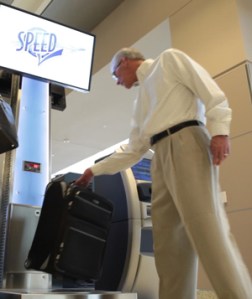
Automated Border Control BenefitsAtlanta International Airport have unveiled the latest in automated passport control in conjunction with the US Customs and Border Protection authority. The kiosks will operate in concourses E & F and will be available to passengers with Electronic System for Travel Authorization approval.

The system allows such passengers to submit their Customs Declaration and other travel and personal information electronically, which will reduce the time they will be required to spend with a CBP officer. The average reduction will be 20-40% in waiting time and will greatly improve efficient expedition of these passengers.

As passenger numbers grow across the globe on a yearly basis, many airports are looking into electronic border control solutions to increase passenger processing, while maintaining security. Ground delays are kept to a minimum, as ‘safe’ passengers can be expedited, leaving more time for border agencies to screen other travellers.

“These new kiosks will go a long way to improve the overall experience for our international customers coming into Atlanta because they provide a more efficient process for exiting customs,” said John Laughter, senior vice president for Delta`s Corporate Safety, Security and Compliance. “We strive to provide our customers with an enjoyable travel experience through all aspects of our operation including Customs and Border Protection checkpoints.”

Airline Operational Messaging with CPDLCL2 Consulting Services Inc have announced the grant of Supplemental Type Certificate (STC) validation from EASA to install Iridium Satellite Communications System of NextGen Aircraft 737-700/800/900/900ER.

L2 will now be able to offer European customers a fully certified NxtLink ICS-220A and IRT-2120 communications system that will give the flight crew a dedicated datalink channel, supporting Controller-Pilot Data Link Communications (CPDLC), FANS messaging, ACARS messaging and global voice channel.

Vice President of Operations for L2, Dean Rudolph said, “An EASA STC validation is required for European operators integrating FAA certified systems. We are delighted to now offer our European customers a fully certified Iridium Communications solution on the B737NG series aircraft.”