Archive

Tag Archives: aviation industry

Scott Ernest, CEO of Textron Aviation, who acquired Beechcraft earlier this year, told the WIBA gathering in Wichita last week that he was upbeat about the current state of the business.

“This is by far the best it’s felt in three years,” said Ernest, “I feel pretty good about how we’re progressing.” Continuing, he spoke about the merger of Beechcraft into the company and its Cessna business, “We’re pretty much done,” he said. “It’s amazing how quickly it’s been able to come together.”

He described how the merger of the businesses has not been difficult, citing one of the possibilities that many of the employees had worked at one or other of the companies at some point in their careers.

Mr Ernest is clearly proud of the company achievements and said, “It’s really a great opportunity to lead a company like this.” In particular, he noted that the Beechcraft acquisition gave Textron the special mission aircraft – King Air turboprops that can be utilised as air ambulance and surveillance aircraft both in the US and overseas.

Also discussed was the launch of the Scorpion tactical jet, which made an appearance at the Farnborough Airshow after a transatlantic flight earlier this year. The Scorpion is expected to be ordered by foreign countries first, with lower operating costs than those of its counterparts.
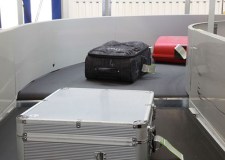

Other Major Providers of Baggage Systems in AirportsIn a project that will see Alaskan baggage handling improved by 2016, Ted Stevens Anchorage International Airport (ANC) has awarded a contract for upgrades and modifications to the baggage system in North Terminal, to Logan Teleflex, part of the Daifuku Webb Holding Company.

The project is expected to include recapitalisation of the current explosive detection system and upgrades to the physical baggage handling system currently serving Concourse C. In addition, significant expansion of the checked baggage resolution area will be carried out and alterations to the structural, architectural, mechanical and electrical building systems in a multi-million dollar deal.

Brian Stewart, general manager of Daifuku’s global airport baggage handling, said, “Our established partnership and collaborative efforts with ANC are aimed to provide a better experience for travellers. Our company continues to produce dependable baggage handling solutions that ultimately make travelling easier for passengers flying in and out of ANC.”

Aircraft Information Manager Certified by EASAEASA has certified the Rockwell Collins Aircraft Information Manager, the secure data transfer system for their avionics Pro Line Fusion, Pro Line 21 and Pro Line 4, for 22 models of business aircraft.

Aircraft Information Manager (AIM) can assist airlines and operators with the secure upload of critical flight updates and downloads of maintenance information using WiFi and cellular data connections across the globe. With automatic transfer, including Flight Management System (FMS), electronic charts, navigation and more, depending upon the avionics generation, the AIM system is set to take the business aviation industry by storm.

EASA certified the system for the following models of aircraft:

  • Falcon 50/50EX/2000 and 2000EX
  • Citation XLS+
  • Challenger 300/601/604 and 605
  • Gulfstream G150
  • Hawker 750/800XP/850XP and 900XP
  • King Air 200GT and 350
  • Piaggio P-180 Avanti II
  • Beechjet 400A Pro Line 21 Upgrade

Greg Irmen, vice president and general manager of flight controls, information systems and commercial systems for Rockwell Collins said, “This is the first round of AIM certification in Europe. In addition to Europe, we are planning certifications in Asia, Africa, and Central and South America.”


Advance Passenger Information System ProvidersAfter arresting 55 illegal foreign workers in three Metro Manila cities last month, the Philippines Bureau of Immigration is putting pressure on the Government to address Advance Passenger Information in a bid to quell illegal activities.

“We will also coordinate with the Department of Foreign Affairs to formulate measures in screening the subjects prior to issuance of entry visas to the Philippines,” said spokesperson Elaine Tan, likening the search for illegal foreigners, once within the metropolis to “finding a needle in a haystack.”

The provision of Advance Passenger Information would alert the border control agencies of such potential illegals before they arrive in the Philippines.

The arrests were made following an anonymous tip-off that workers were operating illegally on construction sites and in retail establishments. Elaine Tan confirmed that the workers would be deported if they fail to produce the relevant documents to support their employment status.

Border Control Solutions ProvidersIt has been announced that a four-year agreement has been signed by the Danish Government for the implementation of biometric-based border control solutions, encompassing enrolment and automated border control.

The contract has been awarded to the consortium of Biometric Solutions and Vision-Box, who will deliver the equipment and related services to the Danish Ministry of Foreign Affairs with an aim to improve processes related to the electronic identity of citizens.

Using biographic and biometric enrolment, via advanced Identity Management solutions, the information collected will consist of facial recognition and fingerprint biometric data in addition to digital signatures. This will provide enhanced security checks for citizens and foreign visitors and can be used for visa applications, resident permits and passport applications.

“We look forward to working with the Danish Government, and our partner Biometric Solutions, to provide the best citizen experience ever. For that, we are committed to providing state-of-the-art technology, designed to offer more efficient and convenient services related to electronic Identity,” says Jean-François Lennon, director of Global Business Development, Sales & Marketing at Vision-Box.

Alex Ramskov Johannsen, CEO of Biometric Solutions says: “We are very happy that our collaboration with Vision-Box will help government institutions raise their service level for citizens around the world, while at the same time strengthening the security measures protecting citizens’ personal data.”

Across the globe, border control solutions are being utilised with advanced technology that ensures enhanced security in a bid to reduce immigration problems and monitor high risk individuals.


Other Providers of CPDLC SolutionsHungaroControl, Hungary’s Air Navigation Service Provider, have announced the modernisation of ATC with the implementation of Controller Pilot Data Link Communications (CPDLC) under the Single European Sky initiative.

CPDLC reduces the reliance upon voice communications and can streamline the messaging system between pilots and ground operations, improving efficiency and safety through reduction of pilot workload in the cockpit. CPDLC uses VDLM2 avionics to enable aircraft FMSs to receive data link communications regarding route clearances, weather information and other mission critical transmissions.

“HungaroControl is also in the vanguard of developing the CPDLC technology in Europe, and we are convinced that using data link communication may considerably improve flight safety and the capacity of air navigation service providers,” said Kornél Szepessy, chief executive of HungaroControl.

The CPDLC changes in Hungary will fall in line with the mandates for the Single European Sky by February 2015.

Other Leading Providers of Business Aviation ServicesIt has been announced that Aircell, Gogo Inc’s business aviation communications provider, has been rebranded to firmly define the company’s two divisions – commercial and business aviation – and will now be known as Gogo Business Aviation.

Business aviation service providers bring aircraft communications services to the business aviation sector exclusively. Many providers have two divisions, as the requirements differ hugely in each sector.

Aircell has been trading since 1991 and are well-known for in-flight connectivity and Wi-Fi solutions using satellite network availability.

“Gogo’s mission is to advance aviation by connecting every aircraft with the most trusted communications services on and above our planet. Having our commercial and business aviation divisions share a brand will make more people aware of the full breadth of our business,” said Gogo’s president and CEO, Michael Small. “The rebranding will also help travellers recognize their favourite Gogo services, whether they’re aboard an airline, corporate, fractional or charter aircraft – anywhere in the world”.

“We’re thrilled to introduce Gogo Business Aviation as the next evolution of our brand,” said Gogo Business Aviation’s executive vice president and general manager, John Wade. “The past five years has seen a remarkable menu of in-flight capabilities emerge for business aircraft operators, including Internet, e-mail, voice, texting, personal smartphone usage, movies, TV episodes, news, weather, cockpit data and more. And at the same time, the onboard equipment has become orders-of-magnitude smaller, lighter and more affordable. These truly are exciting times.”

The rebranded division will also be relocating its headquarters to larger premises a short distance away to fully appreciate the focus of its market, while continuing to share expertise and technology, in addition to the brand name.

Aviation Consultancy for Streamlining Aircraft MessagingA plan to modernise the aviation communications and navigation system in NZ has been announced today by the Transport Minister, Gerry Brownlee. Named the National Airspace and Air Navigation Plan, the system will enable the introduction of technological solutions to improve safety, emissions and journey times for travellers and operators in the aviation sector through the ‘Southern Sky’ initiative.

The NAAN Plan covers eight key elements of New Zealand’s aviation system, namely: navigation, surveillance, communication, aeronautical information management, air traffic management, airspace design, aerodromes, and meteorological services. Working with the FAA, the plan directive will aim to improve overall flight efficiency and help operators to manage the costs of mission critical transmissions.

“This plan outlines how the government and aviation industry will manage the transition from ground-based to modern satellite-based navigation and surveillance technologies, digital information and communication systems, and streamlined air traffic control,” Mr Brownlee says. “It promotes the uptake of new technologies with an estimated economic benefit of almost $2 billion over the next 20 years. These technologies have the potential to bring about significant improvements in efficiency, safety and environmental outcomes in the aviation sector, especially as air traffic volumes increase. As the new technologies are implemented, passengers will benefit from shorter, more direct flight paths and fewer delays”.

Some of the changes will require aircraft operators to make retrofit upgrades, which will mean investments in new equipment. It is hoped that a portion of these cost will be recouped through the efficiencies and lower operational costs as a result of the changes. Smaller operators and private pilots should receive consultations via the Plan and the CAA to ensure that the financial burden can be spread, with a smooth transition between what pilots and operators need in the short term and what they will need for future operations.

Changes to controlled airspace, a part of the Plan, will give private pilots the opportunity to fly in a bigger area without the need to retrofit their aircraft.

Other Providers of Electronic Border Security SolutionsThe UK will be required to pay a US defence company £224 million after a London tribunal found that a border security program contract termination was unlawful.

Raytheon Systems were awarded the contract for the provision of electronic borders, through a program devised in 2003 for the collection of Advance Passenger Information. The Home Office claim that Raytheon missed milestones in 2010 and parts of the program were running at least a year behind.

In spite of this, the damages award consists of £126 million for assets in the form of computer systems that the company had delivered prior to termination of the contract and a further £50 million has been awarded in damages to Raytheon. The decision was described as a ‘catastrophic result’ by Keith Vaz, following receipt of a letter from Home Secretary Theresa May.

“The government stands by the decision to end the eBorders contract with Raytheon. This decision was, and remains, the most appropriate action to address the well-documented issues with the delivery and management of the program,” she said.

A new border security program is being developed.

Understand Type B Messaging with ARINCType B messaging can be perceived as complex, confusing and containing an unimaginable mass of data. These would all be correct assumptions to make and operators all over the globe are paying enormous amounts of money for the transmission of millions of these messages every single day.

Type B messages are transmitted for a wide range of reasons within the aviation industry including, but not limited to:

  • ACARS messaging
  • Filing flight plans
  • Exchanging mission critical messages with partner businesses
  • e-Ticketing transactions
  • Maintenance orders
  • IATA and non-IATA messaging

This complicated form of messaging must be seamlessly reliable to avoid ground-delays and to ensure continuation of operational productivity.

Type B aviation messaging consultancy providers can help to take some of the complexity out of the equation and can help operators to understand Type B in order to enable them to simplify their systems and ultimately save money by doing so. ARINC have a Type B messaging consultancy service and draw on more than 8 decades of industry experience. Take a look at their unique messaging calculator and see how much you could save.