Archive

Tag Archives: aviation communications

More Information About HFDL from Global Providers Rockwell Collins' ARINCA trial program has begun this week spearheaded by Rockwell Collins and involving nine global airlines to test the communications giant’s new ARINC MultiLink flight tracking service, which promised to be one of the most cost-effective solutions to the much debated problem for airlines.

Using multiple data sources, including satellite, HFDL performance data, ADS-C, radar, ACARS and EuroControl positioning data, the ARINC MultiLink reports the location of an aircraft reliably anywhere in the world.

Trials are being conducted in Europe, Middle East and Asia, North and Latin America. Participating airlines have been selected for their geographic diversity, according to Yun Chong, vice president of commercial aviation services for Rockwell Collins IMS.

Once the trials are completed, the service is expected to be widely available towards the end of 2015.


Find Out How Your Aviation Business Can Save on Aircraft Messaging CostsSuperior Aviation Group, Texas-based aviation supply company with headquarters in China, have announced the formation of AvConsulting Services with a primary objective to provide aviation businesses with support and consultation services for aircraft operations in China.

It is not unusual for aviation companies to branch into consultancy services. ARINC provides consultancy for aircraft messaging and aim to save businesses more than 30% of mission critical messaging exchange costs across the board.

Find Out More About Malaysia's Senai Airport Malaysian AirAsia has launched the first automated self-service baggage drop system in the country at Senai International Airport.

The system, which includes self-tagging, check-in and baggage drop, is fully automated and gives AirAsia passengers complete control of the check-in process, saving time and simplifying passenger processing for the airline.

Automated self-service check-in is revolutionising passenger experience all over the world, offering a streamlined experience for both passengers and airports. Airlines are able to manage costs more efficiently with a self-service system, as more passengers book and check-in online and arrive at the airport with pre-printed boarding passes. The system at Senai allows passengers to use the kiosks at the airport to print bag tags before using a handheld scanner to process both this and their boarding passes without any intervention from airline personnel.

Other providers of self-service kiosks, such as Rockwell Collins’ ARINC BagDrop system enables cost sharing amongst airlines with a multiple airline bag drop facility, removing the necessity for dedicated airline baggage drop points and saving valuable space within the terminal.

Find Out More About Dana AirAll across the globe domestic airlines are experiencing difficulties with rising operational costs, airport fees and high insurance to name but a few. This is no more apparent than in Nigeria, where the newly appointed manager of Dana Air has spoken out this week about the need for government reform to encourage ‘friendlier policies’ for the aviation sector.

Mr Mbanuzo highlighted that domestic airlines pay approximately 35% in operational charges, facing challenges such as expensive aviation fuel, fluctuating currency exchange rates and the regime of VAT on air transport.

While it is clear that airlines need some help from governmental policy to stay afloat, cost cutting measures can be put in place in many areas, from aviation messaging to streamlined operations. An aviation messaging audit can reveal areas that can be improved, such as mission-critical transmissions using Type B formats and can potentially save up to 60% for the aircraft operator.

In a highly driven industry, cost efficiencies must be maximised in order for bottom line targets to be met, while maintaining reliability.

Cessna Citation to Boost Chinese Charter ServicesChina Aviation Industry General Aircraft Company will team with Cessna in another joint venture for the company which also involves Guangzhou Zhongeng Group and will be named Zhonghen International Business Aviation.

Cessna, Textron Aviation’s Aircraft unit, who announced the venture at the Asian Business Aviation Conference this week plan to launch a charter management service in China next year involving Guangzhou’s Cessna Citation XLS+ aircraft with a plan to introduce and manage a further range from Textron’s portfolio in the future.

Looking forward, the company believe that the Chinese market is one of the most important to expand to with the emergence of a growing expansion of the business aviation industry.

Other Airline Messaging Solutions ProvidersIn a bid to improve passenger services, Virgin Atlantic has announced that, with Delta Airlines, it will be replacing current ticketing, passenger reservations and departure control system functions with AIR4.

In order to focus upon customer services, Virgin Atlantic and Delta Airlines will also use Air4 to enhance web-based check-in with self-service capabilities, optimised for mobile use.

Using passenger service systems with integrated access to airline DCS can help to streamline airport operations and minimise delays for both airlines and passengers, particularly during peak flow times. Other integrated systems in use in the airport environment include solutions for weather data management, aircraft datalink and flight planning using business-to-business communications.

Other Providers of Leading Cabin Services & Aircraft BroadbandSmartSky Networks announced a partnership with Kontron this week at the AEA Convention held in Dallas. Kontron, German-based cabin WiFi access point (CWAP) manufacturer, and the relatively new SmartSky Networks, air-to-ground aviation telecommunications network provider, will team to provide a SmartSky 4G service with an expected capability of 10 times the current speed and capacity of other networks, according to the Florida-based SmartSky.

As passenger and operational expectations increase across both business and commercial aviation sectors, airlines and operators are seeking greater transfer speeds and capabilities for cabin services and flight deck options.

Other next-generation cabin services providers are utilising powerful satellite communications networks, such as Inmarsat and Iridium, to deliver aircraft WiFi solutions that can be as effective in the sky as they can on the ground.

Streamlining Passegner Processing with Technology & SolutionsNorth Carolina’s Charlotte Douglas International Airport (CLT) has selected a new platform to help streamline passenger processing, operational messaging and business systems as a part of their 2015 upgrade program, which will also include improvements to car parking and to the airport entrance and terminal expansion of more than 30,000 square feet.

Award-winning CLT aim to be the preferred airport and hub for airlines in the region and pride themselves on enhanced passenger experience. The new system will allow them to implement common-use technological solutions in a way that will increase operational flexibility throughout the airport environment, improving passenger experience and reducing costs.

CLT have selected AirIT’s Extended Airline System Environment (EASE) as their preferred platform, which is designed to be scalable to their requirements as they continue with their expansion program and increase passenger flow.

As worldwide airline traffic continues to increase, international airports need to create a virtualisation of operations in order to maintain efficiency throughout the entire passenger processing and ticketing environment. Ground delays result in higher expenditure and as queues increase and waiting times lengthen, passenger satisfaction is reduced.

The implementation of high-performance networks for airlines and airport operators is a growing necessity for international airports to ensure seamless access to airline Departure Control Systems. Using a common-use solution, such as Rockwell Collins’ ARINC AviNet Airport, allows for cost-sharing and terminal space-saving benefits.

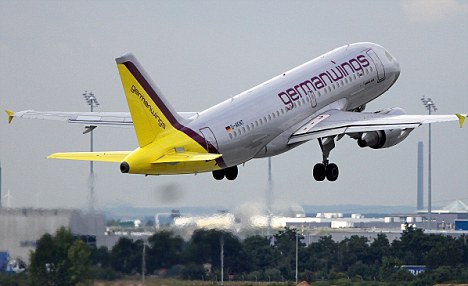
Germanwings Airlines Aviation expert, Norman Shanks, has voiced his concerns about airline testing and psychological evaluations of pilots following the tragic events of the Germanwings crash, as details emerge about the state of mind of the co-pilot.

Mr Shanks says that it is difficult for airlines to determine the psychological state of an individual pilot. A psychological profile of a person can change and can be influenced by events in one’s life. As pilots are placed to work with different colleagues on a regular basis, it is difficult to create a team-building aspect, where a colleague might be able to point out differences in a demeanour or attitude.

Germanwings’ parent company, Lufthansa, are discussing the possibility of changing their flying rules and ensuring that two members of flight crew are on the flight deck at all times.

Providers of Aviation Data Link Communications SolutionsAn Oceanic Data Link (ODL) service will be provided by Rockwell Collins to enable real-time data communications between ATC and pilots in a seven-year contract awarded by the FAA this week.

The ARINC data link service will be established in the FAA control centres in New York, Oakland and Anchorage under the contract, which will enable the air traffic control centres to conduct standard procedures on Future Air Navigation System (FANS) equipped aircraft. FAA aircraft tracking will be made possible while out of radar range.

Rockwell Collins currently works in conjunction with the FAA for the Next Generation Air Transport System (NextGen) initiative, providing voice and domestic data link.