Archive

Tag Archives: automated baggage handling system

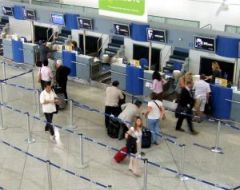
Reduce Airport Queuing with Automated SystemsThe way airline passengers are travelling in modern airports is changing thanks largely to the introduction of self-service kiosks and automated baggage handling systems in airports.

Soon airport queuing will be a thing of the past as Miami Airport experience this Thanksgiving with their new kiosks. The self-service check-in kiosks from SITA has reduced passenger processing times to less than two minutes.

The Director of Information Systems and Telecommunications at Miami Airport, Mr Maurice Jenkins said, “Our aim is to provide excellent service to our passengers. During the Thanksgiving holiday period, we are expecting more than 900,000 passengers to pass through MIA. SITA’s kiosks are reducing wait times and making arrival in Miami faster and easier for international passengers.”

Automated baggage handling systems work similarly, reducing waiting times with sensitive and reliable technological solutions that streamline the entire process while maintaining critical security measures essential for airline travel. Self-service kiosks for check-in and baggage drop off can be located outside the airport thus saving on valuable terminal space in addition to allowing efficient deployment of ground staff within the airport.

Baggage Handling Systems in AirportsA new self-bag drop baggage handling system is to be installed in the newly completed phase of the terminal 3 building of Jakarta Soekarno-Hatta Airport in a project expected to be commenced early next year with a completion date of June 2015.

The new baggage handling system is a part of the remodelling of the airport terminal 3, which has shown major growth over the past 4 years since opening its doors on the first phase in 2009.  The airport, on the island of Java is the main airport serving the Jakarta area and had an original capacity over 3 terminals of 38-million passengers.  The busiest airport in the Southern Hemisphere, further growth is expected to surpass 2012’s figures of 57.8 million per year.

Vanderlande Industries is a part of the winning consortium for the project and will consist of 24 automated self bag drop points in the departures check-in area, 108 check-in positions over 12 rows, screening machines and automated transfer systems.  Phase two will see extra self-bag drop and early bag storage facilities.

The new baggage handling system at the airport will greatly enhance passenger processing and create a smoother experience for passengers as a result.

Self Bag Drop facilities in airports across the world give passengers greater control over their journey, reduces waiting times and generally improves operational productivity for the airport and ground handling staff.

Other baggage handling systems providers, such as ARINC, with their ExpressDrop Solution, bring vMUSE technology and common use terminal equipment to serve multiple airlines at one kiosk.

Baggage Handling Systems in AirportsMalaysia airlines have announced that they have cut the average processing times for bag claims in half with the advent of a new application from SITA, the World Tracer tablet app.  The application gives airline agents the ability to check the status of a missing bag for passengers who are unfortunate enough o arrive without their luggage.

An airline agent armed with an iPad or tablet device can print a claim receipt for the passenger and can proactively manage the claim in just a few minutes, rather than the lengthy process that the passenger has to go through to locate a desk and fill out the forms.

Malaysia Airlines will trial the app at Kuala Lumpur International Airport for six months.

Automated baggage handling systems are gradually reducing instances of lost baggage, an annoying and deeply inconvenient occurrence for passengers.

The entire baggage handling process in airports is becoming more and more streamlined.  Many airport operations now incorporated self service bag drop facilities for multiple airlines and online check-in.

The aim is to reduce airport operational costs and greatly enhance passenger experience with a smooth check-in and no queuing.

Automated Border ClearanceHamad International Airport in the State of Qatar has awarded a contract for 64 e-Gates, equipped with Automated Border Clearance Biometrics to be integrated into the infrastructure of the airport operations.

The technology, including face, fingerprint and iris recognition biometrics will bring enhanced automated border clearance, speeding up passenger processing and streamlining operations at the airport.

Vision-Box, who has been awarded the contract are honoured to be a part of the implementation of the state-of-the-art systems.  “The Middle-East is a market that continues to show enormous potential, where we have invested for some years now and we look forward to further contribute to the various on-going Identity Management programs, as well as supporting the different GCC initiatives in similar projects, by continuously investing in local resources” said Jean-François Lennon, Director of International Business Development at Vision-Box.

Automated Border Clearance Systems are in operation across the globe and can greatly improve operations within the terminal buildings, helping passengers and airport staff with the streamlining of procedures, which before could be exhaustive both physically and operationally.

Other eBorders providers, such as ARINC Inc, bring enhanced automated border clearance technology solutions, including automated baggage handling, self-service kiosks for check-in and bag drop and advanced passenger information systems for the delivery of vital and often mandatory passenger data.

automated baggage handlingAccording to ARINC, passengers are set to spend significantly less time waiting at airports in the near future as airline operators and airports invest in advanced technological solutions designed to increase operational efficiency from advanced passenger information systems to automated baggage handling.

“The passenger is the one who’s going to have more control over that whole experience than they currently have,” said Michael DiGeorge, Managing Director of ARINC Asia Pacific. “That process of going from check-in through immigration through boarding is going to get more invisible.”

Passengers regularly wait for an average of three hours, sometimes more, which is causing industry-wide concern, especially during peak-time congestion, with the real fear of the denial of landing rights during those times.

ARINC’s extensive collection of innovative products are targeted to improve passenger information screening and transmission, travel documentation and check-in, which in turn will increase the flow of passenger traffic through airport terminals and remove the stress for passengers, airlines and operational facilities.

With many Asian nation plans to build new airports and terminals, there is a strong likelihood of growing competition to provide the best experience for passengers and airlines.  It stands to reason that the facilities that can provide smooth and fast passenger experience are going to be the most successful in the future of an industry that is ever-expanding as demand and expectation grows.