Archive

Tag Archives: ARINC

Whilst looking at various business aviation products I came across a service from ARINC Direct that allows pilots to use mobile devices to access flight planning services – ARINC Direct Mobile. Pilots are able to manage most of the flight planning without a computer. They can create, amend or cancel a flight plan as well as send messages to and fro from the aircraft with the reliability we would insist on.

Mobile Flight Planning Solutions

With these mobile devices pilots have access to real time text and graphic weather reports, are able to order fuel, have radar and have access to airport information -getting the most up to date information available for flight planning.

ARINC Direct Business Aviation Solutions is known world over to be the most capable company in the industry to provide private jet owners and operators with a level of innovation, technology and service. We can rest assured when we use the services from ARINC Direct for passenger & crew communications and flight support services of a first class service.

For more info:  business-flight-support.com

ARINC are offering airlines the next generation of passenger connectivity and personal electronic device support with their product Cabin Connect.

ARINC work in partnership with Inmarsat’s SwiftBroadband solution to deliver enhanced bandwidth so that airline passengers can now surf the internet, send and receive email, and use universal messaging all through their own portable electronic device, be that laptop, tablet computer e.g. iPad or Playbook, smart phone or portable gaming devices.

ARINC Cabin Connect SwiftBroadband

ARINC Cabin Connect SwiftBroadband

Alongside this ARINC offer AirCrew connect, a solution offering cabin crew connectivity to allow crew to become more efficient and offer a better level of customer service to passengers inflight. Cabin crew can now act as a concierge service for those important passengers, can collect real time CRM data as well as active fault finding and reporting. Anything that can be done on paper can now be logged and sent while inflight, allowing airlines to enjoy increased operational efficiencies.

Thanks to AirCrew Connect it is also possible to do real time fault finding, providing increased efficiencies as any issues with the IFE or onboard systems can either be remedied in flight (dependent upon the airline’s IFE hardware provider) or engineers can be booked to be waiting on stand for the aircraft to arrive at its destination, thus decreasing the amount of downtime the airframe requires.

Supporting various commercial models, ARINC can work with airlines to find the best unique solution to offer to your passengers and crew, creating differentiation and increased value that can help to promote passenger loyalty.

To find out more about the service please visit the ARINC Cabin Connect website.

CommutAir has chosen the ARINC AviNet Global Data Network Solution to transmit crew Advance Passenger Information to ensure adherence with Canada Border Services Agency (CBSA) passenger reporting requirements. The new proprietary reporting guidelines were created by CBSA in response to privacy and data quality concerns.

CommutAir said it selected ARINC to create a customized solution that would comply with CBSA’s new Data Acquisition Solution guidelines. On behalf of the carrier, ARINC will perform the required message format and communications protocol conversion to meet CBSA guidelines.

CommutAir is headquartered in South Burlington, Vermont with operations centered in Cleveland, Ohio and Newark, New Jersey. The company provides regular flights into Toronto and between more than 20 cities throughout the Midwestern and Northeastern U.S.

ARINC can examine the aviation messaging needs of any aviation user, and make a quick check of potential savings easily available through an online calculator. ARINC says “We understand Type B messaging better than anyone. That’s why we’ve developed a consultancy service to help you understand it too. Use our message calculator tool to gain an immediate idea of the size of your potential saving and then contact us to confirm the numbers”.

The online calculator can be found at: ARINC Type B Check

The Federal Aviation Administration (FAA) estimates that 70% of all aviation delays are caused by weather events, costing the U.S. $27 billion in lost productivity annually.

With two-thirds of these delays preventable with better flight planning, the public and private sector are working together to improve how air traffic controllers and pilots identify and manage weather.

The FAA’s Next Generation (NextGen) air traffic control modernization program has already begun to improve the National Airspace System and transform the way we fly. NextGen is moving aircraft navigation from traditional ground-based radar systems to a global constellation of satellites and upgrading air traffic communications infrastructure to enhance real-time data availability and enable effective collaboration through information sharing.

For business jet owners and operators flight planning for weather events can be challenging. Balancing cost and service is a necessary part of business aviation. Flight support and flight planning services, such as those offered by ARINC direct are invaluable.

As an FAA QICP-certified weather provider, ARINC Direct offers a multitude of services—including a wide array of text products and hundreds of prognostic charts and animations with the most detailed weather data customised to operational needs with both real-time and forecast weather charts, including U.S. NEXRAD and worldwide radar and satellite imagery.

For more information on how ARINC Direct can help business aviation users balance cost with exceptional service please visit the ARINC Direct Flight Support page.

This week we heard that the Border Agency currently has a backlog of 276,000 immigration cases and private companies are tendering for the contract to deal with them.
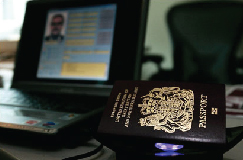
Business Aviation News - Border Management Solutions

Business Aviation News – Border Management Solutions

It is a sad fact that a third of immigrant overstay in the UK. Passenger records held in the e-borders database, which covers details of all flights outside Europe to and from Britain, will be checked and there will be careful monitoring of the 100 immigrants whose visas expire daily.

MPs sitting on the Commons Home Affairs Committee said the UK has become a ‘Bermuda Triangle’ for migrants, a country where it is ‘easy to get in, but impossible to keep track of everyone, let alone get them out.’

So what part do the airlines play in prevention of this problem?

The legal responsibilities of airline carriers are found in the migration laws and regulations of the state that grants those rights to land. All carriers must therefore be familiar with, and comply with, a wide range of legislation and regulations relating to national border control procedure and admittance.

This is detailed in Annex 9 of ICAO’s Convention on Civil Aviation, known as the Chicago Convention which covers the obligations on Carriers and states regarding the Facilitation of people and implementation of Border Control.

Having effective and harmonised guidelines to deal with:

•the communication of advance passenger information

•improperly documented travelers

•the denial of boarding to potential asylum-seekers

•and arrangements in regard to inadmissible passengers who are in transit

are important for airlines and airports to meet their obligations and provide the highest levels of customer service, as well as keep control of operational costs of staff and IT systems incurred as a result of new security requirements and mandates.

An effective solution for airlines?

The ARINC Border Management System is designed to adapt to the changes in operational process and support new technology, enabling Border Control agencies to flex with changing demands and capabilities.

Today it is not enough to simply secure borders from unauthorised entry by known undesirables. Now it is necessary to manage the stay of travellers, from entry through to exit, to know who has been in the country and when they left.

The ARINC Border Management System delivers a full stay management capability, screening all travellers before they travel, and managing visitors throughout their stay.

The ARINC Border Management system is a role-based system, managing entry and exit processes, and improving traveller flow at the primary line. The system supports secondary line investigative processes, enabling immigration, customs and other agencies to co-ordinate resources for a holistic view on potential threats.

For more information please visit ARINC Border Management Solutions

It was recently reported that only a quarter of passengers satisfied with on-board wifi services. A study from FlightView found that despite the increase in uptake of services by airlines just 28% of passengers were satisfied with their service.

So how can airlines offer a better service to their passengers?

ARINC Direct offers a series of solutions for business aviation owners and operators with this very problem in mind. With ARINC in-flight broadband you can deliver solutions to promote passenger loyalty. Integrated satellite services allow you to offer your passengers easy-to-use products based on Inmarsat or Iridium satellite communications services, allowing passengers to stay connected.

ARINC Direct’s Satellite Services offer reliable, cost-effective, voice and data services for your aircraft whenever and wherever you may fly.

Passenger Communications - Satellite Communications

Passenger Communications – Satellite Communications

For voice communications the ARINC business aviation services keep passengers connected with the ability to make calls, send and receive faxes, and stay online anywhere in the world.For the full range of passenger communications services offered by ARINC direct please visit the ARINC Direct Flight Support site.

After the many technological advances we have seen over the last months and years we wanted to do a focus piece on one of the fundamentals in aviation communications for business aviation and commercial airlines, and how one company has lead the way in providing Type B communications.

AviNet Type B messaging provides reliable and economical messaging for mission-critical business-to-business communications for the aviation industry. Processing over 15 million messages daily to over 700 industry users worldwide, AviNet Type B is used for a variety of message types including GLOBALink ACARS®, passenger reservations, weather data, and flight planning.

ACARS

ACARS (or Aircraft Communications Addressing and Reporting System) is a type of aircraft communication system which was designed by ARINC to replace the VHF voice service (the voice service was used for all communications between aircraft and ground stations before the introduction of data link). The ACARS system was first introduced in 1978. ACARS is the only data link infrastructure with pole-to-pole global coverage, therefore used to deliver the critical reliability airlines depend on all their flights.

Passenger reservations

Passenger reservation is part of the process of an airline computer reservation system. The system contains airline schedules, fare tariffs, passenger reservations and ticket records. Passenger reservations are offered as part of ARINC’s AviNet Type B messaging.

Weather Data

Weather data or weather reporting is part of flight operations. ARINC offers the latest weather prediction and reporting services to the aviation industry and airports around the world. ARINC’s Graphic/Text Weather Service (or G/TWS) provides near-real-time graphic and text weather information to flight crew using GLOBALink data link services.

ARINC also provides terminal weather information to aircraft taking off or landing, including precipitation data, gust fronts and wind shear microbursts information within 15 nautical miles of the airport. The ARINC meteorological data collection and reporting system collects real-time weather reports such as wind and severe weather advisories.

Flight Planning

Flight planning is the process of describing a proposed aircraft flight and the flight plans produced typically involves two safety-critical components: fuel calculation and compliance with air traffic control requirements. These components ensure aircrafts can safely reach the proposed destination and to eradicate the mid-air collision risks. Appropriate flight planning also minimises the costs of flights by choosing the optimal route, height and speed; and also by minimum on board fuel load for the proposed journey. Flight planning requires accurate weather forecasts to calculate the impact on fuel consumption due to head or tail winds and air temperature.

For further information please visit: http://typebmessaging-avinet.com

General aviation pilots have been invited to participate in a study with the FAA, from data collected through the Aviation Safety Reporting System (ASRS).

The Aviation Weather in the Cockpit and Aeronautical Information Services via Data Link study hopes to gain information about incidents while pilots were using weather or AIS information in the cockpit.

“The information may be textual and/or graphical, obtained via data link or other sources to include ACARS [aircraft communications addressing and reporting system] and cell phones, on the ground or in the air,” said the NASA press release.

The study examines the type of weather data received, its accuracy, the cockpit display used, software or applications used to receive meteorological information, and end user graphical interface ratings.

Pilots who wish to participate in either study can do so by filing an ASRS report or, in some cases, by filing a report with the FAA’s Aviation Safety Action Program.

For airlines and operators who are concerned about either the accuracy or efficiency of the aircraft messaging ARINC also provide a service to analyse the cost effectiveness of current Type B communications and provide a consultancy on infrastructure and IT surrounding it. For more information please visit www.typebcheck.com

July 24, 2012  – Today we heard that ARINC will be working with Cathay Pacific Airways to implement an advanced information management system into its full fleet of Airbus and Boeing aircraft. This deployment represents the airline industry’s most significant upgrade in flight deck communications technology in more than 30 years.

ARINC reported that the communications solution “creates a true “e-Enabled aircraft” by offering fully-customized, integrated communications management of flight operations, data communication services, cabin services, maintenance, diagnostics, and vital safety information. As such, it represents breakthrough communications technology for the airline industry.”

Cathay Pacific now has the capability to select the most cost-effective communications connectivity for the aircraft and maintain a consistent data delivery connection between aircraft and remote host systems.

“Automating the flight bag saves paper, but the benefits for airlines like Cathay Pacific go far beyond that. The volume and complexity of airline operations means that the right solution can provide significant benefits across the board,” said Randy Pizzi, Vice President of ARINC’s International Division.

For more information on the full range of flight support and flight deck communications services offered by ARINC Direct who specialise in business aviation customers please visit business-flight-support.com.

Director of Immigration for the Dominican Republic Jose Ricardo Taveras introduces ARINC representative Jorge Ramirez (far right).
(Government of the Dominican Republic)

The ARINC Electronic Borders solutions have been seen again in the news this week after ARINC announced that the government of the Dominican Republic had chosen them for all air and maritime border security solutions.

A press conference was held to introduce ARINC to the transport sector as the technology provider of choice for aviation and maritime advance passenger information (API) system solutions to help secure the nation’s borders.

ARINC’s ability to meet the government’s border security requirements with expertise, technology competence, and cost-efficiency defined them as the clear choice for Dominican Republic officials. Other providers did not have the qualifications to meet the necessary air and maritime technology requirements. The country has plans to work with ARINC to implement an advance passenger information system for ground transportation.

ARINC’s API and PNR solutions form part of the ARINC Electronic Borders portfolio, developed to meet today’s challenges in border security. For more detailed information on how ARINC can help airlines, agencies and operators manage the complete stay of passengers in a cost efficient way please visit electronicborders.com