This week it has been announced that a pilot has written an iPad app that will handle the commuter and on-demand flight ops calculations, such as departure gradients, approach planning, flight time tracking and climb performance, to name a few.

The new app for the iPad, called the ‘Aviation Pilot Duty and Performance Calculator’ is the latest in a line of innovations introduced since the iPad impact on the cockpit began saving the Pilot hours of complicated, intricate work involving reams of paper that would have to be carried.

The iPad has been a major contribution to the paperless flight deck and with the many apps on the market, such as the ARINC Direct iPad Flight Planning App, especially designed and developed for business aviation users, the Pilot and flight ops crew can look forward to a truly streamlined, optimized cockpit.

iPad flight planning app

Following pressure from private airlines, Bangladeshi Ministry of Civil Aviation and Tourism have removed the fee structure for aeronautical operations for private airlines.

While the non-aeronautical fees for parking and access to hangar facilities will remain, private domestic airlines will no longer pay the fees associated with takeoff and landing, it was announced at the CIRDAP auditorium last week.

The Minister for Tourism, M Faruk Khan said, “It is to save the industry and these airlines will now be able to cut down operating costs.”

The move comes as a drastic measure in a bid to save the remaining three private airlines in Bangladesh.  Over the past 17 years, six operators have folded and the future of private aviation is in jeopardy if changes to the fee structure are not implemented.

Minister Khan blames previous Governments for the decline of the industry.  Tasbirul Islam, Managing Director of United Airways, urges further cuts to be made in non-aeronautical fees, but welcomes the decision to waive aeronautical fees.

bangladeshi private aviation

Ben-Gurion International Airport in Israel is going to trial a new automated baggage security system which is hoped will shorten waiting times for passengers during security checks.  The system will scan, using an automated baggage system, for explosives and other potentially dangerous material, separating those bags for further screening, before delivering the cleared baggage for loading onto the aircraft.

The new system should help to streamline airport operations and enhance passenger experience, while maintaining strict pre-flight security.

Worldwide, airports are realising the increased efficiency of automated operations, including passenger processing and the groundbreaking self-service check-in and automated baggage drop solutions. 

It is easy to see, with current industry-leaders offering technologically advanced check-in and baggage solutions on the ground and in the air, that the future of airline travel could be fully automated, safe and with reduced waiting times.

automated baggage scan

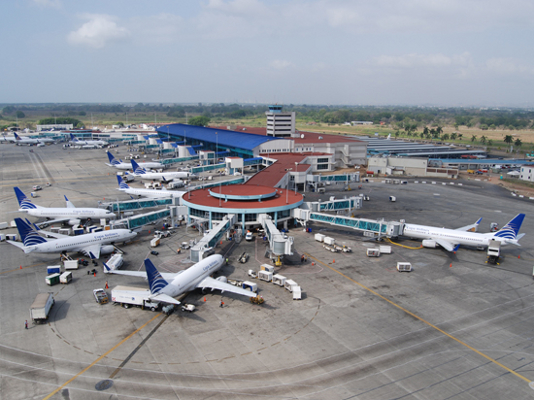
Panama’s Tocumen International Airport with the support of the ICAO has chosen ARINC AviNet Messaging Solution for the analysis of the airport’s operational data and capturing advance passenger information (API).

ARINC also provides baggage source, load and movement messages which encompasses critical data about weight, baggage and movement for arriving and departing aircraft.

Finding ARINC’s AviNet to be the most effective solution available, Juan Carlos Pino, Tocumen’s GM said, “The new solution will assist the airport in capturing both operational and advance passenger information data from international air transport carriers.”

ARINC AviNet will be used for the on-going analysis, through the transmission of API messages, which supports Panama’s border security requirements and aims to improve airport operational efficiency.

ARINC Global Networks and IT Solutions Vice-President, Yun Chong agrees and says, “Tocumen International Airport is joining other industry leaders who are using operation data analysis to improve airport efficiency.”

ARINC AviNet for Tocumen

ARINC, world-leading aviation communications providers also lead the way in the global security market with solutions for highly advanced information management, including ARINC AIM.

ARINC AIM (Advanced Information Management) offers integrated security technologies to the nuclear, military, ports, transportation and government facilities for real-time situational awareness capabilities.  For access control, vehicle and number plate recognition software, biometrics, video systems and identity management, ARINC AIM central command, control and monitoring can protect the critical infrastructure of sensitive, high security facilities.

ARINC uses an intelligent network of advanced technological solutions to provide critical installations across the globe with unique informational security.  Airport facilities and sensitive nuclear installations rely upon ARINC AIM for critical security and monitoring, multi-level controlled access and full system redundancy with resilience for communications, peripheral equipment as well as servers.

ARINC AIM furnishes clients with the reassurance of reliability, seamless integration and utmost efficiency of successful, continuous operations.  The name ARINC has remained synonymous with reliability for decades.  Groundbreaking innovative solutions continue to pave the way for technological advancements from flight deck to ground level security platforms.

The International Air Transport Association (IATA) have announced plans for a ‘New Distribution Capability’ (NDC) which involves the sharing of social media profiles for a better shopping experience for passengers.  NDC will offer personalized booking through a user-friendly platform that is content and image-rich, enabling passengers to book ‘extras’, such as Wi-Fi, comfortable seats or even a chauffeur service to and from the airport, based upon their preferences according to social media profiling.

Passengers, of course, will also have the opportunity to shop anonymously and IATA promise all the usual privacy assurances, but there are still some who are skeptical about sharing such information – especially as some companies who act as middlemen for bookings, such as Amadeus or Travelport may find their roles significantly diminished.

Social Media profiling is huge stuff in today’s marketplace, offering comsumers flexibility, if you don’t mind sharing your information and preferences and offering business massive marketing opportunities.

IATA are excited about the new proposed NDC and have been singing its praises at the group’s 69th AGM in Cape Town this week.  There is a lot of support for NDC and more than a little controversy, but much agreement universally that the face of buying airline travel and the way airlines, travel agencies and associated services work and interact would change enormously.

IATA have released a video to explain more about NDC… See it here...

The New Zealand Aviation Industry Association has announced their intention to add a Careers Open Day to the end of their Aviation Conference Week in a bid to inspire and attract people to consider aviation training as a career opportunity.

The move comes after estimates of 4000 jobs in the sector will need to be filled over the next five years adding up to around 800 jobs per year.  Roles include aeronautical engineers, pilots in commercial and general aviation, air traffic controllers, flying instructors, airport security, ground crew and flight attendants, but are only a portion of the range of skills that are estimated to be required to enable New Zealand to progress in its efforts to reach current growth targets.

Many of the leading training facilitators and aviation organizations will present career opportunities and industry information during the Open Day, in addition to representatives from the NZ tourist industry in a bid to attract new talent if the $16 billion-dollar targets are to be met.

AIA Chief Executive, Irene King, says, “We need more people entering our industry and it’s just such an exciting place to be with career openings and opportunities predicted to be plenty over the next five years.”

ARINC Direct Flight Planning iPad App

ARINC Direct Flight Planning iPad App

ARINC Direct, industry leading business aviation communications providers, demonstrated their new Flight Planning iPad app at EBACE last month, showing the incredible capabilities and connectivity for the use of the iPad as a valuable flight planning tool.

James Hardie, Director for ARINC Direct EMEA and Asia Pacific, said, “Once we realized that more than 50 percent of our subscriber base was already using the [Apple] iPad as an electronic flight bag in the cockpit, we knew that we could provide more up-to-date information, automatically, through our own app, whenever it is connected via the Internet to our servers.”

The combination of the WiFi connectivity of the iPad and ARINC Direct’s Inmarsat SwiftBroadband link, allow for the flight planning iPad app to achieve maximum capability, enhancing the flight deck operations, cutting down the paperwork and offering live weather graphics, graphical flight following and much more.

ARINC Direct’s unique features, such as the ability to connect two iPads via Bluetooth on the flight deck, enabling data sharing, and amending, saving and uploading amended flight plans as PDF’s make the ARINC Direct flight planning iPad app a much needed and long awaited solution to utmost efficiency and another huge step towards a paperless cockpit.

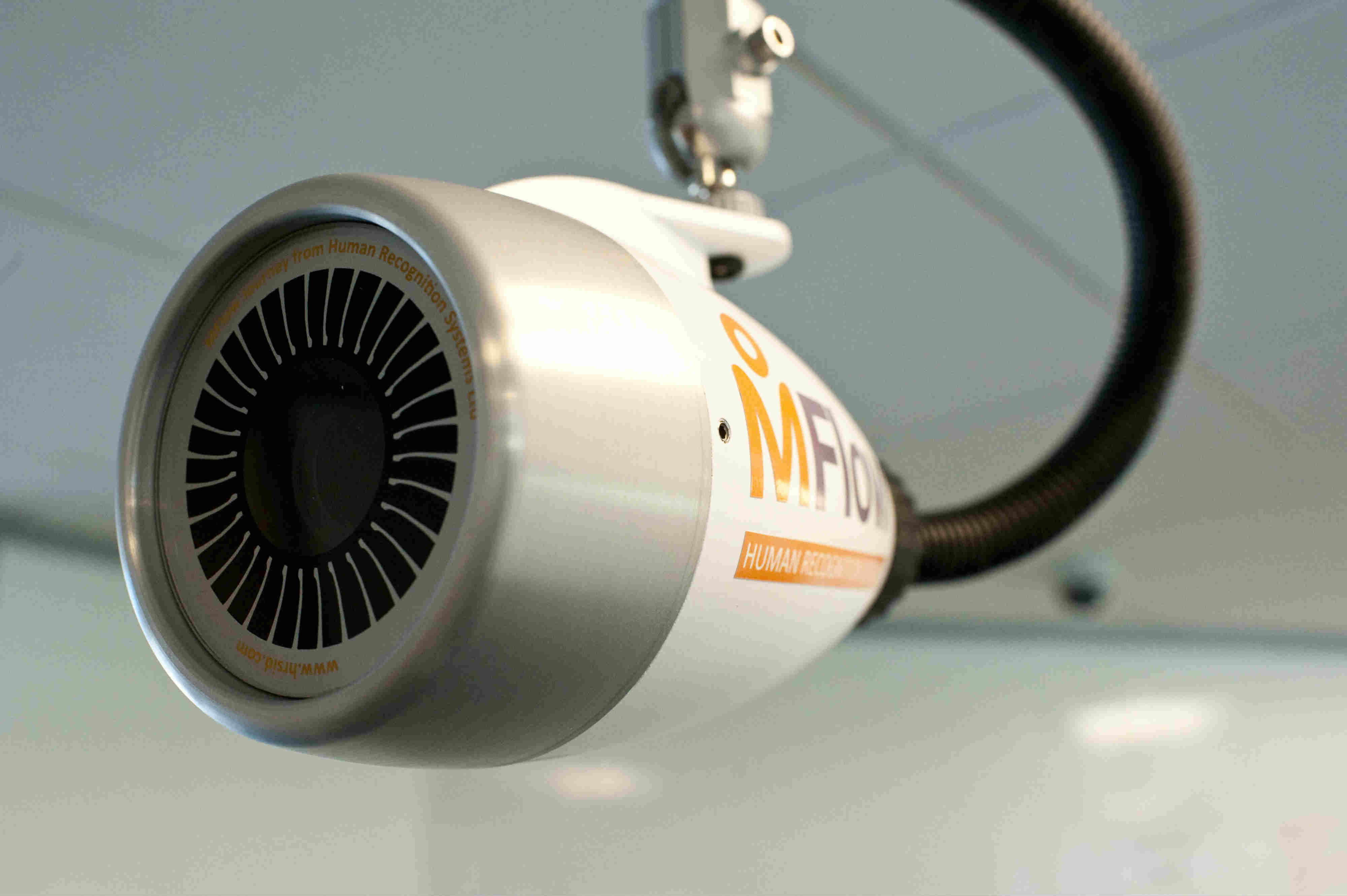
Later this month, Edinburgh airport will introduce MFlow Journey as a part of the airport systems to track and monitor passenger movement through its terminals.

MFlow is one of the latest innovations in Human Recognition, and will take a (thankfully) anonymous image of each passengers face as they check-in.  This enables the airport systems to measure the length of time it will take for each passenger to reach certain ‘check-points’.

Airport Systems

MFlow Airport Systems

The analysis of the data will enable the airport systems      to alert passenger management of any potential queue problems in advance, the idea being that the reduced time for the passenger queuing or waiting in a particular area of the terminal will increase the time the passenger will have for spending in the shopping areas, and therefore, maximizing profit potential for the airport, while enhancing the passenger experience as a whole.

Airport Systems

Edinburgh Airport Systems

Head of IT for Edinburgh Airport, Graeme Agnew said, “As the system doesn’t rely on people carrying Bluetooth or Wi-Fi technology, we are able to collate highly accurate data on the movement of passengers through security screening and then make informed decisions about how we manage this area of the airport in the long term.”

Visitors to EBACE 2013 will be able to view for the first time on static display, the luxuriously fitted BBJ3 from Boeing and Jet Aviation Basel.

The BBJ3 is the latest and the largest business jet aircraft from Boeing and is based upon the 737-900 Extended Range airliner.

The aircraft is currently on sale by the owner, who had the, Jet Aviation Design Studio VIP custom refit done last year.

The BBJ3 has a lounge, dining room, private bedroom with en-suite bathroom and staff area all comfortably furnished with the finest materials and fittings, including real stone, highly-polished sycamore wood, silk carpeting and hand-finished marquetry.

As the first privately owned BBJ 3 to be completed at Jet Aviation Basel, the highly customized cabin interior is finished in a flawless, bright, high-gloss quarter-figured Sycamore wood, with hand-crafted marquetry artwork integrated in the entrance panel,” said Neil Boyle, Vice President of the Completions Center at Jet Aviation Basel.  The centre employs over 1200 staff in their design, engineering, upholstery, fibreglass and paint shops and is capable of outfitting jets to VIP standards as large as an Airbus A380.

During their long-time partnership with Boeing, Jet Aviation Basel has delivered 24 completed aircraft, this being the first privately owned BBJ3 to be completed and shown in this way.

The BBJ3 will accommodate 38 passengers and 8 crew members comfortably and is beautifully equipped for a VIP journey.  With a spacious cabin of 32.7 m long and 3.57 m wide and with a range of 4,900 nautical miles, it is outselling all other business jets in its class by 7-1.

President of BBJ, Captain Steve Taylor said, “Our customers demand airplanes with great performance, enabling them to conduct business around the world.

The business jet aviation industry is experiencing a surge in growth and with more business and corporate use comes a high demand for comfort and connectivity in the air as effectively as in their ground-based offices.

business aviation refit

business aviation