Archive

Tag Archives: passenger processing

Other Advanced Border Management Systems ProvidersZurich Airport has made improvements to its border management system with the installation of a new biometric Advanced Border Control System from Secunet AG. The system upgrade has given Zurich Airport an almost automated process for checking passenger documentation and has also increased flexibility for the airport, almost completely replacing the previous infrastructure for border management.

The inclusion of a fingerprint reader ensures Swiss compliance with mandatory regulations (VIS II) and electronic passport readers have streamlined the passenger processing system for the inspection and checking of identification.

The new system offers airport police the opportunity to access real-time information as the Secunet technology serves as a central interface.

“Travellers and border control staff now have access to the most state-of-the-art border control system in Europe,” said Dr. Rainer Baumgart, chairman of the board at Secunet AG. “The highly modular Secunet biomiddle solution and the new user interface, developed in partnership with the Zurich Cantonal Police, have set new standards in border control technology.”

Airport workstations have been connected to Swiss Police databases as a major part of the infrastructure upgrade process.

As airport traffic increases exponentially each year by an average of 5%, the need for streamlined automated border control processes also increases if ground delays are to be minimised and operational productivity at a high level.

Automated border control technology providers are under increasing pressure to maintain high levels of security across borders all over the world.
Leading Physical Airport Security ProvidersIn a project that is to start next year, Bangladesh will be investing $4m to improve security at four airports in a bid to bring a halt to smuggling.

The Executive Committee of the National Economic Council (ECNEC) has issued approval for the improvements at Hazrat Shahjahal International and Hazrat Shah Amanat International Airports for the installation of primary and secondary surveillance radar in addition to a state-of-the-art security system at Shahjahal.

The project, named Bangladesh Airports Safety & Security System Improvement, will also see enhanced vehicle parking control systems, pedestrian access control, additional CCTV and baggage X-ray scanners, specifically designed to halt the gold smuggling activities that were reported earlier this year.

During the meeting, the ECNEC stated that to develop the system infrastructure for the airports would cost an additional $5m to the original estimate of $2m.

$4m will be sponsored by Denmark, and it will be left to the Bangladeshi Government to raise the additional required funds.

Physical airport security is growing increasingly necessary at airports across the globe. With the threat of terrorist movements and smuggling, airport security providers are searching the very latest technological advancements to ensure national security in addition to the safety of passengers, aircraft and flight crew.

Other Automated Border Control Solutions ProvidersAccording to Georg Hasse, Senior Product Manager of the Portfolio of Electronic Identities at Secunet, leading German IT security company, this year has been an excellent year in terms of sales and industry technological advancements. Europe is expected to dominate the automated border control market over the next five years, so recent research from Acuity tells us, and Germany are embracing the latest technology for biometric border control.

What is being dubbed the ‘border control revolution’ in some corners of the industry, involves the use of biometric recognition in the form of electronic passports, VISAs and residence permits – a growing trend that is quickly spreading as the entire system offers enhanced border security, while keeping operational costs to a minimum.

Across the globe, border security is a hot topic as the threat of terrorism is tackled with a bid to track and monitor the movements of potential persons of interest.

Secunet has been working closely with the German Federal Office for Information Security (BSI) in the field of biometrics for many years, notes Mr Hasse. Secunet prefers to look at the subject of identity protection as a process, rather than a single solution. He said, “This is a decisive advantage for our customers: our biometrics specialists have a better understanding of the effects a new project will have on previous or subsequent process stages than anyone else. For our customers, this guarantees smooth integration of their solution into the overall process. Within the biometrics industry we are well known for our BioAPI 2.0 compliant biometric middleware Secunet biomiddle that is being used by various public authorities in Europe as a platform for their border control and visa applications. This middleware is also an integral part of our eGate solution Secunet easygate that is currently being rolled out at German airports within EasyPASS, the German ABC project. In addition we offer a modular Public Key Infrastructure (PKI) solution called Secunet eID PKI Suite that is being used in the border control context with modern eMRTDs.”

Earlier this month, the UK government raised issues about the provision of Advance Passenger Information to further strengthen directives to protect European borders. Currently the E.U. carry strict policy restrictions for the handling of passenger data. It will be interesting to watch the debate continue in light of the growth of biometric border security solutions industry.

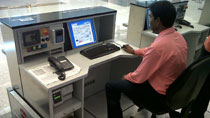
Rockwell Collins' ARINC Check-In-Counter & Baggage SystemsThis week it has been announced that Indira Ghandi Airport (IGI), India’s busiest hub, has renewed its contracts and signed for another six years with Rockwell Collins’ ARINC passenger processing systems and technology, following ICI’s recent award to the company as “Best IT Service Provider” for the second consecutive year.

IGI has used the ARINC vMUSE common-use passenger processing system for more than five years, in addition to ARINC SelfServ kiosks and ARINC VeriPax Passenger Reconciliation system, ARINC BagLink for baggage messaging and Rockwell Collins’ integration of a Local Departure Control System in Terminals 1D and 3.

“IGI has prided itself on being a purveyor of new technology, recognizing it as key to becoming a world-class airport,” said Chief Information Officer and Vice President Davesh Shukla, Delhi International Airport Ltd., on why it has worked closely with Rockwell Collins on implementing the newest and latest technology to aid in ‘Fast Travel.’

“We created a customized solution for IGI that accommodates its rapid growth, while continuing to improve the passenger experience, enhance their competitive advantage and maximize return on investment,” explained Heament John Kurian, managing director, Information Management Services division, Asia Pacific for Rockwell Collins.

As a part of the new contract, the airport will work with Rockwell Collins integrators to deploy mobile and portable check-in devices throughout in a bit to further streamline and enhance the passenger processing experience for both the passenger and the airport.

The space-saving attributes of the modern passenger check-in systems, which now incorporate greater flexibility with multiple airline check in facilities and bag drop points, give airports the opportunity to create enhanced retail spaces and better utilisation of airport personnel within the terminals. This allows increased operational productivity and a better experience for the passenger with the reduced likelihood of queueing and ground delays.

Reliable Data Sharing from Leading APIS ProvidersSome German carriers could find themselves out in the cold with suspended UK flights if UK Government directives concerning the provision of Advance Passenger Information are passed, but not complied with.

Issues could arise as the UK border control system mirrors a similar system in the U.S. and asks for mandatory delivery of Advance Passenger Information in order for security services to monitor the movements of potential persons of interest as they travel to or pass through the UK. However, other countries in the E.U. would need to amend areas of their privacy laws in order for the system to be effective.

UK Home Office secretary, Mr Mark Sedwill issued a statement according to the Guardian newspaper, “We are looking in future legislation at taking mandatory powers. We are working with all the airlines. We have 90% of Advance Passenger Information.”

Advance Passenger Information (API) includes the personal details of passengers and flight crew and in some instances also contains methods of payment and itinerary details. In the U.S. API is a mandatory requirement and assists security agencies with monitoring and tracking of ‘at risk’ passengers.

Continuing, Mr Sedwill said, “We are in discussions, which for obvious reasons I have to keep somewhat private, with other EU countries to change their data protection legislation in order to require this data of the carrier.”

Other German airlines include Lufthansa and Germania. The debate will continue and was due to be discussed during the recent G6 summit in Paris last week.

Leading Providers of Baggage Handling SystemsPalm Beach Airport baggage handling system is 25 years old and needs to be upgraded. According to airport officials, it is growing increasingly difficult to keep up with maintenance issues with the 10-year old explosive detection system.

To ensure enhanced safety is in place for the monitoring and handling of airport baggage, the system must undergo a complete modernisation program and Jerry Allen, deputy director of Palm Beach Country’s airports department, know what he wants, following research that has been ongoing for almost 10 years. “We have had this baggage system for 25 years, and things change in our industry,” said Allen, “What this is going to do is allow us to drop a bag off at any gate and still get it to the appropriate airline.”

Airports across the world are embracing the latest technological advancements in baggage handling systems. With biometric scanning and electronic tagging and tracking, sophisticated, modern systems involve almost no human intervention to operate to maximum efficiency, which gives airport personnel a greater flexibility. Mr Allen said “It operates more efficiently, so those employees can be doing other things.”

To pay for the new automated system, the airport plans to use $32.4 million in federal and state grants, leaving $9.6 million to be realised from passenger facility charges at $4.50 per passenger.

Officials from the airport sought permission from the county to spend the $42 million earlier this week and are awaiting an outcome.

Other Improved Passenger Processing Solutions ProvidersThe Airports Authority of India (AAI) has announced that 25 airports across the country can now handle their 50 million passengers more efficiently and easily with the installation of new integrated passenger processing and baggage handling systems.

In a collaboration with SITA, the AAI have deployed common-use, self-service solutions as a part of a considerable program for modernisation of the airports across India. The baggage systems will be installed in 38 airports and it is hoped that they will reduce baggage mishandling by 10-20%.

“Our airport modernization program is designed to provide better service both for passengers and airlines alike as air travel in India continues to grow,” said Mr. Sudhir Raheja, Chairman of the Airports Authority of India. “With passenger numbers expected to reach 450 million by 2020, we need to ensure we are operating as efficiently as possible. SITA’s baggage systems, common use technology, and self-service check in kiosks are flexible, convenient and will help establish a firm foundation for future growth”.

The baggage reconciliation systems will be integrated into the AAI airports over the next seven years and will utilise the latest technology for CUPPS, CUSS and CUTE systems.

Worldwide Passenger Data Transfer ProvidersThe U.N. Security Council have called for new measures to help curb the movement of potential terrorists. Drafted by the U.S. the measures received unanimous approval from the Security Council, who intend to clamp down on funding and recruitment opportunities amongst the militant groups.

U.S. President, Mr Barack Obama said that it is believed that around 15,000 fighters have travelled to Iraq and Syria to join the Islamic State or Jabhat al-Nusra, the al-Qaeda affiliated group, from more than 80 nations. Speaking about the crisis at an unusual Security Council session, Mr Obama said, “The tactic of terrorism is not new. What brings us together today, what is new, is the unprecedented flow of fighters in recent years to and from conflict zones, including Afghanistan and the Horn of Africa, Yemen, Libya, and most recently, Syria and Iraq.”

Strengthened steps will be taken to prevent suspected foreign terrorist fighters from entering their territories or passing through borders. Part of the plan is the widespread provision of Advance Passenger Information (API), currently mandatory in the U.S. and spreading throughout the world.

Mandatory provision of API, which includes passenger details, destination countries and methods of payment in some cases, can help governments and border agencies to track the movements of travellers, thus indicating potential high-risk passengers for further investigation. The resolution also includes a strengthening of the legal framework for international action by the suggestion of a passage of legislation that can give countries greater flexibility for the prosecution of suspected foreign fighters.

The U.N. have also encouraged member states to be more co-operative with information-sharing.

“Foreign terrorist fighters increase the intensity, duration and intractability of conflicts, and also may pose a serious threat to their states of origin, the states they transit and the states to which they travel,” the resolution said. More efficient methods of sharing information is what is called for to discourage recruitment, organisation and financing of terrorist movements and the aim of the resolution is to make this as difficult as possible.

Airport Systems Providers for Biometric Border SecuritySuperCom, global provider of electronic intelligence solutions has today announced that they will be implementing a high-scale National Security e-Government contract consisting of several, integrated modules. The system is intended to enhance the security of the Country’s borders and add to the economic growth.

Included in the e-Gate security system will be:

Biometric eGate for border control will be deployed at all port entry/exit points for air, sea and land to increase national security for immigration control and improve efficiency.

Biometric Visa applications will reduce processing time and aid the identification of potential security threats to the country.

Biometric Resident Identification System will implement biometric enrolment stations for the issue of ICAO-compliant resident ID cards.

Biometric e-Passport System for the issue of ICAO-standard high security e-Passports.

Providers of electronic borders solutions bring enhanced levels of efficiency to passenger processing while maintaining secure borders. The implementation of systems can help to reduce waiting times with the expedition of ‘low-risk’ travellers and the identification of potential ‘high-risk’ passenger for further investigation.

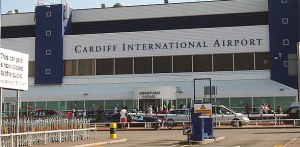
Self-Service Check-In Brings Enhanced Passenger ExperienceRockwell Collins continue their successful promotion of their ARINC Common-Use, Self-Service platform this month with the announcement of a new agreement signed with Cardiff Airport (CIAL).

A fully managed solution will be provided, including hosted connectivity from the Slough-based data centre. CUSS kiosks can help to speed up and streamline the entire passenger processing system, delivering an enhanced passenger experience at the same time. The ability to provide cost-sharing applications for operating airlines, gives the airport greater flexibility and enables better use of expensive terminal space without the need for dedicated, airline-specific check-in desks.

CIAL worked with ARINC for many years, with the first installation of the iMUSE platform in 2003 and an upgrade to ARINC vMUSE Enterprise in 2011 and look forward to continuing the relationship with ARINC’s new owners, Rockwell Collins.