Archive

Tag Archives: passenger processing

Other Providers of Cabin Services Solutions - AirCrew Connect Singapore Airlines have introduced a new, tablet-based mobile app for cabin crew to improve and enhance customer services.

The app, TCS CrewCollab will automate and streamline many of the inflight processes that the cabin crew deal with in the air, such as processing customer flight lists, flight information and crew information, which traditionally has been handled on paper.

The entire system will increase efficiency throughout the cabin and improve passenger experience through enhanced customer services.

Singapore Airlines’ Senior Vice President Cabin Crew, Mr Marvin Tan said, “We are very pleased to collaborate with our long-standing partner Tata Consultancy Services to develop TCS CrewCollab Solution. The application is vital to how we will continue to improve our operations and enhance our customer servicing on board. We look forward to developing the application further in partnership with TCS, to enable our crew to offer a more personalised customer experience and meet our customers’ evolving travel needs.”

“Digital forces like mobile, social and big data analytics are creating tremendous possibilities for businesses globally. TCS CrewCollab Solution harnesses these digital forces in the hands of airline crew to deliver enriched customer experience,” said Ms S Sukanya, VP and Global Head, Travel Transportation and Hospitality Unit, TCS. “Singapore Airlines is one of our most valuable and long standing clients in the region and this partnership brings an industry-validated, ready-to-deploy solution to the airline industry.”
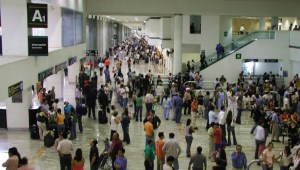
Leading Airport Security Providers - Physical and Infrastructure ProtectionFlight passenger numbers are increasing every year by an average of 5%, which may not sound like much, but we are talking millions of travellers passing through country’s border management systems, placing strain on many an airport infrastructure.

In addition to this growing pressure, airports and border agencies are also faced with the increasing threat of terrorism, which is also growing at an alarming pace, particularly over the last few years.

So what is the answer? Airports all over the world are being left with no other choice than to invest heavily in strengthening security measures across the entire airport environment.

This has led to a surge in growth for the airport security systems sector, which, according to new analysis from Frost and Sullivan estimates that the market will earn revenues in the region of $12-$13million by 2023. The study looked at the areas of perimeter security, surveillance and access control amongst many other aspects including data integration and cyber security as we see the concerns rising with the development and utilisation of connectivity onboard aircraft.

With NextGen technologies also poised to catapult the entire industry into the future, aviation security providers must be ready to go global.

API for Border Security in CanadaCanada is forging ahead in a bid to increase the safety of airline passengers, aircraft and crew. Bill C-51, known as Canada’s Anti-terrorism Act, 2015, is to be tackled in two parts:

  • Security of Canada Information Sharing Act
  • Secure Air Travel Act

If passed, the current Passenger Protection Program would be enhanced with greater transparency for the sharing of passenger data in a similar system to that used in the U.S. in the transmission of Advance Passenger Information (API). API transmission before a flight leaves for its destination, can allow government agencies to scan passenger data and achieve early alert when comparison is made to a ‘do-not-fly’ list or similarly, a list containing the names of potential terrorists, members of high-risk political or radical groups – a ‘Persons of Interest’ list.

Opposers of the scheme argue that concerns should be raised when information sharing is discussed. It is by no means decided at this stage the grounds on which a person will be placed upon such lists and the government of Canada propose to lower the threshold and expand the grounds on which a person becomes ‘specified’ under the Passenger Protection Program.

The debate continues.

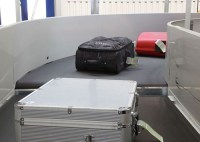
Baggage Handling Systems - Behind the ScenesLast week the Transportation Security Administration (TSA) offered a rare behind-the-scenes look at the journey luggage takes through the Philadelphia International Airport baggage handling system.

As one of the first airports to implement automated explosive-detection in 2003, following government mandate introduction of explosive-detection screening after the terrorist attacks of 9/11.

TSA spokesman, Michael McCarthy said, “Some people think the TSA opens and physically screens every single bag. That may have been the case immediately following 9/11, but not today.”

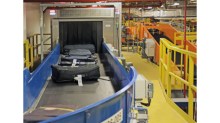
The automation of explosive-detection at Philadelphia International baggage handling system can mean that 1,000 bags every hour are screened – via an in-line system of conveyor belts and detection machinery.

The luggage embarks on a 15-minute journey through the airport baggage handling system and travels almost a quarter of a mile, almost never being handled by human hands. If cleared, via sophisticated CT scanning equipment, the luggage makes its way to the aircraft. If an alarm is activated, or if TSA wants a closer look, the bag is removed, opened and physically searched by a TSA officer at an inspection station.

Electronic screening and an automated baggage handling system can improve operational productivity at airports by streamlining a previously complicated, manual system. Not only does the system improve efficiency, but can also reduce physical injuries from lifting heavy baggage and reduce the possibility of damage to passenger baggage or instances of theft.

Baggage Handling Systems ProvidersThe Guam International Airport Authority has announced plans to install a state-of-the-art baggage handling system which they hope will be completed by the middle of next year.

Funded by the Department of Homeland Security Transportation Security Administration, the $26million project has been in the planning stages since July last year.

The new baggage handling system is expected to double the handling capacity for GIAA and will incorporate baggage screening capabilities. Using the latest technology allows airports to free up valuable terminal space with multi-airline check in and ticketing and multiple airline bag drop.

Passenger experience is also enhanced with improved baggage handling systems, reducing queuing and allowing passengers to shorten waiting times within the terminal.

Passenger Reservations and Aviation Messaging Solutions ProvidersItalian-based carrier, Alitalia has selected an SaaS platform as a part of its modernisation program to handle critical airline operations, including its passenger reservations system.

CEO of Alitalia, Silvano Cassano said, “We are reinventing Alitalia. In the coming years, we expect that you will see a healthy carrier with a fresh and exciting new brand. This is a significant, multi-year initiative and technology will be the cornerstone of our success.”

Alitalia, one of Europe’s largest carriers, have selected Sabre Corporation, U.S. based travel and tourism technology providers, to implement their new passenger reservations system.

Across the globe, the numbers of international travellers is increasing and airlines are seeking new ways to streamline the passenger reservations and processing system. With API requirements also increasing worldwide, it is becoming critical to ensure that reliable aviation messaging solutions are in place, not only for compliance, but also to ensure security.

Other leading solutions providers, such as Rockwell Collins’ ARINC AviNet, provide a robust system architecture to ensure that all mission critical messaging is delivered swiftly and reliably while maintaining seamless security on a global scale.

Many carriers also realise that a reliance upon the latest technology is clearly the way forward.

Other Leading Baggage Systems ProvidersIt has been announced that London Heathrow Airport has awarded its portfolio of baggage handling systems projects to Beumer Group UK via the main contractor, Balfour Beatty.

The baggage handling systems projects will consist of the installation and integration of more than 30 standard baggage screening machines, the installation of a new tilt-tray baggage sorter and the major asset replacement of the baggage handling control systems in Terminals 1 and 4.

Following multiple phases, the huge projects will take place throughout the duration of the so-entitled Q6 projects at Heathrow. Beumer Group was selected via a tender process and will ensure that no disruption to the current baggage handling systems is caused while the new systems and integration processes are taking place.

Other Leading Providers of eBorders TechnologyThe Bulgarian government has co-financed eBorders technology at three airports across the country in an effort to enhance border security. The new automated border control in now in operation at Fraport AG and eGates in Varna and Burgas.

Passengers with machine-readable passports can now pass through the eBorders technology and be scanned via facial recognition software. The system is designed to expedite passenger processing systems and enhance efficiency, while maintaining border security control.

Self-service technology is expanding across the world’s busiest airports and with numbers seeing an increase of an average of 5% every year, airports, governments and border security agencies are searching for solutions to speed up the process, yet tighten security across a country’s borders.

eBorders technology is intelligent and can relay information at a faster rate. Using self-service solutions also gives passengers a greater sense of control over their journey and can maximise operational productivity for airlines and airports.

API Helps to Maintain Security While Expediting Passenger Processing - Find out more...UAE passengers bound for the U.S. will be able to enjoy immigration pre-clearance from this week, avoiding queues on arrival by undertaking immigration, customs and agriculture inspections at terminal three of Abu Dhabi airport where U.S. Customs & Border Protection (CBP) facilities are in place.

Conditional requirements will be the provision of Advance Passenger Information and an individual, machine-readable passport. In addition, passengers must also produce a return or onward ticket for departure from the U.S. within a 90-day window of departure.

For passengers of Etihad Airways flying to New York JFK, Chicago, Washington, San Francisco, Los Angeles and Dallas, the service will be available from January 15. The facility is currently available in six other countries and 15 airports outside North America.

Baggage Handling Solutions ProvidersAs one in four passengers are making the most of the recently-installed self check-in kiosks at Kolkata Airport, queuing is expected to be cut in half according to airport staff.

The six kiosks were installed last month and already, the time savings are said to have been brought down by almost half an hour during peak times for frequent fliers, who can now issue their own boarding passes in under a minute.

Now that almost a quarter of all travellers through Kolkata are using the kiosks to such advantage, the airport are planning to introduce another four kiosks over the next few months to further streamline the check-in process.

Previously, the queues at Kolkata were described as serpentine, and many of the commuter passengers were struggling to meet the flights. One passenger, Rajesh Dwivedi, who takes weekly flights in and out of the airport spoke of his previous problems with the queues. “I was twice denied boarding as the system shut down 45 minutes prior to scheduled departure,” he said. “The kiosks have come as a boon. At have been using the facility at other major airports and am glad that it’s finally come to Kolkata.”

Self-service check-in is a system that is proving itself all over the world as passengers prefer to take greater control of their journey. The introduction of the multiple airline common-bag drop also gives airlines and airports increased flexibility and offers the opportunity for cost-sharing and space saving with a better utilisation of airport personnel, particularly at peak times.