Archive

Tag Archives: passenger processing

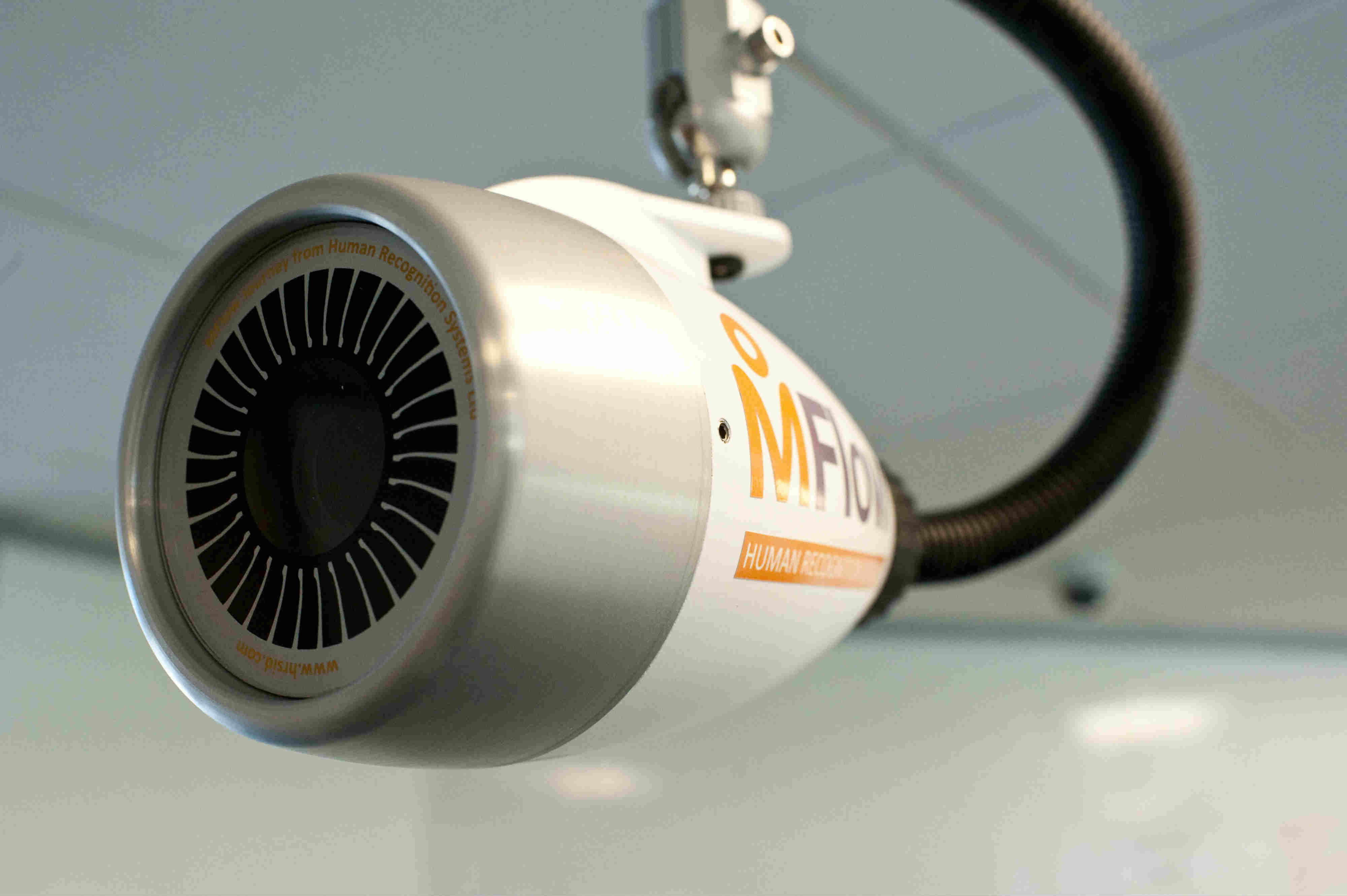
Later this month, Edinburgh airport will introduce MFlow Journey as a part of the airport systems to track and monitor passenger movement through its terminals.

MFlow is one of the latest innovations in Human Recognition, and will take a (thankfully) anonymous image of each passengers face as they check-in.  This enables the airport systems to measure the length of time it will take for each passenger to reach certain ‘check-points’.

Airport Systems

MFlow Airport Systems

The analysis of the data will enable the airport systems      to alert passenger management of any potential queue problems in advance, the idea being that the reduced time for the passenger queuing or waiting in a particular area of the terminal will increase the time the passenger will have for spending in the shopping areas, and therefore, maximizing profit potential for the airport, while enhancing the passenger experience as a whole.

Airport Systems

Edinburgh Airport Systems

Head of IT for Edinburgh Airport, Graeme Agnew said, “As the system doesn’t rely on people carrying Bluetooth or Wi-Fi technology, we are able to collate highly accurate data on the movement of passengers through security screening and then make informed decisions about how we manage this area of the airport in the long term.”

High levels of illegal activity border-wide and corruption within the companies guarding Nigeria’s border has prompted a Chinese firm to apply to install electronic borders control equipment at a cost of approximately 244 million U.S. dollars.

Electronic border management deployment would tighten security immensely, reducing the temptation to try to access Nigeria’s borders illegally.  With enhanced security, and the reduction of illegal border activity, it will be possible for Nigeria to develop its borders and increase commercial promotion.

“Until now, what we had was a proposal from a private Chinese company with which we had also entered into a Memorandum of Understanding (MoU) to provide for an electronic border control and the cost of the equipment was approximately about 244 million U.S. dollars”, Interior Minister, Abba Moro said, adding, “With the assistance of the U.S. State Department, we realised that some components of the offer we got from the private firm was contained in what the State Department would be offering us”.

With the help of U.S. State Department, the Nigerian Interior Ministry hope to deploy advanced surveillance technology in addition to electronic borders equipment.

Canada’s fourth largest airport, Calgary International (YYC) has announced it will extend its current contract with ARINC, providing via the successful vMUSE platform, Common-Use Passenger Processing System (CUPPS) for a further 10 years.  The Calgary Airport Authority agreed the extension of the system with the addition of BagLink, the passenger-friendly, Common Use Self Service system and Local Departure Control on the vMUSE platform.

ARINC has been working with the YYC and CAA for 10 years and are looking forward to providing their existing and future passengers with an enhanced travelling experience for the next decade, especially with the addition of the new terminal, currently under construction and expected to be in use by 2015.  The new terminal will incorporate ARINC’s pioneering common-use technology, seamlessly integrating into the existing operations of the airport.

ARINC’s industry-leading, innovative communications, passenger and baggage processing solutions herald the past, present and future of aviation travel, benefiting airlines, airports, passengers and crew in Calgary and across the globe.

The pressure is on for Airport security providers to step-up technological solutions after the IATA announced its intention to eliminate queues at airports by 2020.

This year the International Air Transport Association (IATA) will run ten more trials for the initiative to implement its ‘Checkpoint of the Future Roadmap’, aimed at the elimination of queues in airports by the end of the decade.

Trials are already underway at London Heathrow, Amsterdam Schiphol and Geneva airports and involve the pre-screening of passengers, explosive detection and biometric data verification instead of traditional scanning methods.

Concerns have arisen as passenger numbers continue to grow year after year, but passenger processing has slowed by over 50% since the events of 9/11.  The new advanced security checkpoint is set to be introduced by 2014 and will speed up the process, eventually eliminating queues altogether.

“We are slowly moving toward the same alignment on security that we have achieved on safety. But we are not there yet and that concerns me greatly,” Tony Tyler, CEO & Director General of IATA, told the Ops conference in Vienna last week.

Airport security providers, such as ARINC’s PSIM solution, are already delivering biometric and automated airport security with their industry-leading technology.  ARINC provide their PSIM solution in over half the U.S. nuclear installations and are ahead of the game when it comes to mission-critical communications and biometric scanning.

Airport Security Providers

Airport Security Providers

Ghana is the latest country to implement biometrics to improve airport security and enhance border control.  The Ghana Immigration Service (GIS) recognised the need to streamline the immigration process with the implementation of electronic border control, visa and permit applications and the installation of electronic gates at Accra’s Kotoka International Airport to enhance airport.

GIS director and Commissioner of Police Dr Peter A Wiredu said, “To maintain Ghana’s economic development, we need an immigration system that can meet the challenges of rapid growth in international travel.”

The GIS has awarded the contract to implement the scheme to Gemalto, who will, with the assistance of Avalon Biometrics, install the fully computerized system.  Dr Wiredu added, “Gemalto has contributed to more than 80 successful government programmes worldwide and has all the required project management skills, reputation and expertise to deliver the country’s new IT infrastructure.”

The eGhana project, which encompasses this initiative, will also set up an online portal, data centre and network upgrade for visa applications and issuance of permits.  The project will allow Ghana to monitor the movements of its borders, as growth continues and will enhance passenger experience with faster, controlled processing while maintaining airport security like never before.

Airport security systems such as that offered by ARINC – AviNet Airport – are becoming increasingly popular worldwide as they offer airlines the chance to improve security whilst concurrently improving efficiency.

Business Aviation News - Border Management Solutions

Business Aviation News – Border Management Solutions

This week saw the introduction of tighter security measures in Fiji as the Immigration Department implemented the new Integrated Border Management System (IBMS) at Nadi International Airport and every other entry point countrywide.

The Fijian Government awarded the contract for installation to Public Sector Solution of Informatics International Limit, a Sri Lankan company who implemented the IBMS, state-of-the-art technology with features designed to enhance passenger profiling and visual verifications that can assist in the identification of high-risk passengers.

IBMS will change the face of security and enhance border management system control, maximising efficiency and productivity with features including access to data, passport and citizenship information, visa and permit modules.

“It will allow for a quick flow of all of our immigration processes and ensure there is quick turnaround time for each passenger that enter or leave our country,” said Major Nemani Vuniwaqa, Director of Immigration for Fiji.  “It strengthens our security system at all of our borders and ensures that we find people that may, in the past, slipped through.”

Although US budget cutbacks effects air traffic control the airport security sector is still expected to grow, and terrorism is still a threat, analysts have said.

In the wake of the September 11 attacks screening passengers and surveillance at airports has boomed. Because airport security is one of the areas that has been hit in the US by budget cuts, the expected growth on air travel will mean an increase in spending on airport security.

Didier Brechemier, an expert at the Roland Berger consultancy said “Airport security is a market niche which is outperforming that of the aviation. It grows along with the volume of passengers which is growing itself by five to six percent per year.”

3 billion passengers will travel by air this year according to the International Air Transport Association (IATA), this is nearly double the amount of people that flew in 2001. IATA also expects this number to double by 2030.

According to Philippe Nguyen, president of the IPE Investment Fund “The airport security screening market is worth some $10 billion (8 billion euros) annually” The Visiongain business information service said “If physical security at and around airports is included the market is worth over $22 billion”

Visiongain has noted that national governments are increasing spending on developing new airport facilities and expanding existing ones to meet increasing air travel, with spending on enhancing security also rising. Visiongain said “Contract sizes and financial data released by companies involved in the industry indicate this and would suggest that the market will continue to expand”

Europe and the US have the largest airport security markets while the Asia Pacific region is on course for the largest growth in the aviation sector.

In the next 10 years China is expected to construct 70 new airports.

Other boosts for security companies include changing the restrictions on carrying on board planes certain items, and the change of the rules of liquids should also boost this sector.

At a recent security conference IATA chief Tony Tyler said “that a right balance needs to be struck between risk and regulation. If we don’t find the right balance soon we will lose the goodwill of our passengers and shippers, clog our airports, slow world trade, and bring down the level of security that we have worked so hard to build-up”

Plenty of commercial opportunities are expected as growth will rest on new technologies. Better target screening is expected by use of information on travellers available to border control agencies will rely heavily on technology and data gathering. Many companies are now offering a full suite of airport security and passenger processing solutions.
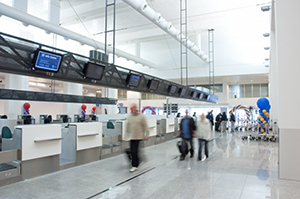
ARINC will continue to provide and maintain the adaptable vMUSE™ platform for the Common Use Passenger Processing Systems (CUPPS). The long term relationship of ARINC and Munich began in 2003 and now to continue with ARINC’s CUPPS solution in MUC Terminal 2 until December 2014.

“We are impressed with the ARINC vMUSE platform and the support we have received over our long partnership. The ARINC team has regularly exceeded our agreed upon benchmarks and SLAs.” Said Marco Butz, Manager Technology and Infrastructure at Munich airport.

ARINC will continue to provide the premium on-site service and a centralized state-of-the-art firewall solution is due to follow during 2013. Tony Chapman ARINC Senior Director, Integrated Travel Solutions commented “We are delighted to continue working with one of our long-standing and valued customers, as we believe it reflects both the quality of our service and commitment to the highest standards of performance,” he continued “Munich Airport is focused on providing the best possible services for its customers, and ARINC’s technology helps make that achievable.”

Brussels Airport Passenger Processing

Brussels Airport Passenger Processing

ARINC announced that it has installed the new Passenger Processing System, with on-site maintenance and support at Brussels Airport in Belgium. ARINC installed its CUPPS-compliant vMUSE common use solution on nearly 500 workstations. ARINC’s AviNet global networking solution has also been fitted at the airport providing a secure WAN connectivity to the airlines’ host systems.

CUTE & Telecommunications Service Manager at Brussels Airport, Pierre Gehrenbeck Said “ARINC’s proven history of successfully migrating major airport sites to common-use passenger processing systems was a key factor in our selection decision. In addition, the efficient and cost-effective program is fully scalable to our airport and can be easily adapted to fit our projected growth”.

ARINC’s vMUSE platform maximizes the use of airport infrastructure through shared workstations, reducing the need for complex and expensive hardware systems, and a cost saving and rapid process. Supporting whichever application an airline has, the open design of vMUSE incorporates an easy integration with airline technology requirements.

At Helsinki Airport, as at many other airports the automatic border control system was introduced to help ease congestion of passenger processing during peak hours and travellers are swiping their passports themselves at border crossing checkpoints.

This year Helsinki Airport expects more than a million users to pass through its automated system, after it was reported that last year 600,000 passengers walked through at ease. Seppo Parkkinen the Kuopio-based musician travels internationally a dozen times a year spoke about the automatic passport control and said “It is much faster, you don’t have to wait and it works really well.”

Citizens holding biometric passports, of the European Economic Area, Switzerland and Japan can pass through the self-service passport control. Users scan their passport in a reader and later pose for a camera that uses facial recognition technology that compares their features with the digital photo embedded in the passport.

Business Aviation News - Border Management Solutions

Business Aviation News – Border Management Solutions

Departure control systems incorporating biometric passport information are becoming ever more affordable and within the reach of most airports. ARINC’s AviNet Airport system is specifically geared towards integration with existing systems and efficient passenger processing.

Currently 70% of Finns have a biometric passport according to Pentti Alapelto of the Finnish Border Guard. By the end of 2016 it is expected that that figure will be 100%. Alapelto explained “We also use the devices to help weed out passengers in cases where we believe someone is travelling with a false document,” as the high-tech readers also offer an additional layer of security to traditional passport control.