Archive

Tag Archives: business aviation

Other Aircraft Internet ProvidersAs the demands for aircraft internet rise amongst passengers, in-flight WiFi communications providers are beginning to see a rise in revenue with Gogo Inc reporting an increase of 35% for the first quarter of this year, amounting to $95.7 million.

“We have proven our leadership in bringing more bandwidth to any aircraft type no matter where it flies,” said Michael Small, Gogo CEO. “In addition Gogo has uniquely positioned itself as a full-service communications provider to the global aviation industry. There’s a sensational demand for connectivity on every face of the earth,” he said. “It’s not surprising that it’s the same demand in the air too.”

Business passengers have had high expectations of aircraft connectivity for some time, according to business aviation providers, ARINC Direct. Faster broadband speeds and global connections are essential for the ‘office-in-the-sky’ needs and competitiveness in the business sector is rising as more operators strive for better services for their passengers.

arrows-navigation-05-14In today’s modern cockpit, it is difficult to imagine what navigation must’ve been like back in the days before GPS and datalink air traffic control, on-board computers and high-technology.

Evidence of how 1920’s, 30’s and 40’s pilots navigated around the country is still visible today in parts of Kansas in the form of giant concrete arrows on the ground. The U.S. government built a series of light beacons at 10-mile intervals along certain flight paths, including the most famous which stretched from New York City to San Francisco. Underneath many of these beacons were placed the huge arrows.

Today, four of these arrows and one tower are left in Kansas at the Kansas City – Amarillo Airway. Although three are located on what is now private property, one is public; located at the southern end of the Anthony Municipal Airport and attracts hundreds of enthusiasts each year. While they can be seen from the ground, the most clear view is given by satellite images, as the original intention, of course, was to view them from the air.

It is fascinating to think of these as essential navigation for pilots using the eyes as the greatest instrument, rather than reliance upon the many navigational technological advancements that we see today.

224332-flareScientists have warned that a recurrence of the solar flare that appeared last week could cause further radio blackouts over the coming days to aviation and communications systems. The solar flare was captured on video by the NASA Solar Dynamics Observatory on Saturday.

The intense bursts of radiation that solar flares emit, although not causing damage to the Earth, can affect communications as they disturb the layer of the atmosphere that carry signals.

“Though people on the ground will not be affected, satellite systems may be affected and this would likely have an effect on the aviation and communication systems for a while. This may last for up to a few hours,” said Dr Mayank Vahia, cosmic rays scientist at the Tata Institute of Fundamental Research.

As the Sun is at is peak of an 11-year cycle, it had been warned by the Indian Centre for Space Physics that there could be ‘dire consequences’ to the satellite systems around the planet, depending upon where they are positioned at the time of the activity.

Suhas Naik-Satam, programme co-ordinator (scientific) at the Nehru Planetarium in Mumbai, said, “The effect on the satellite system cannot be ruled out and therefore all sectors heavily dependent on such communications systems will have to stay alert.”

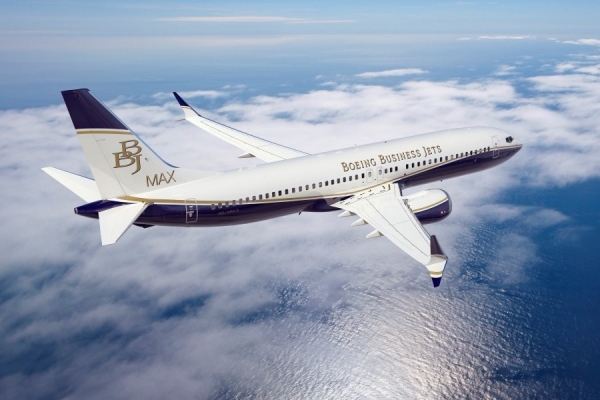
Boeing BBJ Max Business JetBoeing have kickstarted the launch of their latest business jet in the MAX family with an order for the BBJ MAX 8. The undisclosed client is an existing BBJ customer.

The latest jet is based upon the 737 MAX 8, with CFM International LEAP-1B engines and boasts a 14% improvement on fuel economy, which will give better long-range performance over its range of 6,325 nautical miles and Advanced Technology Winglets.

Capt. Steve Taylor, president of Boeing Business Jets said, “The BBJ MAX provides more room, longer range and emits fewer emissions than its nearest competition, making it an ideal choice for today’s BBJ customers.”

The BBJ MAX 8 will have the same size cabin as the BBJ2, at 19 ft longer and with three times the cargo capacity of today’s BBJ, while maintaining the reliability, lower cabin altitude and global support that current clients have grown accustomed to.

“We expect a large demand for the BBJ MAX, particularly for those BBJ owners who want to fly farther and more efficiently and still maintain the exceptional comfort of a BBJ,” Taylor said.

The first flight will be scheduled for 2016 and subsequent deliveries to the first commercial airline clients during 2017. The 737 MAX family has so far received over 1,900 orders from 37 global customers. The first BBJ MAX is to be delivered without an interior, to allow a completely personalised finish for the VIP interior at a centre of the customer’s choice.

Plans are in the pipeline for a BBJ MAX 7 and will also include a BBJ MAX 9, which will offer a 6,255 nautical mile range with the addition of a larger cabin.

Indian Air Operators Seek PolicyThe Business Aircraft Operators Association (BAOA) have lodged their displeasure at the lack of policy framework for private operators and non-scheduled operators, blaming in part a shortage of qualified staffing for the DGCA’s downgrade by the FAA. They claim that the surprise checks and subsequent public observations ‘misrepresent the proven safety consciousness prevailing among NSOPs and private aircraft operators’.

BAOA secretary, Capt R K Bali said, ‘It is not fair to make Indian NSOP operators a scapegoat to showcase DGCA’s authority by subjective reporting of the observations during these inspections.’

The BAOA wrote to the Civil Aviation Ministry days after the DCGA grounded a business jet belonging to the Ambani Group, finding fault with several aircraft owned and operated by other corporate houses and charter companies.

The BAOA remain concerned that general aviation has and will continue to suffer due to the ‘complete lack of infrastructure, high taxes and specific policy framework’, adding that the ICAO had requested that India prepare a ‘roadmap for general aviation til 2036’, back in 2012.

“It is not understood why no follow-up action has been taken on this even after two years, while general aviation continues to suffer due to complete neglect of its infrastructural requirements,” Bali said.

A spokesperson for the DCGA has said that the private charter and business aircraft operators will be called for a meeting over the coming weeks to discuss their grievances and issues.

Business Jet Fares May Rise in UKLast month the UK government announced revisions to the air passenger duty of more than 50%, which could affect business aircraft passengers as the cost is passed on. From 1st April 2015, aircraft weighing more than 20 metric tons with fewer than 19 seats on flights of more than 2,000 miles will race a higher rate of £426. The rate will be £78 for shorter flights, but broader changes mean that flights longer than 6,000 miles will see lower charges.

The APD changes have come as a ‘complete surprise’ to the British Business and General Aviation Association, who have requested a meeting with UK tax officials to attempt to secure amendments to the changes before they come into force next year, warning of ‘unintended consequences’. It is feared that the potential rise in fares for business passengers could damage the business aviation sector and ultimately, the ‘inward investment it brings to the UK’.

ARINC Direct Business Flight Support ServicesAs Rockwell Collins see the business aviation industry growing, it makes sense that after its acquisition of ARINC Inc was finalised late last year, that the business aviation division, ARINC Direct brands and Rockwell Collins applications would gel perfectly in the business flight support services sector.

Rockwell Collins formed the Information Management Services division in January, placing Jeff Sanderski in the senior vice president role. It is a worldwide operation with offices in London and Singapore in addition to the HQ in Annapolis and a further US office in Houston with a total of 2,200 employees.

Around 22% of the business for this division lies in business aviation – a figure that Mr Sanderski sees growing as more private jet aircraft continue to be fitted with Rockwell Collins/ARINC Direct applications, including air-ground voice and data, ground-ground networks and business flight support services.

New Eclipse 550 Business AircraftDescribed by its CEO, Mason Holland, as a ‘game-changer’, the Eclipse Aerospace delivered the first of its new Eclipse 550 to Albuquerque, New Mexico this week to the delight of the company’s European dealer, non-executive chairman of Aeris Aviation, Bruce Dickinson of Iron Maiden fame.

Mr Dickinson, who believes strongly in the Eclipse 550 as the ‘only VLJ’ on the market, said, “In essence it is a two-hour aeroplane. You can stick pretty much anything you want in it and go for two hours. The same is not true for other alleged VLJ’s that weigh a lot more and cost a lot more to operate.” A accomplished private jet pilot and joint-CEO of Cardiff Aviation, Mr Dickinson joined Aeris Aviation to promote sales of the Eclipse in October last year and underwent his type-training while piloting himself to Iron Maiden concert venues in an Eclipse.

Certification has just been achieved from the FAA for the Eclipse 550, a beautiful aircraft that began its production journey in June 2012, and has been described as ideal for those wishing to upgrade from turboprop or pistol aircraft.

Mr Holland said it was an exciting day for Eclipse Aerospace and for general aviation, “With the Eclipse 550, we’ve built a high-performance light jet that includes advanced technology and safety features that have traditionally been found only on much larger cabin-class business jets and commercial aircraft.”

Business Aviation Community Pays TributeThe passing of former president of the ICAO, Dr Assad Kotaite on 27th February has prompted a wave of tributes from the business aviation community as they mark the occasion with the respect that the 89-year old veteran of the industry richly earned in his career.

His life-long contribution to the industry began with the ICAO in 1953 as he joined the Legal Committee. He was a council representative of Lebanon twice, from 1956 to 1962 and again from 1965 until 1970, also holding positions as the chairman of the Air Transport Committee, chairman of the Working Group on ICAO Financial Regulations, second vice president of the ICAO Council and vice chairman of the ICAO Finance Committee.

Dr Kotaite held the position of ICAO secretary general for six years before being elected president in August 1976, where he remained until his retirement thirty years later. His 53-year long career with the ICAO earned him the title president emeritus and was last year awarded the 40th Edward Warner Award in honorary recognition of his contributions to international civil aviation.

The business aviation community paid tribute this week with Ray Rohr, IBAC director of regulatory affairs noting Dr Kotaite’s support of the modernisation of ICAO standards and said, “The original standards had received limited amendment since their implementation in 1969, and didn’t sufficiently address modern business aircraft operations. As a demonstration of his confidence in IBAC and the industry, Kotaite suggested to [then-IBAC Director General] Don Spruston that the industry take the lead to establish a committee and draft revisions for ICAO consideration. We assumed that ICAO would substantially rework our first draft through committee, but instead that draft was largely accepted and implementation was expedited.”

Former NBAA director of international operations, Bill Stine, commended Dr Kotaite’s work to ensure recognition of the International Business Aviation Council (IBAC) and said, “IBAC petitioned for official ICAO recognition less than a year after its founding in 1981. From the beginning, Kotaite recommended that IBAC participate in council panels and committees to demonstrate our commitment to serving civil aviation.”

Dr Kotaite will continue to influence the future of civil aviation, living on through the ICAO’s Assad Kotaite Graduate and Postdoctoral Fellowship fund, encouraging continuing education for the advancement of safety in developing countries.
Business Aviation Communications ProvidersBombardier’s brand new Learjet 75 will be revealed in the planned demonstration tour this month for the first time in Latin America. The beautiful new aircraft has an interior cabin design and technology based upon the Learjet 85 and is designed to carry eight passengers on a full fuel load. The maximum range of the aircraft is more than 2,000 nautical miles and with the addition of its modern design, it is hoped to help to grow the market in this region.

With its long-range capability, the Learjet 75 can fly passengers non-stop from Sao Paulo to Santiago and ensure comfort and accessibility for the duration. The business passenger has high expectations of communications in an aircraft and needs a high degree of connectivity for the ability to undertake business as effectively in the air as they do on the ground. Cabin services on the new Learjet 75 include a cabin management system with individual touchscreen monitors, full audio and video control.

The planned tour will begin with a static display in Toluca, Mexico at the Aero Expo and will also be shown at FIDAE in Santiago, Chile at the end of the month, showcasing at other events along the way in Mexico, Columbia, Panama, Brazil, Guatemala and Chile.

The new regional vice president of sales for Latin America Bombardier Business Aircraft, Stephane Leroy, said, “We are very proud to bring our new Learjet 75 to the region for the first time. This aircraft, with its fusion of modern design, Learjet heritage and top performance, was developed with the needs of our customers in mind. We are convinced that this new Learjet will not only maintain, but grow our market share in the region.”