Archive

Tag Archives: business aviation services

Private Jet Travel Communications for PassengersA delve into the travel arrangements of companies over the past few years has revealed that many corporations could save money over the long-term by using private jet travel over regular commercial flights.

It is not the first method of travel that springs to the mind of a company director when sending employees to other parts of the country to business meetings, yet when taken as a cost-measuring exercise, the results can be surprising.

There are four main modes of private jet transport:

  • Charter
  • Fractional Ownership
  • Jet Card
  • Ownership

Many large corporations do operate, own and run private jets for business purposes. Private jets are not always available for general employees, yet the savings are there to be made.

Taking travel time, airport processing time and flight hours into consideration for a group of employees can add up quickly when using commercial airlines. The time reduction for a business charter flight is significant and when weighed against the ‘down time’ of the employees travelling on commercial airlines, considering the additional passenger connectivity options for business jets, actual work hours can be greatly increased.

Charter flight is perfect for companies that fly employees less than 25 hours per year on a flexible schedule or are headquartered near a major metropolitan centre.

Jet cards are sold in minimum denominations of 25 hours and are ideal for companies that send employees on business trips that involve a stay of longer than 24 hours (no round trip options).

Fractional ownership of a jet means buying segments at a minimum of 50 hours. This option is perfect for those companies that use private jets, but do not want the running costs on their accounts.

If your company measures costs for off-site business meetings, it is easy to see that private jets and the business aviation sector can offer a solution that can spell long-term savings. Business travellers can meet the needs of the company far more effectively when travelling using business aviation – the cost is not measured simply by the price of the seat.
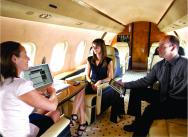
 

Business Passengers Enjoy Full ConnectivityBusiness passengers demand high levels of cabin electronics these days to enable them to work as effectively in the air as they can on the ground. The most highly sought-after commodities being aircraft internet, high-speed connections to download presentations and business documents and the ability to research and access email accounts.

In addition, however, there is also an increasing requirement for ambient lighting, charging facilities for phones and tablets, HD flat screen TV, video and in-flight entertainment features.

In an ever-changing marketplace, it is almost impossible to keep up with the technology; the solutions to these requirements getting faster, more sophisticated and with higher-quality connections.

ARINC Direct stay ahead of the competition with seamless connectivity for business passengers via satellite communications from Inmarsat and Iridium networks. High-speed and high-quality connections offer a truly global coverage with flight tracking capabilities that are also increasing in demand in the wake of the tragic disappearance of flight MH370.

Business passengers travel in comfort and can continue to work effectively with scalable cabin electronics solutions from ARINC Direct.

Other Cabin Services ProvidersTo help reduce operational costs, Finland airline, Finnair has announced its decision to outsource cabin services for 20 long and short-haul flights over the next two years. It is not yet clear about the related impact this will have upon current personnel.

This is not breaking news, as Finnair have been finalising cost-saving measures since March, particularly in the area of cabin services. Finnair has had a cost reduction program in place since 2011, aiming to reduce operational expenses by 18 million EUR. The options include personnel reductions including redundancy, temporary lay-off, hours reductions or a combination of all these options. The cabin services outsourcing plan will go ahead and will be trialled in order to determine the best course of action moving forward for the airline. Finnair will also examine the cost implications of setting up a subsidiary to take over the cabin services functions.

Ville Iho, Chief Operating Officer for Finnair made the following statement, “Finnair has once more met with representatives of the Finnish Cabin Crew Union (SLSY) in an effort to find a common cost reduction solution that would make it possible to avoid outsourcing. SLSY offered 2.9 million EUR in permanent, instant savings, as well as 4.8 million EUR savings that would be achieved within a 20-year time period. This is mainly the same as SLSY’s previous offer. In addition, as a new element, SLSY proposed approximately 4 million EUR temporary savings for a period of one year. In exchange, SLSY required two year protection against lay-offs. Unfortunately, this is too far from the savings that Finnair requires. We cannot continue with our current cost structure, which is why we need to make instant, permanent changes to it. We proposed a solution that would see 12 million EUR of the cost reductions implemented immediately and the remaining 6 million EUR over a longer period of time. Even this compromise did not lead to an agreement.

He added that partnership negotiations for outsourcing are proceeding well, with potential partners in Finland, Europe and Asia. No rushed decisions will be made and careful negotiation and planning will be ensured.

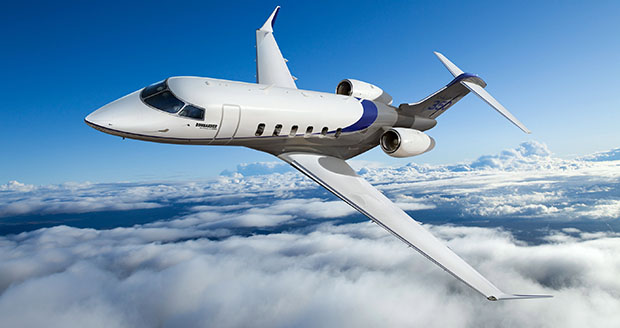
Bombardier's Challenger 350 Business JetBombardier’s Challenger 350 business jet received full type certification from the FAA last month, marking a key step in the journey to entry-into-service for the luxury aircraft.

Stéphane Leblanc, Challenger Programs, Bombardier Business Aircraft vice president and general manager said that the aircraft has been “Designed with the feedback from existing Challenger aircraft owners and operators”, adding that the “New aircraft will meet their ever-growing needs. We are looking forward to delivering this segment leading aircraft and are confident that our customers will love it.”

Following certification, NetJets Inc unveiled their new Challenger 350 at the Westchester County Airport, N.Y. with Bombardier Business Aircraft president, Eric Martel presenting the ceremonial keys to NetJets chairman and CEO Jordan Hansell. NetJets will add eight jets to their fleet this year.

“The addition of the Challenger 350 aircraft to our fleet is a significant step in NetJets’ continued growth, and clearly demonstrates our commitment to provide NetJets customers with the most state-of-the-art aircraft models in the industry,” said Hansell. “This is the first of up to 200 Challenger 350 aircraft that we have on order from Bombardier over the next 10 years. We worked very closely with Bombardier to deliver an aircraft that exceeds our customers’ needs by providing the highest levels of safety, comfort and convenience.”

NetJets have made private aviation history with their purchases of $17.6 billion in aircraft since 2010 for their Signature Series. So far they have received 38 jets from various manufacturers.

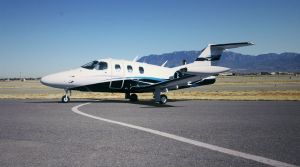
HondaJet First Flight CompletedHonda Aircraft were excited to announce that the first production HondaJet made its first flight last week and reported successful checks during the 84-minute flight. In-flight checks included: landing gear operation, flaps and speed brakes, low and high-speed handling and avionics testing of the Garmin G3000 system.

Test pilot Warren Gould reached an altitude of 15,500 feet and 348 ktas and was greeted by more than 1,000 Honda Aircraft employees upon his return.

President and CEO of Honda Aircraft, Michimasa Fujino said, “With this first flight, the HondaJet program has entered the next exciting phase as we prepare for delivery.”

The beautiful new jet, painted in a deep green pearl colour, is the first in a batch of production models that will be available for delivery after FAA certification, which is expected during the first half of 2015. The five-passenger, single pilot jet is capable of a maximum speed of 420 ktas, altitude of 43,000 feet and has a NBAA IFR range of 1,180 nautical miles.

Business Aviation Conference in BrazilThis years’ EBACE show to be held at São Paulo Congonhas Airport, will be operating under tough conditions as facilities are limited and a large tent at the show entrance will need to be erected. Organising the event has been a catalogue of delays for the Brazilian industry group, Associação Brasileira de Aviação Geral (ABAG) during a period of remodelling for the venue.

“We’re working with the expectation that the fair will be smaller this year than in 2013, which was smaller than in 2012. If it’s bigger, it will be only slightly bigger,” said ABAG executive director, Ricardo Nogueira.

Attendees for the show have declined over the past few years, with 13,823 visitors last year compared to 16,722 attendees in 2012, which at the time, was largely attributed to bad weather during the show’s opening days.

This year it is hoped that figures will rise due to the location of the World Cup tournament, which will bring a boost to local business aviation.

“All our airplanes are chartered for the World Cup, there’s a lot customer aircraft activity, and we’re doing a lot of FBO work for international visitors,” said a spokesman for TAM Aviação Executiva.

There is already a shortage in ramp space available during the tournament with 83% of business aviation slots reserved – equating to approximately 89,640 movements out of 108,000. Slots for 1,000 business aircraft have been reserved for the tournament traffic, which is expected to decrease as teams are eliminated.

The building that has been used during previous shows for LABACE conference sessions and registration has been commandeered as a remote terminal for business aviation during the World Cup tournament. Infraero airport authority Investments in this facility should benefit LABACE when it is finally handed over for use by ABAG.

nice-business jets 22-06-14According to a recent study conducted by Private Jet Charter, the French city of Nice is the most popular destination for private jets out of the UAE, with five trips per year.

Following a close second is Paris for shopping, with four trips annually, then London for business, with two trips per year.

Nice is thought to be the most popular destination due to the belief that UAE high-net-worth individuals prefer to escape the hot summer months by travelling to high-end parts of Europe. Geneva is also popular for skiing during the season.

The report goes on to comment that UAE private jet users appreciate the ‘luxury and hassle-free environment’ that is provided by private charter and many are beginning to use private jets to connect to scheduled commercial airlines to destinations that are not on a standard route.

The staunch growth witnessed in the UAE of business aviation is also partly attributed to the new Al Makhtoum International Airport in Dubai, which now has exclusive private jet facilities with reduced slot restrictions and luxurious lounges.

It is thought that more and more exclusive requirements will need to be met across the UAE and further afield as the business aviation community grows.

Other Providers of the Electronic Flight Bag for Business Aviation

Jeppesen, part of Boeing’s Commercial Aviation Services, has launched the latest version of its Electronic Flight Bag software for Windows 8. FliteDeck Pro has been specifically designed for use with Windows 8 operating systems for tablets and can help to streamline the use of data for navigational information and flight planning for airlines, business jet operators and military fleet programs.

iPad applications are becoming increasingly popular within the business aviation industry as a significant contributor to weight-saving initiatives and fuel consumption savings and is another step closer to a paperless cockpit environment.

Electronic flight bag (EFB) providers aim to streamline the entire process of flight planning and filing flight plans and many applications give pilots and flight crew direct access to all operational information via tablets. Cloud-based applications give comprehensive access to critical data and allow simplified data sharing amongst relevant parties under a secure connection.

Jeppesens’ EFB solution has been integrated by Delta Airlines to increase efficiency in a scalable data management initiative. Managed by the global Jeppesen Distribution Manager Pro, the secure network offers reliability throughout operational activity.

“Pilots will now be able to open two applications side-by-side on screen to access critical flight information such as text and enroute charts in a split view, with Windows 8,” said Tracy Issel, Microsoft general manager for retail, consumer goods, hospitality and travel. “The full HD 1080p Surface tablet provides seamless delivery of real-time flight data from Jeppesen in all lighting conditions, and pilots can configure their tablet to provide the right information at the right time.”

Business Jet Communications Solutions ProvidersPrivate jet operators are noticing that as executive aircraft get bigger, faster and with longer-range capabilities, the demand for parking, hangar space and landing slots is causing problems. There is a widespread call for improved infrastructure to allow some flexibility within the flight plan.

Flight planning involves many thousands of minute calculations, including slot management and route management and as executives fly to further-flung destinations with fewer facilities, parking problems are causing increasing headaches for operators.

Many International airports are unprepared for the volume of business jets, having been designed 10-20 years ago when business jets were traditionally smaller.  This has resulted in rising parking charges and, in some cases, limited slot times that require faster turnaround times on the ground and parking elsewhere before returning to collect the owners.

Flight planning must take all these factors into account and is a service that is offered by third-party providers for business aviation. Most individual owners cannot afford the luxury of a full-time planning department as commercial carriers employ. Flight planning providers, such as ARINC Direct, specifically cater for private jet operators, whether with one aircraft or an entire fleet.

Manufacturers are working towards making improvements to the infrastructure of business aviation, Gulfstream, for example, opened the first service centre in Asia; in Beijing, and has added four full-service airport centres with maintenance and hangar facilities exclusively for business jet aircraft. Earlier this year Bombardier opened a service centre in Singapore, realising that growth will spell more demand.

In-flight Internet Solutions for Business Aviation

American Airlines plans for 30 new Bombardier CRJ-900 NextGen regional jet aircraft will begin this month with the arrival of the first of the fleet. In a bid to provide ATG connectivity, the company has announced an agreement with Gogo, aero communications service provider, to install their systems for in-flight internet connectivity.

“American Airlines was the first commercial airline to launch connectivity service with Gogo, and we are excited to continue to build on our longstanding relationship with American by extending Wi-Fi service to passengers flying on its new regional jets,” said Michael Small, Gogo’s president and CEO.

In-flight internet is fast becoming a pre-requisite for business passengers in todays’ modern skies. The expectation is for connectivity to be as reliable and seamless as it is on the ground in order for business to be conducted as efficiently as the office.

Many business jet communications providers are supportive of the initiative and costs for installation and operation is competitive. The race for reasonably-priced, and above all, reliable in flight internet is gathering momentum across the globe as demand accelerates.