Archive

Tag Archives: border management

Find out more about Rockwell Collins' ARINC passenger processing solutionsThe Philippines plan to streamline the passenger processing system for their Mactan Cebu International Airport by implementing a range of Rockwell Collins’ ARINC airport solutions.

Among the upgrades will be the installation of ARINC VeriPax on the Gunnebo Security Group automated gates in a collaboration between the two companies. This will enhance security with an automatic validation of passenger flight details at check-in.

The airport already uses ARINC vMUSE common-use technology and self-service check-in kiosks.

Industry Leading Providers of APIS | Business Aviation NewsDelays caused by manual screening of passenger information in the Cayman Islands has led to a series of talks regarding the use of Advance Passenger Information System (APIS) to handle sensitive information.

Current Chief Immigration Officer for Cayman, Bruce Smith indicated that ‘technical tests’ were conducted to ensure a consistency of information was transmitted and it ‘didn’t work out’.

Cayman Airways were supposed to be the first to implement APIS, to ensure passengers leaving the region were authorised to do so, and not on any ‘watch lists’, but the airline has not had all destinations included in the passenger screening program.

Until an APIS system can be enforced, manual screening is the only way to ensure security checks are made.

Providers of Electronic Border Security SolutionsThe sixth hearing of the Senate committee this year focused upon the U.S’s borders security technology, perimeters and infrastructure this week.

Chaired by Mr Ron Johnson, testimony was given on the current state of borders security as the committee look forward to the next steps to be taken to increase effectiveness.

Representatives from Homeland Security and the U.S. Customs and Border Protection agencies gave testimony at the hearing where it was noted the ‘DHS could do a better job of collecting data’.

Information was also shared and discussed regarding perimeter fencing of airport environments, and the use of improved technology to increase situational awareness, an area that many committee members feel is seriously lacking.

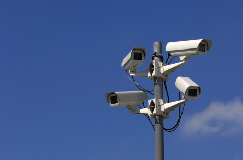
Physical security measures in airports are the ‘front line.’ These would include perimeter fencing and security surveillance equipment. Other measures that focus upon enhanced technology with biometric solutions are becoming increasingly popular around the world, particularly as passenger demand increases for greater control of their travel arrangements with self-service systems.

Advanced Border Management Systems Technology ProvidersInterpol World 2015 in Singapore this week will see Gemalto demonstrate its latest next-generation Border Management Systems with automated eGates, electronic passports and visa monitoring capabilities.

Government and border agencies all over the world are looking to the latest technological advancements to increase border security, at all border checkpoints but not least in the airport environment. As traveller numbers steadily increase year-on-year, it is critical to maintain utmost security while streamlining the passenger processing system in order to keep ground delays to a minimum.

Self-service kiosks and biometric systems from providers such as Gemalto, SITA and Rockwell Collins are amongst the most popular with passengers, allowing them to take greater control of their travel experience and reducing queueing time.

Self-service and common-use systems provide airlines with an opportunity to share costs and reduce the time spent micro-managing the passenger check-in process, while airports regain valuable terminal space and personnel time, which can be better utilised to maximise operational productivity.

Improving Airport Security with Biometric Solutions ProvidersAlthough the world’s major airports are stepping up security for passengers and employees, a top airport official, speaking at Los Angeles International Airport still thinks that it may not be enough to stop the ‘lone wolf’ slipping through the net.

Mr Patrick Gannon, police chief of LAX, said that 54,000 employees undergo recurring security screening, including criminal background checks, but believes that this may not be enough. He said, “I agree that in any airport throughout the United States and here also, there is never a 100% guarantee that somebody who wanted to do something illegal or wrong couldn’t make that happen.”

Just two of the U.S. airports, Orlando and Miami, require all personnel that have access to secure areas of the airport to pass through metal detectors, with other major airports conducting random checks. Often airport personnel undergo the bare minimum before being hired, such as a criminal background check.

The debate has been raised since the arrest of the Delta baggage handler at the end of last year at Jackson International Airport for gun smuggling alongside a passenger.

Mr Gannon is concerned about the process of screening airport staff and the risk of a single member of staff being overlooked. Miami airport security director, Lauren Stover agrees that ID badges and swipe cards are not enough to guarantee the eradication of the likelihood of contraband or a person with malicious intent getting through security access doors.

The debate continues as airports around the world aim to stamp out the threat of terrorist attack. As employees could be targeted by organisations, regular and constant screening is the only answer and is held back by cost implications on a broad scale.

Leading Providers of Electronic Security Systems for Airports and FacilitiesPensacola International Airport has announced that it will be ramping up security at with a new electronic security system that is expected to cost $533,000.

The new high-tech system will include security cameras and a motion detection system with audible warning to alert airport security personnel if concourse areas are breached. The concourses will also be in need of upgrades to facilitate additional security measures for the airport.

It is estimated that an annual $120,000 will be saved by removing the need for constant monitoring of the sensitive areas of the airport.

Contracts have been tendered and discussions will begin this month to decide upon the best way forward with the best airport security systems providers.

Florida’s Department of Transportation will contribute $104,000 towards the technology portion of the project.

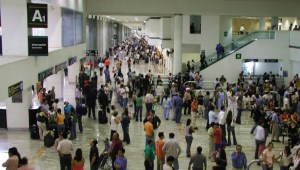
Leading Airport Security Providers - Physical and Infrastructure ProtectionFlight passenger numbers are increasing every year by an average of 5%, which may not sound like much, but we are talking millions of travellers passing through country’s border management systems, placing strain on many an airport infrastructure.

In addition to this growing pressure, airports and border agencies are also faced with the increasing threat of terrorism, which is also growing at an alarming pace, particularly over the last few years.

So what is the answer? Airports all over the world are being left with no other choice than to invest heavily in strengthening security measures across the entire airport environment.

This has led to a surge in growth for the airport security systems sector, which, according to new analysis from Frost and Sullivan estimates that the market will earn revenues in the region of $12-$13million by 2023. The study looked at the areas of perimeter security, surveillance and access control amongst many other aspects including data integration and cyber security as we see the concerns rising with the development and utilisation of connectivity onboard aircraft.

With NextGen technologies also poised to catapult the entire industry into the future, aviation security providers must be ready to go global.

API for Border Security in CanadaCanada is forging ahead in a bid to increase the safety of airline passengers, aircraft and crew. Bill C-51, known as Canada’s Anti-terrorism Act, 2015, is to be tackled in two parts:

  • Security of Canada Information Sharing Act
  • Secure Air Travel Act

If passed, the current Passenger Protection Program would be enhanced with greater transparency for the sharing of passenger data in a similar system to that used in the U.S. in the transmission of Advance Passenger Information (API). API transmission before a flight leaves for its destination, can allow government agencies to scan passenger data and achieve early alert when comparison is made to a ‘do-not-fly’ list or similarly, a list containing the names of potential terrorists, members of high-risk political or radical groups – a ‘Persons of Interest’ list.

Opposers of the scheme argue that concerns should be raised when information sharing is discussed. It is by no means decided at this stage the grounds on which a person will be placed upon such lists and the government of Canada propose to lower the threshold and expand the grounds on which a person becomes ‘specified’ under the Passenger Protection Program.

The debate continues.

Leading Global Providers of eAPIS SolutionsCanada’s Border Services Agency is working towards a U.S.-style Electronic Advance Passenger Information System (eAPIS) to protect its borders and is hoping for complete implementation by spring 2016.

A survey has been created by the Canadian Owners and Pilots Association (COPA) to assess how the new requirements will impact Canadian and U.S. pilots crossing the borders in a bid to make the transition as seamless as possible.

“This survey will provide statistical feedback to Canadian and US officials to find a solution that both addresses their goals and minimizes duplication,” said COPA Vice President of Operations Patrick Gilligan. “COPA is heavily involved in finding creative solutions to minimize the detrimental consequences that any additional requirements will have on our sector of aviation.”

The survey, which can be completed anonymously if required, will aim to assess the general ‘feeling’ of pilots conducting cross-border leisure and personal flights – whether they think that the implementation of a system will impact flight operations in a detrimental way.

The survey will also attempt to gain a general consensus about the introduction of a single portal for the transmission of pilot and passenger data to the Canadian Border Services Agency.

The Aircraft Owners and Pilots Association (AOPA) are working with COPA to ensure that the implementation of an eAPIS mandate remains seamless.

“We’re really working to find a way to make this as transparent as possible,” said Tom Zecha, AOPA manager of aviation security. “We encourage AOPA members who cross the border—or even those who don’t but think they might someday—to complete the survey to convey the impact a duplicate system would have on cross-border operations.”

Biometric eBorders Solutions ProvidersLast week saw a deal signed with French biometric security firm, Morpho (Safran) and the UAE for a range of biometric eBorders technology solutions to be installed in the Emirates’ biggest international airports.

The first installations will take place at Abu Dhabi airport this year, followed by four other airports to create a fully integrated multi-biometric border control system across the UAE.

There will be 96 e-Gates and 94 e-Counters, which will help to expedite passenger processing with the inclusion of touchless fingerprinting, iris and facial recognition systems.

Biometric eBorders technology is a fast-paced industry, embracing enhancements and developing more efficient and effective ways to manage a growing passenger throughput. The need for solutions to manage international borders efficiently, yet maintain security is critical. As threats to national security increase all over the world, the pressure upon governments and border security agencies also intensifies.

Governments and agencies must be able to screen passenger information swiftly and data such as Advance Passenger Information must be transmitted securely. eBorders systems are able to handle critical aviation messaging in addition to the physical screening of passengers in airports.

Biometric eBorders solutions could be the answer to streamlining the entire border management system and must eventually be integrated on a global scale.