Archive

Tag Archives: aviation operational messaging

Air Traffic ManagementAirports Fiji Limited (AFL) has awarded a long-term support contract which will look after the Aurora ATM System, commissioned in May 2010 to Adacel, a developer of Air Traffic Management systems with Headquarters in USA, Canada and Australia and clients all over the world.

The Aurora system gives AFL the flexibility to handle traffic growth, bringing high levels of safety and service to operators. Capabilities include automated conflict detection, control by exception and monitoring, 4D profile protection and dynamic airspace allocation. The use of CPDLC, Air Traffic Service Inter-Facility Data Communications and surveillance incorporating radar has brought AFL to the forefront of ATM technology in the Pacific region.

Mr Faiz Khan, Executive Chairman of AFL said, ‘The introduction of the Aurora system in our airspace allowed us to operate with neighbouring ANSP’s in a completely seamless manner using an already developed and proven system. The performance of our system since commissioning has been exemplary and support from Adacel will assure continuing success in the future.’
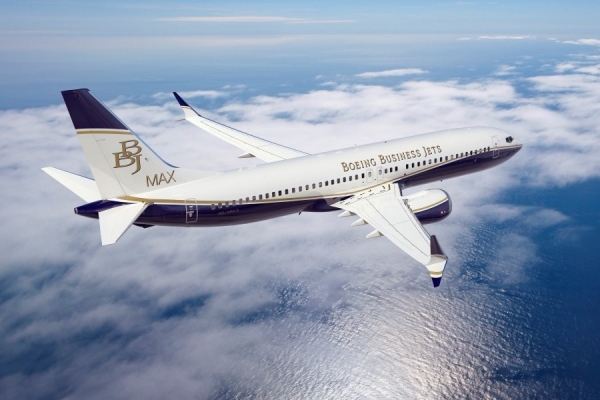

Boeing BBJ Max Business JetBoeing have kickstarted the launch of their latest business jet in the MAX family with an order for the BBJ MAX 8. The undisclosed client is an existing BBJ customer.

The latest jet is based upon the 737 MAX 8, with CFM International LEAP-1B engines and boasts a 14% improvement on fuel economy, which will give better long-range performance over its range of 6,325 nautical miles and Advanced Technology Winglets.

Capt. Steve Taylor, president of Boeing Business Jets said, “The BBJ MAX provides more room, longer range and emits fewer emissions than its nearest competition, making it an ideal choice for today’s BBJ customers.”

The BBJ MAX 8 will have the same size cabin as the BBJ2, at 19 ft longer and with three times the cargo capacity of today’s BBJ, while maintaining the reliability, lower cabin altitude and global support that current clients have grown accustomed to.

“We expect a large demand for the BBJ MAX, particularly for those BBJ owners who want to fly farther and more efficiently and still maintain the exceptional comfort of a BBJ,” Taylor said.

The first flight will be scheduled for 2016 and subsequent deliveries to the first commercial airline clients during 2017. The 737 MAX family has so far received over 1,900 orders from 37 global customers. The first BBJ MAX is to be delivered without an interior, to allow a completely personalised finish for the VIP interior at a centre of the customer’s choice.

Plans are in the pipeline for a BBJ MAX 7 and will also include a BBJ MAX 9, which will offer a 6,255 nautical mile range with the addition of a larger cabin.

Indian Air Operators Seek PolicyThe Business Aircraft Operators Association (BAOA) have lodged their displeasure at the lack of policy framework for private operators and non-scheduled operators, blaming in part a shortage of qualified staffing for the DGCA’s downgrade by the FAA. They claim that the surprise checks and subsequent public observations ‘misrepresent the proven safety consciousness prevailing among NSOPs and private aircraft operators’.

BAOA secretary, Capt R K Bali said, ‘It is not fair to make Indian NSOP operators a scapegoat to showcase DGCA’s authority by subjective reporting of the observations during these inspections.’

The BAOA wrote to the Civil Aviation Ministry days after the DCGA grounded a business jet belonging to the Ambani Group, finding fault with several aircraft owned and operated by other corporate houses and charter companies.

The BAOA remain concerned that general aviation has and will continue to suffer due to the ‘complete lack of infrastructure, high taxes and specific policy framework’, adding that the ICAO had requested that India prepare a ‘roadmap for general aviation til 2036’, back in 2012.

“It is not understood why no follow-up action has been taken on this even after two years, while general aviation continues to suffer due to complete neglect of its infrastructural requirements,” Bali said.

A spokesperson for the DCGA has said that the private charter and business aircraft operators will be called for a meeting over the coming weeks to discuss their grievances and issues.

Business Jet Fares May Rise in UKLast month the UK government announced revisions to the air passenger duty of more than 50%, which could affect business aircraft passengers as the cost is passed on. From 1st April 2015, aircraft weighing more than 20 metric tons with fewer than 19 seats on flights of more than 2,000 miles will race a higher rate of £426. The rate will be £78 for shorter flights, but broader changes mean that flights longer than 6,000 miles will see lower charges.

The APD changes have come as a ‘complete surprise’ to the British Business and General Aviation Association, who have requested a meeting with UK tax officials to attempt to secure amendments to the changes before they come into force next year, warning of ‘unintended consequences’. It is feared that the potential rise in fares for business passengers could damage the business aviation sector and ultimately, the ‘inward investment it brings to the UK’.

Aircraft Records Management Solutions ProviderAirlines are seeking more efficient and scalable solutions for aircraft maintenance and critical information management and Virgin America are no exception. As an award-winning airline, Virgin America need to maintain high-performance levels, high-quality service, efficiency standards and compliance and have selected the latest cloud-based computing service to manage maintenance records for their expanding fleet of Airbus A320 aircraft.

Cloud-based technological solutions can maintain the integrity of the information stored and allow for efficient data-sharing with DCS, supply chain and regulatory authorities.

Virgin America will use AirVault, it has been announced today, to implement their solution, AirVault Mx Records Management.
‘Providing an inventive systems approach was a key driver of our decision. AirVault’s experience with airlines around the world offered Virgin America a framework of best practices specific to aircraft maintenance records that was easy to configure and integrate with our current aircraft engineering systems,’ said Nick Brohm, Virgin America Director of Quality Assurance.

AirVault CEO John Oldham said, ‘We are proud of Virgin America’s choice of AirVault as their mission-critical information management service for aircraft maintenance. AirVault shares Virgin America’s vision of innovation and providing premier service, pushing the use of advanced technology to improve their aircraft maintenance operations and environmental sustainability.’

Airport Security Solutions Providers

While the reason for the disappearance of flight MH370 is still unclear, Malaysian Defence Minister, Hishammuddin Hussein spoke earlier this week about the suggestion from investigators that the behaviour of the aircraft before vanishing from radar and radio contact was ‘consistent with deliberate action’ by someone onboard. Malaysia has agreed to ‘step up’ airline and airport security measures.

The comments followed strong advice from industry experts to consider better security measures across the world to minimise the threats against security. Malaysian Home Minister, Ahmad Zahid Hamidi confirmed that officials were re-examining security within airports and particularly at Kuala Lumpur International and consistently around airport security procedures and protocol for key entry points.

Malaysian authorities have confirmed that they do not check the Interpol database of lost and stolen passports, explaining that there are compatibility and speed issues with the system. This is in spite of the fact that the database contains more than 40 million entries. Early indications show that the stolen passports used to board flight MH370 had been reported missing more than 12 months before.

According to security experts, Malaysia could effectively enhance passenger screening with the use of current security measures if carried out correctly and efficiently without causing severe ground delays and by working with International law enforcement groups, such as Interpol.

“It’s very much the case that global organized criminal networks have exploited the lax government arrangements in Southeast Asia,” said Mr Carl Ungerer, lecturer of International relations at Australian Bond University, ‘Countries in the region should improve coordination between law enforcement agencies on intelligence sharing.’

‘We have increased security and enhanced monitoring procedures on board all our aircraft. However, for security purposes we are unable to discuss any such procedures publicly,’ a Malaysia Airlines spokeswoman said.

Pioneering Providers of ACARS Messaging It has been announced that the aviation regulator for India has issued a mandate for airline crew to be given training on the ACARS system, following the disappearance and issues surrounding flight MH370.

ACARS delivers and receives mission critical messaging throughout the flight, unless manually deactivated. These messages may include NOTAMs, OOOI, engine information and aircraft performance figures, including air speed, issues, position and weather reporting.

Currently, the only area where ACARS coverage is mandatory is within the North-Atlantic route.

Although some Indian airlines have incorporated ACARS into their aircraft, with the largest operator, IndiGo having used ACARS from their earliest flights, several airlines do not have ACARS capability. Murmurs around the aviation industry suggest that every flight should carry the latest that technology has to offer for mission critical messaging.

Aviation Security Messaging ConcernsThe recent disappearance of Malaysia Airlines flight MH370 has raised global questions about the effective use of aviation security messaging for both aircraft communications systems and passenger data transfer.

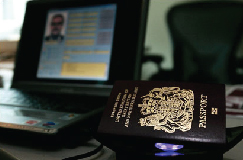
The International Air Transport Association (IATA) suggest that a more refined, tailored approach to security messaging is needed, as current measures appear to be unsuitable in a general sense. With the technology available today, such as biometric security and electronic passports, information can be shared in real-time, allowing passengers to be screened more effectively.

Although the mysterious disappearance of the Boeing 777-200ER has encouraged tighter security in airports across the world, questions are being asked why passengers were allowed on board with stolen passports, whether the incident is linked to the disappearance or not, as has been speculated.

The aircraft’s communications systems were allegedly switched off intentionally and continued to ‘handshake’ with the satellite network, Inmarsat until 8.11 am, when over the Indian Ocean and low on fuel.

Finding a balance when conducting security measures means treading a fine line. Security within airport operations should work in conjunction with border control agencies and government bodies to ensure that security should be tight, but effective, without causing major ground delays.

Airport operations software can help to streamline passenger processing, while maintaining high biometric screening levels and allowing passenger data to be checked, such as with the provision of advance passenger information, now mandatory in the U.S. since the events of 9/11.

Airport Processing Technology - In-Cloud SolutionsAmadeus, European technology firm, has revealed their latest airport platform, designed to focus upon next-gen passenger processing and integration for airport operations.

The common-use system will bring cost effective solution for airport management with an opportunity to lower operational expenses, improving flexibility with simplified messaging and passenger processing capabilities.

With the cloud-based software-as-a-solution (SaaS) system, airlines and ground based operations are able to share both space and resources without costly hosting, development or infrastructure expenses.

John Jarrell, head of airport IT for Amadeus said, “The airport industry has advanced tremendously from the days of dedicated airline check-in desks towards a much more flexible and shared environment.”

ARINC Solutions for Information Management & Passenger Processing Rockwell Collins have been awarded a five-year contract to place ARINC’s vMUSE in four common-use terminals at London Heathrow Airport (LHR). The contract was awarded through Heathrow AOC Ltd on the strength of Rockwell Collins’ recent acquisition of ARINC Inc. LHR will upgrade their current ARINC MUSE platform in terminals 1,2 and 3 to the latest vMUSE implementation and will install a new system in Terminal 4, supporting more than 1,500 common-use workstations.

The upgrades will bring the latest CUPPS standards, offering airlines and LHR greater efficiency and cost management opportunities. The vMUSE platform allows the extension of CUPPS support to off-site locations and is a scalable solution for baggage drop and information management systems.

“As one of the world’s busiest airports, Heathrow must utilize the most effective passenger processing technologies available,” said David P. Wilding, chairman of the AOC Shared Systems Board. “The ARINC system enables us to meet the needs of our member airlines by improving the efficiency and flexibility of passenger processing, which ultimately enables us to provide the best customer service possible.”

“We’ve been working with LHR for many years, and are delighted that the AOC has decided to renew and expand its relationship with us,” said Tony Chapman, executive director, Heathrow for Rockwell Collins’ Information Management Services business. “As passenger traffic continues to grow, we remain committed to providing airlines and airports of all sizes with the most efficient solutions available to meet passenger demands.”