Archive

Tag Archives: ARINC

Out in the news this week was a rather novel idea from the University of Arizona. Immigration interviews may never e the same again if the idea of automated lie detector tests takes off. The machine could ask the passenger a series of questions, and analyse different aspects of your behaviour: how your eyes are moving, how your voice changes, how you pause between answers, how you fidget.

Border Security Future

An image from a demonstration of the Embodied Avatar, from a video by BORDERS, the National Center for Border Security and Immigration at the University of Arizona.

The machine, an “Embodied Avatar kiosk” uses this data to assess how truthful your answers were. Whilst this is the latest technology in the field, it is unlikely to be at Gatwick in the near future. You are much more likely to start to see more of the automated border control systems in place!

ARINC Cabin ConnectIn the news again and again are the developments for inflight broadband. Some passenger groups hail it as an essential, other just see it as a rip off. One news report this week suggested that supply outweighed demand – but no commercial airline or private jet wants to be left behind the times.

This week we heard that the U.S. Federal Communications Commission (FCC) issued an order implementing Ku-band rules for the operation of satellite earth stations on aircraft enhancing competition and promote the widespread availability of Internet access to aircraft passengers – potentially starting the rise of low cost wifi on airplanes.

Providers to the aviation industry often differentiate their products by aircraft wifi for business aviation, and in flight wifi for commercial airlines.

Up until now, L-band licenses (1-2GHz) could be obtained from the FCC to offer connectivity to airborne aircraft over Mobile Satellite Services (MSS). The new rules will allow the FCC to process ESAA applications up to 50% faster and will speed the deployment of ubiquitous airborne broadband services, including Internet access.

This month we have heard another story of airline struggling to deal with costs. Chanchangi airline has said that high cost of aviation fuel in Nigeria is a huge setback for domestic airline operations.

Airlines now have to look at every aspect of their business in order to balance the books. There are lots of areas that you can make cut backs but using route optimisation as a part of flight planning is one, and getting a good deal on aviation messaging is another.

But even with these basics in place fuel remains crippling. Using a contract fuel supplier will help – but this year at the Avalon air show Australia showcased aviation biofuels as the roadmap for the future. More on that story later…

Australian aviation biofuels showcased at Avalon

Australian aviation biofuels showcased at Avalon – picture courtesy of ABC

ARINC will continue to provide and maintain the adaptable vMUSE™ platform for the Common Use Passenger Processing Systems (CUPPS). The long term relationship of ARINC and Munich began in 2003 and now to continue with ARINC’s CUPPS solution in MUC Terminal 2 until December 2014.

“We are impressed with the ARINC vMUSE platform and the support we have received over our long partnership. The ARINC team has regularly exceeded our agreed upon benchmarks and SLAs.” Said Marco Butz, Manager Technology and Infrastructure at Munich airport.

ARINC will continue to provide the premium on-site service and a centralized state-of-the-art firewall solution is due to follow during 2013. Tony Chapman ARINC Senior Director, Integrated Travel Solutions commented “We are delighted to continue working with one of our long-standing and valued customers, as we believe it reflects both the quality of our service and commitment to the highest standards of performance,” he continued “Munich Airport is focused on providing the best possible services for its customers, and ARINC’s technology helps make that achievable.”

Critical Aviation Communications (CPDLC)

Critical Aviation Communications (CPDLC)

The European Commission (EC) has published a framework for the adoption of VDLM2 for CPDLC communications in the form of a Data Link Services Implementing Rule (DLS IR). By this time next year airline operators will be required to retrofit their aircraft with VDLM2/ATN capable avionics, in order to comply with the DLS IR.

The DLS IR legislature is already coming into play – as of 1 January 2011, all new aircraft operating above Flight Level (FL) 285 to be delivered with a compliant system and as of 7 February 2013 the ten core European Air Navigation Service Providers (ANSPs) will need to have implemented a compliant CPDLC ground infrastructure.

Assistance with compliance is essential and ARINC is ne of the suppliers that have publicised details of how they can help your airline become compliant with the new legislation.

ARINC has taken an active role in supporting industry bodies, airframe and avionics manufacturers, ANSPs, and operators, in ensuring that the benefits of the new technology are maximised for the Air Transport Industry. In this context the role of ARINC will evolve from a traditional DataLink Service Provider to an industry partner with years of experience and a history of quality customer support. To see dedicated information regarding this service please see the ARINC CPDLC site.

Well know airline support company ARINC has been seen to be expanding on new areas of business. They announced that their Advanced Information Management (AIM®) Cyber Security Program is now available. Based on Nuclear Energy Institute’s (NEI) 08-09 Revision 6, a regulation which provides a program for achieving regulatory compliance to Nuclear Regulatory Commission’s (NRC) rigorous regulations governing cyber security.

ARINC Advance Information Management

ARINC Advance Information Management

“ARINC is using both physical protection schemes and cyber protection appliances to give nuclear operators total cyber assurance,” said Frank Koren, Business Development Director of ARINC Security Systems. “Our turnkey solution provides nuclear power plant operators with the ability to mitigate cyber threats and to achieve NRC compliance now and in the future.”

Built on ARINC’s Advanced Information Management (AIM) Security Computer System platform, the new Cyber Security solution is an integrated assortment of tools and techniques designed to mitigate cyber-attacks under a variety of operational circumstances. The ARINC solution enables nuclear power plant operators to create a ‘defense-in-depth’ strategy which implements multiple layers of security controls to thwart cyber-attacks. Equally important in mitigating cyber-attacks, cyber programs must establish proactive cyber policies and procedure that continuously analyze the aggregation and correlation of network node information allowing IT staff to build in additional protective strategies as part of a proactive cyber program.

For more information please visit the ARINC AIM website.

ARINC was selected by EnergySolutions for the Zion Nuclear Power Station Independent Spent Fuel Storage Installation (ISFSI) Project. Located on the shores of Lake Michigan, Zion Nuclear Power Station is in the process of being decommissioned, and is the first Exelon Corporation installation that will use the AIM solution.

Patrick Daly, General Manager, Zion Nuclear Power Station said “We are pleased to partner with ARINC on this phase of the project to provide state of the art security and surveillance for the ISFSI structure,”

The Advanced Information Management (AIM®) SCS platform is compliant with CFR regulations as mandated by the Nuclear Regulatory Commission. ARINC will provide its software for the Security Computers System (SCS) as the primary command and control platform for monitoring and control of Zion’s ISFSI facility.

Frank Koren, Product Director of ARINC Security Systems. “Our AIM SCS technology is widely used for security command and control applications at over forty (42) nuclear plants throughout the US and Canada. ”ARINC’s AIM SCS solution will provide the value, stability and performance Zion requires, now and in the future.”

Type B Messaging Services

Type B Messaging Services

Kazakhstan’s national airline, Air Astana, have renewed and extended its contract for ARINC’s Type B Messaging and AviNet Airport service. ARINC will now provide a complete connectivity and messaging platform for the airline’s airport applications. The first carrier from Russia, Eastern Europe  Kazakhstan’s national airline, Air Astana was recently awarded the prestigious 4-star rating, Skytrax World Airline Awards and named ‘Best Airline in South and Central Asia’.

“As Central Asia’s leading carrier, Air Astana recognises the critical role that connectivity plays in maintaining the very highest standards of operational efficiency and service. ARINC has proved to be an outstandingly reliable and responsive partner in the provision of advanced airline IT solutions over many years and I’m delighted to be renewing and extending the scope of our agreement,” said Chamindra Lenawa, vice president IT and E-business, Air Astana JSC.

ARINC’s market-leading AviNet Messaging is an intuitive solution that uses the internet to provide low cost access to IATA Type B Messaging from anywhere in the world from any computer. Together with ARINC’s extremely resilient network, this meets the air transport industry’s need for high-performance messaging and networking, with the core network operating at 99.999% availability. Integrated with ARINC’s MUSE platform, AviNet Airport provide a fully managed reliable service for Air Astana, the service usually be in operational within 10 working days from the date of order, has an attractive Service Level Agreements (SLAs), pricing, and support.

For more information on ARINCs Type B Messaging Service please visit the ARINC AviNet site.

Brussels Airport Passenger Processing

Brussels Airport Passenger Processing

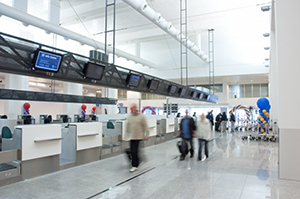
ARINC announced that it has installed the new Passenger Processing System, with on-site maintenance and support at Brussels Airport in Belgium. ARINC installed its CUPPS-compliant vMUSE common use solution on nearly 500 workstations. ARINC’s AviNet global networking solution has also been fitted at the airport providing a secure WAN connectivity to the airlines’ host systems.

CUTE & Telecommunications Service Manager at Brussels Airport, Pierre Gehrenbeck Said “ARINC’s proven history of successfully migrating major airport sites to common-use passenger processing systems was a key factor in our selection decision. In addition, the efficient and cost-effective program is fully scalable to our airport and can be easily adapted to fit our projected growth”.

ARINC’s vMUSE platform maximizes the use of airport infrastructure through shared workstations, reducing the need for complex and expensive hardware systems, and a cost saving and rapid process. Supporting whichever application an airline has, the open design of vMUSE incorporates an easy integration with airline technology requirements.

UK and Irish airspace will shortly have a seamless data link service as a result of UK NATS and the Irish Aviation Authority (IAA) working together with SITA to deliver Controller Pilot Data Link Communication (CPDLC) services to the British and Irish area control centers.

The SITA service and systems support long haul and short haul versions of CPDLC. Long haul aircraft use a Future Air Navigation Systems (FANS) version already implemented over the Atlantic Ocean. Aircraft with FANS systems will now use the SITA network and gateway to communicate with CPDLC systems in the UK and Ireland domestic centers.

Other providers of CPDLC have also hit the headlines recently, including ARINC who now offer a compliance service for airlines.