More about providers of physical security for airports and facilities | Business Aviation NewsFollowing two failed bids going back to February of 2014, Manila’s International Airport Authority has said that the final bid proposal has now been set for the beginning of March.

The CCTV system will be implemented at Ninoy Aquino International Airport and will feature state-of-the-art functionality to replace the current outdated system that has been in situ since the 1990s.

Strict deadlines must be met by potential bidders, and specifications include the facility for facial recognition and heat signature readers. The contract will also include a total of 700 cameras to be located throughout the terminals, parking areas, entry checkpoints and perimeter and ensure total coverage.

Today’s airport environment has vulnerabilities that the latest technologies can overcome. Providers of physical security systems all over the world are recognising the need to secure airports and borders using more than just simple security camera systems.

Find out more about Advance Passenger Information System | Industry leading providers of APISMalaysia’s Home Ministry has announced plans for the implementation of a passenger screening system based on the current U.K. and U.S. Advance Passenger Information System (APIS) to upgrade current screening procedures.

With the growing threat of terrorist attack, and the recent bombings in Jakarta that killed eight people, the country’s officials recognise the benefits of advance passenger screening to prevent known extremists from entering the country.

A system known as the Advanced Passenger Screening System (APSS) is being discussed, and rumours are circulating that it could be developed with help from Interpol.

Fotografiert mit Canon EOS 10DA protest is ongoing by representatives of 15 non-commercial aviation groups against the FAA plans to privatise much of the U.S.’ air traffic control systems.

Plans by the FAA to set up an agency run outside the government have already been proposed and are expected to be debated in Congress in the first quarter of this year.

Despite claims that privatisation in Canada and Europe has proved successful, the aviation community is airing concerns over fee issues and are pleading with lawmakers to carefully assess the benefits of a new system under ‘foreign’ control.

Passenger communications technology soaring | Business Aviation BlogAs the quality of aircraft passenger communications increases in demand, Air France Industries has announced it will use Rockwell Collins’ PAVES passenger services systems to upgrade four Airbus A330’s for a client.

PAVES is renowned in the industry for its weight reduction and subsequent fuel savings that can amount over a year to millions of dollars. The system can also operate independently, or can integrate with other passenger communications and IFE solutions, and benefits from a cabin crew call system.

Air France Industries designed the installation and teamed up with Rockwell Collins for this cabin services solution.

Hurghada International Airport in Egypt has been visited by a UK-based aviation security team as a part of the agreement to secure Egyptian airports between the Aviation Ministry and the Control Risks Company to assess and develop recommendations and proposals.

The company will train aviation security personnel in the latest systems for enhancing border security control, following last year’s attacks on the country’s aviation industry.

The visit from the UK team is the first step in the agreement, and the proposals will arise later in the year to highlight measures that need to be strengthened. The agreement is the way forward for Egypt, whose tourist industry accounts for a large portion of the national economy.

Aviation security providers around the world are continuously improving the way security is managed in airports, using the latest technology.

Stratajet to Expand Business to US | Business Aviation NewsStratajet, who claim they are the ‘world’s only instant online marketplace for private aircraft’, has taken to the U.S. in a bid to break into the American market.

Launched only last year, Stratajet now have more than 500 aircraft on their books in Europe, providing real-time flight pricing for consumers and cutting out the broker system.

Travelling in the company’s Piper Chieftain, Stratajet’s CEO, Jonny Nicol will call on charter operators and FBOs across the U.S. and will participate in the NBAA Schedulers and Dispatchers conference in Florida and the Regional Forum at the end of this month.

Nicol wants to spread the word about the service, which in its first booking, saved the customer 40% on the price of a traditional broker-based reservation.

advance-passenger-informationMalta’s Police Force’s Immigration Unit has completed five projects to enhance border security measures with the help of co-funding from European Border Funds.

The projects include the procurement of additional radios and biometric devices to assist in communications and comparison of passenger data with international no-fly lists. The new technology is designed to halt the passage of illegal residents, with an on-the-spot ability to screen information.

Furthermore, modernisation of the border control system has been focussed upon, with health and safety upgrades made, in addition to an upgrade of equipment.

Finally, Malta has introduced a system for the collection of Advance Passenger Information to strengthen border security. Many countries throughout the world are enhancing border control measures and providers are using the latest technological advancements to introduce stronger systems including eBorders technology.

cabin-services-worldwideThe recent publication of the ‘Airworthiness Approval of Installed Passive Ultra-High Frequency Radio Frequency Identification’ has offered comprehensive guidance for the use and installation of RFID tags on aircraft parts and components. The guide includes information for passive RFID tags only and not those that use communication via satellite, cell phone or wireless tech.

RFID tags are increasing in popularity and usage, in all areas of technology – from retail shopping to airline baggage tagging.

Some humanitarian groups are concerned with the levels of data that can be stored within the tags, but there is little doubt about the increased security the new types of tags can deliver.

aviation_airgrounddata2Arizona-based Associated Air Centre, an aircraft maintenance and modification specialist, has been granted FAA STC for its Boeing VIP business jet, giving the go-ahead for CPDLC installation.

CPDLC is a part of the requirement for FANS compliance, and is being much discussed in the industry in terms of the benefits for flight deck communications around the world, weighed with the additional burden of cost implications.

Regardless, the mandates are forging ahead with plans for completion in 2020 – an extension of the previous 2016 deadline.

Providers of Controller-Pilot Data Link Communications (CPDLC) systems around the globe are hailing CPDLC as the only answer to safety in the skies as burgeoning air traffic numbers continue to rise year-on-year.

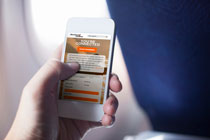
cabinconnectGXIn a recent report from aviation analysts, it was found that the prices passengers are paying for inflight Wifi varies wildly, with some airlines offering a free service, and others charging up to £30.

So why the huge difference? Some providers say that the cost of installation of the aircraft system is a significant contributor to the high cost, yet it seems to be mostly the budget airlines offering free access, surprisingly.

Another complaint from passengers is the speed and quality of inflight Wifi. Onboard internet can be provided in two ways – via satellite communications or via air-to-ground communications systems. The air-to-ground option delivers higher speeds, but satellite is necessary for connectivity over oceanic expanses.

A growing number of airline passengers require inflight Wifi. Some commercial passengers want access to social media, or want to stream information, but others require access for business purposes. Executive travellers can often ‘charge’ inflight Wifi to their business expenses, but others are simply refusing to pay high prices that can be comparable with the cost of a monthly broadband fee at home.

Airlines need to look at their options, as it appears that the provision of inflight Wifi may become a source of competition amongst the airline community as time goes by.