Archive

Monthly Archives: April 2014

High Frequency Data Link - Find out more...Research is being conducted into the use of data link communications on low-altitude flights between UK’s Bristol and Edinburgh this week by the National Air Traffic Services (NATS).

CPDLC will eventually completely replace European-wide voice communications and streamline flight deck communications under the SESAR European Single Sky Directive, run and managed by EUROCONTROL.

The UK trials are being conducted at low altitudes to assess the impact of the system for the provision of the same benefits at flight levels as low as 10,000 feet. The current European mandate will cover altitudes of over 28,500 feet.

In the U.S. the datalink directive is already in place, modernised by the Data Comm Air Traffic Management program (ATM). In the North Atlantic tract datalink is mandatory and access to these valuable routes saves time and fuel for operators.

In addition to these current datalink flight trials, NATS will also perform trials between Bristol and Rome and Scotland and Scandinavia.


Aircraft Internet to Go Beyond Passenger CommunicationsExpanding communications bandwidth may soon broaden the horizons for aircraft internet that pass way beyond passenger connectivity. With increasing computer technology, greater bandwidth and storage capacity, the ability for aircraft to use data sharing and facilitate decision-making with web-based applications brings it all a step closer.

Inmarsat, a British satellite network operator, is a huge name already in aviation, using the far-reaching capabilities of the network for aircraft communications in L-band services. Honeywell is currently working with Inmarsat on the development of the avionics for the new generation of Global Xpress satellites that will operate in Ka-band. Ka-band will bring faster data rates and widen the possibilities for streaming and allowing operators to think ahead of passenger communications.

Honeywell have completed the critical design reviews for Global Xpress and will begin testing this month. The first of three Inmarsat-5 satellites was launched late last year and the rest are expected to be in place by early next year.

224332-flareScientists have warned that a recurrence of the solar flare that appeared last week could cause further radio blackouts over the coming days to aviation and communications systems. The solar flare was captured on video by the NASA Solar Dynamics Observatory on Saturday.

The intense bursts of radiation that solar flares emit, although not causing damage to the Earth, can affect communications as they disturb the layer of the atmosphere that carry signals.

“Though people on the ground will not be affected, satellite systems may be affected and this would likely have an effect on the aviation and communication systems for a while. This may last for up to a few hours,” said Dr Mayank Vahia, cosmic rays scientist at the Tata Institute of Fundamental Research.

As the Sun is at is peak of an 11-year cycle, it had been warned by the Indian Centre for Space Physics that there could be ‘dire consequences’ to the satellite systems around the planet, depending upon where they are positioned at the time of the activity.

Suhas Naik-Satam, programme co-ordinator (scientific) at the Nehru Planetarium in Mumbai, said, “The effect on the satellite system cannot be ruled out and therefore all sectors heavily dependent on such communications systems will have to stay alert.”

Global Flight Support Services ProvidersThe entire aviation industry have scratched its proverbial head in the mysterious disappearance of flight MH370. It has led to a call from the International Telecommunications Union (ITU) for improvements to the 50-year old ‘black box’ system, using advancements in technology to produce a real-time flight tracking system.

According to ITU, there ‘should be a mechanism to ensure that aircraft can be tracked in real time using state-of-the-art cloud computing’.

The black box recorder is mandatory on all flights, to record vital aircraft data regarding flight operations, aircraft systems, performance parameters, magnetic heading, positioning and other critical information. It is today being argued that this information should be available in real-time, with no possibility of being manually disconnected or the need for the recorder to be physically located in the event of an incident.

There is little doubt that the strength of feeling is running high at this stage. The industry as a whole is being urged to find solutions for flight tracking that cannot be manipulated.

Air Traffic ManagementAirports Fiji Limited (AFL) has awarded a long-term support contract which will look after the Aurora ATM System, commissioned in May 2010 to Adacel, a developer of Air Traffic Management systems with Headquarters in USA, Canada and Australia and clients all over the world.

The Aurora system gives AFL the flexibility to handle traffic growth, bringing high levels of safety and service to operators. Capabilities include automated conflict detection, control by exception and monitoring, 4D profile protection and dynamic airspace allocation. The use of CPDLC, Air Traffic Service Inter-Facility Data Communications and surveillance incorporating radar has brought AFL to the forefront of ATM technology in the Pacific region.

Mr Faiz Khan, Executive Chairman of AFL said, ‘The introduction of the Aurora system in our airspace allowed us to operate with neighbouring ANSP’s in a completely seamless manner using an already developed and proven system. The performance of our system since commissioning has been exemplary and support from Adacel will assure continuing success in the future.’

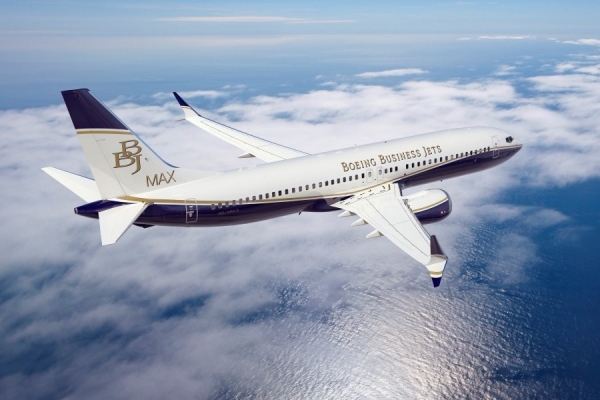
Boeing BBJ Max Business JetBoeing have kickstarted the launch of their latest business jet in the MAX family with an order for the BBJ MAX 8. The undisclosed client is an existing BBJ customer.

The latest jet is based upon the 737 MAX 8, with CFM International LEAP-1B engines and boasts a 14% improvement on fuel economy, which will give better long-range performance over its range of 6,325 nautical miles and Advanced Technology Winglets.

Capt. Steve Taylor, president of Boeing Business Jets said, “The BBJ MAX provides more room, longer range and emits fewer emissions than its nearest competition, making it an ideal choice for today’s BBJ customers.”

The BBJ MAX 8 will have the same size cabin as the BBJ2, at 19 ft longer and with three times the cargo capacity of today’s BBJ, while maintaining the reliability, lower cabin altitude and global support that current clients have grown accustomed to.

“We expect a large demand for the BBJ MAX, particularly for those BBJ owners who want to fly farther and more efficiently and still maintain the exceptional comfort of a BBJ,” Taylor said.

The first flight will be scheduled for 2016 and subsequent deliveries to the first commercial airline clients during 2017. The 737 MAX family has so far received over 1,900 orders from 37 global customers. The first BBJ MAX is to be delivered without an interior, to allow a completely personalised finish for the VIP interior at a centre of the customer’s choice.

Plans are in the pipeline for a BBJ MAX 7 and will also include a BBJ MAX 9, which will offer a 6,255 nautical mile range with the addition of a larger cabin.

Indian Air Operators Seek PolicyThe Business Aircraft Operators Association (BAOA) have lodged their displeasure at the lack of policy framework for private operators and non-scheduled operators, blaming in part a shortage of qualified staffing for the DGCA’s downgrade by the FAA. They claim that the surprise checks and subsequent public observations ‘misrepresent the proven safety consciousness prevailing among NSOPs and private aircraft operators’.

BAOA secretary, Capt R K Bali said, ‘It is not fair to make Indian NSOP operators a scapegoat to showcase DGCA’s authority by subjective reporting of the observations during these inspections.’

The BAOA wrote to the Civil Aviation Ministry days after the DCGA grounded a business jet belonging to the Ambani Group, finding fault with several aircraft owned and operated by other corporate houses and charter companies.

The BAOA remain concerned that general aviation has and will continue to suffer due to the ‘complete lack of infrastructure, high taxes and specific policy framework’, adding that the ICAO had requested that India prepare a ‘roadmap for general aviation til 2036’, back in 2012.

“It is not understood why no follow-up action has been taken on this even after two years, while general aviation continues to suffer due to complete neglect of its infrastructural requirements,” Bali said.

A spokesperson for the DCGA has said that the private charter and business aircraft operators will be called for a meeting over the coming weeks to discuss their grievances and issues.

Business Jet Fares May Rise in UKLast month the UK government announced revisions to the air passenger duty of more than 50%, which could affect business aircraft passengers as the cost is passed on. From 1st April 2015, aircraft weighing more than 20 metric tons with fewer than 19 seats on flights of more than 2,000 miles will race a higher rate of £426. The rate will be £78 for shorter flights, but broader changes mean that flights longer than 6,000 miles will see lower charges.

The APD changes have come as a ‘complete surprise’ to the British Business and General Aviation Association, who have requested a meeting with UK tax officials to attempt to secure amendments to the changes before they come into force next year, warning of ‘unintended consequences’. It is feared that the potential rise in fares for business passengers could damage the business aviation sector and ultimately, the ‘inward investment it brings to the UK’.

Advanced Passenger Information System ~ Find Out More...The International Air Transport Association (IATA) today called for greater use to be made of Advanced Passenger Information System data as the industry still reels in the aftermath of the missing flight MH370 search.

Director General of IATA, Mr Tony Tyler said, ‘It is important to remember that airlines aren’t border guards or policemen, the checking of passports is the well-established responsibility of governments.’ His comments were made at a conference in the Malaysian Capital earlier this week as he spoke of the need for a review of government data-review procedures, which would importantly include the comparison of names against Interpol’s lost and stolen passport lists. Although no link has been established with the two Iranian passengers that boarded with stolen passports and any terrorist organisation, the fact that they were allowed on board ‘rings alarm bells.’

In addition to Advanced Passenger Information System data, Mr Tyler, who is also a former chief executive for Cathay Pacific Airways, placed emphasis upon a need for better aircraft tracking. ‘In a world where our every move seems to be tracked, there is disbelief both that an aircraft could simply disappear and that the flight data and cockpit voice recorders are so difficult to recover,’ he said.

IATA plan to assemble a team of experts to study the available options for aircraft tracking, which is expected to reveal its conclusions at the end of the year.

Self-Service Bag Drop Solutions ProvidersAll over the world, self-service and common use bag drop systems and check-in systems are promising ease of use and expedited passenger processing. Finavia has been using bag drop solutions in Helsinki airport in a pilot scheme since 2012 and now plan to expand the scheme with a further ten machines to be placed in Helsinki and two at Oulu Airport later in the year.

The success of the self-service bag drop solution has not been confined to Finavia, as the machines were in use by SAS and Norwegian airlines as well. Positive feedback has been received for all machines from passengers, airline and airport staff.

Ville Haapsaari, Director of Helsinki Airports said, ‘Increasing the number of machines is a global trend in air traffic services. Self-service, such as bag drop machines, makes the check-in times of passengers much more flexible, evens out the busy periods at the airport and increases the check-in capacity of terminals. More effectively produced airport services also provide airlines with cost advantages, which are also ultimately the precondition for moderate flight ticket prices’.

Automated self-service bag drop solutions carry the luggage from the passenger to the cargo hold with no other intervention from airline staff. Self-service check-in allows passengers to check-in online, attend the airport with less time to wait for the flight, drop off baggage with self-printing baggage tags and board the plane.

This is why scanning machines are critical to the success of the process. All baggage must still be checked enroute to the aircraft effectively and efficiently to minimise delays, while maintaining utmost safety.