Archive

Monthly Archives: July 2013

Military Mission-Critical CommuniationsC&L Aerospace, based in Bangor, Maine, provider of services to the commercial and military aviation industries, has announced plans to undertake a $5 million expansion project.

It is hoped that the planned expansion will turn the company into a one-stop service centre for aircraft owners and operators within military aviation.

The company intend to spend $1.8 million in a project to upgrade its 17,000 sq ft hangar into an aviation paint shop facility and plans maintenance hangar improvements to the tune of around another $3 million.

If the facility expansion and upgrade plan goes ahead as planned, the resulting work will open up opportunities for around 50-70 jobs.

The Fort Wayne-Allen County Airport Authority has given the go-ahead for plans to be designed for a new aviation fuel station.  The fuel station is expected to be in the region of $4 and $5 million for construction cost, with design budget set at a maximum of $500,000.

The fuel station will be a major improvement for Fort Wayne Airport and will help to put the airport on the map for refuelling, giving the airport direct control over fuel, which is currently served by a fuel farm owned and managed by Atlantic Aviation.

Although contracts and designs are expected later this year, it could be years before the construction is finished and the fuel station is operational.

According to Scott Hindermann, executive director of the airport, local money will be used as the new station will not be eligible for federal funding.

In the aviation industry, fuel management can be critical to the continuation of operations for many airlines, both commercial and private.  Often, a large part of flight planning, the costs for fuel need to be managed for optimum productivity and also for the growing concerns about environmental impact.


business aviation Bookajet

Bookajet, leading supplier of executive jets to celebrities has announced the first signs of growth in business aviation since the beginning of the recession.  This growth is a welcome move for the business aviation industry and is likened to the property sector by the MD of Bookajet, Mr Jonathan Clements, who adds, “We are pleased to say we are starting to come out of what has been a very flat and challenging time in Europe.”

It appears that charter demand in business aviation is on the increase and the arrival of new additional aircraft to the fleet has meant the creation of new jobs in the UK.

Bookajet was established in business aviation in 2003 and has bases throughout Europe, in Italy, France, the Netherlands and in Russia that deal with the charter of private jets; overseeing more than 40 aircraft, management and sales.

The newest addition to the fleet is the Gulfstream 4, a luxury executive private jet capable of long-range flight.

Private and business aviation is a steadily growing sector and is competitive, with more and more emphasis placed upon comfort and connectivity.  It is critical that business aviation stays ahead of the game in terms of affordability, maintaining high standards and allowing passengers the same levels of business availability in the air that they have on the ground.

Communications providers must remain cost-effective while offering a range of services that are combined to keep the cabin as efficiently connected as the flight deck to maintain serviceability in this competitive sector of business aviation.

TAG Aviation Use iPad Flight Planning AppUK operator, TAG Aviation has said that it plans to replace the traditional flight bag with the use of iPads and an iPad flight planning app, making them the first UK business aviation operator to move toward the paperless cockpit.

A surprising difference is made to the weight of the aircraft and subsequent fuel consumption with the heavy flight bags on board, as minute calculations are made during the flight planning process.  The innovation of the iPad flight planning app reduces not only the paper consumption, but also the fuel costs making it an all-round winner for business aviation if you add the benefit of streamlined efficiency on the flight deck.

“The introduction of paperless technology will ensure that pilots have up-to-date, essential information at their fingertips.  Flights manuals, manufacturer’s documents and aeronautical flight charts can be updated at the touch of a button instead of the time-consuming and wasteful process of manually updating hard copies,” said Russ Allchorne, Vice President of Flight Operations Europe at TAG Aviation (UK). “At TAG Aviation, we are committed to identifying ways to pioneer standards in flight operations and wider business aviation practices to improve efficiency, safety and our environmental footprint.”

Many communications providers now offer the iPad flight planning app with the aim of reducing costs while maintaining effective and efficient flight management.  ARINC Direct, industry-leading business aviation solutions provider are able to incorporate the iPad flight planning app into their tailored communications and flight support services for business jets.

ARINC AIM CSC

ARINC Inc will attend the Nuclear Information Technology Strategic Leadership workshop in Detroit with its AIM Security Computer & Cyber Security Solutions, it has been announced.

Frank Koren, Business Development Director at ARINC said, “As a leading provider of nuclear security systems mandated by 10CFR 73.55/54, we are highly involved in providing compliant security solutions that ensure the highest levels of safety and security for our customers.”

ARINC AIM cyber security solution is used for security command and control at more than forty nuclear plants across the US and Canada.  The CFR compliant software meets the mandatory regulations imposed by the Nuclear Regulatory Commission and the Canadian Nuclear Safety Commission and addresses the issues associated with IT and cyber security in nuclear-powered utilities.

in-flight wifiIt looks like the days of turning off our mobile devices on aircraft could one day be behind us as the demand grows for passenger in-flight wifi connectivity.  Many passengers now want to tweet their journey or update Facebook statuses as they fly, posting photos of the clouds, their meals or cities from the air.  Social networking, as we all know, is huge and in-flight wifi is a necessary fuel for that fire.

Recent surveys show that a quarter of British holidaying passengers out of 5,000 believe that free in-flight wifi is not only necessary, but a human right, according to HolidayExtras, although it is also recorded that 84% of these passengers are unwilling to pay the current high rates charged for in-flight wifi.

Now that the US FAA declared the use of the new models of mobile phones and device safe to use in ‘airplane mode,’ the floodgates are open in terms of demand for cheaper, faster in-flight wifi connectivity and this leaves many airlines thinking about the possibilities for revenue versus the inevitable costs involved with upgrades to their existing equipment.

Within the next few years, Inmarsat, the British satellite communications network, will be launching three new satellites, which will give global connectivity possibilities and could spell faster and cheaper in-flight wifi, but, until then, with only four commercial airlines currently offering free in-flight wifi, competition is slim and the cost implications for the passenger still high.

While business passengers enjoy the versatility of in-flight wifi, it looks to be a while before the demand is met for the average holidaymaker.

Good news for Air France travellers, who no longer have to wait for the all-clear and can now use the in-flight entertainment (IFE) as soon as they take their seats.

This relaxation of the IFE restrictions follows BA’s decision last year to let long-haul passengers watch their IFE screens straightaway.  After months of intense negotiations with the Civil Aviation Authority, BA became the first British carrier to do so.

IFE has come a long way over the past few decades; from simple in-flight movie provision to personal touch screen technology and internet connectivity.  IFE connectivity providers work hard to stay ahead of the game when it comes to innovation and continually update their services, products and solutions for airlines to maximize efficiency, cost-effectivity and enhance the experience of the passenger.

IFE providers, such as ARINC, have over eight decades of industry experience and are able to offer seamless connections and a vast range of solutions for both cabin and flight deck.

kevbo1983 / Foter / CC BY-NC-ND

EgyptAir Select ARINC AviNetIt has been announced today that EgyptAir has elected to use ARINC’s AviNet Airport services solution for five Egyptian airports and nine others across the world, including Heathrow, Manchester and Dubai.

The decision to implement AviNet follows the recent contract award in March for the installation of vMUSE passenger processing solution at the Egyptian airports of Luxor, Aswan El Arab, Borg, Abu Simbel and Sharm El Sheikh.

ARINC will also provide turnkey project management services, in addition to AviNet, for the connection of the airports to the Amadeus ALTEA host, enabling ARINC to significantly reduce costs for the airline and providing a single-point contact to assist with major upgrades to its critical airport operations worldwide.

“ARINC’s ability to provide a fully managed service eliminates administrative burdens from our team, saving time and money,” said Mr. Hassan Nour, Vice President of IT Services at EgyptAir. “AviNet Airport’s reliable connectivity enables us to improve our airport operations globally, which ultimately benefits all of our passengers.”

Leading provider of airport services, ground handling and security, Airpro Oy has announced the signing of a new 3 year contract with ARINC for its type b messaging service, AviNet.

ARINC EMEA aviation solutions director, Alexis Hickox is delighted that Airpro Oy has selected ARINC for their type b messaging and other critical communications and says, “We believe that AviNet will provide Airpro Oy with an ideal messaging solution now and for years to come.”

Airpro Oy needs a reliable solution that meets cost-effective requirements for regular and dependable communications with flexible and interoperable access that remains seamlessly secure for type b messaging.

Mr Ari Haapanen, Airpro Oy’s MD said, “With AviNet, as a hosted solution, we are able to save significantly on our costs by removing the previous infrastructure which was no longer needed, replacing it with ARINC’s web-based solution.”

Airpro Oy believe that they will not only save money but make improvements to their systems with critical type b messaging, email and SMS messaging.


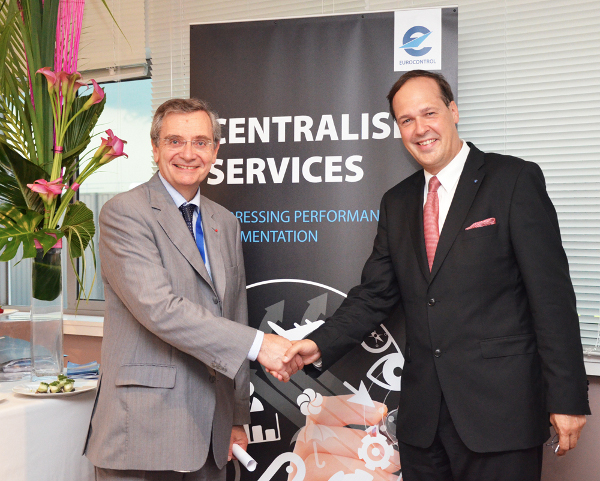
The European Aviation Safety Agency and EuroControl have established a co-operative plan for the improvement of aviation, focussing upon the implementation of the Single European Sky, with environmental protection, training and the development of the EU External Aviation Policy as priorities.

The co-operative plans will establish a common foundation, general framework and a programme on a formal basis, expected later this year.  There will be an evaluation of national civil aviation authorities’ mandates and the requirements of military airspace users in addition to overseeing the SESAR deployment.

EASA executive director Patrick Goudou said “the new framework is instrumental in the development of a more competitive air transport industry in Europe. EUROCONTROL believes this agreement will provide the optimal framework to combine the expertise and resources of the two European organisations, following the extension of EASA competences to ATM/ANS and aerodromes”

It is believed that EUROCONTROL will support EASA’s regulatory work with its air traffic and route management.

The new Single European Sky is a direct initiative borne from the heavy congestion over Europe.  Part of the directive spells the need for CPDLC capability in the cockpits to free up the airwaves.

EASA EuroControl Single Sky CPDLC