Archive

Tag Archives: passenger communications

Last week, at the Hamburg Aircraft Interiors Expo, much excitement was generated by some of the innovative technological advancements set to change the in-flight cabin experience.

From a partnership with Bose, to improve in-flight entertainment with a range of noise-cancelling headphones to Twinings, for a great cup of tea, brand partnerships are a growing trend for airlines in an aim to enhance passenger comfort and experience.

The second in a stream of improvements is the issue of tablet computers to flight attendants, who are now able to be better connected and will be able, for example, to warn passengers of baggage delays or problems to save stress at the carousel.  The tablets will be connected to passenger headrest consoles, enabling them to request help or order directly from the console to the tablet.

In addition to improving passenger experience, the issue of the tablet will streamline communications to the flight deck and to ground-based personnel and will increase efficient operations, maximising the resources of staff for airlines and airports.

In Holland, KLM announced the release of their latest mobile app, following the realisation of the growth of passenger connectivity via Smartphone use.  The airline hopes to begin a free in-flight wifi trial later this year.  They will introduce real-time customer service operations for passengers to provide feedback and have problems dealt with immediately via an intranet connected to teams of iPad-bearing staff.

Virgin America is also developing a similar interactive service, with both airlines paving the way for passenger satisfaction and confidence.

Another interesting reveal at the expo was a growing market for airline and airport specific ‘souvenirs’.   Designers are using the latest trends in fashion to create mementos that passengers will want to use long after their flight experience and creating a realistic income stream for the airlines.

Take the stylish Finnair teaset, for example:

cabin trends Hamburg Expo

ARINC Cabin ConnectA new Ka-Band delivered high-speed broadband service was on display for the first time for visitors to the Hamburg Aircraft Interiors Expo last week.  GX Aviation, launched by Inmarsat, will be supported by new avionics developed by Honeywell and will be commercially available in early 2015.

Jack Jacobs, Vice President of Marketing Product and Management, Honeywell Aerospace said: “The consumer demand for fast, global in-flight connectivity continues to grow at a monumental rate. People want to be connected no matter where they are and have the same Internet experience that they have at home.”

The world-leading satellite communications company, Inmarsat, plans to change the face of in-flight connectivity with GX Aviation, designed to provide throughputs of up to 50Mbps with uninterrupted global broadband coverage, offering like-for-like, ground-based comparative connectivity.

“The world is changing and airlines are seeking to keep up with passengers’ expectations. Our new GX service, which can be combined with our existing L-band solution, enables airlines to capitalise on already installed hardware to provide high speed broadband service with complete geographical coverage for all aircraft requirements, both in the cockpit and the cabin,” says Inmarsat’s Miranda Mills, Vice President of Aerospace.

The in-flight wifi debate continued last week as service providers all have a different approach to bandwidth.

Bill Sullivan, Director for Strategy and Business Development at ViaSat, commented, “People value speed, whether at home or in mobile environment. We have built a system around a very high speed experience. So we are taking that and bringing it into the airline sector.”

However, not everyone agrees that speed is the answer, especially when in-flight wifi provision is so expensive.  Row 44’s John Guidon argues,

“Just talking about speed is not satisfactory. It doesn’t explain the totality of the experience,” adding, “Really people are most interested in, in my opinion, page load time.”

There is no doubt that connectivity for in-flight wifi is in demand.  It is not a question of whether aircraft need it; it is now an account of which service to choose.  Ka-band wifi will provide speeds of at least 12Mbps per passenger, with even faster speeds being achieved with Ku-band or satellite in-flight wifi operations.

Most airlines recognise passengers’ growing demands for in-flight wifi and with the buzz created by the different broadband connectivity providers, the market is exploding.

The Al Maktoum International Airport is hosting the much acclaimed MEBA event, where ARINC Direct will be exhibiting this month.

ARINC Direct will be showcasing its ConnectOnboard Communications System at MEBA. This latest product in a host of flight support services for business aviation delivers complete ACARS messaging, utilizing an iPad application as the user interface, high quality voice using an iPhone or Android device, and managed email.

“This is fertile ground for ARINC and we are delighted to be expanding our portfolio of services and resources in readiness for the growth,” said James Hardie. ”Our ability to support the widest cross-section of customers with continually evolving products and innovations is an advantage that is the envy of our competitors.”

For more details on the passenger communications, flight support or flight deck communications services offered by ARINC Direct please visit the ARINC Direct Business Flight Planning site.

To attract more business aviation Gloucestershire airport has extended its runway, said the airport’s head of operations, Darren Lewington,”Although only 12m of additional tarmac has been laid, the removal of obstacles nearby and the creation of an overrun means the landing distances available for aircraft have increased by up to 150m,” he added “The extra runway distances make a huge difference to the operators of the larger aircraft that currently use the airport and will generate additional business for us,”

Mr Lewington also said, “Business aviation movements make up around 5% of the take-off and landings, but they generate 30% of our revenue.” A large volume of activity is from general aviation aircraft, with approximately 70,000 actions annually. “With the closure of Filton airport, near Bristol, at the end of the year, there is already additional demand from corporate aircraft flying to the southwest of England. We are ideally placed to serve high net worth individuals in this region, as well as the Birmingham and Oxford catchment,” he adds.

Business aviation remains significant for airports across the country but increasingly as costs rise for operators they are looking for new, cost effective ways of running their businesses. Flight operations can be a significant outlay, and whilst operators cannot compromise on safety there are now solutions to make improve efficiency of all aspects of operations. ARINC Direct for example offer complete solutions for business aviation including all aircraft communications, flight support and planning services and even ancillary services such as aircraft broadband. For further information please visit the ARINC Direct website.

The uptake of SwiftBroadband (SBB) services among business aviation users continues at a cracking pace. Simultaneously, ARINC Direct has continued to design and implement new products and services to support this.

Cabin hotspot functionality eases the burden of managing the costs of SBB by enabling usernames and credit card billing. This is an attractive concept, too, with charter operators, and has also been taken up by corporate flight departments wanting to manage costs and budgets across departments using the business jet. Other management functions such as usage alerts have also been added.

If a customer has SBB and uses ARINC Direct’s iPad app they have a completely dynamic aviation information platform that surpasses traditional methods of obtaining flight data. At the half-year mark ARINC Direct’s customer base in EMEA and Asia Pacific had already achieved over 15% growth. The ARINC app is available on the Apple iTunes store.

ARINC Direct has been at the forefront using web enabled technologies since the business unit was founded in 2003, and the increasing availability of web access, suitable hardware and client-based application technology presents new opportunities for the way in which it interacts with its customers. Almost half of all ARINC Direct customers are now using the iPad app.

For more information on ARINC Direct SwiftBroadband service please click here.

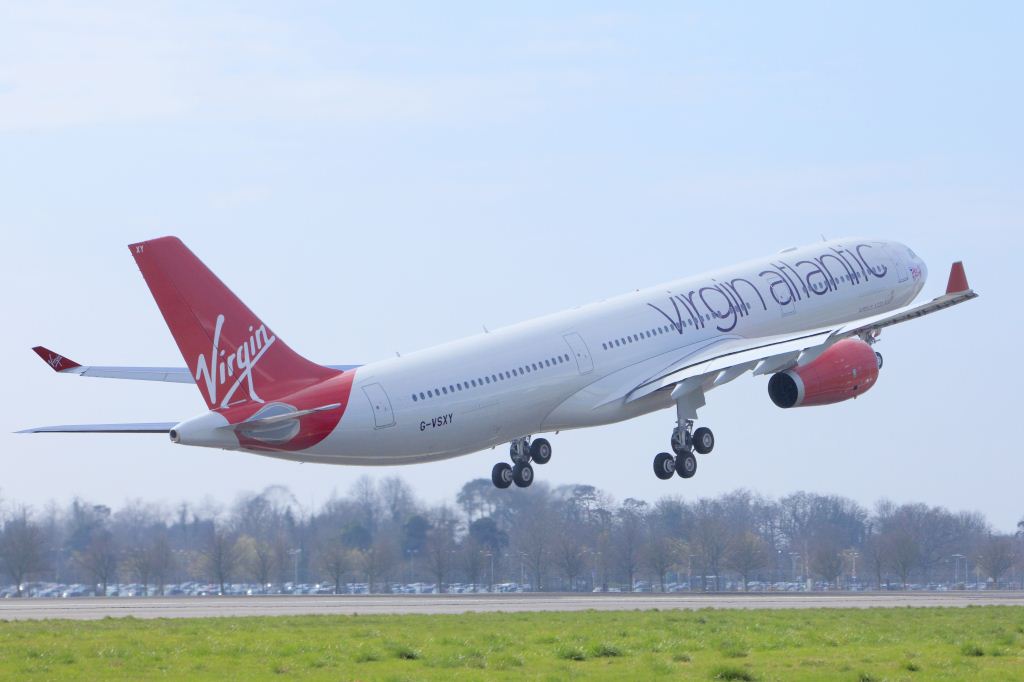
Virgin and ARINC have succeeded in various in-flight initiatives and the latest being a SwiftBroadband-enabled program that provides passengers with live audio content. The Virgin Atlantic passengers will be able to enjoy Wi-Fi connectivity to the Internet and communications products, including seatback messaging, live news and retail portals, allowing constant data connection from early 2013. The system uses a hotspot portal with bandwidth offered by Inmarsat Swiftbroadband.

“We are especially delighted that Virgin Atlantic Airways, a long-term ARINC customer for more than 12 years, is the first company to confirm it will take Cabin Connect on trial. Virgin Atlantic Airways is an airline that is internationally recognized for its strong commitment to enhanced passenger communications and as such is a perfect fit to launch Cabin Connect,” said Lee Costin, director of satellite solutions and cabin services at ARINC.

Fort more information about the Cabin Connect Solution please visit www.cabinconnect.aero.

ARINC Incorporated, a portfolio company of The Carlyle Group, provides communications, engineering and integration solutions for commercial, defence and government customers worldwide.

ARINC Cabin Connect & Virgin

The Virgin VS Airbus A330 to be the first Virgin aircraft to be fitted with ARINC’s Cabin Connect by March 2013.

ARNIC Swiftbroadband, an IP-based packet-switched service that has constant data connection is being launched with Virgin Atlantic. It benefits all passengers to access internet who can now use their own portable electronic devices via ARINC SwiftBroadband Wi-Fi Internet hotspots and providing oceanic satellite coverage. Cockpit and cabin needs, including flight plan, weather, and chart updates, as well as telephone, text messaging, e-mail, Internet and intranet access will be available.

For more information about ARINC Cabin Connect please visit their site.

ARINC Cabin ConnectToday we are focusing on the brilliant facility of the Cabin Connect Suite offered from ARINC for both passengers and air crew. Cabin Connect has next generation connectivity and enhanced bandwidth provided by a partnership between ARINC and SwiftBroadband.

SwiftBroadband is one of the best, maximum cost effective, global, packet switched satellite communications networks available today. With a combined aviation experience of over 100 years airlines can make the most of the technical expertise of two industry leaders, ARINC and Inmarsat SwiftBroadband.

With ARINC’s Cabin Connect Solution passengers can surf the internet using their own electronic devices which can promote passenger loyalty to your services. In turn Cabin Crew can become more efficient by offering a better level of customer service by using ARINC’s AirCrew Connect. For those key passengers, Cabin crew can now act as a concierge service.  They would be able to remedy customer service issues straight away by having a direct link back to the head office, or ground team whilst in flight and experience an increase in operational the efficiencies.

For additional information please visit: cabinconnect.aero

This week I wanted to share a few of the interesting facts and figures found of the executive summary of the Airline IT Trends Survey 2012.

Airlines are more guarded about their outlook for 2013, taking into account a significant economic downside risk. Almost half of the airlines surveyed are still expecting their absolute IT spend to rise. However, the percentage of airlines anticipating growth in IT spending has decreased over the last three years.

For a second consecutive year, mobile services for passengers tops the list of investment programs for airlines, with six out of ten planning major investments in the next three years.

Airlines are continuing to expand their ticket distribution through direct channels. Emerging sales channels such as mobile and social media will have a significant impact on future growth in direct sales.

In the past, selling on an airline’s website has been crucial to driving the transition to direct distribution. Although sales through airline websites will continue to see growth, selling via smart phones is set to become an almost equally important sales channel in the future.

Nine out of ten airlines are planning to sell tickets via mobile phones by 2015, establishing mobile as a mainstream distribution channel for airline tickets. Growing from zero just a few years ago, mobile phones as a distribution channel are expected to generate significant growth in years to come.

Kiosks will continue to play a significant role, with ¾ of airlines increasing the number of check-in kiosks. When it comes to new functionality, however, opinions are split. About half of the respondents do not plan to deploy kiosks for flight transfer or lost baggage reporting. Only 39% of airlines believe kiosks will remain one of the dominant channels to process passengers in the future, highlighting that mobile phones and websites are set to play a more important role for passenger operations in the long-term.

Nine out of ten airlines plan to engage with passengers through mobiles by 2015, and the adoption of new services provided on mobile phones is speeding up. Airlines believe that smart phones can support most, if not all, customer facing interactions including customer service, commerce, in-flight entertainment and passenger processing.