Archive

Tag Archives: passenger communications

Aircraft Internet with ARINC Cabin Connect

ViaSat, providers of Yonder Internet Service for business jets say their customers are feeling the benefit of their high speed aircraft internet after an increase of 60% in bandwidth, new systems and ground station upgrades.

Aircraft internet is rapidly becoming a necessity on the modern executive jet aircraft.  Passenger communications solutions are big news in the business aviation services sector.

With the demands on the increase, the pressure is upon aircraft internet and aircraft wifi providers to bring new, fast and reasonably priced solutions to the industry.

Aircraft satellite communications bring speed, efficiency and cost effectivity to a world that needs seamless global connections.  Business Jet passengers need to work at the same levels of productivity as they do in their ground-based offices and customer service is a firm ground in competitive conditions.

Aircraft internet providers for business aviation such as ARINC Direct, are constantly expanding their extensive suite of solutions.  Competitive packages are individually tailored to suit their customers whether they operate a single executive jet or an entire fleet.
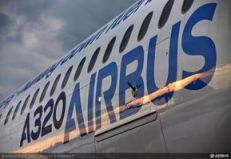
In-Flight Wifi Service ProvidersThe first A320 family of Airbus, single-aisle jet aircraft to be fitted with the company’s Airline Network Architecture (ALNA v2) will soon roll off the assembly line in Toulouse, France.

The equipment will offer passengers internet access with in-flight Wifi and mobile telephone services in readiness for new relaxed rulings about the use of passenger technology in the air.

The A320 family will join the other Airbus A330, A380 and the new A350 XWB families to be refitted with the ALNA v2 equipment.

In-flight Wifi and GSM offerings are hot property in the aviation industry at the moment, with passenger demand for connectivity growing by the day.  In the business sector and private jets, it is expected, in order for company executives to be able to work as efficiently and effectively in the air as they can in their ground-based offices.

Service providers such as ARINC Direct bring a complete suite of passenger connectivity products to the table of business aviation and offer innovative, cost effective and seamlessly operational solutions to in-flight Wifi, telephone, fax and conference video with their unique Inmarsat and Iridium satellite services.

in flight wifiAviation Technical, Washington-based providers have been awarded the contract by New York-based low cost airline, JetBlue to install in-flight Wifi technology on their fleet of 130 Airbus A320 aircraft.  To installations are expected to near completion by the end of 2014.

Designed by LiveTV, who will give training and technical support to Aviation Technical Services, the technology will provide Ka-band connectivity.

JetBlue’s brand for the in-flight wifi is called ‘Fly-Fi’ and will use satellite networks for connectivity, rather than the more common Ku-band provision, which uses ground-based stations.  This will give faster and more reliable connection.

The Ka-band operates within a higher bandwidth and offering eight times more than the Ku-band, which is also more highly congested.

Other in-flight wifi providers, such as ARINC, use Iridium and Inmarsat satellite networks to provide a seamless global connectivity for their customers within the Ka-band with SwiftBroadband and their CabinConnect solutions.

passenger communicationsIt was recently found, according to a new market research report by commercial aviation analyst, Adeline Fernandez that the passenger communications and in-flight entertainment sector market could reach $3 billion by 2017, compared to $2 billion in 2012.

The ever increasing demand for improved in-flight entertainment and the growing need for fast and cost-efficient passenger communications is fuelled by the huge wireless industry.  Most passengers now want to use their own devices and Smartphones on board and do not want to be subject to the traditional restrictions.

As technology is constantly evolving, more advanced use of devices is expected and greater bandwidth is required.  WiFi systems for passenger communications and in-flight entertainment are set to take over in commercial aviation from retrofit systems by manufacturing companies.

Commercial and Business aviation passengers now want to use their phones, devices and laptops as efficiently in the air, at 40,000ft as they do on the ground.  This will fuel the installation of wireless connectivity on board aircraft as airlines vie for passengers.

in flight wifiLast week, the UK’s OFCOM began a deliberation into the possibility of the authorisation of the use of ESOMPs to enable in-flight wifi with speeds capable of streaming content from sites such as BBC iPlayer and Netflix.

If the proposed license of a new satellite system is approved, the connections, up to 10 times faster than current in-flight wifi could be available in the air, on the ground within the UK rail networks and on-board ships as soon as 2014.

In the U.S. the FCC have already authorised the use of Earth Stations on Mobile Platforms (Sumps) which are the key to enabling the fast connections on a global scale.

It is unclear, as yet, just how many of the British-owned airlines will actually use the technology, given the inevitability of high costs.  Upgrades to equipment would be needed and some airlines are reluctant to commit at this stage, as users on-board may be dismissive of the high prices, preferring to remain connected with the 3 or 4G mobile option.

ARINC, U.S. based industry-leading passenger communications providers offer, under the US regulations, next-generation passenger connectivity solutions for commercial and business jet aircraft with CabinConnect.

Brisbane Airport has installed two 3m x 5m LED screens in the international departures area upon which visitors can post 40 character messages to their departing loved ones via SMS between 07.30 and 11.00 each day.

The screens have been added as part of Brisbane Airport’s gradual move to a total digital transformation.  In addition to SMS, the screens also display interactive and rich media content every 30 seconds for passengers and retailers at the terminal.

As well as looking great, the huge screens have created an ambience within the terminal that has been well received, according to Andrew Brodie, GM of Terminal Retail and Commercial at the airport.  He said, “Our retailers can also target and engage more effectively with Chinese and Korean passengers by promoting bilingual special offers aligned to specific flight schedules.  The bilingual ads have achieved an incremental uplift in sales against last year for specific product categories.”

Passengers are able to view local and International weather forecasts before departure, as well as the SMS messages, which can be seen from several areas of the terminal.

Brisbane Airport is the first in Australia to initiate the service.

brisbane SMS sharing

in-flight wifi

In-Flight WiFi

According to many airlines, in-flight WiFi provision gives them a ‘competitive advantage’ in the commercial aviation industry.

As the competition grows fiercer, it seems that in-flight wi-fi will become less of an advantage and more of a normality according to a report by ‘routehappy.com,’ a site that ranks airlines.  Their report says that currently 38% of US flights offer internet connectivity and long haul or the most popular routes, such as non-connecting California-New York are offering in-flight WiFi.

Although it is still a small percentage of flights overall, it shows that, as passenger demands for in-flight WiFi grows, the more likely that it will become standard practice and airlines will be looking to offer faster, better and cheaper in-flight WiFi to remain competitive.

The debate grows after the FAA’s announcement last week that it will be lightening up about the use of electronic devices on-board, allowing passengers on certain flights to carry on using their Smartphones instead of the insistence of powering down before take off.

Most airlines provide ‘GoGo’ for in-flight WiFi, but with dramatic price fluctuations and intermittent signal, the marketplace is broadening and the opening into business aviation for passengers wishing to work in the sky and on the move means that a push into the Ku-band for international connectivity is the way forward.

Aircraft in-flight Wifi provider, ARINC, already offer truly global connectivity with their Inmarsat/iridium satellite network connectivity and are leaders in the business of aviation communications.

Gogo expects that in-flight wifi for business travellers will become a required expense and not an optional one and are experimenting on new pricing models as it is still early days for in-flight wifi connectivity.

Only time will tell…

Changing trends in commercial aviation have shown that over the past six years, there has been a drop in scheduled domestic flights to the tune of almost 9% per year in the largest hub airports in the U.S. with smaller airports losing 21% of domestic activity, according to a report by MIT’s International Center for Air Transportation.

The blame for this significant decrease in activity is largely attributed to the troubled economy and vastly fluctuating fuel prices, forcing operators to adjust capacity for a higher yield per flight and even removing direct flights to smaller airports, thus creating an impact upon small and medium-sized communities, in rural America, for example, in turn greatly affecting the service levels to these areas.

With public transport at a minimum in rural areas, and the demands upon business travellers increases with the economic crisis, there has never been a more critical time for business aviation to provide business travellers with the means to act fast in opportunistic situations.

The U.S. has invested billions in ensuring a safe, reliable and efficient air transport infrastructure and this is essential for the facilitation of the continued operation of airline travel for commercial airlines, business and recreational aircraft to maintain a robust infrastructure and to keep the skies busy and keep the economy growing.

Indeed, rural America encourages companies to bring jobs to the communities and the creation of effective transportation is welcomed with open arms.  The need for strong connections grows and, currently, airlines serve only 10% of the nation’s airports between less than 50 locations country-wide.

The authors of the report do not expect the situation to improve in the near future with commercial airlines and, with the businesses that fly their executives to where the opportunities lie, it is clear that business aviation is an area of the industry that will experience the growth and productivity that will ultimately benefit the nation’s economy.

business aviation

Business Aviation to aid economic growth

mobile broadband

Airline travellers in US airspace may soon be able to enjoy multi-gig broadband connectivity if the proposed provision of a new ATG service goes ahead.

The Federal Communications Commission (FCC) suggest, following a petition filed two years ago by Qualcomm Inc, that a new air-to-ground, two-way mobile broadband service should be introduced in the 14-14.5 GHz Ku-band, which would ensure that it would not interfere with, and also be protected from other users operating essential earth-space communications.

Of course, there is a long way to go yet, with hoops to jump through in terms of regulatory and licensing conditions, not to mention the bidding war that will ensue, once these terms are agreed, for the issue of the contracts to run the services.

If the proposals go ahead, the service will be initially limited to US airspace, but airlines from other countries will be able to offer the two-way mobile broadband service to their passengers whilst in US airspace.

The benefits of the new service will be wide for airline passengers, offering faster connectivity and maybe even a reduction in the cost of broadband services.  It seems that business aviation will be the greatest beneficiary of the new band, as this industry is the fastest growing sector, with private and corporate jets requiring speeds of connectivity for utmost efficiency in the air as on the ground in their land-based offices.

Time will tell as the industry awaits the decision makers – watch this space!

Oman Air, the national carrier of Oman, announced an increase of 130% in internet package sales and a 180% jump in connectivity income over the last year.   The most significant rises are with the use of Smartphones on the Muscat to London Heathrow service.

Oman Air’s Chief Executive Officer, Wayne Pearce said, “The increase in passengers’ use of the service in 2012 underlines their growing expectation that similar levels of connectivity should be available in the air as they are on the ground.  I am pleased that the continued increase in uptake since we introduced the service in 2010 shows that Oman Air still leads the field in this area.”

“Digital communications are playing an increasingly important role in all our lives and, in addition to onboard connectivity and services such as online booking and web check-in, Oman Air is rapidly expanding its online customer engagement. Our social media presence is growing daily and we are offering many more online-only special offers than ever before. Having pioneered onboard connectivity, we are committed to remaining in the vanguard of 21st Century communications,” Pearce concluded.