Archive

Tag Archives: flight operations

APIS Solutions for Mandatory Passenger Data TransferNew rules from Mexico’s National Institute of Immigration (INM) have prompted FltPlan to expand the capabilities of its current eAPIS system. FltPlan president Ken Wilson said the rules now require Advanced Passenger Information System (APIS) manifests be submitted within 30 minutes of any aircraft closing its doors, and warned that breaching them could result in fines of up to $5,000.

Wilson reflected that FltPlan’s five-year plus experience in eAPIS systems and their early adoption of U.S. Customs and Border Protection certification for submission of passenger information made for a relatively easy transition when working with the Mexican government.

FltPlan, which recently exhibited at NBAA’s Schedulers & Dispatchers conference in New Orleans, said its aim was to provide a low-cost, specialist solution. Current annual subscription rates to its eAPIS system are $249, and the Mexico service an additional £200, with $20 per manifest ($40 for a round trip from the U.S. to Mexico).

Other Leading Datalink Communications ProvidersAvionics engineering company, L2 Consulting Services, Inc. (L2) recently announced it has received a Federal Aviation Administration Supplemental Type Certificate (STC) for the installation of the International Communications Group, Inc. (ICG) Iridium Communications System on 767 series aircraft.

A dedicated datalink channel will be able to support Aircraft Communications Addressing and Reporting System (ACARS), Future Air Navigation System (FANs) messaging, Automatic Dependent Surveillance Contract (ADS-C) and Controller Pilot Data Link Communication (CPDLC).

Having developed the integration engineering, produced the installation kits and project managed throughout, including the STC process, L2 will now be allowed to install comprehensive communications systems via ICG NxtLink Series ICS-120A and ICS-220A line replaceable units.

Michael Eiras, Senior Director of L2 Technical Services welcomed the Iridium Communications System STC on the 767 aircraft saying it would ‘complement the companies current portfolio of SATCOM installations on the 737, 747, 757 and 777 aircraft.’

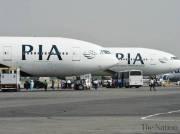
Cut Operational Costs with Consultancy ServicesThe board of directors for Pakistan International Airlines have rejected proposed budget plans for 2014, highlighting the airlines’ need to cut operational costs in order to continue to survive.

The reality is that this is happening across the globe and, especially in the global financial climate, the consensus is that many airlines, regardless of size, must look at ways to cut operational costs.

Although many countries announce a promising recovery from financial despair, it is clear that the changes may not come quickly enough for some.

Aviation consultancy agencies offer a service that has become invaluable in order to recognise the areas that can cut operational costs.

Big companies, such as ARINC, who bring more than 80 years of aviation messaging experience to the table, are able to offer insightful evidence that operational messaging budgets can be cut considerably. Saving money in this area can help enormously when operations management is considered.

Web-based solutions and cost-sharing programs for multiple airlines are made possible with CUTE systems and vMUSE technology.

Like PIA, airlines across the world can benefit from consultancy services when business survival is on the line.

Solutions from ARINC AIM

Mohammed Ahli – Director General – Dubai CAA

With the Gulf airports aiming to increase passenger numbers to 450 million per year by 2020, and the development of new terminals at both Doha and Abu Dhabi, the Arabian Gulf States are investing heavily in airport security, an industry currently estimated to have a global value of $22 billion.

Much of this investment is focussed on innovative technologies designed not only to improve security and efficiencies for the airport but also to improve the passenger experience, as

Mohammed Ahli, director general of the, Dubai Civil Aviation Authority (DCAA) explained,  “It’s crucial to adopt innovative technology, improve security and streamline efficiencies to offer a seamless passenger travel experience.”

Airport Show, the Middle East’s largest airport industry event, provides a welcome opportunity for companies to showcase the technologies vital in achieving this aim. Both Intertech Vision Group, which already has 140 installations in the region, and ARINC, a security and systems integration company offering an Advanced Information Management system (AIM) will be attending,

Stephen Horner, International Business Development Director, Integrated Security Solutions, ARINC, said: “There are many security and systems integration opportunities throughout the GCC region. ARINC has provided integration and security solutions for more than 30 years to a security industry of equal age. We are able to provide ‘best fit’ technology and solution to airports. We wish to showcase our wider capability in delivering integrated security solutions, command and control facility as well as airport solutions.”

Although complaints arose over the Christmas period as delays grounded passengers around the globe, the move to long haul flight communications for low-cost airlines is set to light the fires of competitive costs within the industry.

Long-Haul Flight Communications Solutions ProvidersRecently, Norwegian Air Shuttle announced a new strategy that promises discount flying to long-haul routes such as Bangkok, Florida and New York and has ordered a fleet of Boeing and Airbus aircraft.

Ryanair are also making noises about plans to introduce long-haul flights once prices for wide-body aircraft come down.

Long haul flight communications ensure that global coverage is achieved. High Frequency Data Link is the answer. Communications can be transmitted and received via a network of ground-based stations and satellite networks that can provide truly global, seamless coverage, critical for long-haul flights across oceanic expanses and Polar Regions, where ground-based stations are intermittent.


ARINC Headquarters Complex at AnnapolisIowa-based aviation equipment supplier, Rockwell Collins has announced the completion of the acquisition of ARINC Inc, also confirming that two subsidiaries have been sold and that the Annapolis employees will not be immediately affected.

The ARINC Industry Standards Organization has been sold to SAE International and plans to divest ARINC’s Aerospace Systems Engineering and Support, based in Oklahoma City are underway. Both sales and integrations are expected to take six to nine months to complete. For the foreseeable future, Rockwell Collins has no plans to close the Annapolis Headquarters or relocate any staff.

Similarly, the 300-strong workforce in Oklahoma City will see business as usual for the time being.

Rockwell Collins announced its intention to buy ARINC in August this year for $1.39 billion and expect revenues of more than $600 million within the next quarter.

The Cessna Aircraft Company, owned by Textron Inc is celebrating today after the first deliveries and FAA type certification of the Citation M2 jet is achieved. Announced in September 2011 and the prototype first flown in March 2012, the development and certification process has involved over 150,000 hours in addition to almost 1,000 test flight hours over 360,00 nautical miles.

Cessna’s senior vice-president of business jets, Mr Brad Thress said, “Cessna is once more redefining the light jet segment with the Citation M2. We’re proud to get the M2 into the marketplace and see the aircraft begin to set the standard for the next generation of business aviation.”

Cessna M2 Business JetThe beautiful jet is certified for single-pilot operation and has a flight capacity of 1,300 nautical miles at a cruise speed of 460 miles per hour. With an operational ability to work on short runways and able to climb to 41,000 ft in 24 minutes, the Citation M2 is flexible and efficient, featuring two Williams FJ44 engines.

“The Citation M2 is a versatile aircraft that fits many markets and missions, attracting owner-operators looking for an advanced, innovative aircraft of this size, capability, and value. Our launch customer, Stuart Woods, represents this type of customer: owners moving up from their Citation Mustang. Further, many new M2 owners are upgrading from a turboprop, while still others are moving laterally to a newer, same-size business jet. With its single-pilot certification, the Citation M2 has room for six passengers and is faster than many comparable aircraft, making it a strong performer in this segment,” continued Mr Thress.

The Citation M2 certainly has style and this continues into the cockpit and the roomy cabin, with Garmin 3000 avionics, high-resolution displays and touch-screen interactivity.

The six-passenger capacity cabin has eight large windows and adjustable seats and provides an aisle height of 57 inches.

Provision of Passenger Data to Enhance SecurityConcerns are growing for security chiefs about the increasing risk of potential terrorists being allowed to travel freely around Europe after the release and use of passenger data was blocked on human rights grounds earlier this year.

Cressida Dick, Assistant Commissioner of the Met expressed a warning that young men are able to fly to Turkey, hire a car and drive across the border into Syria. Her concern is that a ‘small number could fall under the spell of terrorists and return to Britain with deadly skills and motivation’.

Passenger data has been effectively used to identify potential high-risk passengers, alerting government agencies and border control before those passengers touch down at their destination. Supporters of the share of this data, referred to as Advanced Passenger Information (API) say that the information is critical to help track terrorists, people traffickers and serious criminals that regularly traverse international borders.

The system was developed after the terror attacks of 9/11 and is mandatory for passengers travelling to and within the U.S. and other parts of the world.

API is delivered electronically via the DCS of airlines. Providers maintain reliable, secure delivery and limited access to the information.

The Civil Liberties Committee of the EP claim that the passenger data storage system raises privacy concerns and critics are unhappy about the data being kept for five years, which could lead to passenger profiling.

As the EU Counter-Terrorism Coordinator points out that the numbers of fighters travelling to Syria is increasing, it has made a call to put airline passenger information availability back into practice, giving security officials the ability to track the movements of particular groups across Europe.

The head of MI5, Mr Andrew Parker, revealed that spies had observed ‘hundreds of people’ travel to Syria and added that some had indeed returned to the UK.

It is unclear how, when or even if, the use of passenger data may return to the forefront of aviation travel in Europe.

Solutions for Reducing Aviation Operational CostsAccording to reports issued by EUROCONTROL, the U.S. is outperforming Europe in terms of aviation operational costs. The Performance Review Commission (PRC) issued two reports and notes that while the two ATM systems show similarities in size and traffic density area, they differ wildly in terms of organisational aspects and regulatory operational variance.

The report regarding air navigation services showed that, when taking a look at the cost-per-flight-per-hour, the U.S. costs are 34% lower than those of Europe.

The cause can be largely attributed to the difference in funding. European ANSPs are funded by route and terminal charges, when the FAA relies upon the airport and airways trust fund in addition to congressional appropriations.

Air Navigation Service Providers (ANSPs) in Europe number 37, which oversee 63 area control centres and 260 approach control units. The U.S. has only one – the FAA’s Air Traffic Organisation, which oversee 20 air route traffic control centres and 162 terminal radar approach control centres.

The report “confirms that the observed gap in cost-efficiency performance arises from considerably higher productivity and lower support costs in the U.S. compared to Europe,” the PRC states. “Air traffic controllers in the U.S. have higher annual working hours and more flexible working arrangements, which allow the U.S. ATO to accommodate changes in demand more easily than European ANSPs.”

Aviation operational costs cover a wide and far-reaching topic, from ANSPs to the individual airport environment. In a global economically challenging era, it has never been more important to continue operational productivity in order to keep the wheels of business turning, but to ensure that costs are kept to a mangeable level. Global companies, such as ARINC, offer products and services operating within a web-based environment that can allow seamless reliability, but with a cost-efficient, integrated framework with cost-sharing capabilities.

Flight Planning Tools for Enhanced OperationsCanadian flight operations software and services company, Navtech Inc are experiencing success with their Navtech Flight Plan (NFP) product this year.

Flight planning tools and support services are critical to today’s’ airways, providing operational productivity, flexibility and solutions to the ever-growing demand for cost optimization.

As the flight deck boldly strides towards a paperless environment and so does the flight bag, the need for flight planning tools to be seamlessly reliable is also an issue for operators.

Navtech Flight Plan is amongst the most popular choices for flight planning services for commercial airlines and brings complete control to the management of mission critical resources and messaging solutions.

Business aviation leaders, ARINC Direct, offer comprehensive flight planning tools and services for executive jet aircraft operations and rely upon a unique partnership with Iridium and Inmarsat satellite networks to furnish the sector with seamless connectivity on a global scale.

As business passengers are searching for new business in every corner of the globe, it is becoming necessary for flights to achieve further-reaching capacity than ever before.

Flight planning, flight support and passenger communications are swiftly becoming on par with flight deck communications for importance in business aviation as passengers want to travel further, in comfort and with all the necessary communications in place to continue with business as usual.