Archive

Tag Archives: business aviation services

Type B Messaging Services

Type B Messaging Services

Kazakhstan’s national airline, Air Astana, have renewed and extended its contract for ARINC’s Type B Messaging and AviNet Airport service. ARINC will now provide a complete connectivity and messaging platform for the airline’s airport applications. The first carrier from Russia, Eastern Europe  Kazakhstan’s national airline, Air Astana was recently awarded the prestigious 4-star rating, Skytrax World Airline Awards and named ‘Best Airline in South and Central Asia’.

“As Central Asia’s leading carrier, Air Astana recognises the critical role that connectivity plays in maintaining the very highest standards of operational efficiency and service. ARINC has proved to be an outstandingly reliable and responsive partner in the provision of advanced airline IT solutions over many years and I’m delighted to be renewing and extending the scope of our agreement,” said Chamindra Lenawa, vice president IT and E-business, Air Astana JSC.

ARINC’s market-leading AviNet Messaging is an intuitive solution that uses the internet to provide low cost access to IATA Type B Messaging from anywhere in the world from any computer. Together with ARINC’s extremely resilient network, this meets the air transport industry’s need for high-performance messaging and networking, with the core network operating at 99.999% availability. Integrated with ARINC’s MUSE platform, AviNet Airport provide a fully managed reliable service for Air Astana, the service usually be in operational within 10 working days from the date of order, has an attractive Service Level Agreements (SLAs), pricing, and support.

For more information on ARINCs Type B Messaging Service please visit the ARINC AviNet site.
A330 passenger aircraft ordered

A330 passenger aircraft ordered

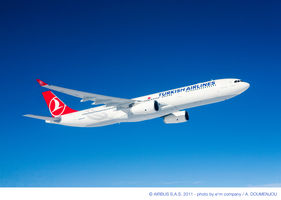
Turkish Airlines has signed a firm order for two additional A330-300 passenger aircraft to be deployed on medium and long haul routes from the Turkish Airlines hub in Istanbul. An additional three options as part of the carrier’s continued growth plans, takes their total orders to 38. With the initial order in 1984, Turkish Airlines now operate in total 104 Airbus

Dr Temel Kotil, CEO of Turkish Airlines said “As one of the fastest growing airlines, our strategy of growth needs to be fully supported by efficient, reliable and profitable aircraft” he continued “This new order for A330s reinforces our commitment to a family of aircraft which already helps us to achieve our ambitious expansion plans, in a profitable and sustainable manner”

The A330 is one of the world’s most efficient aircraft with best in class operating economics. With numerous ongoing product improvements, it still remains the most cost-efficient and capable aircraft, averaging dispatch reliability well above 99 percentThe A330 having 250 to 300 seats, includes Freighter, VIP, and Military Transport/Tanker variants, has now attracted more than 1,200 orders, with over 900 aircraft flying with close to 100 operators worldwide.

Airbus Chief Operating Officer, Customers. John Leahy said “We are very proud to win a repeat order from Turkish Airlines as it shows without doubt a strong endorsement for the A330 unique combination of unbeatable economics, versatility and fuel efficiency,”  “In response to the continuing strong demand, we’re making the A330 better and better, with new higher weight variants to offer more payload-range capability while keeping reliability at top level.”

Airbus aircraft share a unique cockpit and operational commonality, allowing airlines to use the same pool of pilots, cabin crews and maintenance engineers, bringing operational flexibility and resulting in significant cost savings.

Airports know the importance of delivering the best possible for customers travelling through the terminals. The effort to improve customer’s time waiting for their flight has improved during the last few years with gourmet eateries, cell phone charging stations, higher-end facilities, a wide variety of in-airport activities and other plans to upgrades.

When flying, many negative customer experiences are created because of unforeseen delays, mechanical issues, weather problems, etc. These annoyances can create delays of minutes or even hours, and in the worst case scenario cancelled. It is however, possible for these delays to decrease even further, with airlines and airports having the right technology. An iPad-based technology allows cabin crew to manage all reporting and manuals digitally, seeing and addressing unforeseen problems much earlier.

There are polls and articles dedicated to comparing the best and worst airports assisting customers and these new technologies will be a huge benefit in improving customer satisfaction and pre-flight experience, as well as improving a given airport’s reputation.

As well as improving reporting processes, iPad-based technology offers a more effective way to handle customer service issues. Aviation CRM systems are becoming more user-friendly and will be accessible via iPad systems. These CRM systems make it easier for both in-flight crew and airport staff to access customer information, process sales and address customer service issues. Currently airline crews can access corporate memos, manage internal communications, access flight data, up-to-date weather info, etc. while in-flight, from a single device. In the future, airline crews in the airport will be able to handle customer check-in, checking baggage, selling tickets, anywhere, anytime from a single, handheld device.

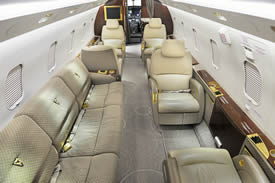
One of Europe’s largest business jet charter operators London Executive Aviation (LEA), based at London Luton Airport, is continuing with expansion by adding another Bombardier Challenger 300 to its fleet.

London Executive Aviation (LEA)

London Executive Aviation (LEA)

“The addition of this Bombardier Challenger 300 to our fleet highlights our dedication to offering the broadest range of aircraft options for business charter operations. We have now amassed considerable experience of operating this type and have been very pleased with its dispatch reliability. The aircraft fully meets passenger expectations for cabin comfort and space, and we have received consistently positive customer feedback” said LEA’s managing director George Galanopoulos. He continued, “Our Challenger 300s fill a niche in our fleet between the midsize Citation Excel and large cabin Embraer Legacys. Their impressive range, coupled with their modern, spacious cabins, makes these aircraft an extremely popular choice.”

The super midsize Challenger 300 has a 3,600 mile range and can operate from runways as short as 1,300 metres. Capable of making non-stop flights from London to destinations such as Moscow, Jeddah, Lagos and Dubai, it can seat up to ten passengers as well as the crew and a stewardess. It is a technologically advanced, high-performance business jet with intercontinental range. It features ‘fly by wire’ avionics, highly efficient Honeywell HTF7000 engines and a state-of-the-art cabin entertainment system.

The Federal Communications Commission is moving to ease restrictions on Internet use in commercial airlines as the agency attempts to enhance competition in the mobile telecommunications market and help speed the deployment of Internet services onboard aircraft. Airlines will be able to test systems that meet FCC standards, establish that they do not interfere with aircraft systems and receive FAA approval.

Rather than having to license on-board systems that provide in-flight wifi on an ad hoc basis, airlines will be able to test systems that meet FCC standards, establish that they do not interfere with aircraft systems and get FAA approval. An FCC statement explained “By reducing administrative burdens on both applicants and the Commission, the new rules should allow the Commission to process ESAA applications up to 50 percent faster, enhancing competition in an important sector of the mobile telecommunications market in the United States and promoting the widespread availability of Internet access to aircraft passengers.

While the FCC is working to speed up deployment of aircraft Wi-Fi systems in airplanes, an airplane manufacturer is also testing on improvements on wireless signals in airplane cabins, making it possible for passengers to enjoy more reliable connectivity when using networked personal electronic devices in the air.

The satellite antenna will carry the signal to and from the aircraft, and mobile technologies such as Wi-Fi will provide communications within the aircraft’s hull. In addition to promoting the economic growth and job-creating impacts of inflight broadband, the action also continues the FCC’s efforts to update and streamline regulatory requirements across the agency.

At this year’s show, the organizers moved things around a bit and now have an expansive hangar for vendors instead of the tents used in previous years. They’ve also moved the food booths and other services closer to show center, making for less walking. However, as the 2013 U.S. Sport Aviation Expo opened in Sebring, Fla., on Thursday, the industry as a whole still isn’t finding healthy sales.

Sport Expo expects about 20,000 attendees at the Sebring show and it continues to be an important venue for some manufacturers who’ve been able to reliably mine sales leads from would-be customers who come to Florida ready to kick the tires one last time before pulling the sales trigger.

John Calla of Adventure Sport Aviation said “We had a buyer come down from Michigan just to see the airplane and make a final decision,” he continued “Some buyers just have to see it, and see it again and see it one more time and then they’ve got to have it,”  The Bristell is a low-wing design that claims the largest cabin size in the field. and the aircraft can accept up to 130 horsepower. That makes it quick, but it doesn’t quite provide the power-to-weight ratio of the reigning hotrod, CubCrafters’ popular Carbon Cub. CubCrafters told AVweb that it’s now rolling a new airplane out of the Yakima, Wash., factory about every four days, the strongest sales since 2008.

Meanwhile, Tecnam’s Tommy Grimes told us the company is going in the opposite direction pricewise with a new offering based on the Echo Lite. It will sell for about $75,000, Grimes said. Like everyone else, Grimes said, Tecnam is still searching for a potential price sweet spot and things a sub-$100,000 LSA is worth trying. As reported in our video, Tecnam was also showing off something some would-be LSA buyers will love: air conditioning in a light sport. The 23-pound FlyCool system fits into the tail section of a P2008 with a minimal weight and balance hit. It chills the cabin by about 20 degrees, a welcome capability for owners flying these airplane in the broiling southern tier states.

It is feared that almost all Indian carriers are in the red, serving one of the world’s fastest growing economies and registered unprecedented growth in traffic. Indian aviation is the ninth largest market in the world and significantly contributed to business, trade and tourism growth in the past decade.

The transportation sector has been impacted by several factors including high operating costs fuelled by high oil and tax cost, cash crunch and soaring debts. Being one of the most important growth in any economy, and air travel has become a necessity and no longer a luxury.

The saving of sales tax on import of ATF is an attractive proposition for airlines. However, they have to use the existing infrastructure of the oil marketing companies (OMC). As India is an ATF-surplus country, direct import by airlines would necessitate finding new export markets for the OMC’s surplus stock. The sector looks toward the Government for tax rationalisation, which most of them believe would be enough for them to soar again, and fuel the growth of the world’s most promising economy.

“ATF pricing mechanism is based on import parity with a black box which currently includes irrational elements and tax on taxes. If a person travels by road or rail, he is using highly subsidised infrastructure or subsidised electricity/ diesel, thereby making a much larger hole in the exchequer. We are only requesting rationalisation of taxes,” says G.P. Gupta, Chief Administrative Officer, SpiceJet.

Passenger Service Fee and User Development Fee, collected on behalf of the Airports Authority of India, suffer service tax thereby pushing up ticket cost, which has outpaced the spending power of customers. According to Gupta, “A major portion of aviation losses is attributable to high taxation.” It is not just the tax, but also the tax on tax which becomes excruciating! For example, several airport operators charge fuel throughput fees from the OMCs. This throughput charge plus service tax forms part of the ATF cost on which sales tax is charged by OMCs, leading to a cascading tax effect.

Passenger Service Fee and User Development Fee, collected on behalf of the Airports Authority of India, suffer service tax thereby pushing up ticket cost, which has outpaced the spending power of customers.

The Transportation Security Administration will remove airport body scanners that privacy advocates likened to strip searches after OSI Systems Inc. where unable to provide software to make passenger images less revealing.

TSA will end a $5 million contract with OSI’s Rapiscan unit for the software after Administrator John Pistole concluded the company couldn’t meet a congressional deadline to produce generic passenger images. 76  machines where removed from U.S. airports last year and the remaining 174 Rapiscan machines, are to shortly follow with the company absorbing the cost, said Karen Shelton Waters, the agency’s assistant administrator for acquisitions. The TSA will instead use 60 machines manufactured by L-3 Communications Holdings, the agency’s other supplier of body scanners. “It became clear to TSA they would be unable to meet our timeline,” Waters said. “As a result of that, we terminated the contract for the convenience of the government.”

Airline passengers were offended by the revealing images, including those of children and the elderly. The Washington- based Electronic Privacy Information Center sued the agency in July 2010 claiming the scanners violated privacy laws and has called use of the machines equivalent to a “physically invasive strip search.”

Sanders said the Rapiscan units did their job by screening 130 million passengers, and the agency wouldn’t have acted if not for the congressional mandate for privacy software.”We are not pulling them out because they haven’t been effective, and we are not pulling them out for safety reasons,” Sanders said. “We’re pulling them out because there’s a congressional mandate.”

OSI Systems is “pleased to reach a mutually satisfactory agreement with the TSA” that will involve moving the machines to other government agencies, L-3 scanning machines rely on millimeter-wave technology, which uses radio frequencies that can find both metallic and non-metallic items. Rapiscan’s machines are based on backscatter technology, which uses low-dose X-ray radiation to detect objects under a passenger’s clothes. Under pressure from privacy advocates and some members of Congress, the TSA moved its screens to separate rooms away from airport security checkpoints. Officials monitoring the scanner images alert agents if they see a possible risk.
The agency’s strategy for handling passenger traffic relies on the capability of L-3’s millimeter-wave machines to process passengers in about half the time as Rapiscan machines, Sanders said. TSA will be getting about 60 more L-3 scanners in January and February, he said.TSA is also planning to move some scanners from airports where they’re underutilized to busier airports, Sanders said. The agency plans to expand the PreCheck program, in which passengers share personal data before going to the airport in exchange for less-invasive screening that lets them keep their belts and shoes on.

Eduardo Sanovicz, president of the Brazilian Airlines Association (ABEAR), told a press conference that he expected stability in the first half of the year and growth in the second. “The performance of the sector is linked to the performance of the economy, of the GDP,” he noted. Amid expectations of GDP growth of around three percent this year, he said the aviation sector “could grow nine or 9.5%.”

Sanovicz said total demand in 2012 grew 7.14% over the previous year.. In December, seat availability rose 5.1% over the previous month, said ABEAR, which added that its five member airlines — TAM, GOL, Avianca, Azul and Trip — carried 75 million passengers in 2012.

Brazil’s top airline TAM, which merged with its Chilean counterpart LAN last year to become Latin America’s biggest airline, retains a 43.9% share of the domestic market, followed by GOL with 34.6%, Azul with 10.5%, Avianca with 6.5% and TRIP with 4.6%.

As the country prepares to host the 2014 World Cup and the 2016 Summer Olympics in Rio, many of Brazil’s 70 airports are congested or in urgent need of an upgrade. Proposals by the federal government to privatize the airports in Rio and Belo Horizonte have been welcomed by Sanovicz, as well as plans to build 800 regional airports across the country.