Archive

Tag Archives: border security

APIS & PNR Transmission Solutions ProvidersIndian airports will soon step up its efforts to control smuggling and track ‘persons of interest’ through its launch of Advance Passenger Information System (APIS) this month.

The APIS system has been developed by the National Informatics Centre with assistance from the Directorate General of Systems under the Finance Ministry and is set for launch at Indira Ghandi International Airport.

The system will operate in much the same way as the US and European APIS systems with the provision of an electronic database of all passengers and flight crew, with the addition of a manifest of all personnel entering and exiting the airport terminals.

APIS is designed to enable government and border agencies access to Advance Passenger Information which can then be screened to identify potential threats to national and international security. The system is mandatory in the US and is proving to be a great asset to agencies in the tracking of terrorist movements. APIS requirements are spreading around the globe as more and more countries take a stand in the threat of terrorism.

APIS providers have a responsibility to ensure that Advance Passenger Information is collected, stored and distributed securely, swiftly and reliably to be of the greatest use to agencies all over the world.

Other Providers of Electronic Border Security SolutionsThe UK will be required to pay a US defence company £224 million after a London tribunal found that a border security program contract termination was unlawful.

Raytheon Systems were awarded the contract for the provision of electronic borders, through a program devised in 2003 for the collection of Advance Passenger Information. The Home Office claim that Raytheon missed milestones in 2010 and parts of the program were running at least a year behind.

In spite of this, the damages award consists of £126 million for assets in the form of computer systems that the company had delivered prior to termination of the contract and a further £50 million has been awarded in damages to Raytheon. The decision was described as a ‘catastrophic result’ by Keith Vaz, following receipt of a letter from Home Secretary Theresa May.

“The government stands by the decision to end the eBorders contract with Raytheon. This decision was, and remains, the most appropriate action to address the well-documented issues with the delivery and management of the program,” she said.

A new border security program is being developed.

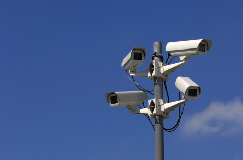
Electronic Surveillance SolutionsThe Dominican Republic is steadfast in its determination to strengthen border control and has just increased electronic surveillance to help the fight against smuggling and illegal entry across the borders.

An additional 150 security cameras have been installed, making a total of 220 now operational over the past three years. They provide 24-hour surveillance at 42 border crossing points and will provide additional assistance to the military presence.

Electronic surveillance equipment is increasing in popularity as the world looks to enhance border control. Solutions from large companies, such as ARINC, can reinforce situational awareness and provide additional assistance to sometimes overstretched personnel and maintain a constant vigil at border checkpoints on the ground and in airport environments.

Physical security solutions can include access management, biometric detection and bioterrorism detection systems in addition to security surveillance cameras and recording equipment.

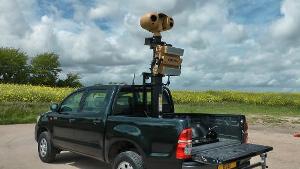
Border Control Solutions for AirportsAs issues of border control and security mount, the introduction of a new lightweight, mobile radar and camera surveillance system, designed specifically for border hotspots has been welcomed into the fray of electronic border solutions.

The system, designed and manufactured by British company, Blighter Surveillance Systems, features a Passive Electronic Scanning Array (PESA) radar, low-light camera, integrated radar tracker and thermal imaging system that can be mounted on a vehicle for deployment within minutes.

Capable of detecting a walking person at 4.6 miles or a moving vehicle at 13.7 miles, the system cues the camera to follow and identify its target. The ‘Blighter Scout’ is perfect for mobile surveillance in areas that are difficult to reach, or where fixed towers are prohibitively expensive.

Electronic border solutions are expanding in airports and border control areas across the globe, offering enhanced security and operational efficiency in even the most remote locations. The provision of such solutions serves to remind us that physical and information security is still at the forefront of global awareness.

Advanced Passenger Information System ~ Find Out More...The International Air Transport Association (IATA) today called for greater use to be made of Advanced Passenger Information System data as the industry still reels in the aftermath of the missing flight MH370 search.

Director General of IATA, Mr Tony Tyler said, ‘It is important to remember that airlines aren’t border guards or policemen, the checking of passports is the well-established responsibility of governments.’ His comments were made at a conference in the Malaysian Capital earlier this week as he spoke of the need for a review of government data-review procedures, which would importantly include the comparison of names against Interpol’s lost and stolen passport lists. Although no link has been established with the two Iranian passengers that boarded with stolen passports and any terrorist organisation, the fact that they were allowed on board ‘rings alarm bells.’

In addition to Advanced Passenger Information System data, Mr Tyler, who is also a former chief executive for Cathay Pacific Airways, placed emphasis upon a need for better aircraft tracking. ‘In a world where our every move seems to be tracked, there is disbelief both that an aircraft could simply disappear and that the flight data and cockpit voice recorders are so difficult to recover,’ he said.

IATA plan to assemble a team of experts to study the available options for aircraft tracking, which is expected to reveal its conclusions at the end of the year.

Other Innovations in Border Security ControlDubai World Trade Centre (DWTC) this month hosted Intersec 2014, with emaratech, the technology and management consulting company owned by the Investment Corporation of Dubai, taking centre stage with its innovative and forward looking border control solutions dubbed “Intelligent Travelling.” Thani Alzaffin, Director General and Board member of emaratech explained that the company had partnered with SRI to produce a suite of technologies, “demonstrating robust security screening and innovative border control solutions.”

IRIS on the move technology (IOM) offers the potential to deal with increasing passenger numbers; reducing both the time it takes to pass through border control and the solving the problems associated with attempting to identify passengers in a busy or limited environment.  Offering non-contact technology, the simple walk-through design of the IOM PassPort SL is able to capture both dual-iris and facial images, without a requirement for the passenger to stop.

Similar benefits can be readily applied to vehicle access points with the IOM PassThru™Drive-up Iris Recognition System, which can replace RFID cards, and can link drivers immediately to their known identity, with the added advantage of being able to record events. In fact emaratech believe the system will become increasingly popular for identification management in many high-traffic environments, including general transportation, employee access and public events.

Provision of Passenger Data to Enhance SecurityConcerns are growing for security chiefs about the increasing risk of potential terrorists being allowed to travel freely around Europe after the release and use of passenger data was blocked on human rights grounds earlier this year.

Cressida Dick, Assistant Commissioner of the Met expressed a warning that young men are able to fly to Turkey, hire a car and drive across the border into Syria. Her concern is that a ‘small number could fall under the spell of terrorists and return to Britain with deadly skills and motivation’.

Passenger data has been effectively used to identify potential high-risk passengers, alerting government agencies and border control before those passengers touch down at their destination. Supporters of the share of this data, referred to as Advanced Passenger Information (API) say that the information is critical to help track terrorists, people traffickers and serious criminals that regularly traverse international borders.

The system was developed after the terror attacks of 9/11 and is mandatory for passengers travelling to and within the U.S. and other parts of the world.

API is delivered electronically via the DCS of airlines. Providers maintain reliable, secure delivery and limited access to the information.

The Civil Liberties Committee of the EP claim that the passenger data storage system raises privacy concerns and critics are unhappy about the data being kept for five years, which could lead to passenger profiling.

As the EU Counter-Terrorism Coordinator points out that the numbers of fighters travelling to Syria is increasing, it has made a call to put airline passenger information availability back into practice, giving security officials the ability to track the movements of particular groups across Europe.

The head of MI5, Mr Andrew Parker, revealed that spies had observed ‘hundreds of people’ travel to Syria and added that some had indeed returned to the UK.

It is unclear how, when or even if, the use of passenger data may return to the forefront of aviation travel in Europe.

Solutions for Improved Data Security in AirportsIATA has announced a call to action for the aviation industry, regulators and governments across the world to reform aviation security through a partnership with a focus on a globally harmonised system.

Tony Tyler, Director General and CEO of IATA, while speaking at the 22nd AVISEC World Conference, held in Istanbul, said “Aviation security stands at a crossroads. Global passenger numbers will be approaching four billion per year by 2017, and the aging systems and outdated procedures of the current security system will not be able to cope. We need to change from prescriptive one-size-fits-all measures and embrace performance-based regulation if the economic benefits of aviation growth are not to be curtailed by security inefficiency.”

The move comes in direct support of the swift delivery of advance passenger information (API) to enable government departments and border security to screen passengers before they arrive on the ground at their destination.  High risk passengers can be identified and prevented from boarding the initial flight, or stopped from entering the destination country.

More than 45 states already operate API or PNR programs.  It is critical for the swift delivery of such information that the entire system is harmonised in line with ICAO regulation.  The issue of cost of collection of the vital information has yet to be finalised.

Mr Tyler went on to say, “Governments and industry can work together to make better use of the data collected. A good example is the checkpoint of the future initiative, which aims to improve the security and convenience of passenger screening by moving to a risk-based approach and adopting advanced technology. The flying public is eager to see the checkpoint of future deployed as quickly as possible. Stakeholders are aligned behind a staged implementation that will see the first versions in 2014. Subsequent stages will see us move from re-purposing equipment and using data more thoughtfully to the eventual deployment of new equipment in the final stage, around 2020.”