Archive

Tag Archives: aviation news

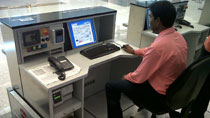
Rockwell Collins' ARINC Check-In-Counter & Baggage SystemsThis week it has been announced that Indira Ghandi Airport (IGI), India’s busiest hub, has renewed its contracts and signed for another six years with Rockwell Collins’ ARINC passenger processing systems and technology, following ICI’s recent award to the company as “Best IT Service Provider” for the second consecutive year.

IGI has used the ARINC vMUSE common-use passenger processing system for more than five years, in addition to ARINC SelfServ kiosks and ARINC VeriPax Passenger Reconciliation system, ARINC BagLink for baggage messaging and Rockwell Collins’ integration of a Local Departure Control System in Terminals 1D and 3.

“IGI has prided itself on being a purveyor of new technology, recognizing it as key to becoming a world-class airport,” said Chief Information Officer and Vice President Davesh Shukla, Delhi International Airport Ltd., on why it has worked closely with Rockwell Collins on implementing the newest and latest technology to aid in ‘Fast Travel.’

“We created a customized solution for IGI that accommodates its rapid growth, while continuing to improve the passenger experience, enhance their competitive advantage and maximize return on investment,” explained Heament John Kurian, managing director, Information Management Services division, Asia Pacific for Rockwell Collins.

As a part of the new contract, the airport will work with Rockwell Collins integrators to deploy mobile and portable check-in devices throughout in a bit to further streamline and enhance the passenger processing experience for both the passenger and the airport.

The space-saving attributes of the modern passenger check-in systems, which now incorporate greater flexibility with multiple airline check in facilities and bag drop points, give airports the opportunity to create enhanced retail spaces and better utilisation of airport personnel within the terminals. This allows increased operational productivity and a better experience for the passenger with the reduced likelihood of queueing and ground delays.


Find out more about Rockwell Collins' ARINCDirect Features for Business AviationIn a move to further enhance efficiency for pilots, dispatchers and flight schedulers, Rockwell Collins has introduced new features to its ARINCDirect Flight Operations System (FOS).

Now available for download, the updates offer current customers access to new and improved features including flight tracking, U.S. and Canadian slot requests, online flight plan filing, graphical and text weather and overlay trips on the ARINCDirect mapping tool.

Rockwell Collins recently announced consolidation of Ascend flight information solutions and ARINC Direct services into one enhanced solution and the integration is a part of that move. With new cabin solutions and flight operations management, subscribers to the flight planning and data link can look forward to the new features.

Reliable Data Sharing from Leading APIS ProvidersSome German carriers could find themselves out in the cold with suspended UK flights if UK Government directives concerning the provision of Advance Passenger Information are passed, but not complied with.

Issues could arise as the UK border control system mirrors a similar system in the U.S. and asks for mandatory delivery of Advance Passenger Information in order for security services to monitor the movements of potential persons of interest as they travel to or pass through the UK. However, other countries in the E.U. would need to amend areas of their privacy laws in order for the system to be effective.

UK Home Office secretary, Mr Mark Sedwill issued a statement according to the Guardian newspaper, “We are looking in future legislation at taking mandatory powers. We are working with all the airlines. We have 90% of Advance Passenger Information.”

Advance Passenger Information (API) includes the personal details of passengers and flight crew and in some instances also contains methods of payment and itinerary details. In the U.S. API is a mandatory requirement and assists security agencies with monitoring and tracking of ‘at risk’ passengers.

Continuing, Mr Sedwill said, “We are in discussions, which for obvious reasons I have to keep somewhat private, with other EU countries to change their data protection legislation in order to require this data of the carrier.”

Other German airlines include Lufthansa and Germania. The debate will continue and was due to be discussed during the recent G6 summit in Paris last week.

Canada Aviation & Space Museum has announced the launch of its first mobile app in the year of the 100th anniversary of WW1.

The app will offer the public a virtual tour of the museum’s fascinating and extensive collection of World War 1 aircraft.

The museum has honoured Canada’s veterans of the First World War in this landmark anniversary year and is proud of its collection, now giving those who might never have a chance to visit the museum, the opportunity to take a look at the historic aircraft and exhibition.

The video includes a demonstration of the new mobile application by the museum’s director general, Mr Stephen Quick.

To view the video, please click here.

Mission Critical Messaging ProvidersBusiness aviation community leaders continue to come out in support of the flight technician. As we all know, maintenance plays a big role in flight support in so far as keeping our aircraft; military, commercial and private executive, not only safe, but fit for purpose and mission-ready.

The NBAA, long-standing champion of the industry, run many initiatives to oversee and enhance the profession, including the all-important maintenance sector. Established service networks for operators, maintenance repair organisations (MROs) and in-house aircraft support departments encompass a wide range of services from the routine tasks to major overhaul, upgrades and repairs.

Aside from, yet a critical part of the maintenance sector, involves the reliable delivery of communications if ground-delays and issues are to be avoided, settled and dealt with as quickly as possible. One of the latest initiatives from the NBAA is the formation of a Connectivity Group, who are tackling global airborne communications.

Many types of issues are handled by the MRO, including IT discrepancies and in-flight data connectivity. It is not only repair issues that could require an ‘approval for return to service’ order.

NBAA committee members are looking to provide guidance to flight crews and cabin staff in order for them to be capable of addressing passenger problems with connectivity in the air, and also training to allow these personnel to handle on-board data systems, such as business aircraft connection installations.

Maintenance professionals do not always receive exposure to data network connectivity and this can pose a challenge within the industry in terms of the support structure. Most new issue aircraft, particularly in the business aviation sector include varying degrees of digital data transfer capabilities. Technicians and MROs need specialist knowledge of installation, inspection and diagnosis in order to effectively and efficiently dispatch aircraft.

The committee is currently most keenly focussed upon the aircraft technician as the industry as a whole begins the definite shift to NextGen systems. It has teamed up with industry organisations to address the issue of enhanced training within the connectivity arena.

With professional shortages predicted over the coming years it is an area that has raised the most concerns and will be addressed as a matter of urgency. The NBAA Maintenance Committee Regulatory Group is handing the issue of technicians dealing with analogue regulations as the industry shifts to a digital world and has suggested that the formation of partnerships with the FAA to provide industry guidance and to accomplish directives for electronic documentation.

Maintenance can be a grey area within the industry, although playing a critical role. Messaging capabilities need to be seamlessly reliable if a smooth, efficient process from the routine tasks on the ground to the IT issues in the air. Providers, such as Rockwell Collins’ ARINC deliver millions of Type B messages every day for thousands of customers over the robust system architecture that the AviNet network has held strong for more than 50 years.

Inmarsat Satellite Communications Systems for Business AviationInmarsat, British satellite communications network is considering the possibility of becoming a direct provider of its integrated air-to-ground (ATG)-S band inflight connectivity service, soon to be launched in Europe. Currently, Inmarsat partners with resellers for its services.

Leo Mondale, Inmarsat president of aviation said, “Going direct is not a strategy or goal of ours per say, but we’re looking at a pretty dramatically changing environment when giant name brands in telecommunications are entering the business, and so there is much higher interest in adjacent markets like mobile communications to cause us to want to study the right way to go to the market.”

Although no fixed plans have been settled, Inmarsat are considering an industry sector that is consistently selling bundles, and following ViaSat’s decision to sell directly to airlines, partnering with Thales/LiveTV, the satellite giant is looking at the sector with a different set of eyes.

“We are actually just a connectivity provider,” says Mondale. We don’t build equipment, and we don’t want to sell content. Our bundle is multiple connectivity platforms, given to the right geography, irrespective of what type of aircraft or how big a fleet. That makes us different because we’re not saying ‘buy IFE and we’ll give you connectivity for free’. We say ‘you decide, and we want to give you the best connectivity.”

Inmarsat are in no hurry to make a decision, and are considering all their options. Current reseller partnerships will not be affected.

For Border Security Enhancements Use Reliable Providers of APISGerman government officials are standing firm in a decision to support passenger data transfer and retention despite objections to another personal information database.

Privacy concerns have been raised by Andrei Hunko, a member of the Bunderstag, who suggests that such a database would violate fundamental privacy rights. He believes that the tracking of potential terrorists or ‘persons of interest’ can be done with the information that already exists and there is no need for ‘yet another’ database, to which ‘police and intelligence agencies would have unlimited access’.

The German government insist that ‘urgent action is needed in the Federal Government’s view’ and suggest that a way to counter the threat that Jihadists returning from Middle Eastern war zones could potentially have across the EU.

Plans for the EU Passenger Name Records (PNR) database were suggested back in 2011 and although the German government are in support of these plans, they do concede that five years is too long a time for the retention of such information as a fundamental violation of privacy rights.

In May this year, the European Court of Justice ruled for the invalidation of EU laws governing the retention of personal passenger data, so the battle is far from won.

Leading Providers of Baggage Handling SystemsPalm Beach Airport baggage handling system is 25 years old and needs to be upgraded. According to airport officials, it is growing increasingly difficult to keep up with maintenance issues with the 10-year old explosive detection system.

To ensure enhanced safety is in place for the monitoring and handling of airport baggage, the system must undergo a complete modernisation program and Jerry Allen, deputy director of Palm Beach Country’s airports department, know what he wants, following research that has been ongoing for almost 10 years. “We have had this baggage system for 25 years, and things change in our industry,” said Allen, “What this is going to do is allow us to drop a bag off at any gate and still get it to the appropriate airline.”

Airports across the world are embracing the latest technological advancements in baggage handling systems. With biometric scanning and electronic tagging and tracking, sophisticated, modern systems involve almost no human intervention to operate to maximum efficiency, which gives airport personnel a greater flexibility. Mr Allen said “It operates more efficiently, so those employees can be doing other things.”

To pay for the new automated system, the airport plans to use $32.4 million in federal and state grants, leaving $9.6 million to be realised from passenger facility charges at $4.50 per passenger.

Officials from the airport sought permission from the county to spend the $42 million earlier this week and are awaiting an outcome.

Inflight Connectivity Providers for Business AviationMiddle Eastern & African airlines are exploring solutions to boost passenger numbers, while making improvements to operational productivity, efficiency and connectivity across all areas of operations.

Throughout the region, the market is coming into its own with Wi-Fi connectivity at the top of the list for passenger satisfaction. Consequently, this sector is becoming competitive as companies vie for the best connections at the best prices.

WirelessG, a South African-based Wi-Fi telecommunications provider has made claims to have launched the world’s first mobile service offering customers a 3G/4G data bundle that can be used on the ground or in the air – 3G, ADSL, Wi-Fi and In-flight Wi-Fi – on a single online platform. There are still technical issues, according to their CEO.

“The Ku-band satellite service we received was relatively very stable. Our airline partner did an excellent job in supporting the service onboard,” says Mr van de Merwe. “Our major problem for two years was that we could not get our in-flight Wi-Fi services out of the ‘beta’ stage in order to meet the telecommunications uptime standards we are used to when providing Wi-Fi on the ground. In our specific case, we have had too many in-flight Wi-Fi hardware problems over our first two years.”

“You cannot fix a plane while it is flying,” he continued. “You have to wait for a suitable time at minimum opportunity cost to the airline. That can take between one week and one month. A new benchmark for in-flight Wi-Fi technology solution providers is therefore to provide and support onboard in-flight telecommunications solutions that support a telecommunications carrier grade model with reliability standards that at least match aviation operation service schedules. Maybe our standards and expectations are too high at this point in time, but we refuse to take our service out of beta until it meets our standards.”

Across the world, the demand for in-flight connectivity is increasing and not just in the cabin. Applications for real-time information on the flight deck also enhances the experience for the flight crew. Swift decision making can be facilitated by reliable connectivity, yet to be completely effective, the system required seamless connections with smooth band-switching.

Rockwell Collins' FANS 1/A & CPDLC CapabilitiesIt has been announced that Rockwell Collins is to offer FANS 1/A with CPDLC capability to the Bombardier Challenger 604 aircraft currently equipped with their Pro Line 4 avionics systems. The upgrade will be made available in mid to late 2015 and will build upon the aircraft’s current Flight Management System (FMS) and Control Display Units (CDUs).

The incorporation of a new communications unit will give operators of the Challenger 604 access to the transatlantic route that offer greater wind-efficiency, which results in significant savings of both time and fuel for the carriers.

The FANS 1/A package is made up of Controller-Pilot Data Link Communications (CPDLC) capabilities and Automatic Dependant Surveillance-Contract (ADS-C) which offer both enhanced clarity for pilot communications and a reduction in flight crew workload.