Archive

Tag Archives: aviation industry

The International Air Transport Association (IATA) have announced plans for a ‘New Distribution Capability’ (NDC) which involves the sharing of social media profiles for a better shopping experience for passengers.  NDC will offer personalized booking through a user-friendly platform that is content and image-rich, enabling passengers to book ‘extras’, such as Wi-Fi, comfortable seats or even a chauffeur service to and from the airport, based upon their preferences according to social media profiling.

Passengers, of course, will also have the opportunity to shop anonymously and IATA promise all the usual privacy assurances, but there are still some who are skeptical about sharing such information – especially as some companies who act as middlemen for bookings, such as Amadeus or Travelport may find their roles significantly diminished.

Social Media profiling is huge stuff in today’s marketplace, offering comsumers flexibility, if you don’t mind sharing your information and preferences and offering business massive marketing opportunities.

IATA are excited about the new proposed NDC and have been singing its praises at the group’s 69th AGM in Cape Town this week.  There is a lot of support for NDC and more than a little controversy, but much agreement universally that the face of buying airline travel and the way airlines, travel agencies and associated services work and interact would change enormously.

IATA have released a video to explain more about NDC… See it here...
The New Zealand Aviation Industry Association has announced their intention to add a Careers Open Day to the end of their Aviation Conference Week in a bid to inspire and attract people to consider aviation training as a career opportunity.

The move comes after estimates of 4000 jobs in the sector will need to be filled over the next five years adding up to around 800 jobs per year.  Roles include aeronautical engineers, pilots in commercial and general aviation, air traffic controllers, flying instructors, airport security, ground crew and flight attendants, but are only a portion of the range of skills that are estimated to be required to enable New Zealand to progress in its efforts to reach current growth targets.

Many of the leading training facilitators and aviation organizations will present career opportunities and industry information during the Open Day, in addition to representatives from the NZ tourist industry in a bid to attract new talent if the $16 billion-dollar targets are to be met.

AIA Chief Executive, Irene King, says, “We need more people entering our industry and it’s just such an exciting place to be with career openings and opportunities predicted to be plenty over the next five years.”

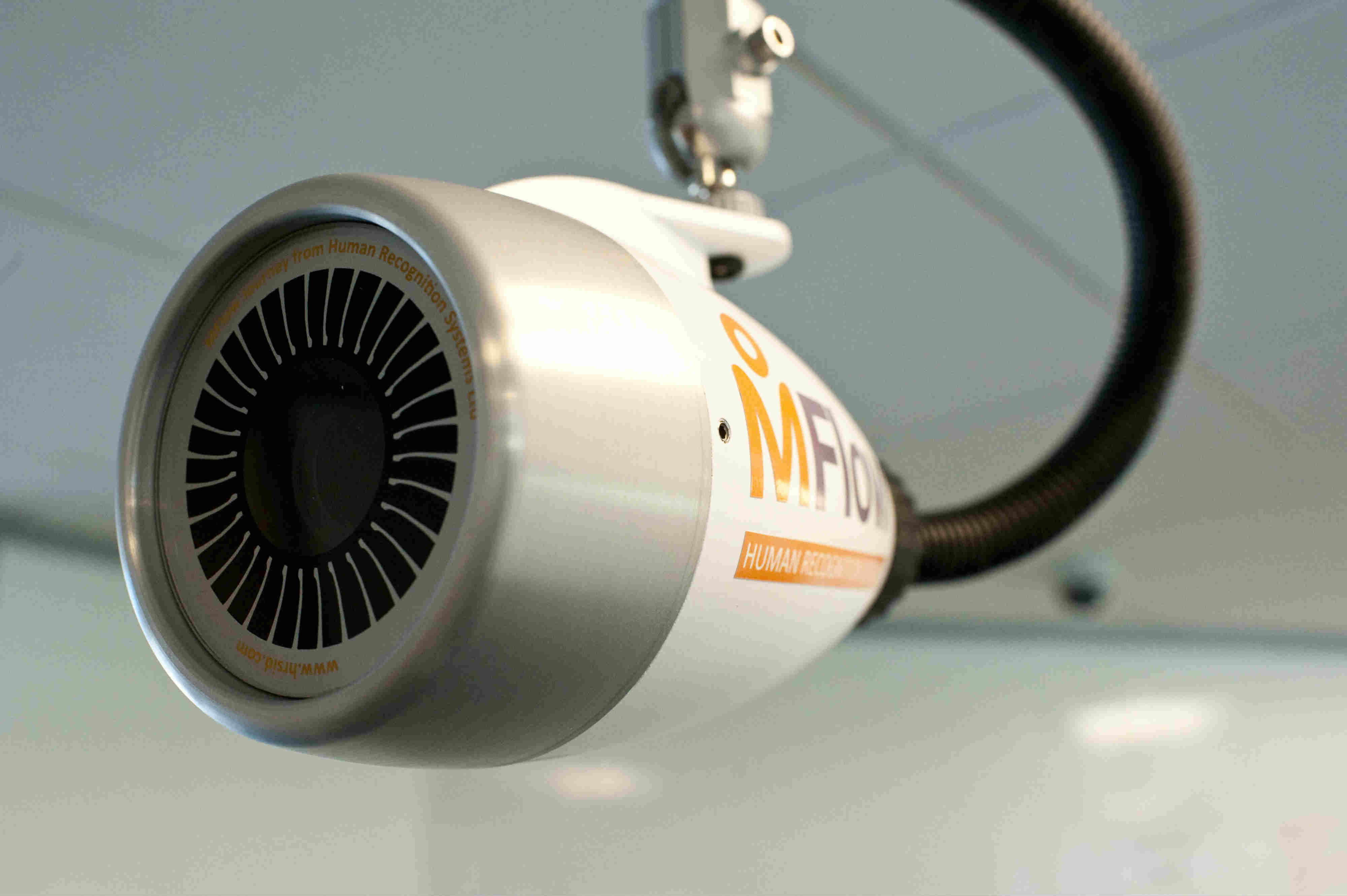
Later this month, Edinburgh airport will introduce MFlow Journey as a part of the airport systems to track and monitor passenger movement through its terminals.

MFlow is one of the latest innovations in Human Recognition, and will take a (thankfully) anonymous image of each passengers face as they check-in.  This enables the airport systems to measure the length of time it will take for each passenger to reach certain ‘check-points’.

Airport Systems

MFlow Airport Systems

The analysis of the data will enable the airport systems      to alert passenger management of any potential queue problems in advance, the idea being that the reduced time for the passenger queuing or waiting in a particular area of the terminal will increase the time the passenger will have for spending in the shopping areas, and therefore, maximizing profit potential for the airport, while enhancing the passenger experience as a whole.

Airport Systems

Edinburgh Airport Systems

Head of IT for Edinburgh Airport, Graeme Agnew said, “As the system doesn’t rely on people carrying Bluetooth or Wi-Fi technology, we are able to collate highly accurate data on the movement of passengers through security screening and then make informed decisions about how we manage this area of the airport in the long term.”

Visitors to EBACE 2013 will be able to view for the first time on static display, the luxuriously fitted BBJ3 from Boeing and Jet Aviation Basel.

The BBJ3 is the latest and the largest business jet aircraft from Boeing and is based upon the 737-900 Extended Range airliner.

The aircraft is currently on sale by the owner, who had the, Jet Aviation Design Studio VIP custom refit done last year.

The BBJ3 has a lounge, dining room, private bedroom with en-suite bathroom and staff area all comfortably furnished with the finest materials and fittings, including real stone, highly-polished sycamore wood, silk carpeting and hand-finished marquetry.

As the first privately owned BBJ 3 to be completed at Jet Aviation Basel, the highly customized cabin interior is finished in a flawless, bright, high-gloss quarter-figured Sycamore wood, with hand-crafted marquetry artwork integrated in the entrance panel,” said Neil Boyle, Vice President of the Completions Center at Jet Aviation Basel.  The centre employs over 1200 staff in their design, engineering, upholstery, fibreglass and paint shops and is capable of outfitting jets to VIP standards as large as an Airbus A380.

During their long-time partnership with Boeing, Jet Aviation Basel has delivered 24 completed aircraft, this being the first privately owned BBJ3 to be completed and shown in this way.

The BBJ3 will accommodate 38 passengers and 8 crew members comfortably and is beautifully equipped for a VIP journey.  With a spacious cabin of 32.7 m long and 3.57 m wide and with a range of 4,900 nautical miles, it is outselling all other business jets in its class by 7-1.

President of BBJ, Captain Steve Taylor said, “Our customers demand airplanes with great performance, enabling them to conduct business around the world.

The business jet aviation industry is experiencing a surge in growth and with more business and corporate use comes a high demand for comfort and connectivity in the air as effectively as in their ground-based offices.

business aviation refit

business aviation

Changing trends in commercial aviation have shown that over the past six years, there has been a drop in scheduled domestic flights to the tune of almost 9% per year in the largest hub airports in the U.S. with smaller airports losing 21% of domestic activity, according to a report by MIT’s International Center for Air Transportation.

The blame for this significant decrease in activity is largely attributed to the troubled economy and vastly fluctuating fuel prices, forcing operators to adjust capacity for a higher yield per flight and even removing direct flights to smaller airports, thus creating an impact upon small and medium-sized communities, in rural America, for example, in turn greatly affecting the service levels to these areas.

With public transport at a minimum in rural areas, and the demands upon business travellers increases with the economic crisis, there has never been a more critical time for business aviation to provide business travellers with the means to act fast in opportunistic situations.

The U.S. has invested billions in ensuring a safe, reliable and efficient air transport infrastructure and this is essential for the facilitation of the continued operation of airline travel for commercial airlines, business and recreational aircraft to maintain a robust infrastructure and to keep the skies busy and keep the economy growing.

Indeed, rural America encourages companies to bring jobs to the communities and the creation of effective transportation is welcomed with open arms.  The need for strong connections grows and, currently, airlines serve only 10% of the nation’s airports between less than 50 locations country-wide.

The authors of the report do not expect the situation to improve in the near future with commercial airlines and, with the businesses that fly their executives to where the opportunities lie, it is clear that business aviation is an area of the industry that will experience the growth and productivity that will ultimately benefit the nation’s economy.

business aviation

Business Aviation to aid economic growth

Last week in Geneva at EBACE, business aviation specialists, ARINC Direct took a step closer to a paperless cockpit with their latest innovation, Xplore, a new communications service, offering a four-in-one portable device – ACARS messaging, high-quality voice service, Blackberry email and SMS/Instant Messaging capable.

Xplore will use an iPad application for the user interface and will be user-friendly, adding the benefit of sychnronicity between two or more iPads with bluetooth technology.

ARINC Direct existing business jet-operating customers will notice that the ACARS functionality is completely interoperable with their ARINC Direct account.

“The system is so flexible and easy to use we are looking at a wider range of applications than just business jets for its use,” said ARINC director James Hardie.

ARINC Direct Xplore, using the Inmarsat and Iriudium satellite networks will enable global connectivity for the flight deck and passengers in a simple, single application.

Mr Hardie continued, “If pilots are equipped with SwiftBroadband and they use the iPad App, then they are benefitting from a dynamic aviation information platform which surpasses traditional methods of getting in flight data.”

ARINC Direct encouraged pre-ordering of their business jet innovation at EBACE and hope to complete certification to launch the live product later this year.

Xplore ACARS

ARINC Direct Xplore – ACARS

mobile broadband

Airline travellers in US airspace may soon be able to enjoy multi-gig broadband connectivity if the proposed provision of a new ATG service goes ahead.

The Federal Communications Commission (FCC) suggest, following a petition filed two years ago by Qualcomm Inc, that a new air-to-ground, two-way mobile broadband service should be introduced in the 14-14.5 GHz Ku-band, which would ensure that it would not interfere with, and also be protected from other users operating essential earth-space communications.

Of course, there is a long way to go yet, with hoops to jump through in terms of regulatory and licensing conditions, not to mention the bidding war that will ensue, once these terms are agreed, for the issue of the contracts to run the services.

If the proposals go ahead, the service will be initially limited to US airspace, but airlines from other countries will be able to offer the two-way mobile broadband service to their passengers whilst in US airspace.

The benefits of the new service will be wide for airline passengers, offering faster connectivity and maybe even a reduction in the cost of broadband services.  It seems that business aviation will be the greatest beneficiary of the new band, as this industry is the fastest growing sector, with private and corporate jets requiring speeds of connectivity for utmost efficiency in the air as on the ground in their land-based offices.

Time will tell as the industry awaits the decision makers – watch this space!

Next month’s Middle East Business Aviation Conference will take place in Jeddah, at the Hilton Hotel in the Kingdom of Saudi Arabia and will be the first time the KSA has hosted the event.

H.H. Prince Fadh bin Abdullah bin Muhammed is the patron of the event and also the President of the General Authority of Civil Aviation (GACA) in the Middle East.

The Kingdom of Saudi Arabia has been experiencing a surge in growth in the aviation sector and is becoming one of the largest markets, with almost half the market share.

At last years conference in Dubai, Honeywell forecast 14,000 business aircraft deliveries up to 2017, with the Saudi Arabian market expected to be on of the main contributors to the industry sales of $233 billion.

Speaking at the conference, in addition to H.H. Prince Fadh bin Abdullah bin Mohammed will be H.E. Dr Faisal Bin Hamad Al Sughair and Mr Wajdi Alidrissi, MD of Saudi Private Aviation, who said, “We anticipate that the Saudi Arabian market will witness growth of at least 10% though to 2014, due to the government’s bold plans for economic cities across the Kingdom and other major infrastructure projects currently underway and in the pipeline.”

The conference will continue with the discussion panels comprised of some of the major companies in the sector, including GASA, Nasjet and Nexus, who will debate regulatory frameworks and other matters concerning the Kingdom’s economic agenda to promote and understand business aviation through the important platform that the MEBAC has become.

According to experts in Asia, the growth in the business aviation industry and other sectors spells great news for the economies of those countries, but improvements are needed in both infrastructure and regulatory systems to sustain that growth and improvement.

The regional differences are as much to blame in China, for example, the huge costs involved with private and business passenger processing are unrealistic and described as ‘outrageous’ by Chris Buchholz, Hong Kong’s Metrojet Executive Director.

Mr Buchholz said, “Governments outside China must do much more to unlock this market.”

Lead times can be wearing, as military governed airspace in China can encounter permit delays of as many as seven days to process,  and flexibility is almost non-existent, due to the strict insistence of fixed flight planning in advance – this, of course, is not much use to business and private jet aviation.

Similar problems are encountered all over Asia, with India’s infrastructure described as “Woefully inadequate” by the President of the Business Aviation Association for India (BAAI), Karan Singh, who commented, “There’s limited parking, and the airlines always get priority, especially at Bombay and Delhi. Ground handling is provided by state-owned companies that have been known to charge $1,500 for a bus to transfer passengers from the ramp to the terminal.”

On a more positive note, there are signs of the rigidity of these attitudes changing, as more Asian Companies take the step of using business and private jet travel, raising awareness of the need for greater infrastructure in this sector.

“The mindset is changing now that Indian companies regard business jets as tools, rather than toys,” Singh noted.

There is a long way to go yet, as tax implications for jet purchasers is still high, and, while Asia moves towards business aviation, and the expectation for growth is encouraging, there are still hurdles to jump, not only in terms of infrastructure and regulation, but also in attitude.

Leslie Merszei, managing director of Orient Sky, a Bangkok-based broker said, “There are too many clients and too little inventory. Most business jets in the region are not available for charter,” adding that according to many Asian beliefs, outsiders can bring ‘bad luck’ if they charter their aircraft.

Orient Sky do not share this belief, with their plans to market around a dozen business jet aircraft later this year.

Although Asian business aviation is far from the models presented by Europe and the US, experts predict the fast-growing industry could double, due to the rise in corporate and indeed person wealth increases continent-wide.

ARINC have announced that long-time customer Aegean Airlines, Greece’s largest full service airline, have chosen their AviNet Airport solution for three major European airports that the Airline operate from – London Heathrow (LHR), Munich Airport (MUC) and Brussels Airport (BRU).

Many airlines in the Europe Middle East African (EMEA) region choose ARINC, as they require ultra-reliability and cost-effectivity when it comes to high speed access to their Amadeus ALTEA Departure Control Sysytem (DCS).  ARINC’s AviNet Airport integrated network solution offers this level of reliability with the vMUSE platform.

The commercial benefits to AviNet Airport are realised by Aegean airlines and other airlines with the reduction of in-house resources needed for implementation of the services, as ARINC manage the ALTEA customer services, flight management and DCS network access.  The common-use, self service platform gives greater flexibility for passengers and the airports, speeding up passenger processing with seamless integration with the DCS.