Archive

Tag Archives: aviation industry

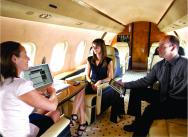
Private Jet Travel Communications for PassengersA delve into the travel arrangements of companies over the past few years has revealed that many corporations could save money over the long-term by using private jet travel over regular commercial flights.

It is not the first method of travel that springs to the mind of a company director when sending employees to other parts of the country to business meetings, yet when taken as a cost-measuring exercise, the results can be surprising.

There are four main modes of private jet transport:

  • Charter
  • Fractional Ownership
  • Jet Card
  • Ownership

Many large corporations do operate, own and run private jets for business purposes. Private jets are not always available for general employees, yet the savings are there to be made.

Taking travel time, airport processing time and flight hours into consideration for a group of employees can add up quickly when using commercial airlines. The time reduction for a business charter flight is significant and when weighed against the ‘down time’ of the employees travelling on commercial airlines, considering the additional passenger connectivity options for business jets, actual work hours can be greatly increased.

Charter flight is perfect for companies that fly employees less than 25 hours per year on a flexible schedule or are headquartered near a major metropolitan centre.

Jet cards are sold in minimum denominations of 25 hours and are ideal for companies that send employees on business trips that involve a stay of longer than 24 hours (no round trip options).

Fractional ownership of a jet means buying segments at a minimum of 50 hours. This option is perfect for those companies that use private jets, but do not want the running costs on their accounts.

If your company measures costs for off-site business meetings, it is easy to see that private jets and the business aviation sector can offer a solution that can spell long-term savings. Business travellers can meet the needs of the company far more effectively when travelling using business aviation – the cost is not measured simply by the price of the seat.


Phones & Laptops Included in Heightened Airport Security MeasuresThe Department of Transport in the UK has expanded upon tightened airport security measures issued earlier this month as they now urge passengers to make sure that mobile phones, tablets and other electronic devices are charged up and ready to be switched on during routine security checks.

Passengers who are unable to comply with the requests may face having devices confiscated under the new rules. The move has been taken following advice from the US after airport security risk was escalated to ‘substantial’ – meaning there is a ‘strong possibility’ of attack from terrorists. Fears arise from intelligence information that terrorist groups could build bomb components from non-metal substances that would be undetected with airport security scanning devices.

A spokesman for the Department of Transport said, “The UK government keeps aviation security under constant review in conjunction with international partners and the aviation industry. On 2 July we announced we were stepping up some of our aviation security measures. In line with the US advice, passengers on some routes into and out of the UK may now also be required to show that electronic devices in their hand luggage are powered up or face not being allowed to bring the device onto the aircraft.”

“Passengers flying into or out of the UK are therefore advised to make sure electronic devices being carried in their hand luggage are charged before they travel,” he added.

Although the government have promised to keep disruption to a minimum, they also stress that public safety remains paramount. Airport security have not confirmed which routes may be affected.

Passenger Reconciliation Systems ProvidersSao Paulo International Airport (GRU) is undergoing a big change to their passenger reconciliation system as Rockwell Collins implement its leading ARINC VeriPax system. Although the entire installation is in progress, the first phase of the project went live ahead of the 2014 World Cup tournament on June 12.

ARINC VeriPax reads boarding passes using automated security screening with 2D barcode scanners and checks passengers against flight information in real time. The system has streamlined the entire process of check-in and has already proved its worth with the attendance of elevated numbers of passengers for the World Cup tournament, speeding up the passenger screening process at security checkpoints.

“Hosting the 2014 World Cup has brought soccer fans from around the world to Brazil so we needed a solution that would provide our passengers with a better, faster check-in experience,” said chief information officer for GRU, Luiz Eduardo Ritzmann. “By automating the screening process, we believe that VeriPax has enabled us to improve GRU’s passenger flow by 15 to 20%.”

Although the ARINC VeriPax solution is utilised in some of the world’s busiest airports, and has been since 2009, GRU is the first airport in South America to use the bar-coded boarding pass gates and the VeriPax solution. The new security screening system is currently in use in the airport’s new terminal 3, but will soon go live in subsequent phases planned for terminals 1, 2 and 4.

“We’re proud to be playing a critical role in making GRU one of the most modern airports in the world in terms of passenger processing capabilities,” said staff vice president of airport systems, Information Management Services for Rockwell Collins, Michael Picco. ”This program marks yet another key milestone in our commitment to invest and grow in Brazil. We look forward to a long and productive relationship with GRU and other airports throughout the country.”

Providers of Aviation Messaging SystemsARINC Inc, acquired last year by Aeronautics giant, Rockwell Collins, developed and introduced ACARS messaging during the earliest years of commercial flight and insist that the technology is available today for real-time aircraft tracking. The debate continues in the wake of the tragic disappearance of Malaysian flight MH370, now into the fourth month with no news.

In-flight connectivity providers and satellite companies are currently competing for business with Inmarsat, the British satellite company that provided additional information about the ill-fated flight and Iridium both supporting flight deck communications and aircraft tracking solutions as they have done for years.

More than 300 airlines and 15,000 aircraft have relied upon the industry-standard ACARS and ARINC GLOBALink for mission critical transmissions. Rockwell Collins’ CEO, Kelly Ortberg said, “We may have to write some software, we may have to do some different things; upgrade the aircraft to implement this capability, but we don’t need to invest in new technology.”

With VHF datalink extending throughout Central and North America, most of Europe and Asia, Inmarsat’s satellite network providing coverage to expand VHF capability to encompass real-time data reporting and weather updates and Iridium’s network reaching the remote oceanic expanses and Polar Regions, it is clear that the technology is indeed available to bring global coverage within reach of the world’s airlines and operators.

Aviation messaging is under scrutiny at the moment, particularly by IATA and ICAO, who are working together to investigate the options for airlines in terms of global tracking to avoid another MH370 crisis at all costs.

Business Passengers Enjoy Full ConnectivityBusiness passengers demand high levels of cabin electronics these days to enable them to work as effectively in the air as they can on the ground. The most highly sought-after commodities being aircraft internet, high-speed connections to download presentations and business documents and the ability to research and access email accounts.

In addition, however, there is also an increasing requirement for ambient lighting, charging facilities for phones and tablets, HD flat screen TV, video and in-flight entertainment features.

In an ever-changing marketplace, it is almost impossible to keep up with the technology; the solutions to these requirements getting faster, more sophisticated and with higher-quality connections.

ARINC Direct stay ahead of the competition with seamless connectivity for business passengers via satellite communications from Inmarsat and Iridium networks. High-speed and high-quality connections offer a truly global coverage with flight tracking capabilities that are also increasing in demand in the wake of the tragic disappearance of flight MH370.

Business passengers travel in comfort and can continue to work effectively with scalable cabin electronics solutions from ARINC Direct.

Passenger Screening at Airports - Solutions ProvidersLast week we saw a call from the U.S. and the U.K. to boost security in airports across the countries as the threat of Islamic radical activities raised its ugly head once more. This week we see France following suit with a boost in passenger screening at its airports. Those most likely affected will be Paris’ Charles de Gaulle and Heathrow in the U.K. receiving a combined average of 2.5 million passengers per day.

The enhanced passenger screening procedure may cause delays for travellers, but the consensus is that it is a greater priority to keep passengers, flight crew and aircraft safe from threat. Both French and British authorities have advised passengers to allow extra time to pass through the enhanced screening procedures.

It is not clear what is involved, but it is thought to be focussed upon footwear and electronic devices, such as mobile phones, tablets and computers. Earlier today, there were reports centred upon the use of mobile phones to carry complex explosive devices. Particular attention was being paid to those phones that are not fully charged, or at least able to be switched on with battery life remaining.

Other Cabin Services ProvidersTo help reduce operational costs, Finland airline, Finnair has announced its decision to outsource cabin services for 20 long and short-haul flights over the next two years. It is not yet clear about the related impact this will have upon current personnel.

This is not breaking news, as Finnair have been finalising cost-saving measures since March, particularly in the area of cabin services. Finnair has had a cost reduction program in place since 2011, aiming to reduce operational expenses by 18 million EUR. The options include personnel reductions including redundancy, temporary lay-off, hours reductions or a combination of all these options. The cabin services outsourcing plan will go ahead and will be trialled in order to determine the best course of action moving forward for the airline. Finnair will also examine the cost implications of setting up a subsidiary to take over the cabin services functions.

Ville Iho, Chief Operating Officer for Finnair made the following statement, “Finnair has once more met with representatives of the Finnish Cabin Crew Union (SLSY) in an effort to find a common cost reduction solution that would make it possible to avoid outsourcing. SLSY offered 2.9 million EUR in permanent, instant savings, as well as 4.8 million EUR savings that would be achieved within a 20-year time period. This is mainly the same as SLSY’s previous offer. In addition, as a new element, SLSY proposed approximately 4 million EUR temporary savings for a period of one year. In exchange, SLSY required two year protection against lay-offs. Unfortunately, this is too far from the savings that Finnair requires. We cannot continue with our current cost structure, which is why we need to make instant, permanent changes to it. We proposed a solution that would see 12 million EUR of the cost reductions implemented immediately and the remaining 6 million EUR over a longer period of time. Even this compromise did not lead to an agreement.

He added that partnership negotiations for outsourcing are proceeding well, with potential partners in Finland, Europe and Asia. No rushed decisions will be made and careful negotiation and planning will be ensured.

Data Link Upgrade InformationAviation maintenance providers, Jet Aviation Dubai announced the completion of its first CPDLC, data link upgrade and ADS-B Out installation on a Gulfstream G550 this week for a regional client.

Data link upgrades to avionics offer improvements to communications between controllers and pilots and can add a level of visibility to long-haul communications.

The director of Safety & Maintenance at Jet Aviation Dubai, Wajahat Ali Khan said, “This particular upgrade was technologically challenged and logistically complicated. I am very pleased to note that our team of qualified technicians worked tirelessly to re-deliver the aircraft on schedule.”

Other leading providers of CPDLC and HF data link communications solutions, such as ARINC, acquired last year by the aeronautics giant, Rockwell Collins, have been delivering data link solutions and upgrades for more than a decade. ARINC were one of the very first providers of data link, pioneering ACARS communications which today has become the industry-standard for aircraft messaging. With global coverage, data link upgrades are increasingly in demand.

Many modern aircraft are now manufactured with HF Data Link capabilities as an option and the airlines specifications for the inclusion of the Data Link upgrade are growing at a rate of almost 20% every year.

Other Real-Time Flight Tracking ProvidersIt has been announced that Skyservice Business Aviation operators have signed a deal that will give real-time flight tracking benefits on a global scale.

The solution, to be installed on Learjet 45’s that make up the Skyservice Air Ambulance fleet, will also offer data collection for maintenance purposes and monitoring functions to enable issue fixing and thus minimising potential downtime and helping to increase operational productivity.

The agreement has been signed initially for five years at an estimated value of $550,000, based on potential flight hours and list prices. Skyservice has signed a contract with Star Navigation Systems Group Ltd, a Canadian-based technology company with a focus on aerospace solutions.

Sam Cimone, President of Skyservice Business Aviation said “Our company is continuously looking at improving its operations and efficiency and more importantly, the safety of our passengers and clients. The STAR-A.D.S. (TM) solution, with the precise data it continuously and globally provides, coupled with its analysis abilities, will enhance our performance, and assist us in monitoring the aircraft in real time. This will ensure better utilization of the aircraft and safety for the passenger”.

As we enter the fourth month following the unprecedented disappearance of Malaysian Airlines flight MH370, more airlines and operators are looking to real-time flight tracking solutions.

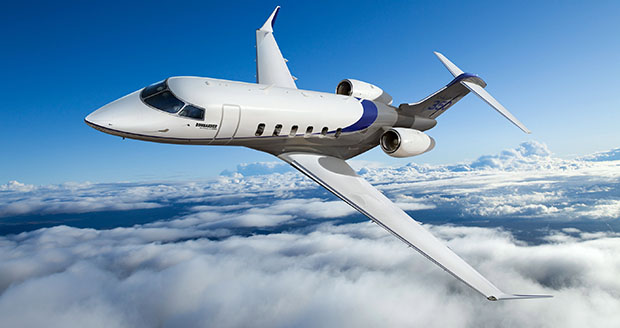
Bombardier's Challenger 350 Business JetBombardier’s Challenger 350 business jet received full type certification from the FAA last month, marking a key step in the journey to entry-into-service for the luxury aircraft.

Stéphane Leblanc, Challenger Programs, Bombardier Business Aircraft vice president and general manager said that the aircraft has been “Designed with the feedback from existing Challenger aircraft owners and operators”, adding that the “New aircraft will meet their ever-growing needs. We are looking forward to delivering this segment leading aircraft and are confident that our customers will love it.”

Following certification, NetJets Inc unveiled their new Challenger 350 at the Westchester County Airport, N.Y. with Bombardier Business Aircraft president, Eric Martel presenting the ceremonial keys to NetJets chairman and CEO Jordan Hansell. NetJets will add eight jets to their fleet this year.

“The addition of the Challenger 350 aircraft to our fleet is a significant step in NetJets’ continued growth, and clearly demonstrates our commitment to provide NetJets customers with the most state-of-the-art aircraft models in the industry,” said Hansell. “This is the first of up to 200 Challenger 350 aircraft that we have on order from Bombardier over the next 10 years. We worked very closely with Bombardier to deliver an aircraft that exceeds our customers’ needs by providing the highest levels of safety, comfort and convenience.”

NetJets have made private aviation history with their purchases of $17.6 billion in aircraft since 2010 for their Signature Series. So far they have received 38 jets from various manufacturers.