Archive

Tag Archives: aviation industry

All-You-Can-Fly Business Jet ServicesA growing sector of the business aviation market is promising to change the way corporate passengers travel, certainly in terms of the cost, this year with the introduction of the All-You-Can-Fly service.

Air travel clubs have been popping up across the U.S. in the past year, offering unlimited flights for a fixed monthly fee to club members. While these are generally not offered at the luxury end of the business market, club members can turn up to check in literally minutes before departure for internal, short-haul flights.

Texas Air Shuttle are amongst the latest companies to announce the service, which they hope to launch in Tulsa before the end of this year. The company will offer the use of a seven-seater King Air 200 aircraft and membership fees ranging between $2,850 and $4,900 per month, per person.

The service is expected to grow rapidly, after a positive explosion into the market in popularity and Texas Air Shuttle are determined to ‘turn the whole commercial air travel industry on its head’, with plans to introduce more than 40 destinations throughout Texas, Oklahoma, Louisiana and Arkansas by the end of 2018.

Other SATCOM Communications Providers for Business AviationA new system, launched by UAE satellite communications providers, Yahsat, has completed successful testing this week for their latest state-of-the-art aircraft satellite communications system for their client, Advanced Integrated Systems.

Including Ka-band airborne SATCOM, the new system promises an end-to-end solution. In a statement, Ali Al Hashemi, GM of YahService said, “At Yahsat, we strive to equip our customers with end-to-end satellite solutions that deliver the very latest in connectivity. The completion of the test with AIS exemplifies our commitment to bringing cutting-edge tools to our clients and constantly improving the speed and performance of our services.”

Aircraft satellite communications providers across the world are using the very latest technological breakthroughs to meet the ever-growing demands placed upon the industry for compliance and for seamless connectivity.

Business passengers need global coverage to ensure that business operations are maximised, taking place as effectively in the skies as they do in their ground-based office environments. The industry as a whole is responding to those needs.

Using API Providers for Secure Flight Passenger Data SharingA new proposal put to Brussels this week has sparked controversy once again with advocates of privacy in the EU. Following the Charlie Hebdo attacks in Paris and the Brussels Jewish Museum shootings last year, the European security services have stepped up measures to detect travellers joining or returning from war in Syria and Iraq and feel that sharing airline passenger data, via Passenger Name Records (PNR) or a system similar to that in place between Europe and the U.S. in the form of Advance Passenger Information (API) would be a step closer to helping to achieve their goal.

Access to personal information across the EU by the intelligence services remains in fierce debate, particularly in countries such as Germany, who were outraged over the accusations of mass surveillance by U.S. intelligence agencies after the attacks of 9/11.

Jan Albreicht, German member of the European Parliament said, “We need to deliver whatever is necessary and proportionate to get a higher level of security. But what you are proposing now, the proposal of blanket mass surveillance of citizens, is exactly the opposite of that. It’s not delivering that.”

Anti-terror measures have become a security priority for the EU and passenger data sharing is at the top of the list in terms of monitoring the movements of suspected high-risk travellers.

Timothy Kirkhope, British member of the European Parliament said, “We need now to make sure we have enough information to look at patterns of behaviour. That is the basis on which we can find criminals and find terrorists in order to protect our citizens. Stop things happening such as the atrocities in Paris recently.”

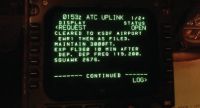
Find Out More About CPDLCThe much-anticipated decision to move the CPDLC mandate deadline has been announced this week by the European Commission (EC). The new deadline will now be February 2020 for operators to equip their aircraft with Controller-Pilot Datalink Communications (CPDLC).

In a statement to Avionics magazine, Gzim Ocakolu, EC Directorate for Mobility & Transport policy officer said, “I can indeed confirm to you some recent important developments related to the implementation of Regulation (EC) No 29/2009.”

The news is welcomed across the industry following concerns regarding the technical issues related to the radio frequency environment and the infrastructure of the ground-based operations currently in place. It is these issues, discovered during an EC investigation into the implementation of DLS ground infrastructure, that have led to the delay for mandatory CPDLC installation, which would have been activated last month.

“Certain air navigation service providers have already taken mitigation measures, consisting of the restriction of DLS operations to aircraft equipped with specific avionics through so-called ‘white lists,’ so as to address potential safety impacts of those PAs in the operations of data link service,” the EC said.

Just 40% of operators would have been ready for the mandate, the investigation found, and only 70% of the necessary ground infrastructure would’ve been ready and fit for use. The implementation of CPDLC is critical to European airspace, with voice channels that have become heavily congested. Compliance will involve retrofitting aircraft with FANS, 1/A router, antenna, CPDLC interface and VHF Data Link Mode 2 radio (VDLM2).

Rockwell Collins Agreement with Iridium Satellite CommunicationsIt has been announced that global communications giant, Rockwell Collins, has entered into an agreement with Iridium Communications Inc which will see them as a value-added manufacturer for Iridium CertusSM broadband terminals.

“Rockwell Collins is a true pioneer and leader in aviation communication solutions, continually pushing the envelope to provide innovative solutions for both aircraft operators and OEMs alike,” said Executive Vice President of Sales and Marketing for Iridium, Bryan Hartin. “Additionally, their excellent global distribution channels support Iridium’s long-term strategy to offer best-in-class products and services while staying true to our wholesale distribution model.”

Rockwell Collins’ Vice President and GM of Air Transport Systems, Steve Timm said, “Through this agreement with Iridium, we’ll be able to deliver high-speed flight deck connectivity to meet the growing connectivity needs of our customers. We also see the potential to offer services through our ARINC information management services, giving customers a single source for their Iridium NEXT connectivity needs.”

Rockwell Collins will design and manufacture the broadband terminals for the new Iridium Certus – a voice and data service that will be enabled by the Iridium NEXT satellite constellation which will begin launch later this year.

Find Out More About Rockwell Collins' HFDL ServicesNew packages have been introduced by both Rockwell Collins and SITA, following high demand for cost-effective and reliable aircraft tracking and in readiness for the new global industry standards and rules – as much as the subject is still in debate to the extent of flight tracking capability.

Initial moves call for aircraft positioning data every 15 minutes, with a view to reviewing this figure and other requirements during potentially problematic situations or when flying over remote areas or vast oceanic expanses.

Tim Ryan, Director of Programs and Service Management for IMS at Rockwell Collins said, “What we have seen since the disappearance of Air France Flight 447 in 2009 is that there is always a desire to find a single ‘silver bullet’ solution. If we’ve learned anything over those years, we’ve learned that a single solution, while it can be fashioned, doesn’t meet the equally important facet of cost-effectiveness.”

Both companies can provide high-frequency surveillance data from equipped aircraft using Automatic Dependent Surveillance Contract (ADS-C), a part of FANS or ACARS using the Rockwell Collins’ ground-based high-frequency data link (HFDL) network, Inmarsat and Iridium satellite communications networks.

Rockwell Collins are currently working with five non-U.S. airlines on a new tracking services to be a part of their GLOBALink suite – to be officially launched next month.

Leading Providers of Electronic Security Systems for Airports and FacilitiesPensacola International Airport has announced that it will be ramping up security at with a new electronic security system that is expected to cost $533,000.

The new high-tech system will include security cameras and a motion detection system with audible warning to alert airport security personnel if concourse areas are breached. The concourses will also be in need of upgrades to facilitate additional security measures for the airport.

It is estimated that an annual $120,000 will be saved by removing the need for constant monitoring of the sensitive areas of the airport.

Contracts have been tendered and discussions will begin this month to decide upon the best way forward with the best airport security systems providers.

Florida’s Department of Transportation will contribute $104,000 towards the technology portion of the project.

SATCOM Services ProvidersSATCOM Direct have opened new offices in Melbourne, Ottawa and Denver, bringing their totals now to nine international and five U.S. offices.

The company, who provide training, support and SATCOM consultations for pilots, maintenance departments and flight crews, will be celebrating the opening of the Melbourne, Australia office at AVALON – the Australia International Airshow and Aerospace & Defence Expo.

“This expansion supports our mission to provide total solutions to our customers. We are where they are,” said David Greenhill, SATCOM Direct president. “Each new location was strategically selected to serve our expanding customer base.”

Global satellite communications providers are in high demand in the aviation industry as passenger demand grows ever higher for inflight communications.

Other Providers of Cabin Services Solutions - AirCrew Connect Singapore Airlines have introduced a new, tablet-based mobile app for cabin crew to improve and enhance customer services.

The app, TCS CrewCollab will automate and streamline many of the inflight processes that the cabin crew deal with in the air, such as processing customer flight lists, flight information and crew information, which traditionally has been handled on paper.

The entire system will increase efficiency throughout the cabin and improve passenger experience through enhanced customer services.

Singapore Airlines’ Senior Vice President Cabin Crew, Mr Marvin Tan said, “We are very pleased to collaborate with our long-standing partner Tata Consultancy Services to develop TCS CrewCollab Solution. The application is vital to how we will continue to improve our operations and enhance our customer servicing on board. We look forward to developing the application further in partnership with TCS, to enable our crew to offer a more personalised customer experience and meet our customers’ evolving travel needs.”

“Digital forces like mobile, social and big data analytics are creating tremendous possibilities for businesses globally. TCS CrewCollab Solution harnesses these digital forces in the hands of airline crew to deliver enriched customer experience,” said Ms S Sukanya, VP and Global Head, Travel Transportation and Hospitality Unit, TCS. “Singapore Airlines is one of our most valuable and long standing clients in the region and this partnership brings an industry-validated, ready-to-deploy solution to the airline industry.”

Leading Airport Security Providers - Physical and Infrastructure ProtectionFlight passenger numbers are increasing every year by an average of 5%, which may not sound like much, but we are talking millions of travellers passing through country’s border management systems, placing strain on many an airport infrastructure.

In addition to this growing pressure, airports and border agencies are also faced with the increasing threat of terrorism, which is also growing at an alarming pace, particularly over the last few years.

So what is the answer? Airports all over the world are being left with no other choice than to invest heavily in strengthening security measures across the entire airport environment.

This has led to a surge in growth for the airport security systems sector, which, according to new analysis from Frost and Sullivan estimates that the market will earn revenues in the region of $12-$13million by 2023. The study looked at the areas of perimeter security, surveillance and access control amongst many other aspects including data integration and cyber security as we see the concerns rising with the development and utilisation of connectivity onboard aircraft.

With NextGen technologies also poised to catapult the entire industry into the future, aviation security providers must be ready to go global.