Archive

Tag Archives: aviation communications

Inflight Connectivity Solutions for Business AircraftA two-year demonstration project to test new approach and landing technology is being led by NetJets Europe for the Single European Sky Air Traffic Management Research program.

The project, part-financed by the SESAR joint undertaking, incorporates 15 organisations who will take part in over 200 flight demonstrations at six European airports, including approaches to land (AAL) and 14 other projects throughout 2016 to highlight the benefits of the SESAR initiative.

Business aircraft utilisation of synthetic and enhanced vision for flights in inclement weather at small, regional airports will be examined during the projects, in addition to approach procedures for access to large hubs.

A statement issued by the SESAR joint undertaking said, “The aim of the project is to pave the way for the uptake of these technologies, which are needed to overcome the limitations of the current ILS equipment, which is costly to install and maintain, and which can only guide straightforward approaches.”

Business aviation communications services providers are helping to pave the way for the SES initiative, as operators aim to complete the retrofit upgrades in preparation to fulfil mandatory requirements for compliance.

Passenger Communications & In-Flight Connectivity Solutions for the Business Jet Flight DeckAs an industry, aviation is awash with discussion about the benefits, both safety and operational, of in-flight connectivity through e-enablement.

The business aviation sector is ahead of the game in this and many other areas, as many BIZAV operators are already utilising WiFi and in-flight connectivity, not just for passenger communications, but also for keeping the flight deck up-to-date, using the latest solutions, such as connected Electronic Flight Bags (EFBs) and increasing flight efficiency with real-time access to flight data and weather updates.

In the Middle East, cabin crew use the aircraft enhanced connectivity to save valuable time, one of the driving forces for business passengers. Using in-flight connectivity features enables cabin crew to send and receive updates, such as cabin maintenance requirements and aircraft status, which can lead to faster turnaround times, ultimately saving business aircraft operators time and money.

In-flight connectivity solutions providers for the business aviation sector make full use of the latest technology to ensure that operators around the world can streamline their operations. The commercial sector is sure to follow.

Providers of CPDLC for Enhanced Operational MessagingThe transition to Controller-Pilot Data Link Communications (CPDLC), according to the original timeline, should by now be well under way, with retrofit requirements under the Single European Sky initiative due by next month.

The European Commission has indicated that the deadline will now be moved to make sure that the industry is ready and that CPDLC avionics are reliable. Air Navigation Service Providers (ANSPs) are implementing the infrastructure in advance of the mandates and the SES initiative is still a global reality.

Although the process is slow, and the costs for retrofitting high, the transition to CPDLC will save airlines and operators in the long-term and increase safety for the skies on a worldwide scale. It is unlikely that CPDLC will replace voice communications altogether, but datalink messaging needs to be implemented in order to cope with the upsurge in air traffic that is expected over the next two decades.

It is not just Europe that is attempting to embrace the CPDLC technology. Data link communications are being trialled in the U.S. under the NextGen program and in Canada, nationwide implementation of CPDLC was completed last summer.

Although phase two of the SES initiative was planned for next month, it seems likely that the plans, so far fraught with technical difficulties, training delays and the cost of retrofitting, may be moved as far as five years into the future.

Bombarider Learjet 75 OrderBombardier ended the year on a high with an order for six Learjet 75s from an undisclosed customer worth $83 million. The order also includes an option for three more, which could mean a potential $124 million if all options are exercised.

According to Pierre Beaudoin, president and CEO of French manufacturer Bombardier, the market for lighter aircraft is taking over from the larger models. He revealed that 16 Learjets were delivered by September last year, compared with just nine in the same period of 2013.

The Learjet sector of Bombardier’s business operations continues to lead with the 70 and 75 models with the introduction of the Learjet 85 on the horizon.

Other Providers of Aviation Consultancy ServicesRobert Stangarone, a former aviation industry executive with a respected 40-year career, has announced the inception of a new aviation consultancy firm, utilising a list of experts and colleagues from almost every sector of the industry.

Mr Stangarone offers a global consultancy service, helping operators all over the world with a reliable, knowledgeable network of more than 30 consultants, including former CEOs.

Aviation consultants can help with many aspects of the industry and can assist operators with cost-cutting endeavours for aviation messaging, operational productivity and management systems. Often, aviation messaging can be complex and difficult to understand, particularly with Type B messaging. As millions of messages are exchanged on a global scale every day, it is also difficult for operators to create budgeting.

Aviation consultants can make a significant difference to an airlines’ bottom line when considering operations and what better qualifications are available than decades of industry experience?

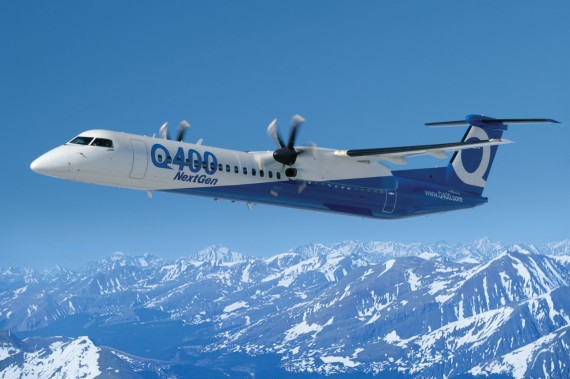
GE Capital Order the Bombardier Q400 NextGenThe year is off to a great start for Bombardier as GE Capital Aviation Services sign a purchase agreement with an order value of $160 million for five of its Q400 NextGen aircraft. The company announced that options have been taken on 10 additional aircraft, which could mean that the GECAS order could reach $448 million, based upon the current list price of the Q400.

The stunning large turboprop aircraft has seating for up to 86 passengers and is optimised for short-haul flights. It is cited as being the most efficient modern turboprop with the lowest seat-mile costs in the short-haul regional marketplace.

In a statement from Norman C.T. Liu, GE Capital Aviation Services CEO and president, the decision-making process for the Q400 is clear. “As we continue to grow our leasing fleet, we are pleased to be adding up to 15 more Q400 NextGen aircraft,” he said. “We have seen a growing demand for turboprop aircraft worldwide and the Q400 NextGen aircraft is ideally positioned to meet the needs of regional airlines now and in the future.”

Other Leading Providers of Reliable Aviation Information Management SolutionsSATCOM Direct, satellite communications provider, has launched a new data centre solutions facility, TerraCom Direct, this month. The new wing of the company promises information security and monitoring for land, sea and air-based operators.

Jim Jensen, CEO and Founder of SATCOM Direct, said “Information security is a huge issue for businesses and individuals. Our new data center is the key to safeguarding connectivity and communications streams, and better securing the missions of our customers. SATCOM Direct and TerraCom Direct customers can have enterprise level security for air, land and sea.”

“The key advantage we have over other data solution providers is flexibility. We offer a wide range of connectivity options, so whether the client simply needs rack space, a private network, or full migration to the cloud, we have the expertise and the capabilities. With our highly-redundant infrastructure and 24/7 support, we do everything possible to ensure 100 percent uptime and uninterrupted service,” said Rich Pilock, president of TerraCom Direct.

Secure and reliable information management is critical to operational productivity and providers aim to establish seamless networks for the protection of mission and facility-critical information on a global scale.

Find Out More About the Technical Advantages of Seamless Aviation MessagingEurocontrol have deployed the second phase of Variable Division Flight Level (vDFL) following the successful implementation in eastern airspace managed by Maastricht Upper Area Control Centre (MUAC). The concept will now cover further into western airspace covering Holland and Northwest Germany.

The deployment of vDFL is the first phase of the introduction of the Single European Sky initiative (SESAR) and is set to improve efficiency of Air Traffic Management through reliable messaging and streamlining of operations across the aviation industry.

As the airways grow busier, messaging providers are supporting a need for greater flexibility for the ATM system. Choosing seamlessly reliable aviation messaging over a robust network, such as Rockwell Collins’ ARINC AviNet is the way forward into the future of commercial and business aviation sectors, improving safety and helping operators to manage spiralling costs.

Dassault Falcon 8X Ultra-Long-Range Business JetThe latest ultra-long-range luxury business jet from Dassault was unveiled in typical French style this month during a ceremonial dinner at their Bordeaux Merignac factory.

Olivier Villa, senior vice-president for civil aircraft said, “The program is right on schedule” as the executive aircraft was proudly showcased with barely dry paint in a launch that was described as mixing “prestige, passion for aviation and the French touch.”

As the aircraft undergoes some modifications that were highlighted during recent testing, the first flight is planned for the first quarter of next year, after each system is signed-off by Dassault’s flight test team. This is expected to be accomplished by the end of January, according to Frederic Petit, vice-president for the Falcon programs.

Three aircraft will be tested by the Falcon 8X program chief test pilot Eric Gerard and test pilot Herve Lavergne. Two of the three aircraft will be available for sale to customers after being demonstrators for approximately one year and the other will remain in Dassault’s fleet.

Airline Messaging Consultancy ServicesThe Indian civil aviation ministry has said that it ‘may request banks to lend up to $94 million’ to the ailing airline, SpiceJet in loans to be guaranteed by Kalanithi Maran, the company chairman, in a bid to try to save jobs without directly placing a burden on the taxpayer.

Aviation consultancy firms can often help airlines to cut the cost of operational messaging and communications, but with 24% aviation fuel tax, the financial burden of flight operations can prove difficult.

With a lack of bankruptcy law, and to prevent the repeat of another Kingfisher Airlines failure, the government is also asking its debtors to give them more time to make payments such as airport fees and fuel costs.

SpiceJet made losses of $49 million in Q3 this year in spite of efforts to cut costs and with a net debt that is almost five times as large, the ailing company may find an investor unwilling to step in unless Mr Maran can put together a rescue plan and fast.

SpiceJet has been stopped from taking advance orders beyond 30 days by the airline regulators, but the government wants this to be removed to offer the airline another chance of climbing out of the financial hole that has been growing steadily larger over the course of the year. Crippling fuel taxes and economic pressure could put an end to the carrier, which would place the Indian aviation industry on very unsteady ground.

The government wants to do whatever it can to save the airline in an effort to protect the staff.