Archive

Tag Archives: aviation communications

Improving Airport Security with Biometric Solutions ProvidersAlthough the world’s major airports are stepping up security for passengers and employees, a top airport official, speaking at Los Angeles International Airport still thinks that it may not be enough to stop the ‘lone wolf’ slipping through the net.

Mr Patrick Gannon, police chief of LAX, said that 54,000 employees undergo recurring security screening, including criminal background checks, but believes that this may not be enough. He said, “I agree that in any airport throughout the United States and here also, there is never a 100% guarantee that somebody who wanted to do something illegal or wrong couldn’t make that happen.”

Just two of the U.S. airports, Orlando and Miami, require all personnel that have access to secure areas of the airport to pass through metal detectors, with other major airports conducting random checks. Often airport personnel undergo the bare minimum before being hired, such as a criminal background check.

The debate has been raised since the arrest of the Delta baggage handler at the end of last year at Jackson International Airport for gun smuggling alongside a passenger.

Mr Gannon is concerned about the process of screening airport staff and the risk of a single member of staff being overlooked. Miami airport security director, Lauren Stover agrees that ID badges and swipe cards are not enough to guarantee the eradication of the likelihood of contraband or a person with malicious intent getting through security access doors.

The debate continues as airports around the world aim to stamp out the threat of terrorist attack. As employees could be targeted by organisations, regular and constant screening is the only answer and is held back by cost implications on a broad scale.

GX Aviation Provides Aircraft Operators with Enhanced Cabin Services CapabilitiesHoneywell and Inmarsat have announced the successful completion of high-speed data performance tests of Jetwave MCS 8200 onboard aircraft hardware using the Inmarsat Global Xpress (GX) network.

Aimed at delivering high-speed aircraft WiFi to passengers, Inmarsat GX was tested for video streaming and file transfers at Honeywell’s UK facility in the West Country. The first GX satellite, launched last year is currently used for government and enterprise customers in the Indian Oceanic region, with a second satellite launched last month for the Americas and Atlantic region, and a third planned for later this year to cover the Pacific, GX aviation will eventually service and cover the entire globe, providing a seamless connectivity experience for passengers.

Honeywell and Inmarsat are delighted with the success of their testing and plan to commence higher data rate testing in the coming months.

Leo Mondale, Inmarsat Aviation president said, “Both the GX network and Honeywell’s terminal have met and exceeded our high expectations. We’re another step closer to bringing a true broadband experience to both commercial airlines and business aviation.”

Reducing Queues at Airports with Automated Border Control GatesGermany’s Tegel Airport in Berlin has installed a new automated border control system in the form of the latest eGates, which allows travellers entering Germany to use the EasyPASS border control system to expedite their journey through customs.

Using electronic automated border control is the answer to cutting queues as passenger traffic grows year-on-year. All over the world, airports are installing automated borders technology to improve passenger experience and reduce waiting times throughout the airport environment.

The Tegel Airport system requires the use of an electronic passport and allows German citizens to travel under a new German identity card for interior flights.

Security measure are also improved with automated authenticity checks and facial recognition software that compares a live image taken at the eGate to the image stored on the electronic passport chip. No personal data is stored during this process at these particular gates.

Passenger processing systems are changing and revolutionising the entire issue of border control within the airport environment.

All-You-Can-Fly Business Jet ServicesA growing sector of the business aviation market is promising to change the way corporate passengers travel, certainly in terms of the cost, this year with the introduction of the All-You-Can-Fly service.

Air travel clubs have been popping up across the U.S. in the past year, offering unlimited flights for a fixed monthly fee to club members. While these are generally not offered at the luxury end of the business market, club members can turn up to check in literally minutes before departure for internal, short-haul flights.

Texas Air Shuttle are amongst the latest companies to announce the service, which they hope to launch in Tulsa before the end of this year. The company will offer the use of a seven-seater King Air 200 aircraft and membership fees ranging between $2,850 and $4,900 per month, per person.

The service is expected to grow rapidly, after a positive explosion into the market in popularity and Texas Air Shuttle are determined to ‘turn the whole commercial air travel industry on its head’, with plans to introduce more than 40 destinations throughout Texas, Oklahoma, Louisiana and Arkansas by the end of 2018.

Other SATCOM Communications Providers for Business AviationA new system, launched by UAE satellite communications providers, Yahsat, has completed successful testing this week for their latest state-of-the-art aircraft satellite communications system for their client, Advanced Integrated Systems.

Including Ka-band airborne SATCOM, the new system promises an end-to-end solution. In a statement, Ali Al Hashemi, GM of YahService said, “At Yahsat, we strive to equip our customers with end-to-end satellite solutions that deliver the very latest in connectivity. The completion of the test with AIS exemplifies our commitment to bringing cutting-edge tools to our clients and constantly improving the speed and performance of our services.”

Aircraft satellite communications providers across the world are using the very latest technological breakthroughs to meet the ever-growing demands placed upon the industry for compliance and for seamless connectivity.

Business passengers need global coverage to ensure that business operations are maximised, taking place as effectively in the skies as they do in their ground-based office environments. The industry as a whole is responding to those needs.

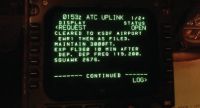
Find Out More About CPDLCThe much-anticipated decision to move the CPDLC mandate deadline has been announced this week by the European Commission (EC). The new deadline will now be February 2020 for operators to equip their aircraft with Controller-Pilot Datalink Communications (CPDLC).

In a statement to Avionics magazine, Gzim Ocakolu, EC Directorate for Mobility & Transport policy officer said, “I can indeed confirm to you some recent important developments related to the implementation of Regulation (EC) No 29/2009.”

The news is welcomed across the industry following concerns regarding the technical issues related to the radio frequency environment and the infrastructure of the ground-based operations currently in place. It is these issues, discovered during an EC investigation into the implementation of DLS ground infrastructure, that have led to the delay for mandatory CPDLC installation, which would have been activated last month.

“Certain air navigation service providers have already taken mitigation measures, consisting of the restriction of DLS operations to aircraft equipped with specific avionics through so-called ‘white lists,’ so as to address potential safety impacts of those PAs in the operations of data link service,” the EC said.

Just 40% of operators would have been ready for the mandate, the investigation found, and only 70% of the necessary ground infrastructure would’ve been ready and fit for use. The implementation of CPDLC is critical to European airspace, with voice channels that have become heavily congested. Compliance will involve retrofitting aircraft with FANS, 1/A router, antenna, CPDLC interface and VHF Data Link Mode 2 radio (VDLM2).

Rockwell Collins Agreement with Iridium Satellite CommunicationsIt has been announced that global communications giant, Rockwell Collins, has entered into an agreement with Iridium Communications Inc which will see them as a value-added manufacturer for Iridium CertusSM broadband terminals.

“Rockwell Collins is a true pioneer and leader in aviation communication solutions, continually pushing the envelope to provide innovative solutions for both aircraft operators and OEMs alike,” said Executive Vice President of Sales and Marketing for Iridium, Bryan Hartin. “Additionally, their excellent global distribution channels support Iridium’s long-term strategy to offer best-in-class products and services while staying true to our wholesale distribution model.”

Rockwell Collins’ Vice President and GM of Air Transport Systems, Steve Timm said, “Through this agreement with Iridium, we’ll be able to deliver high-speed flight deck connectivity to meet the growing connectivity needs of our customers. We also see the potential to offer services through our ARINC information management services, giving customers a single source for their Iridium NEXT connectivity needs.”

Rockwell Collins will design and manufacture the broadband terminals for the new Iridium Certus – a voice and data service that will be enabled by the Iridium NEXT satellite constellation which will begin launch later this year.

Other Providers of Cabin Services Solutions - AirCrew Connect Singapore Airlines have introduced a new, tablet-based mobile app for cabin crew to improve and enhance customer services.

The app, TCS CrewCollab will automate and streamline many of the inflight processes that the cabin crew deal with in the air, such as processing customer flight lists, flight information and crew information, which traditionally has been handled on paper.

The entire system will increase efficiency throughout the cabin and improve passenger experience through enhanced customer services.

Singapore Airlines’ Senior Vice President Cabin Crew, Mr Marvin Tan said, “We are very pleased to collaborate with our long-standing partner Tata Consultancy Services to develop TCS CrewCollab Solution. The application is vital to how we will continue to improve our operations and enhance our customer servicing on board. We look forward to developing the application further in partnership with TCS, to enable our crew to offer a more personalised customer experience and meet our customers’ evolving travel needs.”

“Digital forces like mobile, social and big data analytics are creating tremendous possibilities for businesses globally. TCS CrewCollab Solution harnesses these digital forces in the hands of airline crew to deliver enriched customer experience,” said Ms S Sukanya, VP and Global Head, Travel Transportation and Hospitality Unit, TCS. “Singapore Airlines is one of our most valuable and long standing clients in the region and this partnership brings an industry-validated, ready-to-deploy solution to the airline industry.”

Leading Airport Security Providers - Physical and Infrastructure ProtectionFlight passenger numbers are increasing every year by an average of 5%, which may not sound like much, but we are talking millions of travellers passing through country’s border management systems, placing strain on many an airport infrastructure.

In addition to this growing pressure, airports and border agencies are also faced with the increasing threat of terrorism, which is also growing at an alarming pace, particularly over the last few years.

So what is the answer? Airports all over the world are being left with no other choice than to invest heavily in strengthening security measures across the entire airport environment.

This has led to a surge in growth for the airport security systems sector, which, according to new analysis from Frost and Sullivan estimates that the market will earn revenues in the region of $12-$13million by 2023. The study looked at the areas of perimeter security, surveillance and access control amongst many other aspects including data integration and cyber security as we see the concerns rising with the development and utilisation of connectivity onboard aircraft.

With NextGen technologies also poised to catapult the entire industry into the future, aviation security providers must be ready to go global.

First Embraer Legacy 500 Delivered to AustraliaAn undisclosed customer in North Queensland, Australia is the first in the country to receive delivery of Embraer’s Legacy 500 business jet. Negotiated on behalf of the buyer by Norris Aviation Services, the midsize jet is believed to be used primarily for business purposes.

Australia’s CAA awarded type certification to the Legacy 500 only last month. ExecuJet will provide maintenance contracts for the new aircraft in Australia, in addition to the existing maintenance it has to support the Phenom 100, Legacy 600 and Legacy 650 clientele.

“The Legacy 500 is proving itself to be a very capable executive jet and well suited to the Australia market. It offers excellent field performance and easy transcontinental range,” said President and CEO of Embraer Executive Jets, Marco Túlio Pellegrini. “We are grateful for the confidence that this customer has placed in Embraer, and we are fully committed to supporting their operations.”

“The owner is an astute businessman who carefully selected the Legacy 500 after reviewing all the aircraft in this class,” said Peter Norris, Managing Director of Norris Aviation Services Australia Pty Ltd. “In the end, safety, the clean sheet design, advanced systems, excellent performance, quiet comfortable cabin and professional presentation and support by Embraer, made the Legacy 500 the only logical choice.”