Archive

Tag Archives: airport security

Find out more about Rockwell Collins' ARINC Airport solutions | Business Aviation NewsAirplan, a Columbian private airport management company, has extended and renewed its Rockwell Collins’ ARINC Airport solutions for six of its managed airports across north central Columbia.

Working together since 2010, Airplan and Rockwell Collins will continue in what is described as a ‘multi-year contract’ with ARINC vMUSE check-in applications and ARINC SelfServe kiosks.

Airplan chose the ARINC Airports solutions to negate the necessity of upgrading airport infrastructure. ARINC vMUSE operates on common-use systems for both passenger processing and back office processes, such as flight planning and crew scheduling.

Providers of physical security solutions for airports and facilities | Business Aviation NewsA market research report from Transparency Market Research has shown clear indication that the air transport security marketplace will continue to grow over the next five years at a rate of almost 11% CAGR.

According to the report, the growth will be largely due to the expansion of demand in the Asia Pacific region, but across the world, countries are clamping down on terrorism and ensuring passenger safety through both physical and cyber security improvements.

As investment is also increasing, the cost of upgrading air transport security systems is not expected to impact demand for enhanced surveillance, access control and biometric systems. Providers of physical security solutions for airports and facilities welcome the indicators for growth over the coming years.

PTE 2016 | Business Aviation BlogOne of the biggest items on the agenda at this year’s Passenger Terminal Expo (PTE) to be held in Germany, will be the latest innovations for airport automation, including biometrics and cloud-based solutions technology.
Rockwell Collins will showcase its latest innovative developments, as it works towards a better environment for travellers, and an improved experience.

One of the biggest buzzes about the company at the moment is talk about a paperless journey through the passenger processing system in airports. The latest solutions aim to speed up the system, while maintaining utmost security at every level. Its cloud-based solutions are revolutionising passenger processing and airport operations in general, while biometric facial recognition applications are taking airport systems to a completely new level.

The three-day event will be held in Hall 10 of the Koln Messe in Cologne, Germany, and Rockwell Collins is to be found at stand 6000.

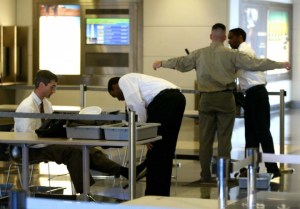
airport-securityPublic opinion varies wildly about the effectivity of airport screening, with many passengers simply feeling violated after security screening, rather than safer.

The TSA has been around for 15 years, and recent reports suggest that screening personnel are under-performing. Some think that there is too much focus on the process of screening, and not enough on performance, which could lead to another terrorist attack.

Perhaps the answer lies in automated airport security, and with the introduction of sophisticated biometric security systems, why not? If human error is to be blamed for under-performance, then airports around the world are bound to become reliant on technology to keep borders secure.

The Republic of the Maldives | Popular tourist destination improves border control systemThe Republic of Maldives, a popular tourist destination, has announced the installation of an upgraded border control system to improve passenger processing standards.

The new systems include a biometric passport registration facility, fingerprint identification system and automatic gates (eGates) to allow passengers to pass through border control at Ibrahim Nasir International Airport using their ePassports to achieve automatic clearance through immigration.

Delivered by Dermalog, a German biometrics company, the new systems are now in operation.

Biometric border control systems are becoming increasingly necessary across the world, when terror threats are at their worst. Other providers of ePassports and fingerprint recognition systems also deliver facial recognition applications to enable another layer of border security.

More about providers of physical security for airports and facilities | Business Aviation NewsFollowing two failed bids going back to February of 2014, Manila’s International Airport Authority has said that the final bid proposal has now been set for the beginning of March.

The CCTV system will be implemented at Ninoy Aquino International Airport and will feature state-of-the-art functionality to replace the current outdated system that has been in situ since the 1990s.

Strict deadlines must be met by potential bidders, and specifications include the facility for facial recognition and heat signature readers. The contract will also include a total of 700 cameras to be located throughout the terminals, parking areas, entry checkpoints and perimeter and ensure total coverage.

Today’s airport environment has vulnerabilities that the latest technologies can overcome. Providers of physical security systems all over the world are recognising the need to secure airports and borders using more than just simple security camera systems.

Find out more about Advance Passenger Information System | Industry leading providers of APISMalaysia’s Home Ministry has announced plans for the implementation of a passenger screening system based on the current U.K. and U.S. Advance Passenger Information System (APIS) to upgrade current screening procedures.

With the growing threat of terrorist attack, and the recent bombings in Jakarta that killed eight people, the country’s officials recognise the benefits of advance passenger screening to prevent known extremists from entering the country.

A system known as the Advanced Passenger Screening System (APSS) is being discussed, and rumours are circulating that it could be developed with help from Interpol.

Hurghada International Airport in Egypt has been visited by a UK-based aviation security team as a part of the agreement to secure Egyptian airports between the Aviation Ministry and the Control Risks Company to assess and develop recommendations and proposals.

The company will train aviation security personnel in the latest systems for enhancing border security control, following last year’s attacks on the country’s aviation industry.

The visit from the UK team is the first step in the agreement, and the proposals will arise later in the year to highlight measures that need to be strengthened. The agreement is the way forward for Egypt, whose tourist industry accounts for a large portion of the national economy.

Aviation security providers around the world are continuously improving the way security is managed in airports, using the latest technology.

cabin-services-worldwideThe recent publication of the ‘Airworthiness Approval of Installed Passive Ultra-High Frequency Radio Frequency Identification’ has offered comprehensive guidance for the use and installation of RFID tags on aircraft parts and components. The guide includes information for passive RFID tags only and not those that use communication via satellite, cell phone or wireless tech.

RFID tags are increasing in popularity and usage, in all areas of technology – from retail shopping to airline baggage tagging.

Some humanitarian groups are concerned with the levels of data that can be stored within the tags, but there is little doubt about the increased security the new types of tags can deliver.