Archive

Tag Archives: airport operations

More about secure network capabilities | Business Aviation NewsAirlines and operators today enjoy the enhanced benefits of network connectivity, reaping rewards such as increased operational efficiency, situational awareness and passenger satisfaction as processing and data transfer continues to streamline passenger processing.

However, there are still concerns in the industry over security measures, with risks increasing in terms of infiltration, or hacking, of critical airport systems infrastructure.

To ensure comprehensive security across an entire infrastructure, these challenges can be addressed with implementation of reliable network services, such as the use of a Wide Area Network (WAN). Rockwell Collins’ ARINC AviNet WAN, for example, gives airlines and operators secure access to a system that has been in operation for more than 50 years, operating seamlessly with airport systems such as the proven vMUSE platform.

vMUSE is a well-known platform, handling applications for back-office, baggage handling, passenger processing and aircraft communications.

Dealing with aviation network security challenges is an important part of airport operations to ensure aircraft and passenger safety across the globe.

More about providers of physical security for airports and facilities | Business Aviation NewsFollowing two failed bids going back to February of 2014, Manila’s International Airport Authority has said that the final bid proposal has now been set for the beginning of March.

The CCTV system will be implemented at Ninoy Aquino International Airport and will feature state-of-the-art functionality to replace the current outdated system that has been in situ since the 1990s.

Strict deadlines must be met by potential bidders, and specifications include the facility for facial recognition and heat signature readers. The contract will also include a total of 700 cameras to be located throughout the terminals, parking areas, entry checkpoints and perimeter and ensure total coverage.

Today’s airport environment has vulnerabilities that the latest technologies can overcome. Providers of physical security systems all over the world are recognising the need to secure airports and borders using more than just simple security camera systems.

Find out more about Advance Passenger Information System | Industry leading providers of APISMalaysia’s Home Ministry has announced plans for the implementation of a passenger screening system based on the current U.K. and U.S. Advance Passenger Information System (APIS) to upgrade current screening procedures.

With the growing threat of terrorist attack, and the recent bombings in Jakarta that killed eight people, the country’s officials recognise the benefits of advance passenger screening to prevent known extremists from entering the country.

A system known as the Advanced Passenger Screening System (APSS) is being discussed, and rumours are circulating that it could be developed with help from Interpol.

Fotografiert mit Canon EOS 10DA protest is ongoing by representatives of 15 non-commercial aviation groups against the FAA plans to privatise much of the U.S.’ air traffic control systems.

Plans by the FAA to set up an agency run outside the government have already been proposed and are expected to be debated in Congress in the first quarter of this year.

Despite claims that privatisation in Canada and Europe has proved successful, the aviation community is airing concerns over fee issues and are pleading with lawmakers to carefully assess the benefits of a new system under ‘foreign’ control.

Hurghada International Airport in Egypt has been visited by a UK-based aviation security team as a part of the agreement to secure Egyptian airports between the Aviation Ministry and the Control Risks Company to assess and develop recommendations and proposals.

The company will train aviation security personnel in the latest systems for enhancing border security control, following last year’s attacks on the country’s aviation industry.

The visit from the UK team is the first step in the agreement, and the proposals will arise later in the year to highlight measures that need to be strengthened. The agreement is the way forward for Egypt, whose tourist industry accounts for a large portion of the national economy.

Aviation security providers around the world are continuously improving the way security is managed in airports, using the latest technology.

advance-passenger-informationMalta’s Police Force’s Immigration Unit has completed five projects to enhance border security measures with the help of co-funding from European Border Funds.

The projects include the procurement of additional radios and biometric devices to assist in communications and comparison of passenger data with international no-fly lists. The new technology is designed to halt the passage of illegal residents, with an on-the-spot ability to screen information.

Furthermore, modernisation of the border control system has been focussed upon, with health and safety upgrades made, in addition to an upgrade of equipment.

Finally, Malta has introduced a system for the collection of Advance Passenger Information to strengthen border security. Many countries throughout the world are enhancing border control measures and providers are using the latest technological advancements to introduce stronger systems including eBorders technology.

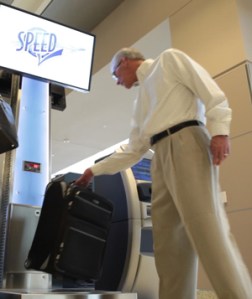
aviation_expressdropNarita International Airport has renewed and expanded a contract with Rockwell Collins for the deployment of ARINC Common Use and Self-Service Passenger Processing systems in Terminals 2 and 3.

Passengers will be able to check-in faster, which will be of enormous benefit to the airport, being Japan’s second busiest with more than 35 million passengers passing through every year.

Rockwell Collins’ ARINC airport systems offer a wide range of solutions for airports of all sizes, including offsite baggage check-in options with ARINC ExpressDrop.

Airlines for Europe begin final preparations for 2016 launch | Business Aviation newsAirlines for Europe (A4E) in in the final stages of preparation as the expected launch date of mid-January approaches.

Air France-KLM, easyjet, International Airlines Group (IAG), Lufthansa Group and Ryanair, Europe’s five biggest airline groups, have partnered to campaign about European aviation policies.

The new airline association began their plans in June this year, after more than 2 years of discussions, and have timed their launch date to correspond with a Dutch aviation summit to be held in Amsterdam (20-21st).

A4E aim to focus their intentions in accord, promising to ‘agree a position and be very loud on it’.

More about aviation cybersecurity protection from leading provder | Business Aviation NewsCybersecurity is a hot, and much debated topic. This is not new news, as the integrity of software solutions, hardware and aircraft communications systems, particularly onboard small, private aircraft has been discussed by operators and hackers alike.

The U.S. and European aviation authorities, although in agreement about the need to improve standards, are experiencing a divided opinion about the methods to employ to combat potential attacks to cybersecurity.

Most of the discord seems to stem from the regulatory standards about the size of aircraft, and the scope of regulations to be applied. The U.S. FAA wants to impose standard for large aircraft, and fear that U.S. companies will find it difficult to sell flight management systems in Europe.

European officials from the European Aviation Safety Agency (EASA) believe that all aircraft, regardless of size or operational scope, should be subject to the same cybersecurity regulations.

The FAA has been tasked with the creation of a panel to discuss and propose new regulatory standards by the middle of next year.

Cybersecurity is increasing in importance since the spate of infiltrations last year of digital aviation systems. Aviation cybersecurity solutions providers maintain that reliable security systems can protect vital infrastructure in addition to the provision of physical security. It seems that both are equally important as potential threats continue to increase around the world.

Find out more about aviation messaging | Other providers of mission critical communications solutionsMission critical communications in airports is an essential part of operations, securely delivering and receiving aviation messaging such as accident management, personnel communications, ATS and passenger information.

Reliable, on-the-ground messaging within the airport environment, or from business-to-business, can mean the difference between efficient operational productivity, or costly ground delays. Mission critical communications providers around the world rely on messaging networks to deliver these transmissions swiftly and securely, often using Type B protocols.

Miami International Airport has selected Everbridge to provide their system upgrades to assist and improve incident response times and minimise errors within their messaging environment.