
Archive

Tag Archives: airport operations

Streamlining Passegner Processing with Technology & SolutionsNorth Carolina’s Charlotte Douglas International Airport (CLT) has selected a new platform to help streamline passenger processing, operational messaging and business systems as a part of their 2015 upgrade program, which will also include improvements to car parking and to the airport entrance and terminal expansion of more than 30,000 square feet.

Award-winning CLT aim to be the preferred airport and hub for airlines in the region and pride themselves on enhanced passenger experience. The new system will allow them to implement common-use technological solutions in a way that will increase operational flexibility throughout the airport environment, improving passenger experience and reducing costs.

CLT have selected AirIT’s Extended Airline System Environment (EASE) as their preferred platform, which is designed to be scalable to their requirements as they continue with their expansion program and increase passenger flow.

As worldwide airline traffic continues to increase, international airports need to create a virtualisation of operations in order to maintain efficiency throughout the entire passenger processing and ticketing environment. Ground delays result in higher expenditure and as queues increase and waiting times lengthen, passenger satisfaction is reduced.

The implementation of high-performance networks for airlines and airport operators is a growing necessity for international airports to ensure seamless access to airline Departure Control Systems. Using a common-use solution, such as Rockwell Collins’ ARINC AviNet Airport, allows for cost-sharing and terminal space-saving benefits.
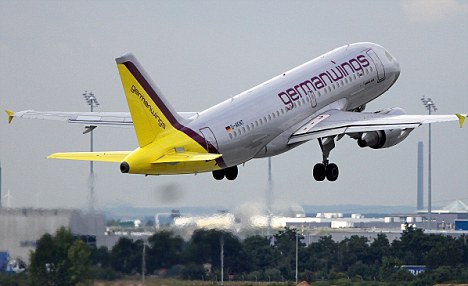

Germanwings Airlines Aviation expert, Norman Shanks, has voiced his concerns about airline testing and psychological evaluations of pilots following the tragic events of the Germanwings crash, as details emerge about the state of mind of the co-pilot.

Mr Shanks says that it is difficult for airlines to determine the psychological state of an individual pilot. A psychological profile of a person can change and can be influenced by events in one’s life. As pilots are placed to work with different colleagues on a regular basis, it is difficult to create a team-building aspect, where a colleague might be able to point out differences in a demeanour or attitude.

Germanwings’ parent company, Lufthansa, are discussing the possibility of changing their flying rules and ensuring that two members of flight crew are on the flight deck at all times.

Improving Airport Security with Biometric Solutions ProvidersAlthough the world’s major airports are stepping up security for passengers and employees, a top airport official, speaking at Los Angeles International Airport still thinks that it may not be enough to stop the ‘lone wolf’ slipping through the net.

Mr Patrick Gannon, police chief of LAX, said that 54,000 employees undergo recurring security screening, including criminal background checks, but believes that this may not be enough. He said, “I agree that in any airport throughout the United States and here also, there is never a 100% guarantee that somebody who wanted to do something illegal or wrong couldn’t make that happen.”

Just two of the U.S. airports, Orlando and Miami, require all personnel that have access to secure areas of the airport to pass through metal detectors, with other major airports conducting random checks. Often airport personnel undergo the bare minimum before being hired, such as a criminal background check.

The debate has been raised since the arrest of the Delta baggage handler at the end of last year at Jackson International Airport for gun smuggling alongside a passenger.

Mr Gannon is concerned about the process of screening airport staff and the risk of a single member of staff being overlooked. Miami airport security director, Lauren Stover agrees that ID badges and swipe cards are not enough to guarantee the eradication of the likelihood of contraband or a person with malicious intent getting through security access doors.

The debate continues as airports around the world aim to stamp out the threat of terrorist attack. As employees could be targeted by organisations, regular and constant screening is the only answer and is held back by cost implications on a broad scale.

Using Technology to Provide Increased Airport SecurityAtkins Identity Management toolkit will be integrated with the ARINC vMUSE and VeriPax technologies from Rockwell Collins to produce a new suite of fully integrated and configurable airport identity management solutions, which will help to take automated passenger processing to another level, while maintaining critical airport security.

The combined technologies will capture passenger identities using biometrics, comparing the information with boarding passes and passport details, including finger print and facial recognition capabilities.

Nick Whitehead, head of strategic services in identity assurance at Atkins said, “Combining Rockwell Collins’ experience deploying CUPPS technology at airports worldwide with our proven capabilities in developing and implementing biometric applications has allowed us to create a fully integrated identity management solution for airports. Airports can use this service to validate a passenger’s identity, ensuring that the individual given the authority to fly is actually the one who boards the plane.”

The initial implementation of the technology will include highly configurable elements and standardised plug-ins to allow seamless identity management without making changes to an airline’s DCS.

Atkins is a leading global design, engineering and project management company with employees in the UK, Middle East, Europe, Asia Pacific and North America.

Improving Airport & Facility SecurityAcross the UAE, airports will be launching biometric screening systems in a project to upgrade the physical security with multimodal measures including eGates.

The project has been prompted, according to ministry officials, by ‘numerous security challenges in the region’ and as Dubai International airport in particular expects more than 80 million passengers during the coming year, the requirements for improved security measures are clear.

In addition to airport security, the plans are expected to include all the country’s borders, with the implementation of fingerprint, eye and facial scanning technology. eGates will strengthen security immediately and help with screening and tracking of passengers leaving and entering the country.

Across the world we see international airports making improvements to physical and biometric security – a result of increased threats from terror organisations all over the globe.

Providers of Bag Drop & Passenger Processing Solutions to Revolutionise the IndustryRockwell Collins are having a busy month this month with the unveiling of yet another new product. Developed to further streamline and enhance the passenger processing system in airports, ARINC vMUSE mobile enables ground handling and airline agents to use a tablet-based application to check-in passengers from anywhere in the airport.

The possibilities for the new passenger processing system are far-reaching, particularly for off-airport check-in, which is a sector of the industry that is fast growing in popularity for both passengers and airports. The flexibility offered to passengers, with off-airport bag drop points and now the ARINC vMUSE mobile system from Rockwell Collins is revolutionising the entire air travel experience; completely changing the traditional airport queue and waiting system that many passengers dread.

The industry is getting a good look at the new product this week at the Passenger Terminal Expo 2015, where demonstrations of the system’s capabilities are being carried out.

ARINC vMUSE mobile will allow each airline to access its own check-in application with the same security and reliability of traditional CUPPS, but without the additional technical resources, software configurations or installation time, thus reducing the costs, but giving the full CUPPS advantages.

Reducing Queues at Airports with Automated Border Control GatesGermany’s Tegel Airport in Berlin has installed a new automated border control system in the form of the latest eGates, which allows travellers entering Germany to use the EasyPASS border control system to expedite their journey through customs.

Using electronic automated border control is the answer to cutting queues as passenger traffic grows year-on-year. All over the world, airports are installing automated borders technology to improve passenger experience and reduce waiting times throughout the airport environment.

The Tegel Airport system requires the use of an electronic passport and allows German citizens to travel under a new German identity card for interior flights.

Security measure are also improved with automated authenticity checks and facial recognition software that compares a live image taken at the eGate to the image stored on the electronic passport chip. No personal data is stored during this process at these particular gates.

Passenger processing systems are changing and revolutionising the entire issue of border control within the airport environment.

All-You-Can-Fly Business Jet ServicesA growing sector of the business aviation market is promising to change the way corporate passengers travel, certainly in terms of the cost, this year with the introduction of the All-You-Can-Fly service.

Air travel clubs have been popping up across the U.S. in the past year, offering unlimited flights for a fixed monthly fee to club members. While these are generally not offered at the luxury end of the business market, club members can turn up to check in literally minutes before departure for internal, short-haul flights.

Texas Air Shuttle are amongst the latest companies to announce the service, which they hope to launch in Tulsa before the end of this year. The company will offer the use of a seven-seater King Air 200 aircraft and membership fees ranging between $2,850 and $4,900 per month, per person.

The service is expected to grow rapidly, after a positive explosion into the market in popularity and Texas Air Shuttle are determined to ‘turn the whole commercial air travel industry on its head’, with plans to introduce more than 40 destinations throughout Texas, Oklahoma, Louisiana and Arkansas by the end of 2018.

Using API Providers for Secure Flight Passenger Data SharingA new proposal put to Brussels this week has sparked controversy once again with advocates of privacy in the EU. Following the Charlie Hebdo attacks in Paris and the Brussels Jewish Museum shootings last year, the European security services have stepped up measures to detect travellers joining or returning from war in Syria and Iraq and feel that sharing airline passenger data, via Passenger Name Records (PNR) or a system similar to that in place between Europe and the U.S. in the form of Advance Passenger Information (API) would be a step closer to helping to achieve their goal.

Access to personal information across the EU by the intelligence services remains in fierce debate, particularly in countries such as Germany, who were outraged over the accusations of mass surveillance by U.S. intelligence agencies after the attacks of 9/11.

Jan Albreicht, German member of the European Parliament said, “We need to deliver whatever is necessary and proportionate to get a higher level of security. But what you are proposing now, the proposal of blanket mass surveillance of citizens, is exactly the opposite of that. It’s not delivering that.”

Anti-terror measures have become a security priority for the EU and passenger data sharing is at the top of the list in terms of monitoring the movements of suspected high-risk travellers.

Timothy Kirkhope, British member of the European Parliament said, “We need now to make sure we have enough information to look at patterns of behaviour. That is the basis on which we can find criminals and find terrorists in order to protect our citizens. Stop things happening such as the atrocities in Paris recently.”

Rockwell Collins Agreement with Iridium Satellite CommunicationsIt has been announced that global communications giant, Rockwell Collins, has entered into an agreement with Iridium Communications Inc which will see them as a value-added manufacturer for Iridium CertusSM broadband terminals.

“Rockwell Collins is a true pioneer and leader in aviation communication solutions, continually pushing the envelope to provide innovative solutions for both aircraft operators and OEMs alike,” said Executive Vice President of Sales and Marketing for Iridium, Bryan Hartin. “Additionally, their excellent global distribution channels support Iridium’s long-term strategy to offer best-in-class products and services while staying true to our wholesale distribution model.”

Rockwell Collins’ Vice President and GM of Air Transport Systems, Steve Timm said, “Through this agreement with Iridium, we’ll be able to deliver high-speed flight deck connectivity to meet the growing connectivity needs of our customers. We also see the potential to offer services through our ARINC information management services, giving customers a single source for their Iridium NEXT connectivity needs.”

Rockwell Collins will design and manufacture the broadband terminals for the new Iridium Certus – a voice and data service that will be enabled by the Iridium NEXT satellite constellation which will begin launch later this year.